Public Steam disclosure research27,951 disclosures tracked
Where do games disclose AI use?
Search developers’ Steam disclosures, compare classified AI use across
games, and follow recorded changes.
This index adds cross-game classifications and statistics to
statements published on individual store pages.
Groups reflect automatic analysis of public disclosures; mature records are excluded. These counts do not measure AI use across all of Steam.
Missing or unclear statements cannot establish whether a game uses AI.
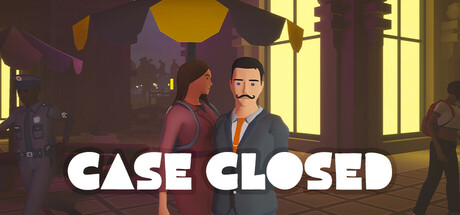
Our game leverages sophisticated artificial intelligence to create an immersive and unpredictable gameplay experience. Each citizen is powered by AI, enabling them to exhibit distinct personalities, react dynamically to player actions, and contribute uniquely to the mystery. This AI integration not only enhances the realism of the city environment but also ensures that no two playthroughs are the same, providing a fresh challenge every time.
Traditionally, NPCs (non-player characters) do not play active roles in video games. However, with the use of AI, they become the main characters of the game. Players can communicate with NPCs verbally through a microphone, and it is the AI that responds
Metaheuristic allows you to interact with LLM in convenient way.
Metaheuristic isn't reselling LLM generated content, user must obtains its own API key for using external LLM service.
Right now, there is only one allowed LLM - OpenAI's ChatGPT
As a small independent development team with limited resources, we used AI-based tools to assist with certain aspects of content creation, including textures, audio, and in-game video elements (such as VHS-style footage). All final content was carefully reviewed, refined, and manually reworked by the development team including additional re-texturing to ensure it reflects our creative vision.
Quest Machina uses generative AI combined with your input to create a unique world just for you. Story, descriptions, and dialog are generated using OpenAI. Character portraits, planet sprites, and location art are generated using Leonardo.ai.
Out of a total of 12 music tracks, 9 were produced using AI. A total of 25 villager profile pictures were generated with AI. All languages except German, French, Polish, Brazilian Portuguese, and Turkish were translated using AI.
AI was used in the creation of the Steam capsule logo.
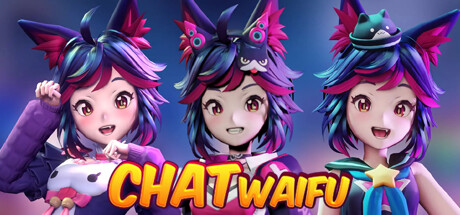
ChatWaifu does not include any large language models by default but supports importing custom large language model files by user. When interacting with the 3D character on the desktop via voice or keyboard input, ChatWaifu utilizes these models to generate and vocalize the conversation text.
The game is a research project into how the use of AI would affect game production, so AI has been used for images, voiceovers, code, dialogue and other areas as much as possible. Just to see what sort of results it provides.
FACEMINER is a concept-driven game that directly engages with the ethics of AI. For thematic purposes, the game features faces which have been generated by a GAN (Generative Adversarial Network) trained on the FFHQ dataset, a research dataset released by NVIDIA that is the backbone of many real-world facial recognition applications. Per NVIDIA, only images under permissive licenses were collected.
The 'AI training' in this game is fictional and has been simulated for entertainment purposes. The game can be interpreted as a critique of AI specifically relating to the ecological impact of mass data hoarding, surveillance concerns, and way it is used to compound corporate power.
AI was used to generate the images in the game.
I'm a solo developer. I can't afford to hire artists, and I depend on this income to pay the rent and buy food. Please be considerate.
I hope you enjoy the game.
PatchWorld includes optional generative AI tools that players can use to create custom content for their worlds and devices.
Players can generate images, 360° skyboxes, 3D meshes, and audio samples by entering text prompts using in-game tools such as the GenieBox device or scripting blocks. Each generation is initiated directly by the player and takes a short amount of time to complete.
Generated content can be used to decorate worlds, create sound effects, and build custom musical instruments. By default, all generated content remains private to the creator and is only shared with others if the player chooses to publish their world.
Generative AI features are entirely optional and are designed to support creativity, experimentation, and collaborative world-building.
I have not used AI to generate any graphics, however, I have used ready art assets, which might, or might not have been made using AI. At least Main Menu shows strong signs of having been created with AI.
I have used AI to come up with story ideas, and also used it for text.
Text used in game is not directly from AI, except for one exception, spell-checking.
Process is that I either ask AI some funny ideas, or give him the ideas myself. Then I see what AI comes with, tell it to do again and again and again to come up with better/different versions of some things.
In the end I myself write the stuff based upon what AI have given me.
As a final step, I put the whole text to AI and tell it to do the spell-check. When AI gives the Spell-checked version of the text, that is only time I am actually copy-pasting AIs whole answer directly.
Otherwise the text is a combination of me and AI.
To create a unique art style, I employed various technical methods during development, including the use of AI-generated tools to assist in producing some of the materials.
These tools significantly streamlined my workflow as a solo developer, allowing me to focus more on core gameplay and detailed refinement. This approach ultimately delivers a richer and more immersive post-apocalyptic world for players. All content has been carefully curated, refined, and integrated to ensure it aligns with the game’s overall quality and artistic vision, while also complying with applicable copyright regulations.
Project Electric Sheep uses generative AI to create character conversations inspired by your dream prompts, as well as to tailor dream worlds to your chosen topics. Below is some more information about which generative AI services we're using in PES, and how:
1. We use ChatGPT to generate NPC dialogue when dream worlds are created and when you reply to an NPC. We use AWS to generate voices for our NPCs.
2. We also use ChatGPT to write in-game world building details, such as graffiti and advertisements, as well as to create the dream description that displays on the dream loading screen.
3. We use DALL·E 2 to paint in-game murals inspired by your dream prompt.
4. Lastly, during the dream generation phase, we use ChatGPT to make creative decisions about world design based on the given dream prompt.
Players can create and modify games using text prompts. The game uses AI (LLM) to understand the player's request and then uses LLM to construct the game using a pre-defined asset library.
If your ingame choices are inconsistent or raise moral questions, you’ll have to justify them in writing. An AI will read your defense and decide whether it counts as a solution. Convince it — because its verdict carries real consequences in the game.
Airtaxi Coach is an AI trained game character called Diana that is trained on the latest flight manuals, as well as the latest industry knowledge on airtaxis, flying cars and the future of mobility. You can ask her any question about the game Metapilot or flight in general, and she will help you navigate the game as well as help you to earn tokens in the game and earn cool perks! Metapilot perks include invited to events, tokens you can spend on our website, and even the chance to get training to become a real airtaxi pilot!
We employ generative AI during the creation of some art assets. Usually, this will be to create basic images reference, that are then modified by hand. All generated content is reviewed and modified by the artist, and it remains a minor part of the total expression created by the artist.
This game heavily uses AI to live-generate in-game content such as text, images, and sound effects. It also uses AI to make a variety of game mechanics decisions in real time.
AI was used to reduce time investment in illustration art. The AI art can be seen in various UI elements where illustrations are present. Please note, all of the AI art you see wasn't merely generated and thrown into the game, it obviously needed a fairly extensive degree of retouching.
We use AI-based tools to assist in the creation of specific static User Interface (UI) assets. This includes inventory icons, status effect indicators (such as hunger and panic alerts), and the background artwork for the 'Quit Game' confirmation screen. All AI-generated assets were manually reviewed, edited, and integrated to fit the game's overall aesthetic. The core game environments and character models are human-created
Some audio assets and store/marketing visuals were generated or assisted using AI during development.
All gameplay content is static — no AI content is generated at runtime.
We confirm that AI-assisted tools were used in the development of our game. The specific scope and manner of use are as follows:
1. Type of AI-Generated Content:
* Text Content: We used AI text-generation tools to assist in creating initial drafts for some of the in-game copy during the early conceptual stages of development.
* This includes content for:
* Background stories and design documents for boss characters, frigates, and other units.
* Descriptive text for player skills.
* Preliminary outlines and descriptions for the game's overall story background.
* In-game text such as enemy names and skill descriptions.
2. Our Workflow and Human Oversight (The Key Part):
* AI's role was that of an "Assistant Tool": The AI was used solely to generate preliminary, unpolished text drafts and inspiration based on core ideas and directions provided by our producers.
* Deep Human Optimization and Review: All AI-generated text underwent strict review, selection, rewriting, and optimization by our producers and development team. We ensured:
* Creative Direction: The final design direction and core ideas were entirely determined by the human team.
* Content Ownership: We hold full and legal rights to all final content included in the game. The content, after profound human modification and optimization, is no longer a purely AI-generated product but the intellectual property of our team.
* Quality and Compliance Control: We ensured all textual content met our quality standards and Steam's distribution rules, containing no infringing, offensive, or inappropriate material.
3. Commitment and Assurance:
* We guarantee that the final version of the game does not directly include any unmodified AI-generated output.
* We take full responsibility for all content in our game.
In Summary: AI was used as a tool for assistance and inspiration during the design phase, but the final generation, approval, and copyright of all game content are the sole responsibility of our human development team.
Dialogue Generation: An on-board AI character named AURORA uses a local offline LLM to generate procedural dialogue in response to player actions or voice input. This allows for varied, context-sensitive replies that maintain the tone and lore of the game world.
Voice Interaction (optional): Players may speak to AURORA using voice recognition, which is then interpreted and processed to generate in-character responses, offering a more immersive narrative experience.
My game uses AI quite frequently. Every logo you see is a product of the collaboration between a human and an AI. Every song you hear is a product of human-AI collaboration. Every player report card uses AI generated text modularly pieced together from smaller chunks.
The match commentator is using an AI generated voice.
This is a modern game that uses modern technology to its full potential.
- Some artworks have been made with the help of the Midjourney AI tool.
- The Map Data in some countries has been generated with the help of AI technology to recognize satellite images.
The background of our logo is generated by AI. As a solo developer I've been 100% focused on gameplay and have not had the time or resources to work with an artist for marketing and social materials. Hopefully as we grow our community during Early Access we can find a few artists that are passionate about creating personalized content that best represent Nova.
Nothing in-game is generated by AI.
Using LLM Code Agent for indie development speed up (no "VIBE CODING", it's originally human made project in 2012-2025, author starts using LLM as smart assistant code edit tool since December 2025). Translations of the game interface and of the store page into languages other than English are generated with LLM tools; the original text is English.