Public Steam disclosure research25,497 disclosures tracked
Where do games disclose AI use?
Search developers’ Steam disclosures, compare classified AI use across
games, and follow recorded changes.
This index adds cross-game classifications and statistics to
statements published on individual store pages.
Groups reflect automatic analysis of public disclosures; mature records are excluded. These counts do not measure AI use across all of Steam.
Missing or unclear statements cannot establish whether a game uses AI.
Some of the artwork in Hunters Trial: One Breath was created with the assistance of generative AI tools. Specifically, AI was used to help produce certain background and environment images, and as a visual reference aid during the design of our menus and user interface.
Some of the 3D models in the game were generated with the assistance of artificial intelligence, and were reviewed and modified by humans before being used as game assets.
Generative AI tools were used during development to assist with programming, concept art, marketing artwork, and the creation of some 3D assets. All AI-assisted content was reviewed, modified where necessary, and approved by the developer before being included in the game.
The game does not use generative AI to create content in real time for players.
Generative AI tools were used to assist with the creation of some 3D assets, textures, and translations. All AI-assisted content was reviewed and edited by the developer before being included in the game.
Generative AI was used to create certain visual assets, including the storefront/marketing artwork, main menu background, loading screens, image-based cutscenes, and a couple of background 3D meshes. All programming and narrative design were developed manually.
Some visual assets, promotional images, and design elements used in Dream Cola were created or assisted with generative AI tools. All AI-generated content was reviewed, modified, and integrated by the developer to fit the game's artistic direction.
The developer used generative AI tools during the development process to assist in creating visual assets and concept art. All content in the final game is pre-rendered and static; the game does not generate new content in real-time or connect to external AI services during execution.
Art assets in this game, such as achievement icons, were created with the assistance of GPT-based image generation tools. The background music was composed using Suno AI. All AI-generated content has been reviewed and approved by human developers.
Generative AI tools were used during the creation of certain marketing and promotional materials for the game, including concept artwork, logos, store page assets, and text drafts. All AI-generated content was reviewed, edited, and integrated by the developer before publication.
Generative AI tools were used during the development process to assist in writing code, creating speech, sound effects, and 3D assets. No generative AI is used during actual gameplay.
Generative AI tools were used as development assistance for code drafting/debugging and for creating some visual source materials. All AI-assisted code and visuals included in the game were reviewed, modified, edited, and integrated by the development team.
Generative AI is used only for some in-game icons.
Those icons are manually edited and finalized by our development team.
Generative AI was not used for any other game assets.
AI is not used during gameplay.
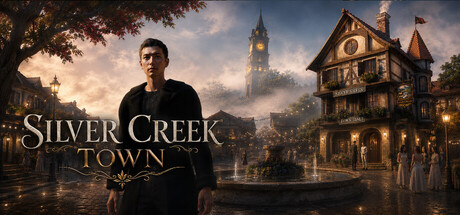
Silver Creek Town uses generative AI to support live NPC dialogue text during gameplay. Player text input may be processed by an AI service to generate in-character fictional NPC responses within the world of Silver Creek Town. Some background music, concept art, character images, text drafts, and marketing materials may also be created or assisted by AI tools during development. We review AI-assisted content before use and apply prompts, content rules, and safety restrictions to reduce inappropriate, illegal, hateful, sexually explicit, infringing, or unsafe output.
Some visuals, text, and promotional materials (including the trailer) were created with the help of AI.
Imperfections, inconsistencies, and “errors” are intentional — they reflect a world where systems don’t always make sense, yet people rely on them anyway.
This is not a bug. It’s the design.
Artificial intelligence (AI) was leveraged for key aspects of the game's development, including in-game logic, support systems, and certain artistic assets.
Generative AI was used to assist in creating selected promotional artwork and logo/icon assets for the Steam store page. All outputs were reviewed, selected, and edited by the developer. Generative AI is not used during gameplay, and no content is generated live for players.
Since english is not my native language.
During the development, I use AI and grammar websites to help me correct my sentences.
But all the text was conceived and finalized by me.
Some assets *may* be AI. These assets were secured from a third party and I cannot confirm this, but if that's the kind of thing that bothers you, you may want to steer clear.
AI was used as an assistive tool for creating specific texture patterns, supporting code development, and producing videos for the game. All generated content was manually reviewed, edited, and refined by our team.
As a small independent game studio, we use AI to support our creative workflow. All final content was created and approved by our team.
Cavernreach contains very limited AI-assisted content, including some music/audio assets and promotional artwork. All gameplay, environments, programming, story content, voice acting, level design, and game implementation were created by the developer. Any AI-assisted assets used during development for testing or reference purposes have been replaced, recreated, or removed from the full release where applicable.
This game was developed using an agentic AI coding tool, the code was written with AI assistance, under the design, direction, and review of the developer. The game contains no AI-generated assets — models and textures are generated procedurally in-engine, audio (sound effects and music) is pre-synthesized with the developer's own non-AI DSP tools, and UI text uses system fonts. No AI content is generated at runtime.
AI-assisted translation software was used to translate the game's text interface and trivia questions from the original English into other supported languages. The original English script was entirely hand-crafted by humans, and the AI was utilized strictly to make the game accessible to a wider global audience at launch.
This game contains pre-generated AI content. Certain in-game dialogue voice lines were created using AI-generated voices. No live AI generation occurs during gameplay, and no user-generated AI content is included.
Google Gemini was utilized during the development phase as an assistive tool for C# scripting, code optimization, debugging, and brainstorming game mechanics. All AI-assisted outputs were manually reviewed, edited, and validated by the developer to ensure proper integration and originality.
During the development process, AI tools were used to assist in the design of some visual assets (such as UI elements and environmental textures) and in optimizing the coding structure. All AI-assisted content was reviewed and refined before being integrated into the final build
Some of the 3D art assets in Night Falls were created with the help of generative AI 3D-generation tools. These assets were then reviewed, edited, rigged, and integrated into the game by the developer. The translation of the menu and interface text into the supported languages was also produced by AI. Also, the image that is used in the Steam library as a capsule or Header, and the image of the icon.
Generative AI is not used live during gameplay, all content is pre-generated and finalized during development.
This game utilizes generative AI for certain 2D illustrations, backgrounds, and portions of written content. All AI-assisted content was manually reviewed, edited, and refined by the developer to ensure consistency with the game's artistic vision, narrative, and gameplay. No live or real-time AI generation occurs during gameplay.
Some of the artwork in Hunters Trial: One Breath was created with the assistance of generative AI tools. Specifically, AI was used to help produce certain background and environment images, and as a visual reference aid during the design of our menus and user interface.
Some of the 3D models in the game were generated with the assistance of artificial intelligence, and were reviewed and modified by humans before being used as game assets.
Generative AI tools were used during development to assist with programming, concept art, marketing artwork, and the creation of some 3D assets. All AI-assisted content was reviewed, modified where necessary, and approved by the developer before being included in the game.
The game does not use generative AI to create content in real time for players.
Generative AI tools were used to assist with the creation of some 3D assets, textures, and translations. All AI-assisted content was reviewed and edited by the developer before being included in the game.
Generative AI was used to create certain visual assets, including the storefront/marketing artwork, main menu background, loading screens, image-based cutscenes, and a couple of background 3D meshes. All programming and narrative design were developed manually.
Some visual assets, promotional images, and design elements used in Dream Cola were created or assisted with generative AI tools. All AI-generated content was reviewed, modified, and integrated by the developer to fit the game's artistic direction.
The developer used generative AI tools during the development process to assist in creating visual assets and concept art. All content in the final game is pre-rendered and static; the game does not generate new content in real-time or connect to external AI services during execution.
Art assets in this game, such as achievement icons, were created with the assistance of GPT-based image generation tools. The background music was composed using Suno AI. All AI-generated content has been reviewed and approved by human developers.
Generative AI tools were used during the creation of certain marketing and promotional materials for the game, including concept artwork, logos, store page assets, and text drafts. All AI-generated content was reviewed, edited, and integrated by the developer before publication.
Generative AI tools were used during the development process to assist in writing code, creating speech, sound effects, and 3D assets. No generative AI is used during actual gameplay.
Generative AI tools were used as development assistance for code drafting/debugging and for creating some visual source materials. All AI-assisted code and visuals included in the game were reviewed, modified, edited, and integrated by the development team.
Generative AI is used only for some in-game icons.
Those icons are manually edited and finalized by our development team.
Generative AI was not used for any other game assets.
AI is not used during gameplay.
Silver Creek Town uses generative AI to support live NPC dialogue text during gameplay. Player text input may be processed by an AI service to generate in-character fictional NPC responses within the world of Silver Creek Town. Some background music, concept art, character images, text drafts, and marketing materials may also be created or assisted by AI tools during development. We review AI-assisted content before use and apply prompts, content rules, and safety restrictions to reduce inappropriate, illegal, hateful, sexually explicit, infringing, or unsafe output.
Some visuals, text, and promotional materials (including the trailer) were created with the help of AI.
Imperfections, inconsistencies, and “errors” are intentional — they reflect a world where systems don’t always make sense, yet people rely on them anyway.
This is not a bug. It’s the design.
Artificial intelligence (AI) was leveraged for key aspects of the game's development, including in-game logic, support systems, and certain artistic assets.
Generative AI was used to assist in creating selected promotional artwork and logo/icon assets for the Steam store page. All outputs were reviewed, selected, and edited by the developer. Generative AI is not used during gameplay, and no content is generated live for players.
Since english is not my native language.
During the development, I use AI and grammar websites to help me correct my sentences.
But all the text was conceived and finalized by me.
Some assets *may* be AI. These assets were secured from a third party and I cannot confirm this, but if that's the kind of thing that bothers you, you may want to steer clear.
AI was used as an assistive tool for creating specific texture patterns, supporting code development, and producing videos for the game. All generated content was manually reviewed, edited, and refined by our team.
As a small independent game studio, we use AI to support our creative workflow. All final content was created and approved by our team.
Cavernreach contains very limited AI-assisted content, including some music/audio assets and promotional artwork. All gameplay, environments, programming, story content, voice acting, level design, and game implementation were created by the developer. Any AI-assisted assets used during development for testing or reference purposes have been replaced, recreated, or removed from the full release where applicable.
This game was developed using an agentic AI coding tool, the code was written with AI assistance, under the design, direction, and review of the developer. The game contains no AI-generated assets — models and textures are generated procedurally in-engine, audio (sound effects and music) is pre-synthesized with the developer's own non-AI DSP tools, and UI text uses system fonts. No AI content is generated at runtime.
AI-assisted translation software was used to translate the game's text interface and trivia questions from the original English into other supported languages. The original English script was entirely hand-crafted by humans, and the AI was utilized strictly to make the game accessible to a wider global audience at launch.
This game contains pre-generated AI content. Certain in-game dialogue voice lines were created using AI-generated voices. No live AI generation occurs during gameplay, and no user-generated AI content is included.
Google Gemini was utilized during the development phase as an assistive tool for C# scripting, code optimization, debugging, and brainstorming game mechanics. All AI-assisted outputs were manually reviewed, edited, and validated by the developer to ensure proper integration and originality.
During the development process, AI tools were used to assist in the design of some visual assets (such as UI elements and environmental textures) and in optimizing the coding structure. All AI-assisted content was reviewed and refined before being integrated into the final build
Some of the 3D art assets in Night Falls were created with the help of generative AI 3D-generation tools. These assets were then reviewed, edited, rigged, and integrated into the game by the developer. The translation of the menu and interface text into the supported languages was also produced by AI. Also, the image that is used in the Steam library as a capsule or Header, and the image of the icon.
Generative AI is not used live during gameplay, all content is pre-generated and finalized during development.
This game utilizes generative AI for certain 2D illustrations, backgrounds, and portions of written content. All AI-assisted content was manually reviewed, edited, and refined by the developer to ensure consistency with the game's artistic vision, narrative, and gameplay. No live or real-time AI generation occurs during gameplay.