Public Steam disclosure research27,951 disclosures tracked
Where do games disclose AI use?
Search developers’ Steam disclosures, compare classified AI use across
games, and follow recorded changes.
This index adds cross-game classifications and statistics to
statements published on individual store pages.
Groups reflect automatic analysis of public disclosures; mature records are excluded. These counts do not measure AI use across all of Steam.
Missing or unclear statements cannot establish whether a game uses AI.
In RoleMIAster, a local AI acts as your personal Game Master. It creates worlds, characters, quests, and items in real time, interprets your actions, and narrates the consequences dynamically, offering a unique and ever-changing role-playing experience.
Before I get into this, I'd like to say that I am a professional game designer, writer, sprite artist, video animator, music producer, and audio engineer. I worked in the industry for a number of years, and deciding on whether or not to use gen AI was not something I took lightly. I know there are a lot of feelings about this right now, and I understand why a lot of people are hurting, but ultimately, I felt that it enhances the will and talent of the end user. I use programs that claim they are trained on models that own the rights to the content, or are trained on open source materials. This game uses a limited amount of generative AI for content. About 50% of the art assets are generated, then carefully tailored for visual cohesion. Currently, very little animation is done with generative AI, but this could change in the future. The music is 100% human created by Punch Deck. The voiceover is 100% generative AI. Depending on funding, this could change in the future.
Kosmass incorporates Generative AI specifically for the creation of musical compositions and store page banner artwork. These assets were generated, selected, and refined by me to ensure originality and quality.
Parts of the game’s code were created with the assistance of AI tools. All game assets are designed and created by our team. The game itself does not use AI features such as live-generated content, textures, or behavior.
AI tools were used exclusively to generate static illustrations and to assist with the translation of the game's text. All character sprites, tiles, and pixel art assets were created by hand by the developer. All AI-generated output has been reviewed, edited, and validated by the developer to ensure it fits the artistic direction and gameplay experience.
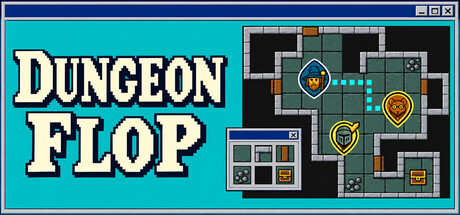
Generative AI is used extensively in making Dungeon Flop, including programming, artwork, writing, game content, and store artwork and text. The game contains AI-generated and AI-assisted material. I provide the direction, choose what to use, revise and combine results, and integrate and test them in the project. Human decisions and manual work are part of that process, alongside substantial AI contributions.
The AI-created content shipped with the game is prepared during development. The game does not include a live generative AI service or require an AI subscription to play. Players can optionally use their own separate AI tools to help create local mod files and images, use the included editors themselves, or combine both approaches.
Certain visual and audio assets were created with the assistance of digital tools that help streamline the creative process. All content has been reviewed and customized to fit the game’s unique style and tone.
AI generation tools were used to create specific 2D visual assets during the development of this game. This includes 2D character illustrations, event thumbnails, UI icons, and various interface elements. All AI-generated content has been manually reviewed and integrated to fit the game's artistic style.
Out of the 996+ files that make up this game, only 5 image files are AI generated. (Title screen, intro screen, game over screen)
This game is made by a solo indie developer with licensed work from independent artists.
This title uses lightweight local AI to generate character conversations in real time.
Each playthrough features dynamic character interactions and evolving stories, letting you enjoy action within a living, breathing world.
Generative AI tools were used by me to create and modify illustrations displayed during game loading screens and in story elements. The images were created based on screenshots taken directly from the game. All materials were reviewed by me. AI does not generate any content during gameplay.
Some game content was translated with the assistance of AI tools.
- Human‑led first. The core research, design, and code were produced by the development team.
- AI used as an advisor. AI provided recommendations, reference gathering, and blind‑spot analysis; it did not generate the final content.
- Human review and integration. Team members validated, edited, and implemented all recommendations before use.
- Technical outcomes verified. Calculations suggested by AI were converted into deterministic code and tested for accuracy.
- Rights and sources checked. Artistic and literary references were verified for licensing and factual accuracy before inclusion.
The story, narrative, and core implementation are entirely human-made.
AI tools were used for supporting elements in voice acting (ElevenLabs), imagery, music production, and video. Less than 15% of videographic content used AI generation (primarily edited in Canva and Filmora).
Our two-person team meticulously guided and refined all AI-assisted content, spending hours to meet specific narrative and quality requirements. We specifically chose ElevenLabs as they contribute directly to Voice Actors through royalties and licensing deals.
Special thanks to the Pixabay community for providing the high-quality audio alternatives used when the GenAI Content toggle is inactive.
The program includes a local (offline, downloaded with the build) AI model trained by us to generate text content for adventures, NPCs, mobs, and items based on player prompts. In addition, the program includes pre-generated 3D models of props and NPCs edited by artists.
During development, some pre-generated assets were created using commercially licensed generative AI services. This includes a portion of the environmental art, character portraits, and character audio voice lines. The developer holds the appropriate commercial licenses for all tools used and owns the rights to all generated assets included in the game.
Generative AI tools were used during development to assist with visual materials, texture design, localization, marketing texts, and partially for coding assistance. No AI is used during gameplay or for generating real-time content.
Umbra Survivors does not use artificial intelligence during runtime.
AI tools were only used as development assistance to help prepare, optimize, or comment on code.
All in-game content (graphics, sounds, text, and code) has been manually reviewed and originates from internal development or properly licensed sources.
I am a solo developer building a massive game. This naturally presents major time and budget challenges for creating all the art assets.
To maintain my ambitious visual scope, I utilize AI-generated concepts purely as a starting foundation. I personally hand-paint and finalize every draft with digital painting before it enters the game. This hybrid art procedure granted me the speed I needed also helped maintaining the visual artistic standards.
We use — and plan to continue using — neural networks to generate various types of content. This is done primarily to optimize routine tasks, as well as time and financial costs.
The content is generated using neural networks that have been additionally trained by our team. All AI-generated content undergoes extensive refinement and manual adjustment by our developers.
Areteion is a solo passion project. AI tools made this scope of art and audio possible for one person, and every asset was chosen, not accepted.
Card art: Midjourney. Sound effects: ElevenLabs. Music: Suno. Narration: written with Claude from the original myths, voiced with ElevenLabs.
ElevenLabs was utilized to produce several in-game audio elements, primarily VFX sounds, while GitHub Copilot assisted us in efficiently completing repetitive or time-consuming tasks.
A small number of minor 3D models and 2D texture assets in the game were generated by AI and then manually modified and optimized by artists. The vast majority of art assets, text, music, and gameplay elements were designed, created, and refined by hand.
Sands of Avalon uses AI exclusively to give the gods unique personalities and dynamic voice lines. Each god reacts differently to the player’s choices, offering distinct blessings, curses, and dialogue that make every playthrough feel personal and immersive. No gameplay mechanics rely on AI and it is used only to enrich storytelling and deepen the connection between players and the divine beings in the game.
All character portraits and voices previously created as placeholders with AI have been replaced by hand-made artwork and professional voice acting. The one exception is the ship's onboard, whose voice is AI-generated on purpose because the character itself is an AI.
This game includes limited use of generative AI during development.
Generative AI was used in the creation of the game’s logo and certain background visuals, and was used to generate a small number of sound effects.
Additional audio assets were sourced from third-party asset stores and integrated into the project in accordance with their licenses.
All remaining content, including gameplay design, implementation, art, and systems, was created directly by the developer.
No generative AI is used during gameplay and it does not affect the player experience.