Public Steam disclosure research25,497 disclosures tracked
Where do games disclose AI use?
Search developers’ Steam disclosures, compare classified AI use across
games, and follow recorded changes.
This index adds cross-game classifications and statistics to
statements published on individual store pages.
Groups reflect automatic analysis of public disclosures; mature records are excluded. These counts do not measure AI use across all of Steam.
Missing or unclear statements cannot establish whether a game uses AI.
This game was made with the help of generative AI tools. During development, AI was used to help create some of the content that ships with the game — including its writing and dialogue, its English and Turkish text, and its 2D art and UI (such as icons, product sprites, achievement badges, and store images). All of this content was directed, reviewed, and curated by the developer. The game does not generate any AI content while you play, and does not connect to any AI service during gameplay.
As a solo developer, I used AI tools as a foundation to expand the game's scope, manually refining and finalizing every asset to ensure the final result is a high-quality, handcrafted experience.
We used advanced AI language models (Claude and Gemini) to help translate
SERVICE DESK SIM into 8 languages: French, German, Spanish, Italian, Hindi,
Urdu, Japanese, and English (UK). The AI handled the initial translation of
all in-game text from UI menus to dialogue, story sequences, and thousands
of unique support tickets. Every translation was then carefully reviewed and
tested by humans to ensure quality and cultural accuracy across all languages.
Some visual assets in this game were created with the assistance of generative AI tools, including UI icons, skill and relic icons, character portraits and sprites, combat VFX, dungeon tile art, and menu and interface decoration. All generated images were reviewed, edited, and integrated by the development team.
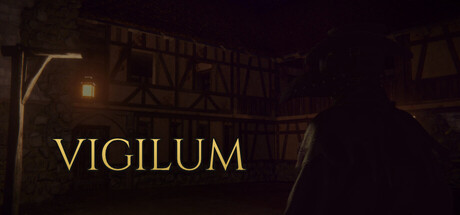
I use generative AI exclusively as a temporary tool for rapid prototyping and placeholder content during early solo development. All AI-generated elements in Vigilum are planned to be fully replaced with custom, human-made assets for the final v1.0 release.
-> 3D Models: I used generative AI tools to create two 3D assets (the Vylem gem and the Blood Sigil element). These are temporary placeholders, and I am currently prioritizing remaking them myself during the Early Access phase.
-> 2D Assets: A few UI icons and images were generated with AI. I intend to commission a professional artist to completely replace these 2D elements as soon as funding allows.
All materials and assets used in this game were created by hand. Generative AI tools were used only as a supportive enhancement tool, for example to refine, polish, or improve certain elements. The final content, including visual assets, story elements, audio direction, and overall creative design, remains the result of human creation and artistic direction.
Some visual assets used in the game and its store page were created with the assistance of generative AI tools. All AI-generated content has been reviewed and curated by the developer. No AI-generated content is created during gameplay.
Artificial Intelligence was used to help in the development of game code only. No art, sound, or other visual assets use or employed AI and were done by a real artist on the team.
Some of the 3D models in the game were generated with the assistance of artificial intelligence, and were reviewed and modified by humans before being used as game assets.
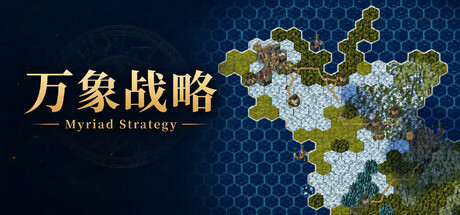
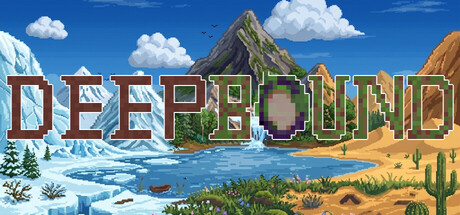
Some store assets (capsules, library art, promotional images) and some in-game terrain sprites (such as mountains and forests) started from drafts produced with AI image tools, then selected, color-graded, composited, and cropped by the developer. All publicly released assets are human-reviewed. UI, fonts, icons, player avatars, faction emblems, and other non-terrain art are drawn directly by the developer or built from licensed fonts / open-source resources — no AI generation involved. Player-to-player text messages produced at runtime by the AI model each player has chosen are disclosed separately under "Live-Generated AI".
This game uses generative AI to assist in generating some text and art resources. All content has been manually reviewed and adjusted, and does not affect core gameplay or content.
AI Usage Disclosure
This game was developed with the assistance of an AI programming tool to help draft portions of the code. All AI-generated code has been reviewed, tested, and revised by the developer to ensure quality and stability.
AI was used solely as a development aid — you will not interact with any generative AI during gameplay. All in-game narrative text, financial knowledge, and numerical systems were independently created by the developer. The game runs entirely offline and does not call any external AI interfaces.
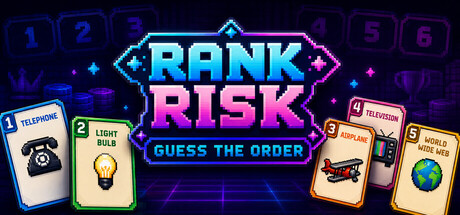
Some in-game visual assets and trivia/ranking question data were created with the assistance of generative AI tools. All AI-assisted content was reviewed, edited, and curated by the developer before being included in the game.
The developer used generative AI tools during development to assist in creating pre-generated assets, including concept art for backgrounds and placeholder text assets. None of the AI content is generated in real-time during gameplay.
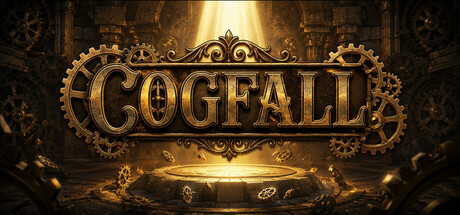
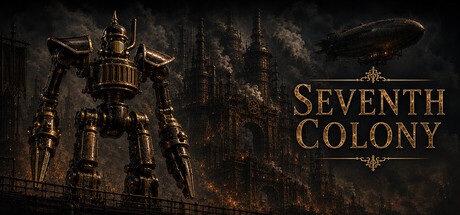
Cogfall was developed solo by Nodding Panda Studios. To bring the steampunk Clockwork Kingdom to life, AI tools were used to generate artwork and music under the creative direction of the developer. Every image and track was intentionally prompted, selected, and refined to fit the game's vision — AI served as a creative tool, not a replacement for creative decisions. All gameplay systems, code, game design, writing, and balancing were created entirely by the developer.
Some visual/audio assets, text content, and development assistance were created with AI tools and then reviewed, modified, and integrated by the developer.
This game uses generative AI during development for pre-rendered visual assets, store capsule and library artwork, icons, textures, and supporting marketing images. AI-generated material is reviewed and edited before inclusion. The game does not generate AI content for players during gameplay.
The Early Access build includes some static pre-generated AI placeholder artwork used as temporary in-game assets during development. This content is not generated during gameplay, is not user-generated, and does not connect to any external AI service. Placeholder artwork may be replaced or polished during Early Access as final art is completed.
This game does not utilize real-time AI-generated content output. In accordance with Steam guidelines, only pre-created and verified content is used.
To improve development efficiency and quality, AI-generated technology is used supplementarily in the following applications:
Program code support: Code refactoring, review, and code completion
Text translation: English translation support
Graphic asset creation: Base generation of some visuals such as potions, crafting ingredients, and background images
Furthermore, all of this content is manually reviewed and edited (added or modified); no unprocessed AI-generated content is used.
The developer describes how this game uses generative AI as follows:
Visual Assets: Some character illustrations, background art, and UI icons in this game have been created or enhanced using generative AI tools.
Generative AI tools were used only to assist in the creation of certain store page and marketing images. No AI-generated content is created during gameplay, and the game does not use live AI systems or connect to external AI services while running.
Generative AI was used to assist in refining and polishing a limited number of hand-drawn 2D pixel art assets, such as the main menu artwork and steam store capsule imagery. All assets are heavily based on original hand-drawn concepts.
Generative AI (OpenAI ChatGPT) was used to create the title/boot key art and the 20 achievement badge icons. The game's code — which procedurally generates the city, UI and synthesized music — was written with AI coding assistance (Anthropic Claude).
The game's narration engine is a deterministic template system with zero runtime AI. The template/fragment library it draws from was hand-crafted in English, and then mass-localized during development using a large language model and then human-curated. No AI image generation was used: all art, icons, and store assets are procedurally rasterized from hand-authored primitive op-lists. The game contains no live/runtime AI generation.
Some visual assets in the game may have been generated or assisted by AI tools. This includes certain textures, logos, shop signs, and some localized translations. All AI-generated or AI-assisted content has been reviewed and integrated into the game by the developer.
Some Steam store page promotional images were created or edited with the assistance of generative AI tools. These assets are used only for store page or marketing presentation.
The playable game itself does not include generative AI features, does not connect to any AI service, and does not generate images, audio, text, or other content at runtime. No AI-generated images, audio, or text are included in the playable game build.
AI was used as an assistive tool for creating specific texture patterns, supporting code development, and producing videos for the game. All generated content was manually reviewed, edited, and refined by our team.
As a small independent game studio, we use AI to support our creative workflow. All final content was created and approved by our team.
Some visual assets and parts of the development workflow for Forest of Numbers were created with the assistance of generative artificial intelligence tools. All content was curated, reviewed, and refined by the developer before being included in the final game.
This game was made with the help of generative AI tools. During development, AI was used to help create some of the content that ships with the game — including its writing and dialogue, its English and Turkish text, and its 2D art and UI (such as icons, product sprites, achievement badges, and store images). All of this content was directed, reviewed, and curated by the developer. The game does not generate any AI content while you play, and does not connect to any AI service during gameplay.
As a solo developer, I used AI tools as a foundation to expand the game's scope, manually refining and finalizing every asset to ensure the final result is a high-quality, handcrafted experience.
We used advanced AI language models (Claude and Gemini) to help translate
SERVICE DESK SIM into 8 languages: French, German, Spanish, Italian, Hindi,
Urdu, Japanese, and English (UK). The AI handled the initial translation of
all in-game text from UI menus to dialogue, story sequences, and thousands
of unique support tickets. Every translation was then carefully reviewed and
tested by humans to ensure quality and cultural accuracy across all languages.
Some visual assets in this game were created with the assistance of generative AI tools, including UI icons, skill and relic icons, character portraits and sprites, combat VFX, dungeon tile art, and menu and interface decoration. All generated images were reviewed, edited, and integrated by the development team.
I use generative AI exclusively as a temporary tool for rapid prototyping and placeholder content during early solo development. All AI-generated elements in Vigilum are planned to be fully replaced with custom, human-made assets for the final v1.0 release.
-> 3D Models: I used generative AI tools to create two 3D assets (the Vylem gem and the Blood Sigil element). These are temporary placeholders, and I am currently prioritizing remaking them myself during the Early Access phase.
-> 2D Assets: A few UI icons and images were generated with AI. I intend to commission a professional artist to completely replace these 2D elements as soon as funding allows.
All materials and assets used in this game were created by hand. Generative AI tools were used only as a supportive enhancement tool, for example to refine, polish, or improve certain elements. The final content, including visual assets, story elements, audio direction, and overall creative design, remains the result of human creation and artistic direction.
Some visual assets used in the game and its store page were created with the assistance of generative AI tools. All AI-generated content has been reviewed and curated by the developer. No AI-generated content is created during gameplay.
Artificial Intelligence was used to help in the development of game code only. No art, sound, or other visual assets use or employed AI and were done by a real artist on the team.
Some of the 3D models in the game were generated with the assistance of artificial intelligence, and were reviewed and modified by humans before being used as game assets.
Some store assets (capsules, library art, promotional images) and some in-game terrain sprites (such as mountains and forests) started from drafts produced with AI image tools, then selected, color-graded, composited, and cropped by the developer. All publicly released assets are human-reviewed. UI, fonts, icons, player avatars, faction emblems, and other non-terrain art are drawn directly by the developer or built from licensed fonts / open-source resources — no AI generation involved. Player-to-player text messages produced at runtime by the AI model each player has chosen are disclosed separately under "Live-Generated AI".
This game uses generative AI to assist in generating some text and art resources. All content has been manually reviewed and adjusted, and does not affect core gameplay or content.
AI Usage Disclosure
This game was developed with the assistance of an AI programming tool to help draft portions of the code. All AI-generated code has been reviewed, tested, and revised by the developer to ensure quality and stability.
AI was used solely as a development aid — you will not interact with any generative AI during gameplay. All in-game narrative text, financial knowledge, and numerical systems were independently created by the developer. The game runs entirely offline and does not call any external AI interfaces.
Some in-game visual assets and trivia/ranking question data were created with the assistance of generative AI tools. All AI-assisted content was reviewed, edited, and curated by the developer before being included in the game.
The developer used generative AI tools during development to assist in creating pre-generated assets, including concept art for backgrounds and placeholder text assets. None of the AI content is generated in real-time during gameplay.
Cogfall was developed solo by Nodding Panda Studios. To bring the steampunk Clockwork Kingdom to life, AI tools were used to generate artwork and music under the creative direction of the developer. Every image and track was intentionally prompted, selected, and refined to fit the game's vision — AI served as a creative tool, not a replacement for creative decisions. All gameplay systems, code, game design, writing, and balancing were created entirely by the developer.
Some visual/audio assets, text content, and development assistance were created with AI tools and then reviewed, modified, and integrated by the developer.
This game uses generative AI during development for pre-rendered visual assets, store capsule and library artwork, icons, textures, and supporting marketing images. AI-generated material is reviewed and edited before inclusion. The game does not generate AI content for players during gameplay.
The Early Access build includes some static pre-generated AI placeholder artwork used as temporary in-game assets during development. This content is not generated during gameplay, is not user-generated, and does not connect to any external AI service. Placeholder artwork may be replaced or polished during Early Access as final art is completed.
This game does not utilize real-time AI-generated content output. In accordance with Steam guidelines, only pre-created and verified content is used.
To improve development efficiency and quality, AI-generated technology is used supplementarily in the following applications:
Program code support: Code refactoring, review, and code completion
Text translation: English translation support
Graphic asset creation: Base generation of some visuals such as potions, crafting ingredients, and background images
Furthermore, all of this content is manually reviewed and edited (added or modified); no unprocessed AI-generated content is used.
The developer describes how this game uses generative AI as follows:
Visual Assets: Some character illustrations, background art, and UI icons in this game have been created or enhanced using generative AI tools.
Generative AI tools were used only to assist in the creation of certain store page and marketing images. No AI-generated content is created during gameplay, and the game does not use live AI systems or connect to external AI services while running.
Generative AI was used to assist in refining and polishing a limited number of hand-drawn 2D pixel art assets, such as the main menu artwork and steam store capsule imagery. All assets are heavily based on original hand-drawn concepts.
Generative AI (OpenAI ChatGPT) was used to create the title/boot key art and the 20 achievement badge icons. The game's code — which procedurally generates the city, UI and synthesized music — was written with AI coding assistance (Anthropic Claude).
The game's narration engine is a deterministic template system with zero runtime AI. The template/fragment library it draws from was hand-crafted in English, and then mass-localized during development using a large language model and then human-curated. No AI image generation was used: all art, icons, and store assets are procedurally rasterized from hand-authored primitive op-lists. The game contains no live/runtime AI generation.
Some visual assets in the game may have been generated or assisted by AI tools. This includes certain textures, logos, shop signs, and some localized translations. All AI-generated or AI-assisted content has been reviewed and integrated into the game by the developer.
Some Steam store page promotional images were created or edited with the assistance of generative AI tools. These assets are used only for store page or marketing presentation.
The playable game itself does not include generative AI features, does not connect to any AI service, and does not generate images, audio, text, or other content at runtime. No AI-generated images, audio, or text are included in the playable game build.
AI was used as an assistive tool for creating specific texture patterns, supporting code development, and producing videos for the game. All generated content was manually reviewed, edited, and refined by our team.
As a small independent game studio, we use AI to support our creative workflow. All final content was created and approved by our team.
Some visual assets and parts of the development workflow for Forest of Numbers were created with the assistance of generative artificial intelligence tools. All content was curated, reviewed, and refined by the developer before being included in the final game.