Public Steam disclosure research25,508 disclosures tracked
Where do games disclose AI use?
Search developers’ Steam disclosures, compare classified AI use across
games, and follow recorded changes.
This index adds cross-game classifications and statistics to
statements published on individual store pages.
Groups reflect automatic analysis of public disclosures; mature records are excluded. These counts do not measure AI use across all of Steam.
Missing or unclear statements cannot establish whether a game uses AI.
This game includes pre-generated AI-assisted assets created during development, including selected background music and some visual art assets. All AI-assisted content was reviewed, curated, and edited by the developer before inclusion in the game. The game does not use live generative AI during gameplay.
Some images in the game are generated by ai. I am aiming to replace these images with hand-drawn images once the game makes enough money to afford artist drawings. Contact me if you volunteer.
Generative artificial intelligence tools were used to assist with creating and iterating on some audio, visual, and code assets. All AI-assisted content was manually reviewed, edited, and integrated by the developer.
This game uses generative AI to improve both the development process and gameplay features. During development, AI tools were utilized to generate certain text, visual, and audio assets.
All AI-generated content is reviewed and controlled to ensure it aligns with the game's design and provides a safe experience for players.
Some artwork and visual assets in Crowned, including
card illustrations and background graphics, were created with the assistance of generative AI tools. All content was
reviewed, curated and integrated by the developer.
Sarges Horrors may use AI-generated audio for placeholder or prototyping purposes during development. Final audio content is planned to be original and hand-crafted.
Generative AI tools were used as supportive assistance in the creation of certain promotional materials, concept art, temporary text, and marketing content during development.
All final in-game content is manually reviewed, edited, and integrated by the development team.
Temporary pre-rendered visual assets were created with the assistance of generative AI tools. The game does not use generative AI during gameplay and does not connect to external AI services while running.
Generative AI tools were used to assist with writing, reviewing, and improving parts of the game's code.
All models, textures, images, sounds, and music used in Single Note are created through human work. The game does not use AI-generated visual assets, audio assets, music, or 3D models.
Single Note is developed by a small independent studio, and AI tools were used as development assistance during production. All final implementation decisions, testing, integration, and creative direction are handled by Fanjoy Studio. The game does not use live-generated AI content during gameplay.
We use generative AI tools in limited parts of the development process.
Visual assets: Some elements such as the main visual, backgrounds, and parts of the UI were created or assisted using image generation AI, and then edited and integrated by the developer.
Story support: AI tools were used to help brainstorm and refine story ideas.
All final content is reviewed, modified, and curated by the developer to fit the game’s design and quality standards.
Graphics & Art: Original asset concepts, sketches, and draft designs were created by the developer and subsequently rendered or refined using generative AI tools. While the underlying concepts and designs are original creations, generative AI may occasionally produce visual similarities to existing artistic styles or works.
Voice Acting: Character voices and audio narration were generated using ElevenLabs voice synthesis technology and are used in accordance with the applicable licensing and usage terms.
BreakDespair2D uses Stable Diffusion for some character portraits and background images.
No AI-generated content is created during gameplay.
The game design, programming, balancing, story, and implementation were created by HappyLuckyRainbowGames.
I used AI for voice-over only and all generated audio assets are pre-rendered, fully vetted, and do not contain any illegal or infringing material. No AI content is generated live or dynamically during gameplay.
This game uses generative AI in its visuals and music to provide players with the best possible experience. On the visual side, AI is particularly utilized in character and environment design.
Generative artificial intelligence was partially used during the development of the game. AI-based tools assisted with parts of the code, the creation of certain textures, and the production of some trailer scenes. All generated materials were manually refined and integrated by the developers to ensure quality and consistency with the game’s artistic vision.
Generative AI was used in the creation of promotional store page artwork, achievement icons, and the game icon. No gameplay content, code, or game mechanics were generated using AI. AI is also not used to make decisions, generate real-time content, or display content within the game.
We are a team of two developers with a limited budget, so we use AI to assist with certain illustration assets, such as character portraits, icons, and backgrounds.
However, all core game assets—including UI HUD and UI interface, enemy 3D models and animations, weapons, and environments are created by the two developers themselves.
Generative AI tools were used in a limited capacity to assist with marketing materials and early concept visuals during development. All AI-assisted content was reviewed and approved by the development team. The final shipped game contains no generative AI content.
This game use generative AI to setup theming, characters and monsters sprites and sounds to speed-up and fill the gap I don't capable of. After generated they're well test and tune to ensure player can have fun with it.
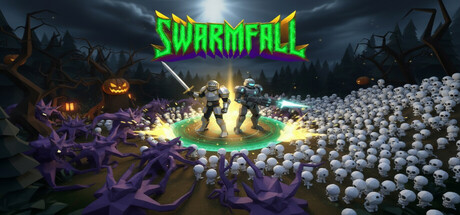
SWARMFALL uses generative AI only for the following 2D images:
Hero icons / profile pictures displayed in the UI and on the store page
Some marketing assets (Steam capsules, banners) and trailer music
All other content — 3D character models, levels, environments, gameplay mechanics and code — was created by hand in Blender or built from royalty-free assets, with no AI. No content is generated by AI during gameplay or in real-time.
This game uses generative artificial intelligence to assist with development.
AI tools were used to create concept art, textures, sound effects, music elements, dialogue, and portions of the game’s code.
All AI‑generated content was reviewed, edited, and integrated by the developer to ensure quality, consistency, and originality.
Specifically:
Tools used: ChatGPT
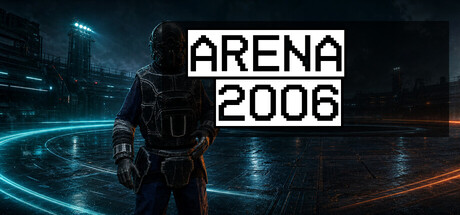
What was created with AI: Capsule images, library assets, and in-game artwork (backgrounds, visual elements, UI components).
Process: All AI-generated outputs were reviewed, curated, and edited by me to ensure they fit the game's pixel-neon aesthetic and overall style. Outputs that did not meet quality or style standards were discarded or further edited.
Rights & legal compliance: I have taken care to avoid generating content that infringes on existing copyrights or trademarks. No prompts referenced real persons, specific copyrighted characters, or trademarked properties. The final assets are used only within this game and its marketing materials.
No live-generated AI is used during gameplay. All AI-generated content was finalized during development and ships as static assets.
A small number of icons and one minor 3D model were generated with AI tools and then edited by the developer. All AI-assisted assets were reviewed and refined before inclusion. No content is generated at runtime.
This is my first game project, created as a learning experience and a personal milestone in my journey as a developer.
Some of the game assets, including 3D models and music, have been generated using artificial intelligence tools. These resources are used to support the creative process and allow me to focus on gameplay design, programming, and overall game development.
All AI-generated content has been carefully selected, integrated, and refined to fit the artistic direction and gameplay experience of the project.
ARB: Alien Races Battle is developed by a solo human author (Raphael Tremblay) with assistance from Anthropic's Claude AI as a coding, art, and writing collaborator throughout production. Specifically:
- Some pixel-art unit sprites, ability icons, and UI elements were generated as SVG code with Claude's help, then reviewed, edited, and approved by the developer.
- In-game ability descriptions, Field Manual codex entries, and supplementary lore text were written with Claude as a writing collaborator, all building on the existing canon of The Alien Races Book (a separate, fully human-authored book by the same author that predates this game by years).
- Game code (gameplay engine, multiplayer infrastructure, UI logic) was developed with Claude as a coding-pair assistant.
Every piece of AI-assisted content was reviewed and edited by the human developer before shipping. The game's core IP — the 60+ documented alien races, their homeworlds, and their first-contact records — comes from The Alien Races Book and is entirely human-authored.
ARB does not use AI to generate content live during gameplay. All in-game content (units, sprites, abilities, sound, text, music) is finalized at build time and shipped as static assets.
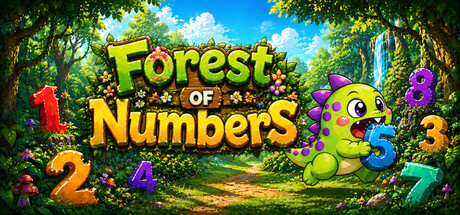
Some visual assets and parts of the development workflow for Forest of Numbers were created with the assistance of generative artificial intelligence tools. All content was curated, reviewed, and refined by the developer before being included in the final game.
Generative AI was used as a supplemental tool during development to streamline workflows and refining technical documentation. All player-facing content has been manually reviewed and polished.
Billionaire MAX is an indie game where the core game design, mechanics, balance, and creative direction were authored by the developer, while the implementation work was assisted by AI tools.
The following content was created with AI assistance:
- Source code: Game logic, UI, networking, and other code was written with the help of AI coding assistants. All code was reviewed, tested, and integrated by the developer.
- Visual assets: Achievement icons, sector illustrations, and in-game card art were generated with AI image generation tools. The developer curated, edited, and selected every asset before inclusion.
- Sound effects: Created with AI audio generation tools. The developer curated and selected each sound effect before inclusion.
- Localization: Initial drafts of English, Korean, and Simplified Chinese translations were produced with AI assistance, then proofread and refined by the developer.
The following content was NOT created with AI:
- Game design and rules
- Music
- Final QA and gameplay tuning
No AI generation occurs at runtime. The game does not invoke any AI service during gameplay; players never see content produced live by AI.
Generative AI tools may be used during development to assist with translations for supported languages. These translations may appear as in-game text. The game does not use live-generated AI content during gameplay.
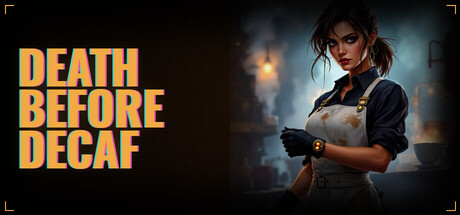
Death Before Decaf uses generative AI tools to assist with visual asset production. This includes character and enemy sprites, environment art, and marketing capsule images, all created using a fine-tuned model trained on reference materials owned by Overdose Interactive (Scenario.gg with a custom DBD LoRA, plus Replicate/Flux for select assets). All AI-generated outputs are reviewed, edited, and approved by a human art director before being shipped in the game.
The game itself does not generate any AI content at runtime: all assets are pre-rendered and bundled with the build. The game does not connect to any external AI services during gameplay.
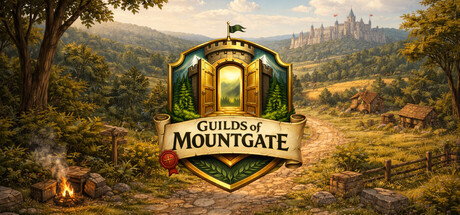
Guilds of Mountgate currently uses AI-generated visual assets during Early Access, primarily for environmental backgrounds and UI-related imagery.
All assets are individually selected and refined to ensure visual consistency within the game world.
This approach allows development to focus on the core systems that define the game — including progression, economy and world simulation.
As development continues, many of these assets — especially location backgrounds — are planned to be replaced with handcrafted, pre-rendered 3D scenes created in Blender for the full release (v1.0).
The game was made with the help of generative AI tools for visual assets, store artwork, music, localization support, and development assistance. AI-assisted materials were reviewed, selected, edited where necessary, and integrated by the developer.
This game includes pre-generated AI-assisted assets created during development, including selected background music and some visual art assets. All AI-assisted content was reviewed, curated, and edited by the developer before inclusion in the game. The game does not use live generative AI during gameplay.
Some images in the game are generated by ai. I am aiming to replace these images with hand-drawn images once the game makes enough money to afford artist drawings. Contact me if you volunteer.
Generative artificial intelligence tools were used to assist with creating and iterating on some audio, visual, and code assets. All AI-assisted content was manually reviewed, edited, and integrated by the developer.
This game uses generative AI to improve both the development process and gameplay features. During development, AI tools were utilized to generate certain text, visual, and audio assets.
All AI-generated content is reviewed and controlled to ensure it aligns with the game's design and provides a safe experience for players.
Some artwork and visual assets in Crowned, including
card illustrations and background graphics, were created with the assistance of generative AI tools. All content was
reviewed, curated and integrated by the developer.
Sarges Horrors may use AI-generated audio for placeholder or prototyping purposes during development. Final audio content is planned to be original and hand-crafted.
Generative AI tools were used as supportive assistance in the creation of certain promotional materials, concept art, temporary text, and marketing content during development.
All final in-game content is manually reviewed, edited, and integrated by the development team.
Temporary pre-rendered visual assets were created with the assistance of generative AI tools. The game does not use generative AI during gameplay and does not connect to external AI services while running.
Generative AI tools were used to assist with writing, reviewing, and improving parts of the game's code.
All models, textures, images, sounds, and music used in Single Note are created through human work. The game does not use AI-generated visual assets, audio assets, music, or 3D models.
Single Note is developed by a small independent studio, and AI tools were used as development assistance during production. All final implementation decisions, testing, integration, and creative direction are handled by Fanjoy Studio. The game does not use live-generated AI content during gameplay.
We use generative AI tools in limited parts of the development process.
Visual assets: Some elements such as the main visual, backgrounds, and parts of the UI were created or assisted using image generation AI, and then edited and integrated by the developer.
Story support: AI tools were used to help brainstorm and refine story ideas.
All final content is reviewed, modified, and curated by the developer to fit the game’s design and quality standards.
Graphics & Art: Original asset concepts, sketches, and draft designs were created by the developer and subsequently rendered or refined using generative AI tools. While the underlying concepts and designs are original creations, generative AI may occasionally produce visual similarities to existing artistic styles or works.
Voice Acting: Character voices and audio narration were generated using ElevenLabs voice synthesis technology and are used in accordance with the applicable licensing and usage terms.
BreakDespair2D uses Stable Diffusion for some character portraits and background images.
No AI-generated content is created during gameplay.
The game design, programming, balancing, story, and implementation were created by HappyLuckyRainbowGames.
I used AI for voice-over only and all generated audio assets are pre-rendered, fully vetted, and do not contain any illegal or infringing material. No AI content is generated live or dynamically during gameplay.
This game uses generative AI in its visuals and music to provide players with the best possible experience. On the visual side, AI is particularly utilized in character and environment design.
Generative artificial intelligence was partially used during the development of the game. AI-based tools assisted with parts of the code, the creation of certain textures, and the production of some trailer scenes. All generated materials were manually refined and integrated by the developers to ensure quality and consistency with the game’s artistic vision.
Generative AI was used in the creation of promotional store page artwork, achievement icons, and the game icon. No gameplay content, code, or game mechanics were generated using AI. AI is also not used to make decisions, generate real-time content, or display content within the game.
We are a team of two developers with a limited budget, so we use AI to assist with certain illustration assets, such as character portraits, icons, and backgrounds.
However, all core game assets—including UI HUD and UI interface, enemy 3D models and animations, weapons, and environments are created by the two developers themselves.
Generative AI tools were used in a limited capacity to assist with marketing materials and early concept visuals during development. All AI-assisted content was reviewed and approved by the development team. The final shipped game contains no generative AI content.
This game use generative AI to setup theming, characters and monsters sprites and sounds to speed-up and fill the gap I don't capable of. After generated they're well test and tune to ensure player can have fun with it.
SWARMFALL uses generative AI only for the following 2D images:
Hero icons / profile pictures displayed in the UI and on the store page
Some marketing assets (Steam capsules, banners) and trailer music
All other content — 3D character models, levels, environments, gameplay mechanics and code — was created by hand in Blender or built from royalty-free assets, with no AI. No content is generated by AI during gameplay or in real-time.
This game uses generative artificial intelligence to assist with development.
AI tools were used to create concept art, textures, sound effects, music elements, dialogue, and portions of the game’s code.
All AI‑generated content was reviewed, edited, and integrated by the developer to ensure quality, consistency, and originality.
Specifically:
Tools used: ChatGPT
What was created with AI: Capsule images, library assets, and in-game artwork (backgrounds, visual elements, UI components).
Process: All AI-generated outputs were reviewed, curated, and edited by me to ensure they fit the game's pixel-neon aesthetic and overall style. Outputs that did not meet quality or style standards were discarded or further edited.
Rights & legal compliance: I have taken care to avoid generating content that infringes on existing copyrights or trademarks. No prompts referenced real persons, specific copyrighted characters, or trademarked properties. The final assets are used only within this game and its marketing materials.
No live-generated AI is used during gameplay. All AI-generated content was finalized during development and ships as static assets.
A small number of icons and one minor 3D model were generated with AI tools and then edited by the developer. All AI-assisted assets were reviewed and refined before inclusion. No content is generated at runtime.
This is my first game project, created as a learning experience and a personal milestone in my journey as a developer.
Some of the game assets, including 3D models and music, have been generated using artificial intelligence tools. These resources are used to support the creative process and allow me to focus on gameplay design, programming, and overall game development.
All AI-generated content has been carefully selected, integrated, and refined to fit the artistic direction and gameplay experience of the project.
ARB: Alien Races Battle is developed by a solo human author (Raphael Tremblay) with assistance from Anthropic's Claude AI as a coding, art, and writing collaborator throughout production. Specifically:
- Some pixel-art unit sprites, ability icons, and UI elements were generated as SVG code with Claude's help, then reviewed, edited, and approved by the developer.
- In-game ability descriptions, Field Manual codex entries, and supplementary lore text were written with Claude as a writing collaborator, all building on the existing canon of The Alien Races Book (a separate, fully human-authored book by the same author that predates this game by years).
- Game code (gameplay engine, multiplayer infrastructure, UI logic) was developed with Claude as a coding-pair assistant.
Every piece of AI-assisted content was reviewed and edited by the human developer before shipping. The game's core IP — the 60+ documented alien races, their homeworlds, and their first-contact records — comes from The Alien Races Book and is entirely human-authored.
ARB does not use AI to generate content live during gameplay. All in-game content (units, sprites, abilities, sound, text, music) is finalized at build time and shipped as static assets.
Some visual assets and parts of the development workflow for Forest of Numbers were created with the assistance of generative artificial intelligence tools. All content was curated, reviewed, and refined by the developer before being included in the final game.
Generative AI was used as a supplemental tool during development to streamline workflows and refining technical documentation. All player-facing content has been manually reviewed and polished.
Billionaire MAX is an indie game where the core game design, mechanics, balance, and creative direction were authored by the developer, while the implementation work was assisted by AI tools.
The following content was created with AI assistance:
- Source code: Game logic, UI, networking, and other code was written with the help of AI coding assistants. All code was reviewed, tested, and integrated by the developer.
- Visual assets: Achievement icons, sector illustrations, and in-game card art were generated with AI image generation tools. The developer curated, edited, and selected every asset before inclusion.
- Sound effects: Created with AI audio generation tools. The developer curated and selected each sound effect before inclusion.
- Localization: Initial drafts of English, Korean, and Simplified Chinese translations were produced with AI assistance, then proofread and refined by the developer.
The following content was NOT created with AI:
- Game design and rules
- Music
- Final QA and gameplay tuning
No AI generation occurs at runtime. The game does not invoke any AI service during gameplay; players never see content produced live by AI.
Generative AI tools may be used during development to assist with translations for supported languages. These translations may appear as in-game text. The game does not use live-generated AI content during gameplay.
Death Before Decaf uses generative AI tools to assist with visual asset production. This includes character and enemy sprites, environment art, and marketing capsule images, all created using a fine-tuned model trained on reference materials owned by Overdose Interactive (Scenario.gg with a custom DBD LoRA, plus Replicate/Flux for select assets). All AI-generated outputs are reviewed, edited, and approved by a human art director before being shipped in the game.
The game itself does not generate any AI content at runtime: all assets are pre-rendered and bundled with the build. The game does not connect to any external AI services during gameplay.
Guilds of Mountgate currently uses AI-generated visual assets during Early Access, primarily for environmental backgrounds and UI-related imagery.
All assets are individually selected and refined to ensure visual consistency within the game world.
This approach allows development to focus on the core systems that define the game — including progression, economy and world simulation.
As development continues, many of these assets — especially location backgrounds — are planned to be replaced with handcrafted, pre-rendered 3D scenes created in Blender for the full release (v1.0).
The game was made with the help of generative AI tools for visual assets, store artwork, music, localization support, and development assistance. AI-assisted materials were reviewed, selected, edited where necessary, and integrated by the developer.