Public Steam disclosure research25,512 disclosures tracked
Where do games disclose AI use?
Search developers’ Steam disclosures, compare classified AI use across
games, and follow recorded changes.
This index adds cross-game classifications and statistics to
statements published on individual store pages.
Groups reflect automatic analysis of public disclosures; mature records are excluded. These counts do not measure AI use across all of Steam.
Missing or unclear statements cannot establish whether a game uses AI.
Yes, we used AI tools in a limited capacity during the development of our game. Specifically, AI was utilized for certain aspects of the game's text, such as crafting the Steam page description, and for some pieces of code. However, the core development, design, and creative processes were driven by our team(me). The use of AI was supplementary, aimed at enhancing productivity and efficiency, rather than shaping the core elements of the game.
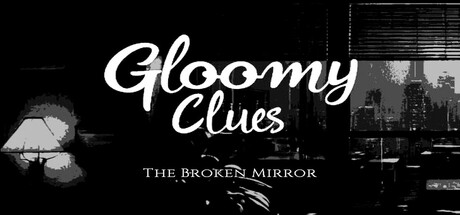
For the development of The Broken Mirror (Xuru Engine Edition), we have integrated advanced generative AI workflows to enhance the atmospheric Noir experience.
Environment & Visual Arts: Environmental assets and backgrounds have been conceptualized and generated using AI, then manually refined and stylized in high-contrast black and white to achieve a unique 'graphic novel' aesthetic.
Audio Experience: Soundtrack and atmospheric sound effects were developed with AI assistance to create a deep, immersive psychological thriller mood.
Human Oversight: All AI-assisted content has been curated, edited, and directed by our lead developer. The core narrative, character arcs, complex puzzle design, and final assembly are 100% original human creations, ensuring a cohesive and high-quality artistic vision.
Illustrations and UI visual elements were created with the assistance of AI tools and subsequently refined and optimized manually. Portions of the text were developed based on suggestions from Large Language Models (LLMs) and underwent final manual review and stylistic polishing by the developer.
Some of the images on our store page were created by artificial intelligence and edits were made on the images. and some images in the game were made by artificial intelligence.
AI tools were used only for certain static illustrations and promotional images.
All gameplay systems, code, and dynamic content are entirely human-created and do not use AI generation.
We used AI technology to generate the music for Proportions. We also used text generation to help us translate the description of Proportions in english.
I use Ai to aid in a variety of topics such as 2D artwork such as UI elements as well as help with ques and dialog ideas. Music is also designed by Ai.
AI was used in the BlueSky/Concepting phase of development to help ideate some designs of characters and UI to save time on our small team. Stable Diffusion using in-house created libraries and loras created from our own original art and not publicly available libraries was used in this process. These concepts are then taken and turned into functional useable game art created by hand, by real artists. Oftentimes this human created art ends up looking nothing like the original concept. No where in the game is any raw AI art used.
Yes, we used AI tools in a limited capacity during the development of our game. Specifically, AI was utilized for certain aspects of the game's text, such as crafting the Steam page description, and for some pieces of code. However, the core development, design, and creative processes were driven by our team(me). The use of AI was supplementary, aimed at enhancing productivity and efficiency, rather than shaping the core elements of the game.
For the development of The Broken Mirror (Xuru Engine Edition), we have integrated advanced generative AI workflows to enhance the atmospheric Noir experience.
Environment & Visual Arts: Environmental assets and backgrounds have been conceptualized and generated using AI, then manually refined and stylized in high-contrast black and white to achieve a unique 'graphic novel' aesthetic.
Audio Experience: Soundtrack and atmospheric sound effects were developed with AI assistance to create a deep, immersive psychological thriller mood.
Human Oversight: All AI-assisted content has been curated, edited, and directed by our lead developer. The core narrative, character arcs, complex puzzle design, and final assembly are 100% original human creations, ensuring a cohesive and high-quality artistic vision.
Illustrations and UI visual elements were created with the assistance of AI tools and subsequently refined and optimized manually. Portions of the text were developed based on suggestions from Large Language Models (LLMs) and underwent final manual review and stylistic polishing by the developer.
Some of the images on our store page were created by artificial intelligence and edits were made on the images. and some images in the game were made by artificial intelligence.
AI tools were used only for certain static illustrations and promotional images.
All gameplay systems, code, and dynamic content are entirely human-created and do not use AI generation.
We used AI technology to generate the music for Proportions. We also used text generation to help us translate the description of Proportions in english.
I use Ai to aid in a variety of topics such as 2D artwork such as UI elements as well as help with ques and dialog ideas. Music is also designed by Ai.
AI was used in the BlueSky/Concepting phase of development to help ideate some designs of characters and UI to save time on our small team. Stable Diffusion using in-house created libraries and loras created from our own original art and not publicly available libraries was used in this process. These concepts are then taken and turned into functional useable game art created by hand, by real artists. Oftentimes this human created art ends up looking nothing like the original concept. No where in the game is any raw AI art used.