Public Steam disclosure research25,508 disclosures tracked
Where do games disclose AI use?
Search developers’ Steam disclosures, compare classified AI use across
games, and follow recorded changes.
This index adds cross-game classifications and statistics to
statements published on individual store pages.
Groups reflect automatic analysis of public disclosures; mature records are excluded. These counts do not measure AI use across all of Steam.
Missing or unclear statements cannot establish whether a game uses AI.
Some content in this game, such as text, translations, or visual elements, was initially generated with the assistance of AI tools and later reviewed, edited, and integrated by the developer. All final content was curated to ensure it fits the game's narrative, style, and quality standards.
I used standard agentic tools for things like translation and making simple icons. Some images/effects were created with Stable Diffusion XL Base 1.0 (sd_xl_base_1.0.safetensors). The background music I iterated on with a local ACE-Step setup.
Visual Content: Generative AI was used to create the base visual concepts and illustrations for the puzzles. These images were then manually edited and refined to ensure they fit the historical context and game style.
Programming: AI tools were used to assist in code optimization and the implementation of localization systems.
Marketing: AI assisted in creating graphic assets for the Steam Store page (e.g., store banners).
All AI-assisted content has been carefully reviewed and manually post-processed to ensure quality and compliance with copyright standards.
This game utilizes generative AI tools to assist and enhance various aspects of our creative process. Specifically, AI technologies were employed to help design and refine visual artwork, generate dynamic variations of select musical tracks, assist in the editing of specific in-game assets, and support our localization efforts across multiple languages
Artificial intelligence tools were used during certain stages of the development of The Letter as supportive tools to assist the creative process. AI was primarily utilized for concept ideation, early visual references, and iterative design exploration.
These tools helped accelerate prototyping, generate visual inspiration, and assist with writing drafts during early development phases. However, all core gameplay systems, narrative design, environmental storytelling, and final artistic direction were created, reviewed, and curated by the developer.
AI tools were used as creative assistants rather than autonomous content generators, ensuring that the final experience remains a carefully crafted and human-directed project.
The development of the game was supported by AI in some areas to improve efficiency and quality. AI was used to write code and debug, as well as for performance optimization. It also contributed to the creation of 2D graphics for the shop area and the generation of background sounds. In addition, AI played a role in automating translations thus contributing to the realization of the game for a single developer.
The images for the steam store were created using concept images, some of which were ai-generated.
And the text for the steam store page was translated using google translate. Except for english, dutch/nederlands, and german/deutsch.
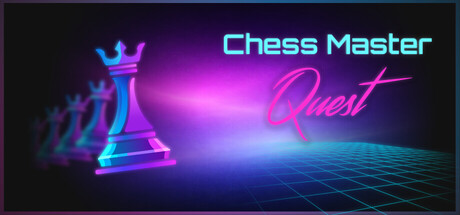
Chess Master Quest was developed by a solo developer with assistance from generative AI tools during development.
• Code: AI coding assistants (GitHub Copilot, Claude) were used to help write and refine parts of the game code. All code was reviewed and tested by the developer.
• Text: AI was used to help draft and edit some in-game text, including puzzle annotations and educational commentary. All text was reviewed and edited by the developer.
No AI-generated visual art or music is used in the game. Chess piece graphics are open-source vector assets. Store capsule images and artwork were created by a professional artist. The chess engine (Stockfish) is traditional software, not generative AI. No content is generated by AI at runtime during gameplay.
This game analyzes and evaluates images input by the user using a Visual Language Model, and outputs the results as text.
This game contains ai (grok) generated graphic assets.
The Steam library and store pages use AI generated graphic elements, but the game itself doesn't. All graphics in the game are hand made, created by our graphics designer in our self developed editor.
Generative AI was used to create several environmental textures (such as stone and ground textures), some ui elements (such as buttons and icons), Capsule and Library images in Steam. All AI-generated content was manually reviewed and refined by the developer to ensure quality and compliance.
Some visible in-game assets, including but not limited to cutscenes, characters, environments, and UI elements, were created or visually enhanced with the help of AI, including generation based on white model references.
Some store page assets were also created or visually enhanced with the help of AI, including generation based on white model references.
Some music and sound effects were generated with the help of AI.
Some localized language content was translated with the help of AI.
Some development assistance tools based on generative AI were used during the creation of this game, including help with programming and text drafting.
No AI-generated content is produced during gameplay.
This game uses AI to assist in generating [art assets/localized text/voice dubbing]. All AI-generated content has been manually reviewed and modified to ensure compliance with regulations and the game's world setting.
Generative AI was used to create certain 2D background assets within the game world. This includes some family group photographs used as props, visuals shown on in-game television screens, and decorative wall posters. These AI-generated elements are static environmental assets only and were not used for in-game cinematics, character models, or animations.
None of the assets seen or heard in the game have been generated by AI, but AI generated images and music have been used when ideating the finished content created by humans.
AI has been used to help in the coding process and localisation, but everything has been always checked (if not created) by at least one human. Localisations usually have been created by one person and checked by another to assure quality of translations.
Some of the music/sound effects in this game were arranged or edited with the assistance of generative AI tools. All AI-generated audio was reviewed and curated by the development team.
This game uses pre-generated visual assets, including images and cinematic sequences created with external tools. These assets are used for environmental storytelling and menu presentation, and do not involve real-time AI generation.
AI is only used to create art assets, backgrounds, and visual materials during the development of the game. It is not used for any in-game mechanics, NPC behaviors, or real-time interactions with players.
Some of the pre-made visual elements used in Quadrix—including certain card images/templates, game music, and some game mode icons—were created with the help of generative AI tools. These elements were reviewed, selected, and refined by the developer before being added to the game to ensure they align with the game’s visual style and usability requirements. Quadrix does not use real-time generative AI during gameplay, and players cannot generate AI-generated content within the game.
Some background scenes, supporting character artwork, music, and localization text in this game were created with the assistance of AI generation tools. All main character artwork, UI design, and core visual assets were created by human artists.
The game features a multilingual system, with some languages processed using AI.
Some UI elements and game scene components were designed with AI assistance.
Game plugin code was processed using AI.
Some game music, sound effects, and trailer music were also processed using AI.
Some content in this game, such as text, translations, or visual elements, was initially generated with the assistance of AI tools and later reviewed, edited, and integrated by the developer. All final content was curated to ensure it fits the game's narrative, style, and quality standards.
I used standard agentic tools for things like translation and making simple icons. Some images/effects were created with Stable Diffusion XL Base 1.0 (sd_xl_base_1.0.safetensors). The background music I iterated on with a local ACE-Step setup.
Visual Content: Generative AI was used to create the base visual concepts and illustrations for the puzzles. These images were then manually edited and refined to ensure they fit the historical context and game style.
Programming: AI tools were used to assist in code optimization and the implementation of localization systems.
Marketing: AI assisted in creating graphic assets for the Steam Store page (e.g., store banners).
All AI-assisted content has been carefully reviewed and manually post-processed to ensure quality and compliance with copyright standards.
This game utilizes generative AI tools to assist and enhance various aspects of our creative process. Specifically, AI technologies were employed to help design and refine visual artwork, generate dynamic variations of select musical tracks, assist in the editing of specific in-game assets, and support our localization efforts across multiple languages
Artificial intelligence tools were used during certain stages of the development of The Letter as supportive tools to assist the creative process. AI was primarily utilized for concept ideation, early visual references, and iterative design exploration.
These tools helped accelerate prototyping, generate visual inspiration, and assist with writing drafts during early development phases. However, all core gameplay systems, narrative design, environmental storytelling, and final artistic direction were created, reviewed, and curated by the developer.
AI tools were used as creative assistants rather than autonomous content generators, ensuring that the final experience remains a carefully crafted and human-directed project.
The development of the game was supported by AI in some areas to improve efficiency and quality. AI was used to write code and debug, as well as for performance optimization. It also contributed to the creation of 2D graphics for the shop area and the generation of background sounds. In addition, AI played a role in automating translations thus contributing to the realization of the game for a single developer.
The images for the steam store were created using concept images, some of which were ai-generated.
And the text for the steam store page was translated using google translate. Except for english, dutch/nederlands, and german/deutsch.
Chess Master Quest was developed by a solo developer with assistance from generative AI tools during development.
• Code: AI coding assistants (GitHub Copilot, Claude) were used to help write and refine parts of the game code. All code was reviewed and tested by the developer.
• Text: AI was used to help draft and edit some in-game text, including puzzle annotations and educational commentary. All text was reviewed and edited by the developer.
No AI-generated visual art or music is used in the game. Chess piece graphics are open-source vector assets. Store capsule images and artwork were created by a professional artist. The chess engine (Stockfish) is traditional software, not generative AI. No content is generated by AI at runtime during gameplay.
This game analyzes and evaluates images input by the user using a Visual Language Model, and outputs the results as text.
This game contains ai (grok) generated graphic assets.
The Steam library and store pages use AI generated graphic elements, but the game itself doesn't. All graphics in the game are hand made, created by our graphics designer in our self developed editor.
Generative AI was used to create several environmental textures (such as stone and ground textures), some ui elements (such as buttons and icons), Capsule and Library images in Steam. All AI-generated content was manually reviewed and refined by the developer to ensure quality and compliance.
Some visible in-game assets, including but not limited to cutscenes, characters, environments, and UI elements, were created or visually enhanced with the help of AI, including generation based on white model references.
Some store page assets were also created or visually enhanced with the help of AI, including generation based on white model references.
Some music and sound effects were generated with the help of AI.
Some localized language content was translated with the help of AI.
Some development assistance tools based on generative AI were used during the creation of this game, including help with programming and text drafting.
No AI-generated content is produced during gameplay.
This game uses AI to assist in generating [art assets/localized text/voice dubbing]. All AI-generated content has been manually reviewed and modified to ensure compliance with regulations and the game's world setting.
Generative AI was used to create certain 2D background assets within the game world. This includes some family group photographs used as props, visuals shown on in-game television screens, and decorative wall posters. These AI-generated elements are static environmental assets only and were not used for in-game cinematics, character models, or animations.
None of the assets seen or heard in the game have been generated by AI, but AI generated images and music have been used when ideating the finished content created by humans.
AI has been used to help in the coding process and localisation, but everything has been always checked (if not created) by at least one human. Localisations usually have been created by one person and checked by another to assure quality of translations.
Some of the music/sound effects in this game were arranged or edited with the assistance of generative AI tools. All AI-generated audio was reviewed and curated by the development team.
This game uses pre-generated visual assets, including images and cinematic sequences created with external tools. These assets are used for environmental storytelling and menu presentation, and do not involve real-time AI generation.
AI is only used to create art assets, backgrounds, and visual materials during the development of the game. It is not used for any in-game mechanics, NPC behaviors, or real-time interactions with players.
Some of the pre-made visual elements used in Quadrix—including certain card images/templates, game music, and some game mode icons—were created with the help of generative AI tools. These elements were reviewed, selected, and refined by the developer before being added to the game to ensure they align with the game’s visual style and usability requirements. Quadrix does not use real-time generative AI during gameplay, and players cannot generate AI-generated content within the game.
Some background scenes, supporting character artwork, music, and localization text in this game were created with the assistance of AI generation tools. All main character artwork, UI design, and core visual assets were created by human artists.
The game features a multilingual system, with some languages processed using AI.
Some UI elements and game scene components were designed with AI assistance.
Game plugin code was processed using AI.
Some game music, sound effects, and trailer music were also processed using AI.