Public Steam disclosure research25,508 disclosures tracked
Where do games disclose AI use?
Search developers’ Steam disclosures, compare classified AI use across
games, and follow recorded changes.
This index adds cross-game classifications and statistics to
statements published on individual store pages.
Groups reflect automatic analysis of public disclosures; mature records are excluded. These counts do not measure AI use across all of Steam.
Missing or unclear statements cannot establish whether a game uses AI.
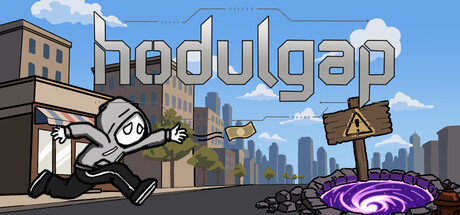
Some visual assets in HODULGAP were created with the assistance of generative AI tools during development, including early concept art, sprite bases, icons, and visual effects. These assets are manually edited, simplified, cleaned up, and adjusted by the developer before being included in the game.
HODULGAP does not use AI to generate content during gameplay. Music and sound effects are sourced from non-AI asset libraries.
Some of this game's content was created with the help of generative AI tools, including certain illustrations, in-game background art, and portions of the in-game text and its translations. All AI-generated content was produced during development and reviewed by the developer before release. The game does not generate any content in real time during play.
We use AI to translate the store steam page to different languages. This will be changed on release and we will hire professional translators for this purpose.
Some promotional artwork and achievement icons were created using generative AI and then manually edited by the developer. No gameplay content is generated by AI.
Disclosure of Generative AI:
This game incorporates content generated by artificial intelligence. Specifically, we used AI tools to create certain background images, marketing assets, and to assist with localization. Please note that all AI-generated content undergoes human review, modification, and optimization before being included in the game or on this store page.
Parts of this game were made with the help of generative AI tools. The music and sound effects were created using AI audio generation, then selected, edited, and mixed by us — they ship as fixed assets, not content generated live while you play.
We also used AI-assisted coding tools (such as code autocomplete and programming assistants) during development. Every line that ships was reviewed, tested, and integrated by us; the AI sped up routine work while the design, architecture, and final decisions remained human-led.
The game does not run any AI or collect player data during gameplay.
The game uses generative artificial intelligence to create some of its images, and a portion of the visual content was produced with AI tools, but all such assets have been reviewed to ensure they do not infringe copyrights and comply with Steam’s rules.
Generative AI was used as a supporting tool during the creation of some of the Steam Community assets, with all AI-generated images being carefully refined and significantly reworked by a professional graphic artist. The game itself (and all in-game artwork) was created entirely by human developers and artists, without the use of generative AI.
Localisation: The game's interface text was localised into 11 languages (French, Spanish (Latin America), Italian, German, Portuguese (Brazil), Russian, Simplified Chinese, Korean, Japanese, Polish, Turkish) with the assistance of AI tools. All original English source text was written by the developer.
Voice-over: Some in-game voice-over was created using AI voice generation, used alongside recordings from real voice artists.
Music: Two background music tracks heard on in-game radios were generated with AI tools, then filtered and edited by the developer in FL Studio.
Store art: The capsule artwork combines a hand-made logo created by a commissioned artist with an AI-generated background.
Approximately 90% of Haunted House's content (art, text, narrative, game design, and code) is AI-generated, using ComfyUI / Stable Diffusion with custom LoRA, LLMs, and AI coding assistants. All AI outputs are reviewed, edited, and integrated by Hoppy, the sole developer. Music and sound effects are licensed, not AI-generated. No voice acting. Final creative direction and decisions are by Hoppy.
Some of the game's visual assets (boss artwork, item icons, background illustrations) and store page imagery were created using generative AI tools, then integrated and refined by hand. Gameplay design, balancing, and integration are done manually.
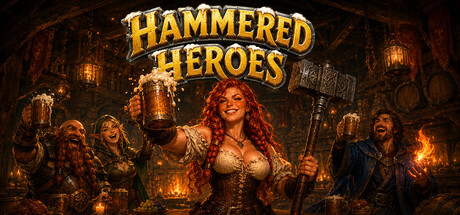
Hammered Heroes is a solo-developed game, with all design, direction, and gameplay built by one developer. Some 2D art assets (such as sprites and capsule art) were created with the help of generative AI image tools, then edited and assembled by the developer.
During development, some of the game's art assets (including icons, UI elements, scene backgrounds, and character visuals) were created with the help of AI image-generation tools, then curated, adjusted, and integrated by hand. The game does not generate any AI content in real time during play.
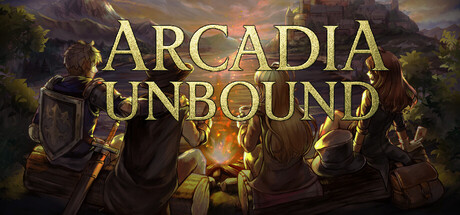
Arcadia Unbound does not use AI-generated artwork, music, sound effects, voice acting, story content, quests, localization, or character dialogue.
Arcadia Unbound uses a locally running language model as part of the AURA Framework to interpret player speech during specific conversation sequences. The model analyzes player intent and conversational context, and then selects from developer-authored dialogue responses and narrative outcomes.
All artwork, music, voice acting, story content, character dialogue, and gameplay content presented to players are created and curated by the development team and performed by professional voice actors where applicable. No AI system generates any type of dialogue, story events, artwork, audio, or player-facing content.
This game used generative AI tools as an aid in creating some of its visual assets, such as background illustrations and character/environment pixel art. All AI-generated output was reviewed, refined, and edited by the developer before being included in the game. No content is generated by AI in real time during gameplay.
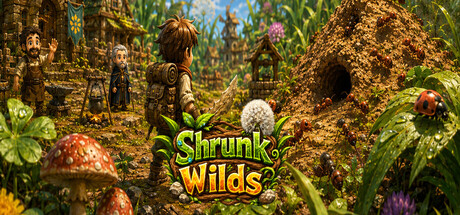
Some visual assets and artwork used during the development of Shrunk Wilds were created with the assistance of AI image generation tools. All generated assets are manually reviewed, modified, and curated by the developer before being implemented into the game. Players do not interact with AI systems during gameplay, and the game does not generate content in real time.
Generative AI was used during development to assist with creating some art assets, music, sound effects, gameplay prototypes, text, and code iteration. All AI-generated content used in the game has been manually reviewed, edited, integrated, and tested before inclusion.
Built by a two-person studio, The Last Banner deploys AI tools as supplements only. All art and code are curated, hand crafted and built by us. We strive to create the best game possible with the best tools of the modern day.
Generative AI was used to assist in the creation of certain UI icons and interface artwork. All generated content was reviewed, modified, and integrated by the developer before being used in the game.
Some store page text, promotional materials, localization support, and selected visual assets may be created or assisted by generative AI tools. All AI-assisted content is reviewed and edited by Demona Vosz before publication. Vanya Online does not use generative AI to create live content during gameplay.
Deeprise is a solo-developed indie game. Generative AI was used as a tool in the creation of this game, specifically for:
- Concept art and illustrations (character portraits, enemy designs, environment backgrounds, building art, item icons, and research card art), generated with AI image tools and curated, edited, and integrated by the developer.
- Sound effects and voicelines, generated with AI audio tools using developer-written scripts and prompts.
- Capsule art and store page imagery, created by compositing AI-generated assets with developer-designed layouts.
All game design, systems, code, writing, lore, and creative direction are the developer's own work. AI was used to bring this solo project to a visual and audio polish that would otherwise be out of reach for a single developer, and every AI-generated asset was reviewed, selected, and integrated by hand.
The Darkened Northern Lights uses generative AI to help create some of the content that ships with the game:
Artwork: many of the game's pixel-art characters and graphics were made with the help of an AI art tool.
Sound: some of the game's audio was created with the help of AI.
Text and localization: parts of the game's text and its Finnish and English translations were produced with the help of AI.
All of this content was reviewed by the developer and is fixed - it does not change while you play. The game does not generate any content live during gameplay. An optional feature that generates extra storybook tales may be added in a future update; if so, this notice will be updated.
Some of the visual assets in Anime Draft Survivors — including character and enemy artwork, stage backgrounds, UI ornamentation, marketing/capsule images and some audio, were created with the help of generative AI image tools, then hand edited, composited, and integrated by the developer. All game code, design, and gameplay systems are human authored. All AI assisted content is pre-rendered and fixed in the build; the game does not generate any content live during gameplay.
While developing this game I used AI Tools to assist in many aspects of the game creation process. I used MidJourney to create background images, Mureka to create the sound track, and Ludo to generate sprites.
All game design, logic, formulas, gameplay modes, powers, balancing, etc. I handled myself over months of development time.
Some visual assets in this game were created with the assistance of generative AI tools, including UI icons, skill and relic icons, character portraits and sprites, combat VFX, dungeon tile art, and menu and interface decoration. All generated images were reviewed, edited, and integrated by the development team.
This game utilizes generative AI tools as an assisting tool for creating various assets, including Artwork (Character portraits, backgrounds, and some UI elements), Sound (BGM and effects), and Text (localization).
AI was also used to assist in programming and debugging. All assets were carefully selected by the developer, and the core gameplay systems, balance, boss design, and all strategic features were entirely designed and implemented by hand.
During the early stages of development, generative AI was used to create prototypes for some visual assets. These assets were manually redrawn and revised by the developer before being included in the game.
Some visual assets in HODULGAP were created with the assistance of generative AI tools during development, including early concept art, sprite bases, icons, and visual effects. These assets are manually edited, simplified, cleaned up, and adjusted by the developer before being included in the game.
HODULGAP does not use AI to generate content during gameplay. Music and sound effects are sourced from non-AI asset libraries.
Some of this game's content was created with the help of generative AI tools, including certain illustrations, in-game background art, and portions of the in-game text and its translations. All AI-generated content was produced during development and reviewed by the developer before release. The game does not generate any content in real time during play.
We use AI to translate the store steam page to different languages. This will be changed on release and we will hire professional translators for this purpose.
Some promotional artwork and achievement icons were created using generative AI and then manually edited by the developer. No gameplay content is generated by AI.
Disclosure of Generative AI:
This game incorporates content generated by artificial intelligence. Specifically, we used AI tools to create certain background images, marketing assets, and to assist with localization. Please note that all AI-generated content undergoes human review, modification, and optimization before being included in the game or on this store page.
Parts of this game were made with the help of generative AI tools. The music and sound effects were created using AI audio generation, then selected, edited, and mixed by us — they ship as fixed assets, not content generated live while you play.
We also used AI-assisted coding tools (such as code autocomplete and programming assistants) during development. Every line that ships was reviewed, tested, and integrated by us; the AI sped up routine work while the design, architecture, and final decisions remained human-led.
The game does not run any AI or collect player data during gameplay.
The game uses generative artificial intelligence to create some of its images, and a portion of the visual content was produced with AI tools, but all such assets have been reviewed to ensure they do not infringe copyrights and comply with Steam’s rules.
Generative AI was used as a supporting tool during the creation of some of the Steam Community assets, with all AI-generated images being carefully refined and significantly reworked by a professional graphic artist. The game itself (and all in-game artwork) was created entirely by human developers and artists, without the use of generative AI.
Localisation: The game's interface text was localised into 11 languages (French, Spanish (Latin America), Italian, German, Portuguese (Brazil), Russian, Simplified Chinese, Korean, Japanese, Polish, Turkish) with the assistance of AI tools. All original English source text was written by the developer.
Voice-over: Some in-game voice-over was created using AI voice generation, used alongside recordings from real voice artists.
Music: Two background music tracks heard on in-game radios were generated with AI tools, then filtered and edited by the developer in FL Studio.
Store art: The capsule artwork combines a hand-made logo created by a commissioned artist with an AI-generated background.
Approximately 90% of Haunted House's content (art, text, narrative, game design, and code) is AI-generated, using ComfyUI / Stable Diffusion with custom LoRA, LLMs, and AI coding assistants. All AI outputs are reviewed, edited, and integrated by Hoppy, the sole developer. Music and sound effects are licensed, not AI-generated. No voice acting. Final creative direction and decisions are by Hoppy.
Some of the game's visual assets (boss artwork, item icons, background illustrations) and store page imagery were created using generative AI tools, then integrated and refined by hand. Gameplay design, balancing, and integration are done manually.
Hammered Heroes is a solo-developed game, with all design, direction, and gameplay built by one developer. Some 2D art assets (such as sprites and capsule art) were created with the help of generative AI image tools, then edited and assembled by the developer.
During development, some of the game's art assets (including icons, UI elements, scene backgrounds, and character visuals) were created with the help of AI image-generation tools, then curated, adjusted, and integrated by hand. The game does not generate any AI content in real time during play.
Arcadia Unbound does not use AI-generated artwork, music, sound effects, voice acting, story content, quests, localization, or character dialogue.
Arcadia Unbound uses a locally running language model as part of the AURA Framework to interpret player speech during specific conversation sequences. The model analyzes player intent and conversational context, and then selects from developer-authored dialogue responses and narrative outcomes.
All artwork, music, voice acting, story content, character dialogue, and gameplay content presented to players are created and curated by the development team and performed by professional voice actors where applicable. No AI system generates any type of dialogue, story events, artwork, audio, or player-facing content.
This game used generative AI tools as an aid in creating some of its visual assets, such as background illustrations and character/environment pixel art. All AI-generated output was reviewed, refined, and edited by the developer before being included in the game. No content is generated by AI in real time during gameplay.
Some visual assets and artwork used during the development of Shrunk Wilds were created with the assistance of AI image generation tools. All generated assets are manually reviewed, modified, and curated by the developer before being implemented into the game. Players do not interact with AI systems during gameplay, and the game does not generate content in real time.
Generative AI was used during development to assist with creating some art assets, music, sound effects, gameplay prototypes, text, and code iteration. All AI-generated content used in the game has been manually reviewed, edited, integrated, and tested before inclusion.
Built by a two-person studio, The Last Banner deploys AI tools as supplements only. All art and code are curated, hand crafted and built by us. We strive to create the best game possible with the best tools of the modern day.
Generative AI was used to assist in the creation of certain UI icons and interface artwork. All generated content was reviewed, modified, and integrated by the developer before being used in the game.
Some store page text, promotional materials, localization support, and selected visual assets may be created or assisted by generative AI tools. All AI-assisted content is reviewed and edited by Demona Vosz before publication. Vanya Online does not use generative AI to create live content during gameplay.
Deeprise is a solo-developed indie game. Generative AI was used as a tool in the creation of this game, specifically for:
- Concept art and illustrations (character portraits, enemy designs, environment backgrounds, building art, item icons, and research card art), generated with AI image tools and curated, edited, and integrated by the developer.
- Sound effects and voicelines, generated with AI audio tools using developer-written scripts and prompts.
- Capsule art and store page imagery, created by compositing AI-generated assets with developer-designed layouts.
All game design, systems, code, writing, lore, and creative direction are the developer's own work. AI was used to bring this solo project to a visual and audio polish that would otherwise be out of reach for a single developer, and every AI-generated asset was reviewed, selected, and integrated by hand.
The Darkened Northern Lights uses generative AI to help create some of the content that ships with the game:
Artwork: many of the game's pixel-art characters and graphics were made with the help of an AI art tool.
Sound: some of the game's audio was created with the help of AI.
Text and localization: parts of the game's text and its Finnish and English translations were produced with the help of AI.
All of this content was reviewed by the developer and is fixed - it does not change while you play. The game does not generate any content live during gameplay. An optional feature that generates extra storybook tales may be added in a future update; if so, this notice will be updated.
Some of the visual assets in Anime Draft Survivors — including character and enemy artwork, stage backgrounds, UI ornamentation, marketing/capsule images and some audio, were created with the help of generative AI image tools, then hand edited, composited, and integrated by the developer. All game code, design, and gameplay systems are human authored. All AI assisted content is pre-rendered and fixed in the build; the game does not generate any content live during gameplay.
While developing this game I used AI Tools to assist in many aspects of the game creation process. I used MidJourney to create background images, Mureka to create the sound track, and Ludo to generate sprites.
All game design, logic, formulas, gameplay modes, powers, balancing, etc. I handled myself over months of development time.
Some visual assets in this game were created with the assistance of generative AI tools, including UI icons, skill and relic icons, character portraits and sprites, combat VFX, dungeon tile art, and menu and interface decoration. All generated images were reviewed, edited, and integrated by the development team.
This game utilizes generative AI tools as an assisting tool for creating various assets, including Artwork (Character portraits, backgrounds, and some UI elements), Sound (BGM and effects), and Text (localization).
AI was also used to assist in programming and debugging. All assets were carefully selected by the developer, and the core gameplay systems, balance, boss design, and all strategic features were entirely designed and implemented by hand.
During the early stages of development, generative AI was used to create prototypes for some visual assets. These assets were manually redrawn and revised by the developer before being included in the game.