Public Steam disclosure research25,695 disclosures tracked
Where do games disclose AI use?
Search developers’ Steam disclosures, compare classified AI use across
games, and follow recorded changes.
This index adds cross-game classifications and statistics to
statements published on individual store pages.
Groups reflect automatic analysis of public disclosures; mature records are excluded. These counts do not measure AI use across all of Steam.
Missing or unclear statements cannot establish whether a game uses AI.
Description of the Game’s Use of AI
Our game does not use generative AI to create gameplay behavior or influence player decisions. All narrative content, character behavior, dialogue, level design, and artistic direction are hand-crafted by the developer.
We only use AI in limited, non-gameplay ways, such as:
Development assistance (e.g., debugging or improving scripts).
Optional asset prototyping (concept sketches used as early references before creating final assets).
No AI systems interact with the player during gameplay, and no player data is used to train AI models.
The in-game guidance, character responses, and story progression are fully authored, not generated dynamically by AI.
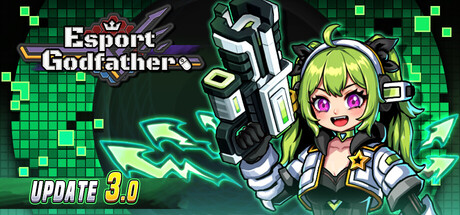
In our game development process, we have adopted AI technology to generate art content, mainly for the character portraits of esports players and illustrations in game events. We hope to provide players with richer and more diverse character portraits, but considering the economic, manpower, and time aspects, we find it difficult to afford a large amount of hand-drawn content. We have tried to separate parts such as the mouth, face, and nose, and then assemble them into 3D characters, but the effect was not satisfactory.
Therefore, we decided to try a new method: using AI to generate these contents. We used some of the content we had created before to train the AI model, allowing it to learn and understand the art style and requirements we want. Now, all the AI-generated character portraits and illustrations in the game are made by our trained model, and after completion, we also manually correct them.
We deeply understand that AI cannot replace the creativity and uniqueness of real artists. For this, we feel very sorry, but we also promise you that “Esports Godfather” is not a work without sincerity. We have spent a tremendous amount of time polishing innovative gameplay and various experience content. In these four and a half years, we have been committed to completing a work that satisfies everyone.
We hope you can understand our decision and continue to support our game. We will continue to work hard to provide you with a better gaming experience.
Used AI powered video editing tool to animate the static images of our Rico Character and Sky Marshal. We used all our fully contracted and paid for existing content and images we had with these actors from our original recording sessions. No new AI content was generated.
The package image of this game was created using multiple AI tools.
Part of the background image and background character: Created using Stable Diffusion and provided under the CreativeML Open RAIL-M license.
Part of the logo design: Created by Sonic-Alpha using OpenAI's generative AI, "ChatGPT," under the paid "ChatGPT Plus" plan.
No AI-generated elements are included in the main game or in-game content.
The package image of this game was created using multiple AI tools.
Part of the background image and background character: Created using Stable Diffusion and provided under the CreativeML Open RAIL-M license.
Part of the logo design: Created by Sonic-Alpha using OpenAI's generative AI, "ChatGPT," under the paid "ChatGPT Plus" plan.
No AI-generated elements are included in the main game or in-game content.
In-game patient responses are generated in real time with offline local language model. Game logo animation and part of game music samples/loops have been produced with tools utilizing generative technology.
The package image of this game was created using multiple AI tools.
Part of the background image and background character: Created using Stable Diffusion and provided under the CreativeML Open RAIL-M license.
Part of the logo design: Created by Sonic-Alpha using OpenAI's generative AI, "ChatGPT," under the paid "ChatGPT Plus" plan.
No AI-generated elements are included in the main game or in-game content.
Generative AI was used to generate images for Store Capsule Assets and Library Capsule, Header, and Hero Assets. The game screenshots and gameplay footage (trailer) were not generated by AI and are unaffected by any AI.
The storefront Logo for this game was created with the help of AI-assisted tools and was then further developed through manual work — modified, improved, and integrated to align with the game’s overall style and vision. No other AI generation was used in the development of this game.
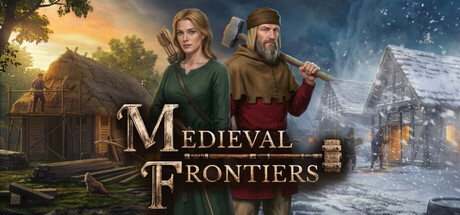
Some game content, marketing materials, and character voices for Medieval Frontiers were created or translated with the assistance of AI tools. While we use these technologies to support our workflow, every feature and narrative beat is a result of our team’s deliberate creative decisions. The final experience is hand-guided by our vision to ensure the world feels authentic to our players.
AI tools were used in the production of the voice acting. We are a five-person team that has been working on this project for several years without the budget of a large studio. In our case, this was a practical solution that allowed us to complete the game at the level of quality we were aiming for. All creative decisions and the final shape of the game were made by our team. AI was used as a supporting production tool, not as a replacement for the creative work behind the game.
Using LLM Code Agent for indie development speed up (no "VIBE CODING", it's originally human made project in 2012-2025, author starts using LLM as smart assistant code edit tool since December 2025)
AI stock images and generative AI content is occasionally used in the development process of art assets we use for things like, but not limited to, event themes.
The Art Director chose a composition for each background.
They were then made by professional artists or, for a few, bought on Adobe Stock.
Finally, the art director enhanced each background in Photoshop and also through LeonardoAI.
AI was used to generate the images of the characters in the default in-game database. There is also a 100% optional, opt-in only AI Chatbot assistant that can help provide booking ideas.
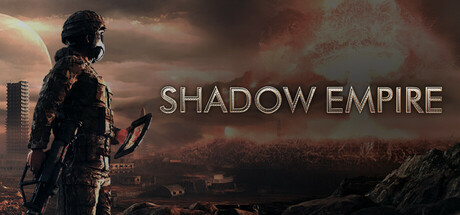
Usage of AI-Generated and Assisted Illustrations in Shadow Empire
Post-release Illustration Creation Process
The developers use Midjourney and Nano Banana to generate high-resolution illustrations for new functionality added post-release, particularly for Vidcom and Stratagem artwork.
These images are often post-processed by hand, as well as enhanced using tools like Magnific, Topaz Labs, or other upscaling and refinement software.
AI in Post-release Portrait Art
Portraits: A base image is generated using Midjourney with a generic prompt such as “portrait of young woman, military.”
Smaller parts (eyes, nose, mouth, hair, etc.) are overlaid using DALL·E to create variations.
Aging effects are achieved by rendering an older skin texture with partial transparency over the younger base face. The older the character, the more opaque the overlay becomes. (Note: Eyes and lips often retain a youthful appearance.)
This effect is gradually applied using a limited number of sprite layers, allowing nuanced visual transitions.
AI-Generated Art in Post-release Game Content
The game includes AI-generated and AI-assisted illustrations for Vidcoms and Stratagems.
All such AI-generated art is pre-generated — no generative AI tools are called or used in real-time by the game itself.
The intention is to provide players with an option to toggle between the original and updated AI-enhanced graphics via preferences. (Note: This is an aim and may not yet apply to all content.)
The package image of this game was created using multiple AI tools.
Background image and part of the background character: Created using Stable Diffusion and provided under the CreativeML Open RAIL-M license.
Part of the logo design: Created by Sonic-Alpha using OpenAI's generative AI, "ChatGPT," under the paid "ChatGPT Plus" plan.
No AI-generated elements are included in the main game or in-game content.
All in-game content is created and authored by the development team.
Like most modern game development, our tools and software may include AI-assisted features for internal workflows such as iteration, editing, or placeholder experimentation. These tools do not generate final player-facing content.
We have used in-house AI models to generate background assets, font, and some voices.
We will continue to advance the practical application of AI in art creation. To discuss the latest progress in this field, welcome to contact us.
The package image of this game was created using multiple AI tools.
Part of the background image and background character: Created using Stable Diffusion and provided under the CreativeML Open RAIL-M license.
Part of the logo design: Created by Sonic-Alpha using OpenAI's generative AI, "ChatGPT," under the paid "ChatGPT Plus" plan.
No AI-generated elements are included in the main game or in-game content.
The package image of this game was created using multiple AI tools.
Part of the background image and background character: Created using Stable Diffusion and provided under the CreativeML Open RAIL-M license.
Part of the logo design: Created by Sonic-Alpha using OpenAI's generative AI, "ChatGPT," under the paid "ChatGPT Plus" plan.
No AI-generated elements are included in the main game or in-game content.
Parts of this game’s package image (including part of the logo design and part of the background image) were created by Sonic-Alpha using OpenAI's "ChatGPT Plus." No AI-generated elements are included in the main game or in-game content.
This game has used AI to partially create the following art assets:
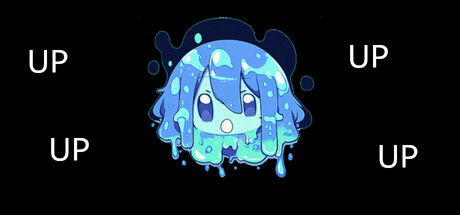
Slime character, Chain, Ball, Slime picture from the menu's and the slime imagery on steam.
The 2D character portraits (standing illustrations) in the game were created using Stable Diffusion and are provided under the CreativeML Open RAIL-M license.
Description of the Game’s Use of AI
Our game does not use generative AI to create gameplay behavior or influence player decisions. All narrative content, character behavior, dialogue, level design, and artistic direction are hand-crafted by the developer.
We only use AI in limited, non-gameplay ways, such as:
Development assistance (e.g., debugging or improving scripts).
Optional asset prototyping (concept sketches used as early references before creating final assets).
No AI systems interact with the player during gameplay, and no player data is used to train AI models.
The in-game guidance, character responses, and story progression are fully authored, not generated dynamically by AI.
In our game development process, we have adopted AI technology to generate art content, mainly for the character portraits of esports players and illustrations in game events. We hope to provide players with richer and more diverse character portraits, but considering the economic, manpower, and time aspects, we find it difficult to afford a large amount of hand-drawn content. We have tried to separate parts such as the mouth, face, and nose, and then assemble them into 3D characters, but the effect was not satisfactory.
Therefore, we decided to try a new method: using AI to generate these contents. We used some of the content we had created before to train the AI model, allowing it to learn and understand the art style and requirements we want. Now, all the AI-generated character portraits and illustrations in the game are made by our trained model, and after completion, we also manually correct them.
We deeply understand that AI cannot replace the creativity and uniqueness of real artists. For this, we feel very sorry, but we also promise you that “Esports Godfather” is not a work without sincerity. We have spent a tremendous amount of time polishing innovative gameplay and various experience content. In these four and a half years, we have been committed to completing a work that satisfies everyone.
We hope you can understand our decision and continue to support our game. We will continue to work hard to provide you with a better gaming experience.
Used AI powered video editing tool to animate the static images of our Rico Character and Sky Marshal. We used all our fully contracted and paid for existing content and images we had with these actors from our original recording sessions. No new AI content was generated.
The package image of this game was created using multiple AI tools.
Part of the background image and background character: Created using Stable Diffusion and provided under the CreativeML Open RAIL-M license.
Part of the logo design: Created by Sonic-Alpha using OpenAI's generative AI, "ChatGPT," under the paid "ChatGPT Plus" plan.
No AI-generated elements are included in the main game or in-game content.
The package image of this game was created using multiple AI tools.
Part of the background image and background character: Created using Stable Diffusion and provided under the CreativeML Open RAIL-M license.
Part of the logo design: Created by Sonic-Alpha using OpenAI's generative AI, "ChatGPT," under the paid "ChatGPT Plus" plan.
No AI-generated elements are included in the main game or in-game content.
In-game patient responses are generated in real time with offline local language model. Game logo animation and part of game music samples/loops have been produced with tools utilizing generative technology.
The package image of this game was created using multiple AI tools.
Part of the background image and background character: Created using Stable Diffusion and provided under the CreativeML Open RAIL-M license.
Part of the logo design: Created by Sonic-Alpha using OpenAI's generative AI, "ChatGPT," under the paid "ChatGPT Plus" plan.
No AI-generated elements are included in the main game or in-game content.
Generative AI was used to generate images for Store Capsule Assets and Library Capsule, Header, and Hero Assets. The game screenshots and gameplay footage (trailer) were not generated by AI and are unaffected by any AI.
The storefront Logo for this game was created with the help of AI-assisted tools and was then further developed through manual work — modified, improved, and integrated to align with the game’s overall style and vision. No other AI generation was used in the development of this game.
Some game content, marketing materials, and character voices for Medieval Frontiers were created or translated with the assistance of AI tools. While we use these technologies to support our workflow, every feature and narrative beat is a result of our team’s deliberate creative decisions. The final experience is hand-guided by our vision to ensure the world feels authentic to our players.
AI tools were used in the production of the voice acting. We are a five-person team that has been working on this project for several years without the budget of a large studio. In our case, this was a practical solution that allowed us to complete the game at the level of quality we were aiming for. All creative decisions and the final shape of the game were made by our team. AI was used as a supporting production tool, not as a replacement for the creative work behind the game.
Using LLM Code Agent for indie development speed up (no "VIBE CODING", it's originally human made project in 2012-2025, author starts using LLM as smart assistant code edit tool since December 2025)
AI stock images and generative AI content is occasionally used in the development process of art assets we use for things like, but not limited to, event themes.
The Art Director chose a composition for each background.
They were then made by professional artists or, for a few, bought on Adobe Stock.
Finally, the art director enhanced each background in Photoshop and also through LeonardoAI.
AI was used to generate the images of the characters in the default in-game database. There is also a 100% optional, opt-in only AI Chatbot assistant that can help provide booking ideas.
Usage of AI-Generated and Assisted Illustrations in Shadow Empire
Post-release Illustration Creation Process
The developers use Midjourney and Nano Banana to generate high-resolution illustrations for new functionality added post-release, particularly for Vidcom and Stratagem artwork.
These images are often post-processed by hand, as well as enhanced using tools like Magnific, Topaz Labs, or other upscaling and refinement software.
AI in Post-release Portrait Art
Portraits: A base image is generated using Midjourney with a generic prompt such as “portrait of young woman, military.”
Smaller parts (eyes, nose, mouth, hair, etc.) are overlaid using DALL·E to create variations.
Aging effects are achieved by rendering an older skin texture with partial transparency over the younger base face. The older the character, the more opaque the overlay becomes. (Note: Eyes and lips often retain a youthful appearance.)
This effect is gradually applied using a limited number of sprite layers, allowing nuanced visual transitions.
AI-Generated Art in Post-release Game Content
The game includes AI-generated and AI-assisted illustrations for Vidcoms and Stratagems.
All such AI-generated art is pre-generated — no generative AI tools are called or used in real-time by the game itself.
The intention is to provide players with an option to toggle between the original and updated AI-enhanced graphics via preferences. (Note: This is an aim and may not yet apply to all content.)
The package image of this game was created using multiple AI tools.
Background image and part of the background character: Created using Stable Diffusion and provided under the CreativeML Open RAIL-M license.
Part of the logo design: Created by Sonic-Alpha using OpenAI's generative AI, "ChatGPT," under the paid "ChatGPT Plus" plan.
No AI-generated elements are included in the main game or in-game content.
All in-game content is created and authored by the development team.
Like most modern game development, our tools and software may include AI-assisted features for internal workflows such as iteration, editing, or placeholder experimentation. These tools do not generate final player-facing content.
We have used in-house AI models to generate background assets, font, and some voices.
We will continue to advance the practical application of AI in art creation. To discuss the latest progress in this field, welcome to contact us.
The package image of this game was created using multiple AI tools.
Part of the background image and background character: Created using Stable Diffusion and provided under the CreativeML Open RAIL-M license.
Part of the logo design: Created by Sonic-Alpha using OpenAI's generative AI, "ChatGPT," under the paid "ChatGPT Plus" plan.
No AI-generated elements are included in the main game or in-game content.
The package image of this game was created using multiple AI tools.
Part of the background image and background character: Created using Stable Diffusion and provided under the CreativeML Open RAIL-M license.
Part of the logo design: Created by Sonic-Alpha using OpenAI's generative AI, "ChatGPT," under the paid "ChatGPT Plus" plan.
No AI-generated elements are included in the main game or in-game content.
Parts of this game’s package image (including part of the logo design and part of the background image) were created by Sonic-Alpha using OpenAI's "ChatGPT Plus." No AI-generated elements are included in the main game or in-game content.
This game has used AI to partially create the following art assets:
Slime character, Chain, Ball, Slime picture from the menu's and the slime imagery on steam.
The 2D character portraits (standing illustrations) in the game were created using Stable Diffusion and are provided under the CreativeML Open RAIL-M license.