Public Steam disclosure research25,497 disclosures tracked
Where do games disclose AI use?
Search developers’ Steam disclosures, compare classified AI use across
games, and follow recorded changes.
This index adds cross-game classifications and statistics to
statements published on individual store pages.
Groups reflect automatic analysis of public disclosures; mature records are excluded. These counts do not measure AI use across all of Steam.
Missing or unclear statements cannot establish whether a game uses AI.
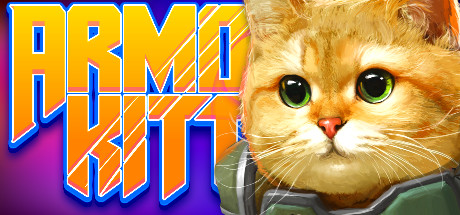
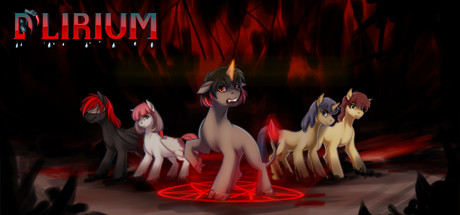
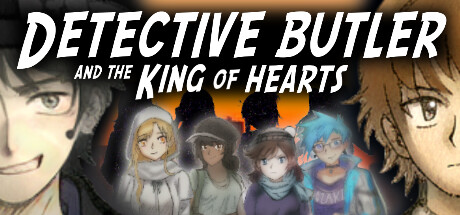
The package image of this game was created using multiple AI tools.
Part of the background image and background character: Created using Stable Diffusion and provided under the CreativeML Open RAIL-M license.
Part of the logo design: Created by Sonic-Alpha using OpenAI's generative AI, "ChatGPT," under the paid "ChatGPT Plus" plan.
No AI-generated elements are included in the main game or in-game content.
Photo of the dog for my pictures on the steam page is generated by AI. Game itself does not include any AI images or content except the dog image on the title.
In order to empower a single developer to achieve results that would otherwise not be possible, the developer utilizes a variety of AI tools to help in the creation of specific texture designs, translations as well as incorporating text-to-speech voice models for voice narration within the game.
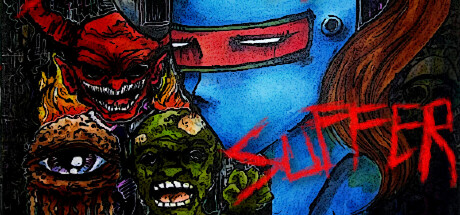
SUFFER is a solo project and I used whatever I could to help me make the game I wanted to make.
AI tools were used as part of my process for updating some of the old enemy sprites and scenery details. I also used them to help clean up a few stubborn code issues to make the game more stable and reduce frame drops.
This section exists because Valve said it has to, and I believe in being upfront. I’m not here to debate tools or trends. People have strong feelings about this stuff, and that’s fine. My goal was simple: make SUFFER look and play the way I always imagined it could, and these tools helped me get it (mostly) there.
There’s really nothing more to it. I hope you enjoy the game.
The package image of this game was created using multiple AI tools.
Part of the background image and background character: Created using Stable Diffusion and provided under the CreativeML Open RAIL-M license.
Part of the logo design: Created by Sonic-Alpha using OpenAI's generative AI, "ChatGPT," under the paid "ChatGPT Plus" plan.
No AI-generated elements are included in the main game or in-game content.
We do not use generative AI in the game. For community-requested languages that are not officially supported, we use DeepL to assist with localization, with the help of community members who review and improve the translations.
All AI content is placeholder assets until the full release. This includes: Spoken dialog (rendered via Eleven Labs), and some story-related images (generated with Midjourney). The vocals will be recorded by voice actors once the script is completely finalized, and any art will be redone by human artists before the 1.0 release.
This project did not use tools to create content from text prompts.
Because "Generative Artificial Intelligence" is inconcistently defined, following it the list all Machine Learning technologies I use. Many of them are widely used and not commonly considered AI, but meet the current dictionary definition of "computer system that has some qualities of human brain that is able to produce text, images, etc.", so I list them for full transparency:
- Generating crew portraits with artist-driven sliders for facial features.
- Creating portrait depth maps for dynamic lighting.
- Upscaling promotional images.
- Denoising rendered images.
- Enhancing in-game ads with actor face replacement for realism.
- Spell-checking, grammar-checking and rephrasing some text.
Our team utilizes AI in a variety of ways to improve the quality of our game. Here are a few examples of how our team incorporates AI into our development process:
1. We use AI to translate dialogue, subtitles, and (more infrequently) music into a variety of different languages spoken by players of our game. This allows more players from different regions to enjoy playing Operation: Harsh Doorstop in their own language, and helps us reach more players throughout the world.
2. We utilize machine learning to help train our NPC bots, giving non-player characters more realistic and adaptive behavior on the battlefield.
3. We utilize AI to assist with finding bugs and other issues in the game, which our developers can then diagnose and fix.
We currently work with the RevoltGPT team to help us incorporate AI into our development workflows. If you're interested in learning more, you can visit their website at https://rvt.dev
Some of the voice-over dialogs during the introduction cut-scene are computer generated. Some of the images during the introduction cut-scene were stylized using generative AI.
Generative AI has been critical for the development of this game and is infact a part of it's lore as well. Generative AI assisted us in producing pre-renders for our backgrounds and complimenting the high quality of our human made animations, the backgrounds of this game wouldn't have looked as beautiful as it does nor even possible had BOS released before generative AI existed.
In simple: The game uses AI generated images for the backgrounds of different regions.
We are a small indie team and as our game includes close to 200 characters you can interact with, we have used Midjourney to produce their portraits for the Early Access release of the game. Depending on feedback we may revisit this at a later stage.
While almost the entirety of the game is human-made, there are still some places where AI was used to speed up work, data validation or help with tedious tasks - such as converting old crafting recipes to a new format, improving wording of some in-game item descriptions, or generating placeholder thumbnails for internal use (e.g. testing GUI layout and renderer).
In order to improve game performance, some parts of the code use mathematical formulas generated with the help of AI.
AI was used to enhance several backgrounds and images that were originally hand-drawn and then used as reference material.
Due to the ambitious scope of the game, as well as our limited budget and manpower, generative AI has been integrated into our workflow to create pre-rendered "AI-assisted" assets.
Character sprites (including facial expressions) are hand-drawn and colored, but enhanced using Stable Diffusion (img2img).
Background images may be real photographs taken by hand, and/or AI-enhanced versions of real photographs (img2img).
Voices are uniquely AI-generated by Eleven Labs. Proper inflection and tone are achieved by using an AI voice-changer to "wear" each voice and record lines individually.
All of the above work is being done by the team lead, who is also responsible for the writing and programming, in order to bring his creative vision to life in a reasonable span of time.
We appreciate your understanding, and hope you enjoy the game.
The package image of this game was created using multiple AI tools.
Part of the background image and background character: Created using Stable Diffusion and provided under the CreativeML Open RAIL-M license.
Part of the logo design: Created by Sonic-Alpha using OpenAI's generative AI, "ChatGPT," under the paid "ChatGPT Plus" plan.
No AI-generated elements are included in the main game or in-game content.
Photo of the dog for my pictures on the steam page is generated by AI. Game itself does not include any AI images or content except the dog image on the title.
In order to empower a single developer to achieve results that would otherwise not be possible, the developer utilizes a variety of AI tools to help in the creation of specific texture designs, translations as well as incorporating text-to-speech voice models for voice narration within the game.
SUFFER is a solo project and I used whatever I could to help me make the game I wanted to make.
AI tools were used as part of my process for updating some of the old enemy sprites and scenery details. I also used them to help clean up a few stubborn code issues to make the game more stable and reduce frame drops.
This section exists because Valve said it has to, and I believe in being upfront. I’m not here to debate tools or trends. People have strong feelings about this stuff, and that’s fine. My goal was simple: make SUFFER look and play the way I always imagined it could, and these tools helped me get it (mostly) there.
There’s really nothing more to it. I hope you enjoy the game.
The package image of this game was created using multiple AI tools.
Part of the background image and background character: Created using Stable Diffusion and provided under the CreativeML Open RAIL-M license.
Part of the logo design: Created by Sonic-Alpha using OpenAI's generative AI, "ChatGPT," under the paid "ChatGPT Plus" plan.
No AI-generated elements are included in the main game or in-game content.
We do not use generative AI in the game. For community-requested languages that are not officially supported, we use DeepL to assist with localization, with the help of community members who review and improve the translations.
All AI content is placeholder assets until the full release. This includes: Spoken dialog (rendered via Eleven Labs), and some story-related images (generated with Midjourney). The vocals will be recorded by voice actors once the script is completely finalized, and any art will be redone by human artists before the 1.0 release.
This project did not use tools to create content from text prompts.
Because "Generative Artificial Intelligence" is inconcistently defined, following it the list all Machine Learning technologies I use. Many of them are widely used and not commonly considered AI, but meet the current dictionary definition of "computer system that has some qualities of human brain that is able to produce text, images, etc.", so I list them for full transparency:
- Generating crew portraits with artist-driven sliders for facial features.
- Creating portrait depth maps for dynamic lighting.
- Upscaling promotional images.
- Denoising rendered images.
- Enhancing in-game ads with actor face replacement for realism.
- Spell-checking, grammar-checking and rephrasing some text.
Our team utilizes AI in a variety of ways to improve the quality of our game. Here are a few examples of how our team incorporates AI into our development process:
1. We use AI to translate dialogue, subtitles, and (more infrequently) music into a variety of different languages spoken by players of our game. This allows more players from different regions to enjoy playing Operation: Harsh Doorstop in their own language, and helps us reach more players throughout the world.
2. We utilize machine learning to help train our NPC bots, giving non-player characters more realistic and adaptive behavior on the battlefield.
3. We utilize AI to assist with finding bugs and other issues in the game, which our developers can then diagnose and fix.
We currently work with the RevoltGPT team to help us incorporate AI into our development workflows. If you're interested in learning more, you can visit their website at https://rvt.dev
Some of the voice-over dialogs during the introduction cut-scene are computer generated. Some of the images during the introduction cut-scene were stylized using generative AI.
Generative AI has been critical for the development of this game and is infact a part of it's lore as well. Generative AI assisted us in producing pre-renders for our backgrounds and complimenting the high quality of our human made animations, the backgrounds of this game wouldn't have looked as beautiful as it does nor even possible had BOS released before generative AI existed.
In simple: The game uses AI generated images for the backgrounds of different regions.
We are a small indie team and as our game includes close to 200 characters you can interact with, we have used Midjourney to produce their portraits for the Early Access release of the game. Depending on feedback we may revisit this at a later stage.
While almost the entirety of the game is human-made, there are still some places where AI was used to speed up work, data validation or help with tedious tasks - such as converting old crafting recipes to a new format, improving wording of some in-game item descriptions, or generating placeholder thumbnails for internal use (e.g. testing GUI layout and renderer).
In order to improve game performance, some parts of the code use mathematical formulas generated with the help of AI.
AI was used to enhance several backgrounds and images that were originally hand-drawn and then used as reference material.
Due to the ambitious scope of the game, as well as our limited budget and manpower, generative AI has been integrated into our workflow to create pre-rendered "AI-assisted" assets.
Character sprites (including facial expressions) are hand-drawn and colored, but enhanced using Stable Diffusion (img2img).
Background images may be real photographs taken by hand, and/or AI-enhanced versions of real photographs (img2img).
Voices are uniquely AI-generated by Eleven Labs. Proper inflection and tone are achieved by using an AI voice-changer to "wear" each voice and record lines individually.
All of the above work is being done by the team lead, who is also responsible for the writing and programming, in order to bring his creative vision to life in a reasonable span of time.
We appreciate your understanding, and hope you enjoy the game.