Public Steam disclosure research25,380 disclosures tracked
Where do games disclose AI use?
Search developers’ Steam disclosures, compare classified AI use across
games, and follow recorded changes.
This index adds cross-game classifications and statistics to
statements published on individual store pages.
Groups reflect automatic analysis of public disclosures; mature records are excluded. These counts do not measure AI use across all of Steam.
Missing or unclear statements cannot establish whether a game uses AI.
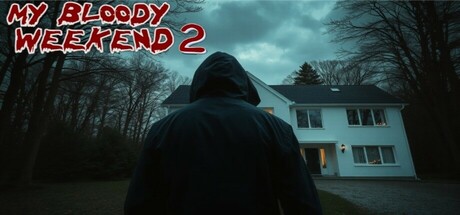
The game uses multiple AI characters, each with unique memories and re-collections to participate in a group conversation where they try to deduce who is the killer (the player). Essentially a reverse Turing-test with bells and whistles.
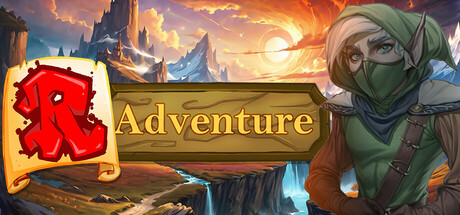
Generative AI was used to touch up and upconvert original artwork in the making of the Radventure Demo. It is our intent to fundraise to hire more artists to replace the use of AI in the future.
Additionally, AI was used in the creation of some sound effects for the demo.
I have ChatGPT and Copilot to assist me in creating the code.
Some textural assistance was provided by ChatGPT, Copilot and Gemini.
We have Udio composing some of the music.
Also, I used BiaB, ACS, CREEVO, and Orpheus, which are not AI but auto-generators, for some songs.
The game uses generative AI to create certain character portrait images. These portraits are produced through a directed process involving manual adjustment of predefined parameters related to facial features and lighting. Selected portraits are pre-rendered, curated, and fixed at development time.
No content is generated dynamically during gameplay.
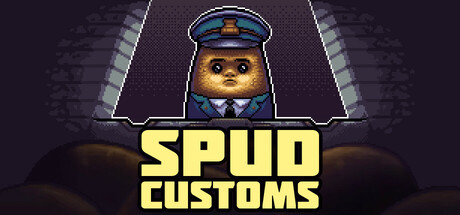
Spud Customs is made by Lost Rabbit Digital: two siblings who handle all the coding, music, writing, and playtesting ourselves, with help from one additional artist, and one musician. We're a tiny team with no outside funding. To keep up, we sometimes use AI tools to brainstorm or generate rough drafts. But nothing ships without our hands on it. Every line of code, every sprite, every track is reviewed, rewritten, and refined by us.
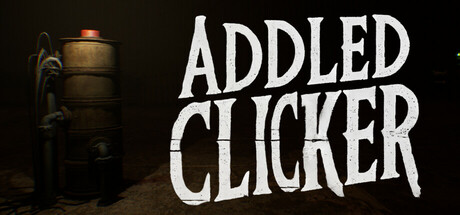
I used AI images incredibly sparingly; I also modified the original AI image templates to get a desired outcome. The examples are -- the games text logo "Addled Clicker" was original AI before being edited heavily, a single image depicting a lovecraftian blob was used in one of the monster descriptions -- again, heavily edited, and finally in the in-game merchant, the background is a blurred lovecraftian manuscript that was AI generated as well.
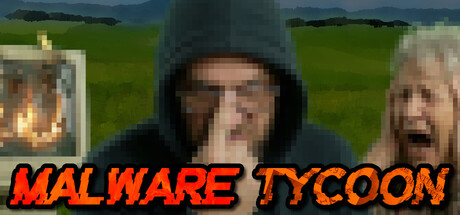
Malware Tycoon uses AI to the most minimal extent possible. This includes some music (but never any lyrical content) and a minimal subset of graphics (less than 5%).
AI is not used liberally in the production of Malware Tycoon, and where a feasible effort can be made to exclude it, that effort is executed.
As a Solo Developer, AI was used mostly for things that would otherwise take too much time or finance, such as: Voice Lines, SFX, and custom Images.
AI type used: Voice Changers, Image Generators, and Audio Generators.
During the development process, I may utilize procedural and AI-based tools to assist in the creation of certain content, including voiceover audio. In all cases, these tools are used as part of the creative process, and the final product reflects my artistic vision and expression as the developer. For example, I may use voice-changer tools or AI-assisted generation to create the voices of characters during in-game dialogues and cutscenes.
Some in-game images, illustrations, and decorative elements were created using AI-assisted image generation tools.
Additionally, select voiceovers and sound effects were generated or enhanced using AI-based audio technologies.
We used generative AI tools to assist with the initial translation of the game's text. However, all AI-generated content was subsequently reviewed, edited, and refined by the development team to ensure accuracy and quality.
Our hero submitted a portfolio generated by an AI, and got a job interview.
After seeing the company's artwork (also AI generated) and the portfolio, the interview starts.
Using AI, the interviewer's reaction will be custom, based on the hero's text input.
All the rest (music, script...) is human.
The user's voice input will be converted to text, then sent to open ai's LLM along with parameters and characteristics. A response will be given and then sent to elevenlabs to be converted into voice to give a life-like response to the player.
The game uses multiple AI characters, each with unique memories and re-collections to participate in a group conversation where they try to deduce who is the killer (the player). Essentially a reverse Turing-test with bells and whistles.
Generative AI was used to touch up and upconvert original artwork in the making of the Radventure Demo. It is our intent to fundraise to hire more artists to replace the use of AI in the future.
Additionally, AI was used in the creation of some sound effects for the demo.
I have ChatGPT and Copilot to assist me in creating the code.
Some textural assistance was provided by ChatGPT, Copilot and Gemini.
We have Udio composing some of the music.
Also, I used BiaB, ACS, CREEVO, and Orpheus, which are not AI but auto-generators, for some songs.
The game uses generative AI to create certain character portrait images. These portraits are produced through a directed process involving manual adjustment of predefined parameters related to facial features and lighting. Selected portraits are pre-rendered, curated, and fixed at development time.
No content is generated dynamically during gameplay.
Spud Customs is made by Lost Rabbit Digital: two siblings who handle all the coding, music, writing, and playtesting ourselves, with help from one additional artist, and one musician. We're a tiny team with no outside funding. To keep up, we sometimes use AI tools to brainstorm or generate rough drafts. But nothing ships without our hands on it. Every line of code, every sprite, every track is reviewed, rewritten, and refined by us.
I used AI images incredibly sparingly; I also modified the original AI image templates to get a desired outcome. The examples are -- the games text logo "Addled Clicker" was original AI before being edited heavily, a single image depicting a lovecraftian blob was used in one of the monster descriptions -- again, heavily edited, and finally in the in-game merchant, the background is a blurred lovecraftian manuscript that was AI generated as well.
Malware Tycoon uses AI to the most minimal extent possible. This includes some music (but never any lyrical content) and a minimal subset of graphics (less than 5%).
AI is not used liberally in the production of Malware Tycoon, and where a feasible effort can be made to exclude it, that effort is executed.
As a Solo Developer, AI was used mostly for things that would otherwise take too much time or finance, such as: Voice Lines, SFX, and custom Images.
AI type used: Voice Changers, Image Generators, and Audio Generators.
During the development process, I may utilize procedural and AI-based tools to assist in the creation of certain content, including voiceover audio. In all cases, these tools are used as part of the creative process, and the final product reflects my artistic vision and expression as the developer. For example, I may use voice-changer tools or AI-assisted generation to create the voices of characters during in-game dialogues and cutscenes.
Some in-game images, illustrations, and decorative elements were created using AI-assisted image generation tools.
Additionally, select voiceovers and sound effects were generated or enhanced using AI-based audio technologies.
We used generative AI tools to assist with the initial translation of the game's text. However, all AI-generated content was subsequently reviewed, edited, and refined by the development team to ensure accuracy and quality.
Our hero submitted a portfolio generated by an AI, and got a job interview.
After seeing the company's artwork (also AI generated) and the portfolio, the interview starts.
Using AI, the interviewer's reaction will be custom, based on the hero's text input.
All the rest (music, script...) is human.
The user's voice input will be converted to text, then sent to open ai's LLM along with parameters and characteristics. A response will be given and then sent to elevenlabs to be converted into voice to give a life-like response to the player.