Public Steam disclosure research25,383 disclosures tracked
Where do games disclose AI use?
Search developers’ Steam disclosures, compare classified AI use across
games, and follow recorded changes.
This index adds cross-game classifications and statistics to
statements published on individual store pages.
Groups reflect automatic analysis of public disclosures; mature records are excluded. These counts do not measure AI use across all of Steam.
Missing or unclear statements cannot establish whether a game uses AI.
Some of the game's content was created with the help of generative AI tools and then edited, cleaned up, rigged, animated and integrated by the developer. This includes 3D models of characters and enemies, 2D art such as ability icons, UI elements and some store page artwork, sound effects, and parts of the store page text. All gameplay, design, balance and final assembly were done by the developer.
Some content in this game was made with the help of generative AI tools and then reviewed and edited by the developer: parts of the 2D artwork (backgrounds, characters, icons), some sound effects, the trailer narration voice, and first drafts of the translated text. No content is generated by AI during gameplay.
Generative AI tools were used during development to assist with draft text, localization, concept references, and asset iteration. All final content included in the game has been reviewed and edited by the developer. The game does not generate AI content during gameplay.
The game includes pre-generated sound effects created with generative AI. Some store and promotional artwork was also created with AI tools. No content is generated by AI during gameplay.
Some of the artwork in this game was created with the assistance of generative AI tools. This includes character and enemy models, visual effects, skill icons, and key art. All generated material was reviewed, edited, and integrated by the developer. No AI-generated content is produced while the game is running.
The game's pixel art sprites and visual effects, the store capsule art and logo, and the music were created with the help of generative AI tools, then selected, edited and integrated by the developer. The store page text and its Chinese translation were drafted with AI assistance and reviewed by the developer. All content is pre-generated; nothing is generated while the game is running.
AI Disclosure Statement:Code Optimization: AI tools were used as an assistant during development to review the C# source code and optimize algorithms for better in-game performance (higher FPS).Localization: The translation of game texts into multiple languages was generated using AI translation tools and manually reviewed for quality.Visual Assets: The loading screens were created with the assistance of AI image generation tools and polished for in-game integration. All generated content has been verified to ensure it does not infringe on existing copyrights.
Some visual effect textures in this game were generated using AI image tools and then edited by hand before being used. All other content - character and environment art, animation, models, music, sound and writing was created with love by humans. All AI-assisted assets were reviewed and edited before inclusion.
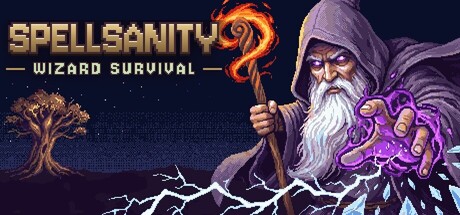
Spellsanity is made by one person and uses generative AI as a tool, not as a substitute for design.
Art: Much of the pixel art (enemies, bosses, characters, portraits, story stills, environment details) was produced with AI image generators and then reworked by hand: reduced to the game's colour palette, corrected pixel by pixel, animated and fitted into the game. Some of the art (surfaces, effects, UI frames) was drawn without AI or generated procedurally.
Text: Dialogue, descriptions and help texts were written with AI assistance and revised by the developer. The translations from English (German, Spanish, Portuguese, Russian, Chinese) were produced with AI and spot-checked; please report mistakes.
Code: AI assistants were used during programming.
Music and sound are not AI: the music is licensed work by Kevin MacLeod (incompetech.com), the sound effects are synthesized.
No AI runs inside the game. All content is shipped with the game and was reviewed before release; nothing is generated at runtime.
Generative AI tools were used throughout development: the game's code and its in-game text, the paintings, icons and interface art, the 3D models, and the music and sound effects. Everything was reviewed, edited and tested, and ships as fixed content. Nothing is generated while you play: the game runs no model and makes no network call.
Generative AI was used during development to help create some visual assets included in the game, including artwork and models, and to assist with translation of in-game text. Generative AI was also used to create promotional artwork and help write the descriptions on this Steam store page. These materials and translations are prepared in advance. The game does not use AI to generate content or code during gameplay and does not connect to external AI services.
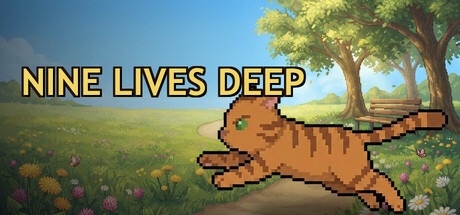
Some 2D artwork in Nine Lives Deep including select UI elements, item icons, and environment backgrounds was created with the help of generative AI image tools during development. All such content is static and fixed at the time the game ships; nothing is generated live during gameplay, and the game does not connect to any AI service while you play.
Generative AI tools were used during the development of the game to create and assist with certain pieces of content.
AI was used to generate some visual elements, including individual icons, as well as some sound effects. Some generated assets were further edited and adapted for use in the game.
AI was also used as an assisting tool for creating text content and localizing the game into other languages.
Due to budget constraints, I’ve had to rely on AI to create the soundtrack and translate the game into languages I don’t speak (all languages except English and Spanish).
I know it’s not the same as working with professional musicians and translators, and I’d really like to change that in the future. If the game is well received and gets enough support, I’ll be more than happy to invest part of that support into working with professionals and replacing these AI-generated elements.
Thank you for giving the game a chance and for supporting this indie project.
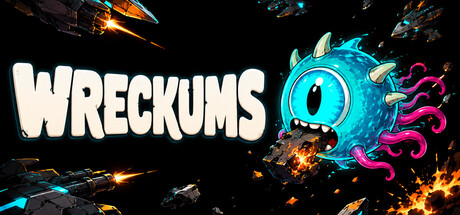
Generative AI tools were used during development to help create selected artwork, audio assets, and promotional materials. These materials were reviewed and selected by the developer. Wreckums does not generate AI content during gameplay or connect to external AI services while you play.
We use generative AI as a reference and drafting tool, and always finish by hand. Early in development we generated AI concept images to explore ideas and mood; those are reference only. All in-game models, animation and UI are built by hand in 3D by the two of us. Some in-game textures were first generated with AI as a guide and then retouched by hand. The store key art is rendered from the game's own 3D characters and scenes, run through an AI tool for style, then composited and retouched by hand. Store text was drafted with an AI assistant and rewritten by us. The game does not use generative AI while you play.
Generative AI was used to assist in the creation of some promotional and marketing materials (such as key art).
All in-game content, gameplay, and screenshots are created without the use of generative AI.
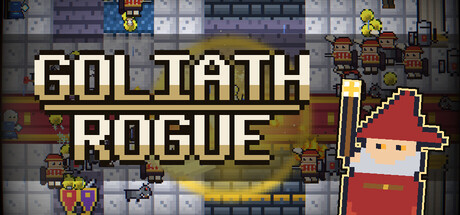
Goliath Rogue was made with the help of generative AI. The 2D art, the music and the sound effects were AI-generated — some of the art was then retouched by hand — and the Spanish and French translations were AI-assisted. All of it ships as fixed assets in the game; nothing is generated while you play. AI coding tools were also used during development to help write the game's code.
Concept Art and Design:
Generative AI tools were used during the pre-production phase to brainstorm visual aesthetics and generate early concept art for the title screen and in-game graphic elements.
Final Assets:
While AI was used to establish the artistic direction and conceptual frameworks, all final assets, title screen graphics, and in-game artwork appearing in the released version of the game were manually refined to ensure a cohesive, high-quality experience.
We are relying on pre-rendered assets for proof-of-concepts, but continuously replacing these with our assets. Our plan to is replace all textures before go-live. No AI-generated music/sfx is used.
Some of this game's art was created with the help of generative AI tools and then edited by hand. All of it is pre-generated during development: the game generates no content while you play and does not connect to any AI service.
No generative AI content ships in the game itself — all in-game art, music, sound effects, writing, and design were created by the developer. Generative AI was used only to create some of the store/marketing capsule images.
Generative AI tools were used during development to help create some of the game's artwork, including zombie character sprites, hammer icons, achievement icons. All AI-assisted artwork was reviewed and selected by the developer before being included in the final game. The store page description was also written with the assistance of an AI writing tool.
Some store and marketing images were created with generative AI tools. Parts of the in-game UI artwork were also created or assisted with generative AI, then reviewed and integrated by the developer. All other game content is human-authored or from licensed third-party assets. No generative AI content is created live during gameplay.
Generative AI tools were used during development to assist with language translation and localization, as well as researching historical and contextual lore to ensure narrative accuracy. All final text, gameplay content, and lore were reviewed and edited by human creators.
Some static art assets and store promotional texts of this game are drafted with generative AI. All AI-generated materials have been manually checked for copyright and revised by the development team. No dynamic AI content will be generated in real time during gameplay.
Generative AI was used only for the character portrait artwork currently included in the demo. No generative AI was used for gameplay, programming, game assets, localization, or other game content.
Generative AI tools were used during development to assist with selected text content and localization. All AI-assisted content was reviewed and edited by the developer before inclusion. The game does not generate AI content during gameplay.
Some artwork and localization in Grave Company were created with the assistance of generative AI. This content was reviewed and adjusted by the development team before release.
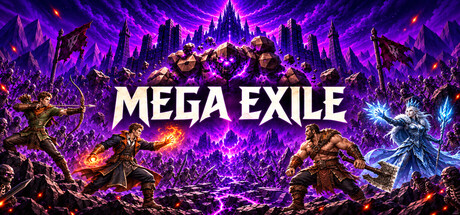
Generative AI tools were used during development to help create some 3D character assets and store page text. This content is prepared in advance. Mega Exile does not generate AI content during gameplay or connect to external AI services while you play.
We use AI to assist with ideation for some art assets, music, and programming, as well as to support asset creation during the prototyping stage. All final assets are manually recreated, arranged, refined, and exported by our team.
Generative AI tools were used during development to assist with programming, gameplay and balance systems, mission and narrative text, UI copy, Korean–English localization, and some store and marketing text. Generative AI was also used to create an early pre-rendered concept image for the game's visual direction. The current in-game character and environment artwork, fonts, music, and most sound effects are human-created assets used under their respective licenses. The game does not generate content with AI at runtime, and players cannot submit prompts or interact with generative AI.
Pre-generated content only. Some 2D art assets in the game (planet, star and interface sprites) and the store page capsule artwork were produced using generative AI image tools, then edited, composited, colour-corrected and integrated by hand. No generative AI runs at runtime and no content is generated live during gameplay. All audio is either licensed under Creative Commons with attribution given in-game, or original.
Generative AI was used during production to create license icons and to assist with store descriptions and Chinese and English text. The icons were selected, edited and integrated as fixed assets. The AI use described here takes place during production.
Generative AI was used to assist in the creation of certain promotional and store page artwork. All gameplay, programming, game design, pixel art, and in-game content were created and reviewed by the developer.
Some of the game's content was created with the help of generative AI tools and then edited, cleaned up, rigged, animated and integrated by the developer. This includes 3D models of characters and enemies, 2D art such as ability icons, UI elements and some store page artwork, sound effects, and parts of the store page text. All gameplay, design, balance and final assembly were done by the developer.
Some content in this game was made with the help of generative AI tools and then reviewed and edited by the developer: parts of the 2D artwork (backgrounds, characters, icons), some sound effects, the trailer narration voice, and first drafts of the translated text. No content is generated by AI during gameplay.
Generative AI tools were used during development to assist with draft text, localization, concept references, and asset iteration. All final content included in the game has been reviewed and edited by the developer. The game does not generate AI content during gameplay.
The game includes pre-generated sound effects created with generative AI. Some store and promotional artwork was also created with AI tools. No content is generated by AI during gameplay.
Some of the artwork in this game was created with the assistance of generative AI tools. This includes character and enemy models, visual effects, skill icons, and key art. All generated material was reviewed, edited, and integrated by the developer. No AI-generated content is produced while the game is running.
The game's pixel art sprites and visual effects, the store capsule art and logo, and the music were created with the help of generative AI tools, then selected, edited and integrated by the developer. The store page text and its Chinese translation were drafted with AI assistance and reviewed by the developer. All content is pre-generated; nothing is generated while the game is running.
AI Disclosure Statement:Code Optimization: AI tools were used as an assistant during development to review the C# source code and optimize algorithms for better in-game performance (higher FPS).Localization: The translation of game texts into multiple languages was generated using AI translation tools and manually reviewed for quality.Visual Assets: The loading screens were created with the assistance of AI image generation tools and polished for in-game integration. All generated content has been verified to ensure it does not infringe on existing copyrights.
Some visual effect textures in this game were generated using AI image tools and then edited by hand before being used. All other content - character and environment art, animation, models, music, sound and writing was created with love by humans. All AI-assisted assets were reviewed and edited before inclusion.
Spellsanity is made by one person and uses generative AI as a tool, not as a substitute for design.
Art: Much of the pixel art (enemies, bosses, characters, portraits, story stills, environment details) was produced with AI image generators and then reworked by hand: reduced to the game's colour palette, corrected pixel by pixel, animated and fitted into the game. Some of the art (surfaces, effects, UI frames) was drawn without AI or generated procedurally.
Text: Dialogue, descriptions and help texts were written with AI assistance and revised by the developer. The translations from English (German, Spanish, Portuguese, Russian, Chinese) were produced with AI and spot-checked; please report mistakes.
Code: AI assistants were used during programming.
Music and sound are not AI: the music is licensed work by Kevin MacLeod (incompetech.com), the sound effects are synthesized.
No AI runs inside the game. All content is shipped with the game and was reviewed before release; nothing is generated at runtime.
Generative AI tools were used throughout development: the game's code and its in-game text, the paintings, icons and interface art, the 3D models, and the music and sound effects. Everything was reviewed, edited and tested, and ships as fixed content. Nothing is generated while you play: the game runs no model and makes no network call.
Generative AI was used during development to help create some visual assets included in the game, including artwork and models, and to assist with translation of in-game text. Generative AI was also used to create promotional artwork and help write the descriptions on this Steam store page. These materials and translations are prepared in advance. The game does not use AI to generate content or code during gameplay and does not connect to external AI services.
Some 2D artwork in Nine Lives Deep including select UI elements, item icons, and environment backgrounds was created with the help of generative AI image tools during development. All such content is static and fixed at the time the game ships; nothing is generated live during gameplay, and the game does not connect to any AI service while you play.
Generative AI tools were used during the development of the game to create and assist with certain pieces of content.
AI was used to generate some visual elements, including individual icons, as well as some sound effects. Some generated assets were further edited and adapted for use in the game.
AI was also used as an assisting tool for creating text content and localizing the game into other languages.
Due to budget constraints, I’ve had to rely on AI to create the soundtrack and translate the game into languages I don’t speak (all languages except English and Spanish).
I know it’s not the same as working with professional musicians and translators, and I’d really like to change that in the future. If the game is well received and gets enough support, I’ll be more than happy to invest part of that support into working with professionals and replacing these AI-generated elements.
Thank you for giving the game a chance and for supporting this indie project.
Generative AI tools were used during development to help create selected artwork, audio assets, and promotional materials. These materials were reviewed and selected by the developer. Wreckums does not generate AI content during gameplay or connect to external AI services while you play.
We use generative AI as a reference and drafting tool, and always finish by hand. Early in development we generated AI concept images to explore ideas and mood; those are reference only. All in-game models, animation and UI are built by hand in 3D by the two of us. Some in-game textures were first generated with AI as a guide and then retouched by hand. The store key art is rendered from the game's own 3D characters and scenes, run through an AI tool for style, then composited and retouched by hand. Store text was drafted with an AI assistant and rewritten by us. The game does not use generative AI while you play.
Generative AI was used to assist in the creation of some promotional and marketing materials (such as key art).
All in-game content, gameplay, and screenshots are created without the use of generative AI.
Goliath Rogue was made with the help of generative AI. The 2D art, the music and the sound effects were AI-generated — some of the art was then retouched by hand — and the Spanish and French translations were AI-assisted. All of it ships as fixed assets in the game; nothing is generated while you play. AI coding tools were also used during development to help write the game's code.
Concept Art and Design:
Generative AI tools were used during the pre-production phase to brainstorm visual aesthetics and generate early concept art for the title screen and in-game graphic elements.
Final Assets:
While AI was used to establish the artistic direction and conceptual frameworks, all final assets, title screen graphics, and in-game artwork appearing in the released version of the game were manually refined to ensure a cohesive, high-quality experience.
We are relying on pre-rendered assets for proof-of-concepts, but continuously replacing these with our assets. Our plan to is replace all textures before go-live. No AI-generated music/sfx is used.
Some of this game's art was created with the help of generative AI tools and then edited by hand. All of it is pre-generated during development: the game generates no content while you play and does not connect to any AI service.
No generative AI content ships in the game itself — all in-game art, music, sound effects, writing, and design were created by the developer. Generative AI was used only to create some of the store/marketing capsule images.
Generative AI tools were used during development to help create some of the game's artwork, including zombie character sprites, hammer icons, achievement icons. All AI-assisted artwork was reviewed and selected by the developer before being included in the final game. The store page description was also written with the assistance of an AI writing tool.
Some store and marketing images were created with generative AI tools. Parts of the in-game UI artwork were also created or assisted with generative AI, then reviewed and integrated by the developer. All other game content is human-authored or from licensed third-party assets. No generative AI content is created live during gameplay.
Generative AI tools were used during development to assist with language translation and localization, as well as researching historical and contextual lore to ensure narrative accuracy. All final text, gameplay content, and lore were reviewed and edited by human creators.
Some static art assets and store promotional texts of this game are drafted with generative AI. All AI-generated materials have been manually checked for copyright and revised by the development team. No dynamic AI content will be generated in real time during gameplay.
Generative AI was used only for the character portrait artwork currently included in the demo. No generative AI was used for gameplay, programming, game assets, localization, or other game content.
Generative AI tools were used during development to assist with selected text content and localization. All AI-assisted content was reviewed and edited by the developer before inclusion. The game does not generate AI content during gameplay.
Some artwork and localization in Grave Company were created with the assistance of generative AI. This content was reviewed and adjusted by the development team before release.
Generative AI tools were used during development to help create some 3D character assets and store page text. This content is prepared in advance. Mega Exile does not generate AI content during gameplay or connect to external AI services while you play.
We use AI to assist with ideation for some art assets, music, and programming, as well as to support asset creation during the prototyping stage. All final assets are manually recreated, arranged, refined, and exported by our team.
Generative AI tools were used during development to assist with programming, gameplay and balance systems, mission and narrative text, UI copy, Korean–English localization, and some store and marketing text. Generative AI was also used to create an early pre-rendered concept image for the game's visual direction. The current in-game character and environment artwork, fonts, music, and most sound effects are human-created assets used under their respective licenses. The game does not generate content with AI at runtime, and players cannot submit prompts or interact with generative AI.
Pre-generated content only. Some 2D art assets in the game (planet, star and interface sprites) and the store page capsule artwork were produced using generative AI image tools, then edited, composited, colour-corrected and integrated by hand. No generative AI runs at runtime and no content is generated live during gameplay. All audio is either licensed under Creative Commons with attribution given in-game, or original.
Generative AI was used during production to create license icons and to assist with store descriptions and Chinese and English text. The icons were selected, edited and integrated as fixed assets. The AI use described here takes place during production.
Generative AI was used to assist in the creation of certain promotional and store page artwork. All gameplay, programming, game design, pixel art, and in-game content were created and reviewed by the developer.