Public Steam disclosure research25,376 disclosures tracked
Where do games disclose AI use?
Search developers’ Steam disclosures, compare classified AI use across
games, and follow recorded changes.
This index adds cross-game classifications and statistics to
statements published on individual store pages.
Groups reflect automatic analysis of public disclosures; mature records are excluded. These counts do not measure AI use across all of Steam.
Missing or unclear statements cannot establish whether a game uses AI.
AI Gen tools were used in a variety of ways for this game. Asset image concepting, narrative re-writes, 3d meshing, and marketing assets typically went through some form of a.i. modification, but then returned to a human-in-the-loop production step before game integration.
The story and game design are an original creation of the developer.
AI was used as a tool to produce certain fixed visuals (store page, logo, illustrations),
in order to faithfully represent the game's artistic vision.
No content is AI-generated during gameplay.
Some 2D art assets in MutantTide (including promotional key art) were created with the assistance of AI based pixel art tools. All game design, code, systems, and gameplay were hand crafted by the developer. No AI generated content is produced live during gameplay.
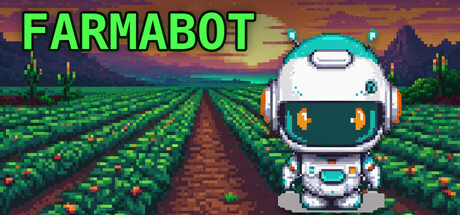
Some of the 2D art in Farmabot — including certain character, creature and crop sprites, cutscene background illustrations, and the game's store page / marketing images (capsules, icon, key art) — was produced with the assistance of locally-run generative AI image tools (Stable Diffusion). All AI-assisted assets are pre-generated (there is no live or runtime AI generation in the game); every asset was curated, edited, and assembled by the developer before inclusion.
AI has been used in some store materials, such as audio content. However, the majority of the game’s content is not AI-generated, particularly the main characters, maps, and weapons.
Generative AI-assisted tools were used as part of the development process for Xenogarden.
This includes support in creating and refining selected visual content such as concept art, artwork, textures, marketing materials and store page assets, as well as assistance with text, localization, sound/music ideas and creative drafts.
All content included in the game is pre-generated, selected, reviewed and curated. The game does not generate new AI content during gameplay and does not connect to external AI services during gameplay.
Space Delivery is a solo indie project by Christian Wolf. Generative AI was one of the tools used to make it: all character voice-over and some sound effects were generated with ElevenLabs, AI image tools were used for the game's icons and some other menu/UI artwork, and AI tools were used to translate the game and its store page from English. The trailer and promotional images were assembled using AI tools from the game's own assets. AI also assisted with coding and design during development. All game design, art direction, and final creative decisions were made by the developer.
Generative AI was used to create some promotional images for the Steam store page. The game itself and its gameplay do not contain AI-generated content.
Some visual assets used in this game were created or assisted by generative AI tools during development. All AI-generated content was reviewed, edited, and integrated by the developer before being included in the final game. No AI-generated content is created during gameplay.
AI-generated art assets are used in this game. All such assets have been manually reviewed and adjusted to ensure a consistent visual style and quality.
A pre-rendered cinematic intro sequence was created with the assistance of AI-based video generation tools. Some visual assets were generated or refined using AI image generation.
Some visual assets used in the game and on the Steam store page were created with the assistance of generative AI and have been further refined and integrated into the game by the developer. No live-generated AI content is used during gameplay.
During development, generative AI tools were used to assist in the creation of certain visual assets. All AI-generated content has been reviewed and curated by the development team.
Some portions of the game's source code were developed with the assistance of generative AI tools. All gameplay design, story, puzzles, dialogue, creative direction, and final implementation decisions were created, reviewed, and controlled by the developer.
Some promotional artwork and marketing materials may also have been created with the assistance of generative AI tools and subsequently reviewed and edited by the developer.
No generative AI is used during gameplay, and no content is generated dynamically for players.
Because I am a dev team of 1, yes, I have used AI specifically for working on multiplayer code - that's an area of coding I'm just not up to speed on. The in-game code is all me though. As for art, having 10 years experience in game-dev GFX, that's me - 99% of it. I'm highly proficient in using the tools of the trade )Pshop, Blender, 3d MAx etc), but yes, I have used some highly modified bits and pieces for the landing screen and outros, but everything in-game (100%) is me. The SFX, music and voice acting, me too... for my sins. I'm no Mozart or Lawrence Olivier, but, yakknow... it's passable :)
Some of Citadel Zero's visual assets (pixel-art sprites, icons, and backgrounds) were created with the help of generative AI tools, then reviewed and refined by the developer. All such content is pre-generated and baked into the game — Citadel Zero performs no real-time AI generation and connects to no AI service while you play.
This game may include pre-generated content created or assisted by generative artificial intelligence tools during development, mainly for support with visual materials, promotional text, localization/translation, and marketing assets.
All content included in the game and on the store page has been manually reviewed, edited, and approved by the development team before publication. The game does not use generative artificial intelligence in real time during gameplay, so no new AI-generated content is created while the user is playing.
The game does not use generative artificial intelligence in real time. No images, text, sounds, dialogue, missions, or any other content are generated by AI while the game is running.
OFS is made by a solo developer using a hybrid, human-led production pipeline.
Some of the game's content was produced with the help of several generative AI tools — for instance to assist with certain complex 3D meshes, textures, and visual elements. These tools are used for one purpose only: to augment and accelerate human creativity, never to replace it.
Every artistic direction, every gameplay decision, and every final creative call is made by a human. All AI-assisted assets — meshes, textures, visuals, objects and anything else — are hand-reviewed, edited, and finalized by a human before they ever make it into the game.
As a solo developer, this hybrid approach simply unlocks far more creative possibilities than would otherwise be feasible without a full team — while keeping full human authorship over the final result.
One man team here. AI helped me learn to code and I also used it to help generate some of the artwork and voices. All of the artwork generated by AI has been carefully polished and modified.
We used generative AI mainly for generating code. It has also been used for writing flavour text, many interface descriptions and some lines for an AI character. Finally it has also been used for proofreading.
As a solo developer, I used AI tools as a foundation to expand the game's scope, manually refining and finalizing every asset to ensure the final result is a high-quality, handcrafted experience.
During development, I may use procedural- and AI-assisted tools to support content creation, iteration, and production workflows. In all such cases, the final product reflects my own creative direction, selection, editing, and implementation as the developer.
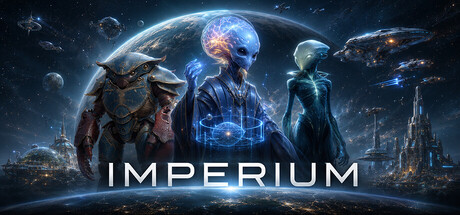
Imperium is a solo-developed game that makes extensive use of generative AI
to create its content:
• Visual art and graphical assets — planet surfaces, buildings, species and
ship artwork, interface art, and store/marketing imagery — were generated
using Midjourney and ChatGPT, then extensively edited, composited, and
refined by hand in Photoshop (including Photoshop's AI tools) to fit the
game's art direction.
• Music was generated using Suno.
• Sound effects were generated using ElevenLabs.
Every asset is reviewed, edited, and approved by the developer before it
ships, and the game's design, systems, and balance are the developer's own.
Imperium's in-game opponents use traditional algorithmic AI, not generative AI.
Generative AI tools were used only to assist in the creation of certain store page and marketing images. No AI-generated content is created during gameplay, and the game does not use live AI systems or connect to external AI services while running.
The game includes cinematic video sequences that were generated or assisted using AI tools. These AI-assisted elements are used as non-interactive intro/ending cutscenes and visual presentation material. The game design, level design, gameplay systems, characters, dialogue integration, voice implementation, part of cinematic and final editing were created and assembled by the developer.
AI tools were used to assist with concept art direction, store artwork iteration, written content, UI text refinement, and creative planning. All final content was reviewed, edited, and implemented by the developer.
AI was used to assist in producing the in-game user-interface text translations for French, Spanish, German and Italian, which were then reviewed for accuracy. The English and Portuguese text is human-authored. All visual art, sound effects and music in NEON SURGE are generated procedurally by our own code — no AI models were used to create art, audio or gameplay assets.
Azura uses artificial intelligence to accelerate card prototyping, character ideas, and mechanic balancing, always providing creative support. All final content goes through human curation and collaborations with artists, ensuring a visually unique and soulful game.
The Event currently includes three AI-generated projector scenes used only as temporary placeholders, pending replacement with human-made artwork in the near future.(feel free to contact me for any possible collaborations)
Aside from these placeholder scenes, the remaining voice work, including the double voice effects, was created directly by the developer.
We utilize only Google AI Studio text-to-speech models during development to pre-generate voice acting files for regional localization. All generated audio files are post-processed, mixed, and hardcoded into the game build using standard engine tools before distribution. No assets infringe on existing copyrights.
AI Gen tools were used in a variety of ways for this game. Asset image concepting, narrative re-writes, 3d meshing, and marketing assets typically went through some form of a.i. modification, but then returned to a human-in-the-loop production step before game integration.
The story and game design are an original creation of the developer.
AI was used as a tool to produce certain fixed visuals (store page, logo, illustrations),
in order to faithfully represent the game's artistic vision.
No content is AI-generated during gameplay.
Some 2D art assets in MutantTide (including promotional key art) were created with the assistance of AI based pixel art tools. All game design, code, systems, and gameplay were hand crafted by the developer. No AI generated content is produced live during gameplay.
Some of the 2D art in Farmabot — including certain character, creature and crop sprites, cutscene background illustrations, and the game's store page / marketing images (capsules, icon, key art) — was produced with the assistance of locally-run generative AI image tools (Stable Diffusion). All AI-assisted assets are pre-generated (there is no live or runtime AI generation in the game); every asset was curated, edited, and assembled by the developer before inclusion.
AI has been used in some store materials, such as audio content. However, the majority of the game’s content is not AI-generated, particularly the main characters, maps, and weapons.
Generative AI-assisted tools were used as part of the development process for Xenogarden.
This includes support in creating and refining selected visual content such as concept art, artwork, textures, marketing materials and store page assets, as well as assistance with text, localization, sound/music ideas and creative drafts.
All content included in the game is pre-generated, selected, reviewed and curated. The game does not generate new AI content during gameplay and does not connect to external AI services during gameplay.
Space Delivery is a solo indie project by Christian Wolf. Generative AI was one of the tools used to make it: all character voice-over and some sound effects were generated with ElevenLabs, AI image tools were used for the game's icons and some other menu/UI artwork, and AI tools were used to translate the game and its store page from English. The trailer and promotional images were assembled using AI tools from the game's own assets. AI also assisted with coding and design during development. All game design, art direction, and final creative decisions were made by the developer.
Generative AI was used to create some promotional images for the Steam store page. The game itself and its gameplay do not contain AI-generated content.
Some visual assets used in this game were created or assisted by generative AI tools during development. All AI-generated content was reviewed, edited, and integrated by the developer before being included in the final game. No AI-generated content is created during gameplay.
AI-generated art assets are used in this game. All such assets have been manually reviewed and adjusted to ensure a consistent visual style and quality.
A pre-rendered cinematic intro sequence was created with the assistance of AI-based video generation tools. Some visual assets were generated or refined using AI image generation.
Some visual assets used in the game and on the Steam store page were created with the assistance of generative AI and have been further refined and integrated into the game by the developer. No live-generated AI content is used during gameplay.
During development, generative AI tools were used to assist in the creation of certain visual assets. All AI-generated content has been reviewed and curated by the development team.
Some portions of the game's source code were developed with the assistance of generative AI tools. All gameplay design, story, puzzles, dialogue, creative direction, and final implementation decisions were created, reviewed, and controlled by the developer.
Some promotional artwork and marketing materials may also have been created with the assistance of generative AI tools and subsequently reviewed and edited by the developer.
No generative AI is used during gameplay, and no content is generated dynamically for players.
Because I am a dev team of 1, yes, I have used AI specifically for working on multiplayer code - that's an area of coding I'm just not up to speed on. The in-game code is all me though. As for art, having 10 years experience in game-dev GFX, that's me - 99% of it. I'm highly proficient in using the tools of the trade )Pshop, Blender, 3d MAx etc), but yes, I have used some highly modified bits and pieces for the landing screen and outros, but everything in-game (100%) is me. The SFX, music and voice acting, me too... for my sins. I'm no Mozart or Lawrence Olivier, but, yakknow... it's passable :)
Some of Citadel Zero's visual assets (pixel-art sprites, icons, and backgrounds) were created with the help of generative AI tools, then reviewed and refined by the developer. All such content is pre-generated and baked into the game — Citadel Zero performs no real-time AI generation and connects to no AI service while you play.
This game may include pre-generated content created or assisted by generative artificial intelligence tools during development, mainly for support with visual materials, promotional text, localization/translation, and marketing assets.
All content included in the game and on the store page has been manually reviewed, edited, and approved by the development team before publication. The game does not use generative artificial intelligence in real time during gameplay, so no new AI-generated content is created while the user is playing.
The game does not use generative artificial intelligence in real time. No images, text, sounds, dialogue, missions, or any other content are generated by AI while the game is running.
OFS is made by a solo developer using a hybrid, human-led production pipeline.
Some of the game's content was produced with the help of several generative AI tools — for instance to assist with certain complex 3D meshes, textures, and visual elements. These tools are used for one purpose only: to augment and accelerate human creativity, never to replace it.
Every artistic direction, every gameplay decision, and every final creative call is made by a human. All AI-assisted assets — meshes, textures, visuals, objects and anything else — are hand-reviewed, edited, and finalized by a human before they ever make it into the game.
As a solo developer, this hybrid approach simply unlocks far more creative possibilities than would otherwise be feasible without a full team — while keeping full human authorship over the final result.
One man team here. AI helped me learn to code and I also used it to help generate some of the artwork and voices. All of the artwork generated by AI has been carefully polished and modified.
We used generative AI mainly for generating code. It has also been used for writing flavour text, many interface descriptions and some lines for an AI character. Finally it has also been used for proofreading.
As a solo developer, I used AI tools as a foundation to expand the game's scope, manually refining and finalizing every asset to ensure the final result is a high-quality, handcrafted experience.
During development, I may use procedural- and AI-assisted tools to support content creation, iteration, and production workflows. In all such cases, the final product reflects my own creative direction, selection, editing, and implementation as the developer.
Imperium is a solo-developed game that makes extensive use of generative AI
to create its content:
• Visual art and graphical assets — planet surfaces, buildings, species and
ship artwork, interface art, and store/marketing imagery — were generated
using Midjourney and ChatGPT, then extensively edited, composited, and
refined by hand in Photoshop (including Photoshop's AI tools) to fit the
game's art direction.
• Music was generated using Suno.
• Sound effects were generated using ElevenLabs.
Every asset is reviewed, edited, and approved by the developer before it
ships, and the game's design, systems, and balance are the developer's own.
Imperium's in-game opponents use traditional algorithmic AI, not generative AI.
Generative AI tools were used only to assist in the creation of certain store page and marketing images. No AI-generated content is created during gameplay, and the game does not use live AI systems or connect to external AI services while running.
The game includes cinematic video sequences that were generated or assisted using AI tools. These AI-assisted elements are used as non-interactive intro/ending cutscenes and visual presentation material. The game design, level design, gameplay systems, characters, dialogue integration, voice implementation, part of cinematic and final editing were created and assembled by the developer.
AI tools were used to assist with concept art direction, store artwork iteration, written content, UI text refinement, and creative planning. All final content was reviewed, edited, and implemented by the developer.
AI was used to assist in producing the in-game user-interface text translations for French, Spanish, German and Italian, which were then reviewed for accuracy. The English and Portuguese text is human-authored. All visual art, sound effects and music in NEON SURGE are generated procedurally by our own code — no AI models were used to create art, audio or gameplay assets.
Azura uses artificial intelligence to accelerate card prototyping, character ideas, and mechanic balancing, always providing creative support. All final content goes through human curation and collaborations with artists, ensuring a visually unique and soulful game.
The Event currently includes three AI-generated projector scenes used only as temporary placeholders, pending replacement with human-made artwork in the near future.(feel free to contact me for any possible collaborations)
Aside from these placeholder scenes, the remaining voice work, including the double voice effects, was created directly by the developer.
We utilize only Google AI Studio text-to-speech models during development to pre-generate voice acting files for regional localization. All generated audio files are post-processed, mixed, and hardcoded into the game build using standard engine tools before distribution. No assets infringe on existing copyrights.