Public Steam disclosure research25,376 disclosures tracked
Where do games disclose AI use?
Search developers’ Steam disclosures, compare classified AI use across
games, and follow recorded changes.
This index adds cross-game classifications and statistics to
statements published on individual store pages.
Groups reflect automatic analysis of public disclosures; mature records are excluded. These counts do not measure AI use across all of Steam.
Missing or unclear statements cannot establish whether a game uses AI.
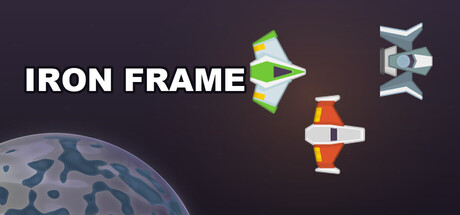
All art, sound and music in Iron Frame are human-made. The sprites and sound
effects are CC0 assets by Kenney, the music is CC0 work by nene, and the store
capsules are composed from those same sprites — nothing you see or hear was
generated by AI.
Generative AI was used as a writing assistant for some in-game text: weapon,
frame and enemy names and their one-line descriptions, and this store page.
Everything was reviewed and edited by the developer, and no content is generated
while you play.
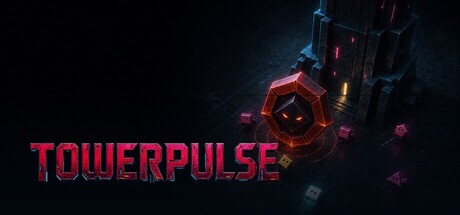
Some pre-generated visual and audio assets used in TOWERPULSE were created with the assistance of generative AI tools during development. These assets were selected, edited, and integrated by the developer.
TOWERPULSE does not use generative AI at runtime. No player prompts, gameplay content, dialogue, or other assets are generated live while the game is running.
Generative AI tools were used during development to assist with programming and in the creation of certain pre-generated game assets. All AI-assisted content was reviewed, selected, edited when necessary, and manually integrated by the developer. No AI-generated content is produced in real time during gameplay.
The 2D art in this game — character and enemy sprites, weapon and UI icons, visual effects, tilesets, the title screen, and the store artwork — was produced with the help of generative AI image tools. Every asset was then processed by hand for the game: sliced, colour-keyed, scaled with nearest-neighbour, and assembled into sprite sheets by the developer.
All audio is synthesised procedurally by the developer's own scripts — it is not AI generated. The game's code and design are written by the developer.
Nothing is generated by AI while you play. All content ships with the game and never changes.
Generative AI tools were used during development to assist in creating various game assets, including visual assets, UI elements, and some audio content. All AI-assisted content was reviewed, selected, and integrated by the developer as part of the game's overall creative direction. The game does not use generative AI to create content in real time during gameplay.
Contenu visuel pré-généré uniquement. Des outils d'IA générative ont servi à
produire une partie des illustrations livrées avec le jeu (portraits de
personnages, décors, illustrations de cartes, icônes de succès) ainsi que des
ressources graphiques de la page du magasin. Toutes les images ont été
sélectionnées, retouchées et validées manuellement par le développeur avant
intégration. Aucune génération en temps réel pendant le jeu.
Text content only, all pre-generated during development and reviewed by the developer. AI assistance was used to write the in-game story text, the user interface translations for the 8 supported languages, the achievement names and descriptions, and the store page copy. Nothing is generated live at runtime and the game does not connect to any AI service. Art, sprites, capsule images, icons and the soundtrack are NOT AI-generated: they are produced by procedural scripts written by the developer and included in the project source.
This game contains pre-generated content created with the assistance of generative AI, including selected visual assets, music, sound effects, and written content. All AI-assisted content is reviewed and curated by the developer before release. The game does not use generative AI to create content live while players are playing.
Generative AI tools were used during development to create some pre-generated visual assets, including certain ships, enemies, bosses, and visual effects. These assets were reviewed, selected, edited, and manually processed before being integrated into the game. HULLSTORM does not generate content using AI during gameplay.
Parts of this game's 2D art were created with the help of generative AI, and every generated asset was reviewed, edited and approved by us before it shipped.
Specifically:
• In-game UI icons (weapon and stat icons) start as AI-generated flat silhouettes, which we then clean up, recolour and integrate by hand.
• Some marketing and store page imagery — background and atmospheric layers of our capsule art — is AI-generated.
• Parts of the source code and some store page text were written with AI assistance and then reviewed, edited and tested by the developers.
Everything else is made by hand, without generative AI: the logo, the app icon and mascot, all 3D models, materials, shaders and visual effects, level layouts.
No generative AI runs while you play. The game does not create content or code at runtime, and it never connects to an external AI service.
Generative AI was used during development to assist in creating and refining some visual assets and development materials. All AI-assisted content included in the game and its marketing is reviewed, selected, and edited by the developer before publication. No AI-generated content is created during gameplay.
This game is currentilty making use of 2 AI generate models among all other hand crafted models for the PLAYTEST alone and will be changed during DEMO and FULL RELEASE.
This game uses generative AI to create part of its visual content. Specifically, AI tools were used as part of the graphics workflow to generate concept and source material for sprites and artwork, which were then manually reworked, adjusted, and integrated into the final game using Affinity Designer.
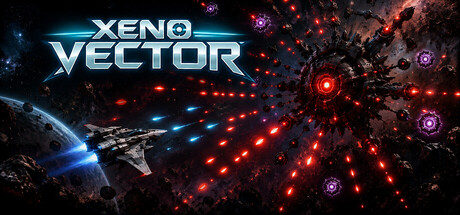
AI-assisted coding was used in the development of Xenovector, including systems responsible for procedural environments, visual effects and dynamically assembled in-game scenery.
AI-generated or AI-assisted artwork was also used for in-game backgrounds and graphical elements, in addition to promotional/store assets.
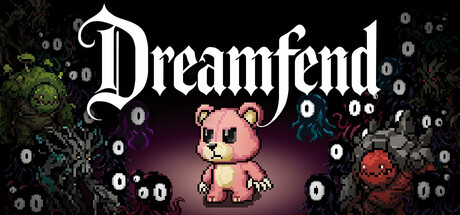
Some assets in Dreamfend were created using generative AI tools. This applies to the music and to some of the visual assets. All such content is reviewed and refined by hand to match the game's style and the author's intent. No content is generated during gameplay.
Generative AI tools were used during development to assist with creating and refining some pre-generated artwork and other media assets, including assets used in the game and on its Steam store page. All AI-assisted content was reviewed, edited, and integrated by the developer. The game does not generate AI content during gameplay or connect to external AI services.
Generative AI tools were used to assist with translations of user interface text and game descriptions into some supported languages. All localization content is pre-generated and included in the game files. The game does not generate any content using AI at runtime.
Penguin Fury uses generative AI tools for part of its content.
Localization: The game is available in 39 languages. The original text was
written by the developer. The translations were produced with AI translation
tools and reviewed before release.
Art: Some achievement icons and character/UI artwork were created with the help
of AI image tools and then edited by the developer.
Store page: Some of the text and images on this store page were created with AI
assistance and edited by the developer.
No AI content is generated while you play. Everything in the game is created in
advance and shipped with the build.
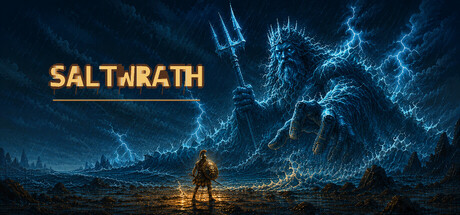
Some of SALTWRATH's audio and store artwork was created using generative AI tools and then edited by hand. The music and sound effects were generated with Suno, then trimmed, mixed and levelled manually before being used in the game. Some store page and capsule artwork was generated with an AI image tool and edited before use.
The game itself does not use generative AI while you play. Nothing is generated live during a run, no content changes between playthroughs because of AI, and no player input is ever sent to an AI service.
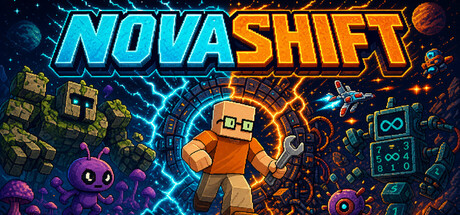
NovaShift: Universe uses AI-generated art. Some 2D artwork — enemy, boss and item sprites for several game universes, boss projectile sprites, and store/marketing images (capsules, key art, logo) — was created with the assistance of AI image-generation tools, then curated, edited, transparency-cleaned and integrated by the developer. All gameplay code, procedural art, audio and game design are human-made. No content is generated by AI at runtime; players never interact with a live AI system.
Generative AI tools were used in the creation of some visual assets in the game. Some generated artwork was used directly after review, while other generated artwork was edited, modified, or used as a starting point for final assets.
AI tools were used to create some of the game's artwork, UI elements, backgrounds, music and sound effects. Visual effects generally combine or modify multiple generated assets, while sound effects are edited and layered from multiple generated sounds. Some generated artwork, including backgrounds and UI elements, is used largely as originally created. No AI content is generated during gameplay.
This work incorporates the use of generative artificial intelligence (AI) in the following areas:
Parts of the artwork, parts of the sound, and localization.
Some of the game's 2D artwork - was created using generative AI tools, then manually curated and edited by the developer. Text
localization into non-English languages is AI-assisted and reviewed by
the developer. A planned voice for one character will use AI speech
generation. All game design, level design, code, gameplay systems, and
the English text are human-made.
Generative AI tools were used during development for visual assets, 3D models, audio, and localization. Final assets were selected and integrated by the developer. Generative AI was also used to assist with translations. No AI content is generated during gameplay.
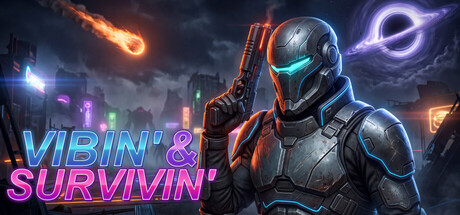
As a solo project, Vibin & Survivin leverages AI assistance for asset design, audio generation, and coding support. This allowed me to punch above my weight class as a single developer and focus on crafting tight, responsive action-roguelike gameplay!
Some of our store and marketing art started as AI-generated images. We used Midjourney to create the base key art for the Steam capsules, the library hero and the page background, then edited and composited those into the final images ourselves. The logo, wordmark and typography are our own work.
The game itself does not use generative AI. Every in-game asset (art, animation, UI, music, sound, and code) was made by us, by hand or with our own tools.
We’ve reviewed the AI-assisted art, we hold the rights to use it commercially, and as far as we’re aware it doesn’t infringe anyone else’s work.
This work of love was made with the best tools and talent I could get my hands on. That includes commercially available AI tools, because what idiot wouldn't use the best tools at their disposal? Some of the sprite art, the key art, and the score were made with AI under my direction and finished by hand. Play the game. If it sucks, that's because I'm a lousy manager, not because some of the tools were AI.
Some visual assets were created with the assistance of generative AI tools and then curated and edited by the developer: story illustrations, character portraits, key art / capsule backgrounds, and a small number of decorative item images.
All gameplay sprites, animations, environments, music and sound effects are human-made assets used under CC0 / open licenses (credited in-game).
Voice-over lines (English and Turkish) were generated with ElevenLabs text-to-speech under a commercial license, from scripts written by the developer.
The game does not generate any content with AI at runtime. The developer has reviewed all AI-assisted content to ensure it is not illegal or infringing.
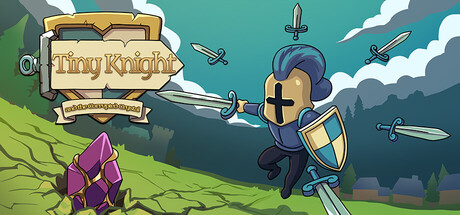
Tiny Knight and the Corrupted Crystal uses AI-generated music. All background music tracks were created with Suno, then edited, and mixed by the developer before being placed in the game.
Generative AI tools were used during the art creation process to generate initial inspiration and drafts. All final art assets were then redrawn, refined, and finalized by the developer to ensure visual consistency, polish, and alignment with the game's overall tone.
AI was used only to generate the music and sound effects for BitBeasts. No AI was used to generate the game's visual assets, gameplay systems, code, or other core game content.
Used AI to over optimize the performance of the game as it is very painful to have 1000 monsters with real physics on your screen at the same time and 100 projectiles per seconds without turning your pc into an oven
Generative AI was used as an assistive tool during development and for localization support. All such content was reviewed and edited by the developer before inclusion. The game does not generate AI content live during gameplay.
Portions of the game's text content (item descriptions and English localization) and store page text were written with the assistance of a generative AI language model, under human direction with full review and editing. All artwork is hand-drawn by the developers, and the game does not use any live/runtime AI generation.
All art, sound and music in Iron Frame are human-made. The sprites and sound
effects are CC0 assets by Kenney, the music is CC0 work by nene, and the store
capsules are composed from those same sprites — nothing you see or hear was
generated by AI.
Generative AI was used as a writing assistant for some in-game text: weapon,
frame and enemy names and their one-line descriptions, and this store page.
Everything was reviewed and edited by the developer, and no content is generated
while you play.
Some pre-generated visual and audio assets used in TOWERPULSE were created with the assistance of generative AI tools during development. These assets were selected, edited, and integrated by the developer.
TOWERPULSE does not use generative AI at runtime. No player prompts, gameplay content, dialogue, or other assets are generated live while the game is running.
Generative AI tools were used during development to assist with programming and in the creation of certain pre-generated game assets. All AI-assisted content was reviewed, selected, edited when necessary, and manually integrated by the developer. No AI-generated content is produced in real time during gameplay.
The 2D art in this game — character and enemy sprites, weapon and UI icons, visual effects, tilesets, the title screen, and the store artwork — was produced with the help of generative AI image tools. Every asset was then processed by hand for the game: sliced, colour-keyed, scaled with nearest-neighbour, and assembled into sprite sheets by the developer.
All audio is synthesised procedurally by the developer's own scripts — it is not AI generated. The game's code and design are written by the developer.
Nothing is generated by AI while you play. All content ships with the game and never changes.
Generative AI tools were used during development to assist in creating various game assets, including visual assets, UI elements, and some audio content. All AI-assisted content was reviewed, selected, and integrated by the developer as part of the game's overall creative direction. The game does not use generative AI to create content in real time during gameplay.
Contenu visuel pré-généré uniquement. Des outils d'IA générative ont servi à
produire une partie des illustrations livrées avec le jeu (portraits de
personnages, décors, illustrations de cartes, icônes de succès) ainsi que des
ressources graphiques de la page du magasin. Toutes les images ont été
sélectionnées, retouchées et validées manuellement par le développeur avant
intégration. Aucune génération en temps réel pendant le jeu.
Text content only, all pre-generated during development and reviewed by the developer. AI assistance was used to write the in-game story text, the user interface translations for the 8 supported languages, the achievement names and descriptions, and the store page copy. Nothing is generated live at runtime and the game does not connect to any AI service. Art, sprites, capsule images, icons and the soundtrack are NOT AI-generated: they are produced by procedural scripts written by the developer and included in the project source.
This game contains pre-generated content created with the assistance of generative AI, including selected visual assets, music, sound effects, and written content. All AI-assisted content is reviewed and curated by the developer before release. The game does not use generative AI to create content live while players are playing.
Generative AI tools were used during development to create some pre-generated visual assets, including certain ships, enemies, bosses, and visual effects. These assets were reviewed, selected, edited, and manually processed before being integrated into the game. HULLSTORM does not generate content using AI during gameplay.
Parts of this game's 2D art were created with the help of generative AI, and every generated asset was reviewed, edited and approved by us before it shipped.
Specifically:
• In-game UI icons (weapon and stat icons) start as AI-generated flat silhouettes, which we then clean up, recolour and integrate by hand.
• Some marketing and store page imagery — background and atmospheric layers of our capsule art — is AI-generated.
• Parts of the source code and some store page text were written with AI assistance and then reviewed, edited and tested by the developers.
Everything else is made by hand, without generative AI: the logo, the app icon and mascot, all 3D models, materials, shaders and visual effects, level layouts.
No generative AI runs while you play. The game does not create content or code at runtime, and it never connects to an external AI service.
Generative AI was used during development to assist in creating and refining some visual assets and development materials. All AI-assisted content included in the game and its marketing is reviewed, selected, and edited by the developer before publication. No AI-generated content is created during gameplay.
This game is currentilty making use of 2 AI generate models among all other hand crafted models for the PLAYTEST alone and will be changed during DEMO and FULL RELEASE.
This game uses generative AI to create part of its visual content. Specifically, AI tools were used as part of the graphics workflow to generate concept and source material for sprites and artwork, which were then manually reworked, adjusted, and integrated into the final game using Affinity Designer.
AI-assisted coding was used in the development of Xenovector, including systems responsible for procedural environments, visual effects and dynamically assembled in-game scenery.
AI-generated or AI-assisted artwork was also used for in-game backgrounds and graphical elements, in addition to promotional/store assets.
Some assets in Dreamfend were created using generative AI tools. This applies to the music and to some of the visual assets. All such content is reviewed and refined by hand to match the game's style and the author's intent. No content is generated during gameplay.
Generative AI tools were used during development to assist with creating and refining some pre-generated artwork and other media assets, including assets used in the game and on its Steam store page. All AI-assisted content was reviewed, edited, and integrated by the developer. The game does not generate AI content during gameplay or connect to external AI services.
Generative AI tools were used to assist with translations of user interface text and game descriptions into some supported languages. All localization content is pre-generated and included in the game files. The game does not generate any content using AI at runtime.
Penguin Fury uses generative AI tools for part of its content.
Localization: The game is available in 39 languages. The original text was
written by the developer. The translations were produced with AI translation
tools and reviewed before release.
Art: Some achievement icons and character/UI artwork were created with the help
of AI image tools and then edited by the developer.
Store page: Some of the text and images on this store page were created with AI
assistance and edited by the developer.
No AI content is generated while you play. Everything in the game is created in
advance and shipped with the build.
Some of SALTWRATH's audio and store artwork was created using generative AI tools and then edited by hand. The music and sound effects were generated with Suno, then trimmed, mixed and levelled manually before being used in the game. Some store page and capsule artwork was generated with an AI image tool and edited before use.
The game itself does not use generative AI while you play. Nothing is generated live during a run, no content changes between playthroughs because of AI, and no player input is ever sent to an AI service.
NovaShift: Universe uses AI-generated art. Some 2D artwork — enemy, boss and item sprites for several game universes, boss projectile sprites, and store/marketing images (capsules, key art, logo) — was created with the assistance of AI image-generation tools, then curated, edited, transparency-cleaned and integrated by the developer. All gameplay code, procedural art, audio and game design are human-made. No content is generated by AI at runtime; players never interact with a live AI system.
Generative AI tools were used in the creation of some visual assets in the game. Some generated artwork was used directly after review, while other generated artwork was edited, modified, or used as a starting point for final assets.
AI tools were used to create some of the game's artwork, UI elements, backgrounds, music and sound effects. Visual effects generally combine or modify multiple generated assets, while sound effects are edited and layered from multiple generated sounds. Some generated artwork, including backgrounds and UI elements, is used largely as originally created. No AI content is generated during gameplay.
This work incorporates the use of generative artificial intelligence (AI) in the following areas:
Parts of the artwork, parts of the sound, and localization.
Some of the game's 2D artwork - was created using generative AI tools, then manually curated and edited by the developer. Text
localization into non-English languages is AI-assisted and reviewed by
the developer. A planned voice for one character will use AI speech
generation. All game design, level design, code, gameplay systems, and
the English text are human-made.
Generative AI tools were used during development for visual assets, 3D models, audio, and localization. Final assets were selected and integrated by the developer. Generative AI was also used to assist with translations. No AI content is generated during gameplay.
As a solo project, Vibin & Survivin leverages AI assistance for asset design, audio generation, and coding support. This allowed me to punch above my weight class as a single developer and focus on crafting tight, responsive action-roguelike gameplay!
Some of our store and marketing art started as AI-generated images. We used Midjourney to create the base key art for the Steam capsules, the library hero and the page background, then edited and composited those into the final images ourselves. The logo, wordmark and typography are our own work.
The game itself does not use generative AI. Every in-game asset (art, animation, UI, music, sound, and code) was made by us, by hand or with our own tools.
We’ve reviewed the AI-assisted art, we hold the rights to use it commercially, and as far as we’re aware it doesn’t infringe anyone else’s work.
This work of love was made with the best tools and talent I could get my hands on. That includes commercially available AI tools, because what idiot wouldn't use the best tools at their disposal? Some of the sprite art, the key art, and the score were made with AI under my direction and finished by hand. Play the game. If it sucks, that's because I'm a lousy manager, not because some of the tools were AI.
Some visual assets were created with the assistance of generative AI tools and then curated and edited by the developer: story illustrations, character portraits, key art / capsule backgrounds, and a small number of decorative item images.
All gameplay sprites, animations, environments, music and sound effects are human-made assets used under CC0 / open licenses (credited in-game).
Voice-over lines (English and Turkish) were generated with ElevenLabs text-to-speech under a commercial license, from scripts written by the developer.
The game does not generate any content with AI at runtime. The developer has reviewed all AI-assisted content to ensure it is not illegal or infringing.
Tiny Knight and the Corrupted Crystal uses AI-generated music. All background music tracks were created with Suno, then edited, and mixed by the developer before being placed in the game.
Generative AI tools were used during the art creation process to generate initial inspiration and drafts. All final art assets were then redrawn, refined, and finalized by the developer to ensure visual consistency, polish, and alignment with the game's overall tone.
AI was used only to generate the music and sound effects for BitBeasts. No AI was used to generate the game's visual assets, gameplay systems, code, or other core game content.
Used AI to over optimize the performance of the game as it is very painful to have 1000 monsters with real physics on your screen at the same time and 100 projectiles per seconds without turning your pc into an oven
Generative AI was used as an assistive tool during development and for localization support. All such content was reviewed and edited by the developer before inclusion. The game does not generate AI content live during gameplay.
Portions of the game's text content (item descriptions and English localization) and store page text were written with the assistance of a generative AI language model, under human direction with full review and editing. All artwork is hand-drawn by the developers, and the game does not use any live/runtime AI generation.