Public Steam disclosure research25,376 disclosures tracked
Where do games disclose AI use?
Search developers’ Steam disclosures, compare classified AI use across
games, and follow recorded changes.
This index adds cross-game classifications and statistics to
statements published on individual store pages.
Groups reflect automatic analysis of public disclosures; mature records are excluded. These counts do not measure AI use across all of Steam.
Missing or unclear statements cannot establish whether a game uses AI.
Generative AI tools were used to assist in creating certain pre-rendered 2D assets, including achievement icons. These assets are static, were manually reviewed and edited before inclusion, and do not involve any live generation during gameplay. The game does not send player information to generative AI services.
Art: AI image tools assisted with some 2D assets; all final art was produced by our artists based on original designs.
Localization: Core languages were translated by our team; additional languages use AI-assisted translation.
Development of this game uses AI coding agents. Some procedural shader code shipping in the game was written by coding agents following human-made designs. All designs, music, and art styles are created by humans. All in-game text is written or edited by a human before release; no generated text ships unreviewed. No AI content is generated at runtime.
Part of the game's art illustrations and promotional materials are assisted by generative AI. All AI-generated assets have been manually reviewed, edited and verified for compliance, with no infringing or illegal content.
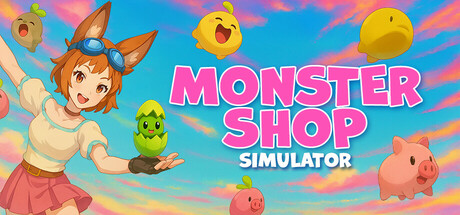
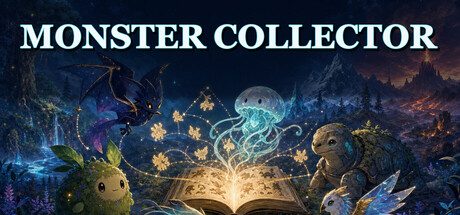
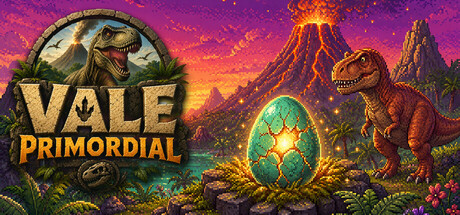
The images shown on the monster reveal screen after an egg is cracked, and the artwork used on the daily report screen, were created with generative AI.
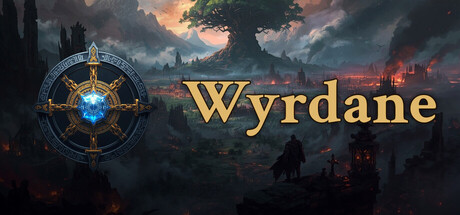
Wyrdane uses AI-generated artwork for its card illustrations. As a solo developer working without a starting budget, this is a pragmatic choice to bring the game's world to life and test its mechanics without a professional illustration budget. If the project finds its audience, the goal is to progressively replace these visuals with artwork made by human illustrators.
Game design, card balance, game mechanics, world-building, and creative direction are entirely human-made. AI is a production tool, not the creator of this game.
Generative AI tools, including Claude and Codex, were used during development to assist with programming, game logic, written content, and other development tasks. All AI-assisted output was reviewed, edited, and integrated by the developer before inclusion in the final product. The game does not generate AI content during gameplay and does not connect to external generative AI services at runtime.
Some of the visual material for this game was created with the help of generative AI tools. Specifically, the opening cinematic and several of the promotional images on this store page were produced using AI-assisted image generation, followed by manual editing, compositing and art direction by our team. All gameplay, code, design and audio were created without generative AI.
AI tools including ChatGPT, Lovart, and others were used during development to generate early concept art for characters, weapons, props, UI, and pet animations. All final in-game assets were manually redrawn and refined by our art team.
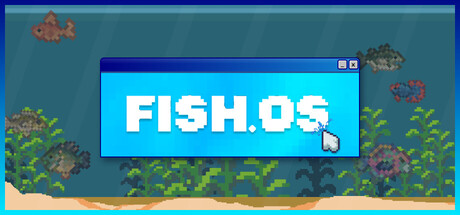
Some 2D art in the game was created with the help of an AI pixel-art tool during development, specifically the application icons and and was hand-adjusted before shipping. The rest of the game's art, including all fish sprites and item icons, was made without AI.
Some plant artwork and store assets were created with AI-assisted tools and then manually reviewed, edited, and integrated into the game. DeskBloom does not generate AI images, text, audio, or other content during gameplay.
Generative AI tools were used during development to assist with the creation of some pre-generated visual assets and development materials. All AI-assisted content is reviewed, selected, and integrated by the developer. The game does not generate AI content during gameplay.
This game uses generative AI as an assistive tool for creating some artwork and store assets. All AI-assisted content has been reviewed, edited, and approved by the developer before inclusion. The game does not generate AI content during gameplay.
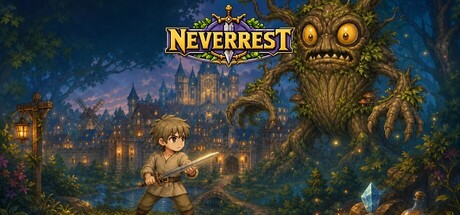
Neverrest uses generative AI tools during development to assist with the creation of some pre-rendered 2D artwork and visual assets. All AI-assisted content is reviewed, edited, and integrated by the developer. The game does not generate AI content during gameplay.
During development, OpenAI image generation tools were used to create portions of the game's 2D artwork, including characters, monsters, backgrounds, UI elements, and icons. Suno was used to create portions of the background music, and ElevenLabs was used to create portions of the sound effects. Generative AI was also used as a drafting and editing aid for some in-game writing and localization.
All generated material was selected, edited, processed, and reviewed by the developer before inclusion in the game. The game does not connect to generative AI services at runtime and does not generate content from player input.
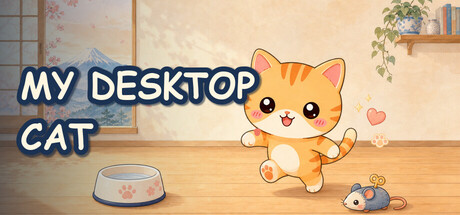
Generative AI was used during development to create and refine some pre-generated visual assets, including cat character and animation sprites, backgrounds, decorative items, achievement icons, and selected store and marketing artwork. Every generated asset was reviewed, edited, and integrated by the developer before inclusion. The game does not generate AI content at runtime and does not connect to external AI services during play.
This game was developed with substantial help from generative AI: the pixel art (in-game art, capsules and icons), the code, much of the text, and the translations were produced with AI assistance and then reviewed, refined, and directed by the developer.
AI was used only to generate the music and sound effects for BitBeasts. No AI was used to generate the game's visual assets, gameplay systems, code, or other core game content.
Generative AI was used to create visual art in this game. Creature, character and background artwork was produced with AI image and animation tools, then hand-edited, cleaned up and assembled by the developer before being placed in the game. This artwork also appears in store page and marketing materials. The game additionally uses licensed, human-made pixel-art asset packs. AI tools (LLM) were also used to help write the game's code and in-game text during development, and to translate that text into the game's six non-English languages (Korean, Simplified Chinese, Japanese, Russian, Spanish, Brazilian Portuguese). All audio - music and sound effects - is human-made and licensed from human creators; no generative AI was used for audio. No AI runs during gameplay: all content is generated ahead of time and reviewed by the developer before it ships.
The game's music was generated using an AI tool (Suno), then selected and mixed by me. Everything else — 3D models, textures, animations, sound effects, text and code is handmade. My goal is to replace it with original compositions from a human artist as soon as sales allow.
Some cosmetic cat skins and visual assets were created with the assistance of generative AI tools. All final assets are manually reviewed, edited, and integrated by the developer. The game does not generate AI content during gameplay.
Some visual assets, including certain item artwork, icons, and promotional images, were created or assisted using generative AI. All AI-generated content was reviewed, edited, and curated by the development team before being included in the game.
Some of the artwork in this game was created with the assistance of generative AI tools as part of our development process. All AI-assisted content is reviewed, edited, and finalized by our human artists before being included in the game.
During the development of this game, we utilized generative AI tools to assist in the following areas:
Code Development: Portions of game logic and system code were generated with AI assistance. All AI-generated code has been manually reviewed, adjusted, and integrated into the final product to ensure stability and performance.
Multilingual Text Translation (English): The English localization—including UI, dialogues, and prompts—was initially drafted using AI translation. These drafts were then proofread and polished by professional translators to ensure natural language flow and cultural appropriateness.
All AI-generated content has undergone rigorous human review and testing to meet our quality standards and deliver a great player experience. If you have any questions, please feel free to contact the developers.
This game uses AI-generated content. The character artwork was pre-generated locally with an image model (Animagine XL 3.1) and manually curated by the developer. During gameplay, the mascot's chat replies (text only) are generated in real time by a bundled local language model (Google Gemma 3 via the Ollama runtime) running entirely on your PC. No internet connection is used and no conversation data leaves your device.
Some of the background music in Aquora was produced using a generative audio tool. Those tracks are placeholder. They are being replaced with commissioned
original music, and any remaining generated audio will be phased out of the game over time.
All visual art in Aquora is procedurally generated by the developer's own custom tooling, drawn from hand-authored colour palettes, explicit shape instructions
and seeded random number generation. No image generation model is involved at any point in the art pipeline, and no AI generated images appear in the game.
I mostly use AI for debugging and I make it document my code for me. I've been using it for placeholder art but intend on replacing all, or at least most of them by release. I use it like a tool I can turn to for general tasks rather then a crutch that does everything.
I’m a web designer by day, and making a game has been a childhood dream of mine. I used generative AI as part of my development process, including helping with code, visual and audio assets. Every asset included in the final game was personally selected, refined by hand, placed, and directed by me to match the game’s overall vision.
Some artwork used in Salty was created with the assistance of generative AI tools, including store page capsule art, marketing images, and certain in-game visual assets. All game design, code, systems, and gameplay are authored by the developer. No AI content is generated during gameplay.
Generative AI assisted with selected 2D art, promotional assets,. All content was manually reviewed, edited, and integrated. The game does not generate AI content at runtime.
This game contains pre-generated visual, audio, and text assets created with generative AI and selected, directed, edited, and integrated by the developer. It does not use live-generated AI content during gameplay.
AI tools were used to assist with early visual ideation and development production pipelines. All content has been reviewed, edited, refined, and integrated by the development team.
This game uses pre-generated AI-assisted content. The base concepts, 3D geometry, textures, and some source animation data for the male and female player characters were created with Tencent Hunyuan 3D Studio. The development team subsequently performed extensive manual editing and integration, including topology and rigging adjustments, animation processing, hand replacement, material work, and technical review. No content is generated by AI during
Graphic assets such as sprites and decorations are created with AI tools, then refined by hand in software like Photoshop. Videos follow the same process. Music and sound effects contain no AI-generated content.
AI tools were used during development for the following assets:
Steam Store capsule images and marketing art
Game localization and text translations
Select 2D visual assets and graphics in the game
Parts of this game's content were created with the help of generative AI, always under human direction and review: some in-game artwork and text, and the store page's localizations. All AI-assisted content is pre-rendered — nothing is generated live while you play.
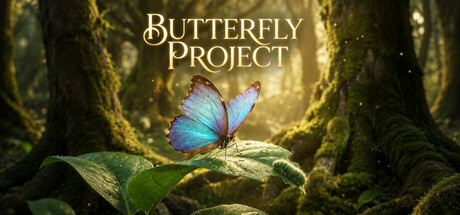
Some visual assets in Butterfly Project (such as backgrounds and illustrations) were created with the assistance of generative AI tools, then selected and integrated by the developer. Gameplay, systems, and overall design are human-made.
Generative AI tools were used to assist in creating certain pre-rendered 2D assets, including achievement icons. These assets are static, were manually reviewed and edited before inclusion, and do not involve any live generation during gameplay. The game does not send player information to generative AI services.
Art: AI image tools assisted with some 2D assets; all final art was produced by our artists based on original designs.
Localization: Core languages were translated by our team; additional languages use AI-assisted translation.
Development of this game uses AI coding agents. Some procedural shader code shipping in the game was written by coding agents following human-made designs. All designs, music, and art styles are created by humans. All in-game text is written or edited by a human before release; no generated text ships unreviewed. No AI content is generated at runtime.
Part of the game's art illustrations and promotional materials are assisted by generative AI. All AI-generated assets have been manually reviewed, edited and verified for compliance, with no infringing or illegal content.
The images shown on the monster reveal screen after an egg is cracked, and the artwork used on the daily report screen, were created with generative AI.
Wyrdane uses AI-generated artwork for its card illustrations. As a solo developer working without a starting budget, this is a pragmatic choice to bring the game's world to life and test its mechanics without a professional illustration budget. If the project finds its audience, the goal is to progressively replace these visuals with artwork made by human illustrators.
Game design, card balance, game mechanics, world-building, and creative direction are entirely human-made. AI is a production tool, not the creator of this game.
Generative AI tools, including Claude and Codex, were used during development to assist with programming, game logic, written content, and other development tasks. All AI-assisted output was reviewed, edited, and integrated by the developer before inclusion in the final product. The game does not generate AI content during gameplay and does not connect to external generative AI services at runtime.
Some of the visual material for this game was created with the help of generative AI tools. Specifically, the opening cinematic and several of the promotional images on this store page were produced using AI-assisted image generation, followed by manual editing, compositing and art direction by our team. All gameplay, code, design and audio were created without generative AI.
AI tools including ChatGPT, Lovart, and others were used during development to generate early concept art for characters, weapons, props, UI, and pet animations. All final in-game assets were manually redrawn and refined by our art team.
Some 2D art in the game was created with the help of an AI pixel-art tool during development, specifically the application icons and and was hand-adjusted before shipping. The rest of the game's art, including all fish sprites and item icons, was made without AI.
Some plant artwork and store assets were created with AI-assisted tools and then manually reviewed, edited, and integrated into the game. DeskBloom does not generate AI images, text, audio, or other content during gameplay.
Generative AI tools were used during development to assist with the creation of some pre-generated visual assets and development materials. All AI-assisted content is reviewed, selected, and integrated by the developer. The game does not generate AI content during gameplay.
This game uses generative AI as an assistive tool for creating some artwork and store assets. All AI-assisted content has been reviewed, edited, and approved by the developer before inclusion. The game does not generate AI content during gameplay.
Neverrest uses generative AI tools during development to assist with the creation of some pre-rendered 2D artwork and visual assets. All AI-assisted content is reviewed, edited, and integrated by the developer. The game does not generate AI content during gameplay.
During development, OpenAI image generation tools were used to create portions of the game's 2D artwork, including characters, monsters, backgrounds, UI elements, and icons. Suno was used to create portions of the background music, and ElevenLabs was used to create portions of the sound effects. Generative AI was also used as a drafting and editing aid for some in-game writing and localization.
All generated material was selected, edited, processed, and reviewed by the developer before inclusion in the game. The game does not connect to generative AI services at runtime and does not generate content from player input.
Generative AI was used during development to create and refine some pre-generated visual assets, including cat character and animation sprites, backgrounds, decorative items, achievement icons, and selected store and marketing artwork. Every generated asset was reviewed, edited, and integrated by the developer before inclusion. The game does not generate AI content at runtime and does not connect to external AI services during play.
This game was developed with substantial help from generative AI: the pixel art (in-game art, capsules and icons), the code, much of the text, and the translations were produced with AI assistance and then reviewed, refined, and directed by the developer.
AI was used only to generate the music and sound effects for BitBeasts. No AI was used to generate the game's visual assets, gameplay systems, code, or other core game content.
Generative AI was used to create visual art in this game. Creature, character and background artwork was produced with AI image and animation tools, then hand-edited, cleaned up and assembled by the developer before being placed in the game. This artwork also appears in store page and marketing materials. The game additionally uses licensed, human-made pixel-art asset packs. AI tools (LLM) were also used to help write the game's code and in-game text during development, and to translate that text into the game's six non-English languages (Korean, Simplified Chinese, Japanese, Russian, Spanish, Brazilian Portuguese). All audio - music and sound effects - is human-made and licensed from human creators; no generative AI was used for audio. No AI runs during gameplay: all content is generated ahead of time and reviewed by the developer before it ships.
The game's music was generated using an AI tool (Suno), then selected and mixed by me. Everything else — 3D models, textures, animations, sound effects, text and code is handmade. My goal is to replace it with original compositions from a human artist as soon as sales allow.
Some cosmetic cat skins and visual assets were created with the assistance of generative AI tools. All final assets are manually reviewed, edited, and integrated by the developer. The game does not generate AI content during gameplay.
Some visual assets, including certain item artwork, icons, and promotional images, were created or assisted using generative AI. All AI-generated content was reviewed, edited, and curated by the development team before being included in the game.
Some of the artwork in this game was created with the assistance of generative AI tools as part of our development process. All AI-assisted content is reviewed, edited, and finalized by our human artists before being included in the game.
During the development of this game, we utilized generative AI tools to assist in the following areas:
Code Development: Portions of game logic and system code were generated with AI assistance. All AI-generated code has been manually reviewed, adjusted, and integrated into the final product to ensure stability and performance.
Multilingual Text Translation (English): The English localization—including UI, dialogues, and prompts—was initially drafted using AI translation. These drafts were then proofread and polished by professional translators to ensure natural language flow and cultural appropriateness.
All AI-generated content has undergone rigorous human review and testing to meet our quality standards and deliver a great player experience. If you have any questions, please feel free to contact the developers.
This game uses AI-generated content. The character artwork was pre-generated locally with an image model (Animagine XL 3.1) and manually curated by the developer. During gameplay, the mascot's chat replies (text only) are generated in real time by a bundled local language model (Google Gemma 3 via the Ollama runtime) running entirely on your PC. No internet connection is used and no conversation data leaves your device.
Some of the background music in Aquora was produced using a generative audio tool. Those tracks are placeholder. They are being replaced with commissioned
original music, and any remaining generated audio will be phased out of the game over time.
All visual art in Aquora is procedurally generated by the developer's own custom tooling, drawn from hand-authored colour palettes, explicit shape instructions
and seeded random number generation. No image generation model is involved at any point in the art pipeline, and no AI generated images appear in the game.
I mostly use AI for debugging and I make it document my code for me. I've been using it for placeholder art but intend on replacing all, or at least most of them by release. I use it like a tool I can turn to for general tasks rather then a crutch that does everything.
I’m a web designer by day, and making a game has been a childhood dream of mine. I used generative AI as part of my development process, including helping with code, visual and audio assets. Every asset included in the final game was personally selected, refined by hand, placed, and directed by me to match the game’s overall vision.
Some artwork used in Salty was created with the assistance of generative AI tools, including store page capsule art, marketing images, and certain in-game visual assets. All game design, code, systems, and gameplay are authored by the developer. No AI content is generated during gameplay.
Generative AI assisted with selected 2D art, promotional assets,. All content was manually reviewed, edited, and integrated. The game does not generate AI content at runtime.
This game contains pre-generated visual, audio, and text assets created with generative AI and selected, directed, edited, and integrated by the developer. It does not use live-generated AI content during gameplay.
AI tools were used to assist with early visual ideation and development production pipelines. All content has been reviewed, edited, refined, and integrated by the development team.
This game uses pre-generated AI-assisted content. The base concepts, 3D geometry, textures, and some source animation data for the male and female player characters were created with Tencent Hunyuan 3D Studio. The development team subsequently performed extensive manual editing and integration, including topology and rigging adjustments, animation processing, hand replacement, material work, and technical review. No content is generated by AI during
Graphic assets such as sprites and decorations are created with AI tools, then refined by hand in software like Photoshop. Videos follow the same process. Music and sound effects contain no AI-generated content.
AI tools were used during development for the following assets:
Steam Store capsule images and marketing art
Game localization and text translations
Select 2D visual assets and graphics in the game
Parts of this game's content were created with the help of generative AI, always under human direction and review: some in-game artwork and text, and the store page's localizations. All AI-assisted content is pre-rendered — nothing is generated live while you play.
Some visual assets in Butterfly Project (such as backgrounds and illustrations) were created with the assistance of generative AI tools, then selected and integrated by the developer. Gameplay, systems, and overall design are human-made.