Public Steam disclosure research25,376 disclosures tracked
Where do games disclose AI use?
Search developers’ Steam disclosures, compare classified AI use across
games, and follow recorded changes.
This index adds cross-game classifications and statistics to
statements published on individual store pages.
Groups reflect automatic analysis of public disclosures; mature records are excluded. These counts do not measure AI use across all of Steam.
Missing or unclear statements cannot establish whether a game uses AI.
This game features certain art assets that were generated with the assistance of AI. All such AI-assisted or AI-imitated artwork has been created with the consent of the original creator (which essentially means I fed my own drawings into the AI). All other content, including text, audio, and other materials, was produced without any AI involvement.
Generative AI was used as a development aid to create and modify program code, produce some visual assets, and draft localized text. All AI-generated content has been reviewed, edited, and adjusted by the developer. No AI content is generated while the game is running.
An AI-assisted tool was used to create a preliminary translation pass that was reviewed and revised by human localization professionals.
AI was not and will not be used to generate in-game art, audio, narrative, or gameplay elements.
Generative AI tools were used in creating the game's illustrations, artwork, cutscene images, map designs, and sound, as well as throughout development, and in writing and revising the story. All AI-assisted content was directed, reviewed, and finalized by our team.
Some art assets in the game and on the store page (story character portraits, some icons, backgrounds, and capsule images) were created with AI image generation tools, then manually curated and edited by the developer. All gameplay, code, and written story content is human-made. No AI content is generated at runtime.
Artificial Intelligence Usage Notice:
We have used some generative models to prototype new ideas, and some of them have been made into production. However, AI-generated content is no more than 1% of the total game assets and arts.
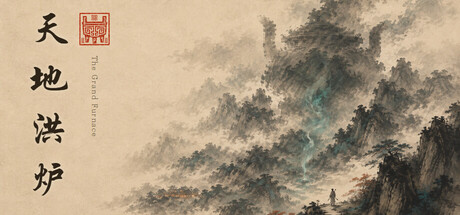
This game uses generative AI in two ways. (1) Live generation: narrative text and NPC dialogue are generated in real time based on the player's choices and current game state. Illustrative images for locations, scenes and items are also generated on demand the first time such an element appears, then cached and reused. Core game rules, numerical outcomes, inventory changes, and progression are always resolved by deterministic game systems. Live text generation is governed by server-side content rules that cannot be directly modified by player input. Live image generation uses server-controlled prompt templates based on structured game data (entity type, name, and a short in-world description) within a fixed ink-painting style; players cannot directly provide image-generation prompts. (2) Development-time generation: some static art assets (including location, scene, item and background illustrations) were generated with image-generation AI tools during development. Store-facing marketing assets and selected screenshots containing such artwork were reviewed by a human before publication. Store page copy was drafted with AI assistance and reviewed by a human.
本游戏以两种方式使用生成式AI。(1)实时生成:叙事文本与NPC对话根据玩家选择与当前游戏状态实时生成;地点/场景/物品的插画也会在其首次出现时按需生成,之后缓存复用。核心规则、数值结算、物品变动与进度始终由确定性游戏系统裁定。实时文本生成受服务端内容规则约束(玩家输入无法直接修改);实时图像生成使用服务端控制的提示词模板,基于结构化游戏数据(实体类别、名称与简短的世界内描述)并锁定水墨画风格,玩家不能直接书写图像提示词。(2)开发期生成:部分静态美术素材(包括地点、场景、物品与背景插画)在开发过程中使用图像生成AI制作;用于商店宣传以及所选商店截图中的相关素材均经过人工审阅后发布。商店页文案由AI辅助创作、经人工审定。
Some promotional and store assets for this game, including the capsule images, library artwork and application icons, were created with the assistance of generative AI tools.
All in game visuals are generated procedurally by the game's own code at runtime: characters, buildings, terrain, animals and effects are drawn from algorithmic vector shapes, not from AI generated images. All audio is synthesised in real time by the game engine. All game code was written by the developer.
Generative AI has been used solely as a supporting tool to create some of the icons used for the character's abilities and upgrades, as well as to assist with translating the game's text into other languages.
This game uses AI-generated imagery. Character portraits, backgrounds, card illustrations, and UI assets were created with generative AI image tools, then reviewed, edited to fit the game's art direction. Store page capsules use the same artwork.
Writing, game design, code, and systems are authored by a human developer. Nothing is generated while the game is running.
Dragon Soul: Awakening is a solo-developed game that uses generative AI as one of many creative tools during development. The logo, some backgrounds, character sprites, UI elements, and music were created using AI-assisted workflows alongside original writing, design, editing, and human-created artwork. Some AI-assisted assets currently serve as placeholders during development and will be replaced before the full release.
Ashen Wild was created almost exclusively with AI tools to generate the code and graphics, VFX, sound etc. The store page, website and other marketing materials were created using AI.
Portions of the in-game codex (character biographies, historical battle summaries) were drafted with the assistance of a large language model based on the developer's own lore notes and edited by hand. A subset of pixel-art tile and prop textures were procedurally generated from developer-written Python scripts. All content is reviewed and finalized by the developer; no generative image models (e.g. Stable Diffusion, Midjourney) were used to produce in-game art.
We use generative AI in two limited ways.
Translation. Simplified Chinese, German, Japanese, and Brazilian Portuguese were machine-translated so the story reaches more players. English, Turkish, French, and Spanish were localized by our international friends and us. However, AI translation can miss nuance, so we warmly welcome player feedback to improve it.
Placeholder art. Three images are AI-generated: the Prologue background and the Mentor and Player portraits. They are placeholders. We believe in human expression and will replace them with commissioned art once the game has an audience.
Everything else (code, design, and all other artwork) is made by human hands.
Generative AI tools were used during the early production stage to create preliminary visual assets and reference materials. All AI-assisted assets included in the final game were manually edited, refined, and reviewed by our designers.
Generative AI was used as an occasional development aid for some dialogue wording, localization, and marketing / store texts.
The game's story, characters, and game design were created by the developer.
AI-assisted dialogue is reviewed and edited by the developer, and AI-assisted translations are reviewed and edited by native speakers.
The game does not use AI-generated images, voices, music, or other AI-generated audiovisual assets.
Some visual assets, audio, voice-over and cinematic elements were created with the assistance of generative AI tools, then selected, edited, refined and integrated by the developer. No generative AI is used live during gameplay.
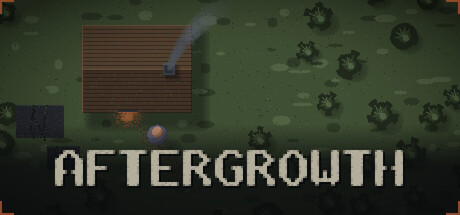
Aftergrowth's code was written with the help of an AI coding assistant, and some of the game's text — including parts of this store page — was first drafted with it and then edited by hand.
Nothing you see or hear is AI-generated. Every sprite, tile and icon is drawn by deterministic Python scripts rather than by an image model. The music is synthesised and the sound effects are CC0 recordings by Kenney, both credited in the game's CREDITS file. No generative AI runs while you play: nothing is generated live, and the game makes no request to any AI service.
Generative AI was used during development to create selected pre-generated store graphics, story illustrations, and in-game art. These assets were reviewed and edited before inclusion. The game does not generate AI content at runtime and does not send player input or personal data to AI services.
This game uses generative AI for some of its assets, specifically: character art and scene backgrounds, UI icons, the main menu motion visual, and part of the soundtrack. All story text is written by the developer; AI was used only for formatting and validation. Every AI-generated asset was manually reviewed, edited, and integrated before shipping.
AI was utilized as a supplementary tool for the creation of some art and promotional imagery. The core game experience is entirely hand-crafted using the Godot engine with original and licensed assets. All AI-generated marketing materials underwent human curation and post-processing to ensure visual consistency with the actual gameplay and compliance with platform guidelines.
All in-game video footage (including characters, scenes, cutscenes,music) is generated using AI tools.
Dialogue writing, choice design, stat system, UI design, programming are hand-crafted by the development team.
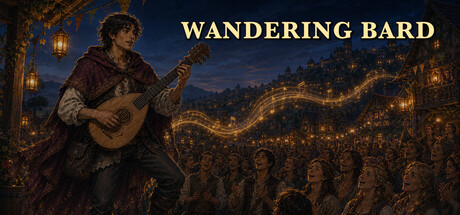
Development of Wandering Bard used generative AI tools to assist with some pre-generated character portraits, environment and store artwork, narrative and dialogue text, fixed character voice recordings, and instrumental music. All of this content was generated before release, then reviewed, selected, edited and integrated by the developer. The game does not generate content during play and does not connect to external AI services during play.
Generative AI tools were used during development to assist with selected pre-generated visual assets, promotional and store-page materials, and localization/text. All AI-assisted content was reviewed, edited, curated, and approved by the developer before inclusion. No generative AI is used during gameplay, and the game does not connect to external AI services while running.
The background art, character art, and music in this game were created with the assistance of generative AI tools. The story and narrative text were written by humans.
Generative AI has been used to assist in the creation of certain promotional artwork and visual assets. AI tools have also been used during development to assist with programming, documentation, and iteration. All generated content has been reviewed, integrated, and validated by the developer before being included in the final product.
All spoken roles were performed by the developer, Morph. Those recordings were then transformed into different character voices and accents using AI voice conversion and further processed with Logic Pro.
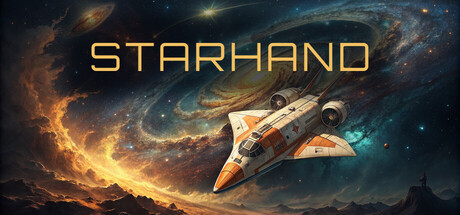
The visual art, music, sound effects, pilot voice lines and written text in Starhand were created using generative AI tools — Recraft for illustration, Suno for music, and ElevenLabs for voice and sound effects — and were then selected, edited and assembled by the developer. All of it is generated ahead of time and ships as fixed assets: the game does not generate any content while you play, and it does not connect to any AI service at runtime.
I'm not a professional game developer or artist. Making my own game had been a dream for years, but I never knew how to turn that dream into reality. Generative AI became the tool that finally made it possible.
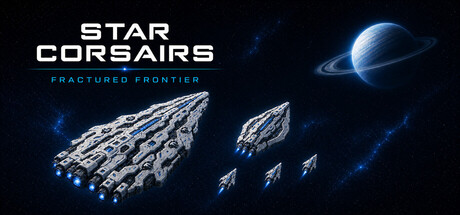
With its help, I created many of the game's visual and audio assets, including item, UI, skill, and module icons, character portraits, ships, space stations, backgrounds, the game icon, the Steam store artwork, and some of the sound effects. It also assisted me with programming.
But Star Corsairs is not a game that AI simply generated. Every asset was reviewed, rejected, refined, or replaced until it matched the vision I had in mind. Every gameplay system was designed, tested, and reworked repeatedly until it felt right. The economy, ship balance, pirate AI, combat, and progression were all shaped through countless hours of playtesting and manual iteration. The story, world, and all of the writing were created by me.
Without generative AI, this game would probably never have existed. But without the countless creative decisions, revisions, and work behind every part of it, Star Corsairs wouldn't exist either.
Generative AI was used for deep game simulation to assist with designing difficulty curves and testing in game mathmatical calculations. It was also used for designing alternative UI Models for cosmetic changes.
Game Design, layout, original creations, music, sound, story, plots, etc. were Designed entirely by the Creator.
The 2D background images in the main menu and the promotional (capsule) designs used on the Steam store page were created with the help of generative AI tools and subsequently edited manually. The characters, battlefields, and in-game pixel art graphics that make up the core game experience are completely outside of this scope.
This game features certain art assets that were generated with the assistance of AI. All such AI-assisted or AI-imitated artwork has been created with the consent of the original creator (which essentially means I fed my own drawings into the AI). All other content, including text, audio, and other materials, was produced without any AI involvement.
Generative AI was used as a development aid to create and modify program code, produce some visual assets, and draft localized text. All AI-generated content has been reviewed, edited, and adjusted by the developer. No AI content is generated while the game is running.
An AI-assisted tool was used to create a preliminary translation pass that was reviewed and revised by human localization professionals.
AI was not and will not be used to generate in-game art, audio, narrative, or gameplay elements.
Generative AI tools were used in creating the game's illustrations, artwork, cutscene images, map designs, and sound, as well as throughout development, and in writing and revising the story. All AI-assisted content was directed, reviewed, and finalized by our team.
Some art assets in the game and on the store page (story character portraits, some icons, backgrounds, and capsule images) were created with AI image generation tools, then manually curated and edited by the developer. All gameplay, code, and written story content is human-made. No AI content is generated at runtime.
Artificial Intelligence Usage Notice:
We have used some generative models to prototype new ideas, and some of them have been made into production. However, AI-generated content is no more than 1% of the total game assets and arts.
This game uses generative AI in two ways. (1) Live generation: narrative text and NPC dialogue are generated in real time based on the player's choices and current game state. Illustrative images for locations, scenes and items are also generated on demand the first time such an element appears, then cached and reused. Core game rules, numerical outcomes, inventory changes, and progression are always resolved by deterministic game systems. Live text generation is governed by server-side content rules that cannot be directly modified by player input. Live image generation uses server-controlled prompt templates based on structured game data (entity type, name, and a short in-world description) within a fixed ink-painting style; players cannot directly provide image-generation prompts. (2) Development-time generation: some static art assets (including location, scene, item and background illustrations) were generated with image-generation AI tools during development. Store-facing marketing assets and selected screenshots containing such artwork were reviewed by a human before publication. Store page copy was drafted with AI assistance and reviewed by a human.
本游戏以两种方式使用生成式AI。(1)实时生成:叙事文本与NPC对话根据玩家选择与当前游戏状态实时生成;地点/场景/物品的插画也会在其首次出现时按需生成,之后缓存复用。核心规则、数值结算、物品变动与进度始终由确定性游戏系统裁定。实时文本生成受服务端内容规则约束(玩家输入无法直接修改);实时图像生成使用服务端控制的提示词模板,基于结构化游戏数据(实体类别、名称与简短的世界内描述)并锁定水墨画风格,玩家不能直接书写图像提示词。(2)开发期生成:部分静态美术素材(包括地点、场景、物品与背景插画)在开发过程中使用图像生成AI制作;用于商店宣传以及所选商店截图中的相关素材均经过人工审阅后发布。商店页文案由AI辅助创作、经人工审定。
Some promotional and store assets for this game, including the capsule images, library artwork and application icons, were created with the assistance of generative AI tools.
All in game visuals are generated procedurally by the game's own code at runtime: characters, buildings, terrain, animals and effects are drawn from algorithmic vector shapes, not from AI generated images. All audio is synthesised in real time by the game engine. All game code was written by the developer.
Generative AI has been used solely as a supporting tool to create some of the icons used for the character's abilities and upgrades, as well as to assist with translating the game's text into other languages.
This game uses AI-generated imagery. Character portraits, backgrounds, card illustrations, and UI assets were created with generative AI image tools, then reviewed, edited to fit the game's art direction. Store page capsules use the same artwork.
Writing, game design, code, and systems are authored by a human developer. Nothing is generated while the game is running.
Dragon Soul: Awakening is a solo-developed game that uses generative AI as one of many creative tools during development. The logo, some backgrounds, character sprites, UI elements, and music were created using AI-assisted workflows alongside original writing, design, editing, and human-created artwork. Some AI-assisted assets currently serve as placeholders during development and will be replaced before the full release.
Ashen Wild was created almost exclusively with AI tools to generate the code and graphics, VFX, sound etc. The store page, website and other marketing materials were created using AI.
Portions of the in-game codex (character biographies, historical battle summaries) were drafted with the assistance of a large language model based on the developer's own lore notes and edited by hand. A subset of pixel-art tile and prop textures were procedurally generated from developer-written Python scripts. All content is reviewed and finalized by the developer; no generative image models (e.g. Stable Diffusion, Midjourney) were used to produce in-game art.
We use generative AI in two limited ways.
Translation. Simplified Chinese, German, Japanese, and Brazilian Portuguese were machine-translated so the story reaches more players. English, Turkish, French, and Spanish were localized by our international friends and us. However, AI translation can miss nuance, so we warmly welcome player feedback to improve it.
Placeholder art. Three images are AI-generated: the Prologue background and the Mentor and Player portraits. They are placeholders. We believe in human expression and will replace them with commissioned art once the game has an audience.
Everything else (code, design, and all other artwork) is made by human hands.
Generative AI tools were used during the early production stage to create preliminary visual assets and reference materials. All AI-assisted assets included in the final game were manually edited, refined, and reviewed by our designers.
Generative AI was used as an occasional development aid for some dialogue wording, localization, and marketing / store texts.
The game's story, characters, and game design were created by the developer.
AI-assisted dialogue is reviewed and edited by the developer, and AI-assisted translations are reviewed and edited by native speakers.
The game does not use AI-generated images, voices, music, or other AI-generated audiovisual assets.
Some visual assets, audio, voice-over and cinematic elements were created with the assistance of generative AI tools, then selected, edited, refined and integrated by the developer. No generative AI is used live during gameplay.
Aftergrowth's code was written with the help of an AI coding assistant, and some of the game's text — including parts of this store page — was first drafted with it and then edited by hand.
Nothing you see or hear is AI-generated. Every sprite, tile and icon is drawn by deterministic Python scripts rather than by an image model. The music is synthesised and the sound effects are CC0 recordings by Kenney, both credited in the game's CREDITS file. No generative AI runs while you play: nothing is generated live, and the game makes no request to any AI service.
Generative AI was used during development to create selected pre-generated store graphics, story illustrations, and in-game art. These assets were reviewed and edited before inclusion. The game does not generate AI content at runtime and does not send player input or personal data to AI services.
This game uses generative AI for some of its assets, specifically: character art and scene backgrounds, UI icons, the main menu motion visual, and part of the soundtrack. All story text is written by the developer; AI was used only for formatting and validation. Every AI-generated asset was manually reviewed, edited, and integrated before shipping.
AI was utilized as a supplementary tool for the creation of some art and promotional imagery. The core game experience is entirely hand-crafted using the Godot engine with original and licensed assets. All AI-generated marketing materials underwent human curation and post-processing to ensure visual consistency with the actual gameplay and compliance with platform guidelines.
All in-game video footage (including characters, scenes, cutscenes,music) is generated using AI tools.
Dialogue writing, choice design, stat system, UI design, programming are hand-crafted by the development team.
Development of Wandering Bard used generative AI tools to assist with some pre-generated character portraits, environment and store artwork, narrative and dialogue text, fixed character voice recordings, and instrumental music. All of this content was generated before release, then reviewed, selected, edited and integrated by the developer. The game does not generate content during play and does not connect to external AI services during play.
Generative AI tools were used during development to assist with selected pre-generated visual assets, promotional and store-page materials, and localization/text. All AI-assisted content was reviewed, edited, curated, and approved by the developer before inclusion. No generative AI is used during gameplay, and the game does not connect to external AI services while running.
The background art, character art, and music in this game were created with the assistance of generative AI tools. The story and narrative text were written by humans.
Generative AI has been used to assist in the creation of certain promotional artwork and visual assets. AI tools have also been used during development to assist with programming, documentation, and iteration. All generated content has been reviewed, integrated, and validated by the developer before being included in the final product.
All spoken roles were performed by the developer, Morph. Those recordings were then transformed into different character voices and accents using AI voice conversion and further processed with Logic Pro.
The visual art, music, sound effects, pilot voice lines and written text in Starhand were created using generative AI tools — Recraft for illustration, Suno for music, and ElevenLabs for voice and sound effects — and were then selected, edited and assembled by the developer. All of it is generated ahead of time and ships as fixed assets: the game does not generate any content while you play, and it does not connect to any AI service at runtime.
I'm not a professional game developer or artist. Making my own game had been a dream for years, but I never knew how to turn that dream into reality. Generative AI became the tool that finally made it possible.
With its help, I created many of the game's visual and audio assets, including item, UI, skill, and module icons, character portraits, ships, space stations, backgrounds, the game icon, the Steam store artwork, and some of the sound effects. It also assisted me with programming.
But Star Corsairs is not a game that AI simply generated. Every asset was reviewed, rejected, refined, or replaced until it matched the vision I had in mind. Every gameplay system was designed, tested, and reworked repeatedly until it felt right. The economy, ship balance, pirate AI, combat, and progression were all shaped through countless hours of playtesting and manual iteration. The story, world, and all of the writing were created by me.
Without generative AI, this game would probably never have existed. But without the countless creative decisions, revisions, and work behind every part of it, Star Corsairs wouldn't exist either.
Generative AI was used for deep game simulation to assist with designing difficulty curves and testing in game mathmatical calculations. It was also used for designing alternative UI Models for cosmetic changes.
Game Design, layout, original creations, music, sound, story, plots, etc. were Designed entirely by the Creator.
The 2D background images in the main menu and the promotional (capsule) designs used on the Steam store page were created with the help of generative AI tools and subsequently edited manually. The characters, battlefields, and in-game pixel art graphics that make up the core game experience are completely outside of this scope.