Public Steam disclosure research25,376 disclosures tracked
Where do games disclose AI use?
Search developers’ Steam disclosures, compare classified AI use across
games, and follow recorded changes.
This index adds cross-game classifications and statistics to
statements published on individual store pages.
Groups reflect automatic analysis of public disclosures; mature records are excluded. These counts do not measure AI use across all of Steam.
Missing or unclear statements cannot establish whether a game uses AI.
Some of this game's content was created with the help of generative AI tools during development:
- Artwork: some of the visual art in the game.
- Text: parts of the in-game writing, and the Simplified Chinese translation.
- Audio: a small number of sound effects. Most of the game's sound was made without AI.
Nothing is generated by AI while you play.
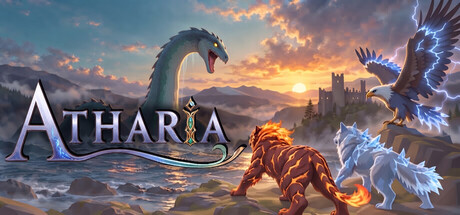
Atharia uses generative AI tools under the developer's constant direction. The combat animations are AI-generated video clips, converted into sprites and integrated into custom-built staging. Background environments and interface elements are also created with AI assistance. Every asset is art-directed, selected and validated by the developer before it enters the game.
AI tools were used to help draft and edit some English text: store page copy and some in-game UI strings such as hints, item descriptions and dialogs. All text was reviewed and edited by the developer. All art, models, audio and music are human-made or licensed assets. The game does not generate any content with AI at runtime.
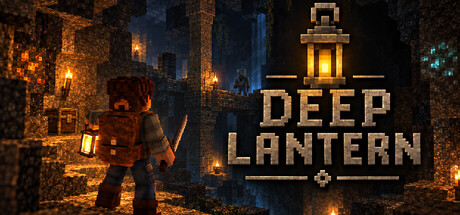
Deep Lantern contains some pre-generated visual assets created or assisted with generative AI, including certain textures, interface or illustrative visual elements, which were then reviewed, edited, and integrated manually by the developer.
The game does not use live generative AI during gameplay, and players cannot generate content in-game using AI.
The game engine is written with substantial AI assistance.
Some dialogues and quest texts are AI generated, and are successively replaced by human-written dialogue. Every piece of flavor text has a label that states the author (human or ai).
The 3D character models are currently generated with AI, and then transformed through a custom pipeline to work with the text-based graphics and CPU rendering. It is possible to replace them with manually crafted models.
Pre-generated AI tools were used during development to create portions of the game's static 2D artwork and music, including some environment and character images, store marketing art, and achievement icons. The outputs were selected, edited, integrated, and reviewed by the developer. No content is generated while the game is running, and the game does not send player prompts or player data to any AI service.
Portraits of characters and creatures are generated using Stable Diffusion. They appear in-game and in store page materials. I plan to replace all generated portraits with hand-drawn art.
Some in-game labels and text descriptions are placeholders generated by an LLM. I am gradually rewriting them by hand.
Generative AI was used during development to create or assist with some in-game artwork, promotional images, written content, and localization. The game does not use generative AI to generate content during gameplay.
Generative AI tools assisted development and the creation of promotional artwork and some written content. Screenshots and gameplay footage show the actual game. No AI content is generated during gameplay, and the game does not connect to external AI services.
During development, this game used generative AI tools to assist in creating some content: some card illustrations, character art, and scene images were initially generated by AI, then manually selected, redrawn, and post-processed by the developer. Some music, sound effects, and text were also created with AI assistance and finalized after item-by-item revisions by the developer. Some assets used on the store page and promotional images were also produced with the assistance of the above tools. The game does not contain any AI content generated in real time at runtime, and does not use any third-party copyrighted characters, assets, or trademarks.
Hexpanse is a solo developer's experiment in building a game 100% with AI, and it is developed with AI assistance (including its source code). The game itself is built almost entirely from procedural, code-generated pixel art and synthesized audio — produced algorithmically by our own code, not by AI. Generative AI was used in two limited, pre-rendered ways: (1) as a starting point for some ship and station part illustrations, later cleaned up, processed and integrated by hand; and (2) to produce the neural text-to-speech voice-over of the intro cinematic. In Early Access, the community feedback I find relevant feeds the AI-assisted development. No generative AI runs while you play — nothing is generated live in-game.
Generative AI tools were used to create some pre-generated static artwork displayed as mission images in the campaign menu. All gameplay visuals, screenshots, and gameplay footage are rendered directly from the game. No AI-generated content is created during gameplay
Generative AI was used as a supporting tool for selected elements of the artwork. Most elements were extensively modified and adapted through substantial hands-on work, including repainting, rigging, and animation.
Generative AI tools were used during development to assist with draft text, localization, concept references, and asset iteration. All final content included in the game has been reviewed and edited by the developer. The game does not generate AI content during gameplay.
Some images were created with AI image generation: the crew portraits, loading-screen image, and the current store capsule artwork and logo (commissioned artwork will replace the capsule). The game's code was written with AI coding assistants under the developer's direction; ships, weapons and effects are drawn procedurally by that code. All in-game text is written by the developer.
The developer uses generative AI during development for prototyping (placeholder models/assets), and some current store‑page marketing images are AI‑composed. No generative AI runs during gameplay.
The game includes pre-generated sound effects created with generative AI. Some store and promotional artwork was also created with AI tools. No content is generated by AI during gameplay.
Some of the artwork in this game was created with the assistance of generative AI tools. This includes character and enemy models, visual effects, skill icons, and key art. All generated material was reviewed, edited, and integrated by the developer. No AI-generated content is produced while the game is running.
Some pre-generated content — the fictional league, club and player name pools, portions of descriptive and flavour copy, the arena photograph used on the title and store presentation, and parts of the store description — was created with generative-AI assistance during development, then selected, reviewed and edited by the developer. No content is generated at runtime, and no player data is sent to any AI service.
Intergalactic Burger Joint has been a labor of love, with a lot of time, attention, and care put into bringing this little corner of the galaxy to life.
The game’s 3D characters, environments, and props use licensed Synty assets. Generative AI helped create achievement icons, some interface and branding artwork, Steam store images, music, ambient audio, sound effects, and chef and customer voices. It also helped us write in-game text and dialogue.
Choosing what belonged, refining the details, and bringing everything together into a game took time, experimentation, and care. We hope you feel that love in the little details as you play.
All AI-generated content was created during development. Nothing is generated live while you play.
I used an AI coding assistant while building the game, and it helped come up with the achievement names and descriptions, which I edited. Nothing else in the game is AI generated: the soundtrack is licensed from its creators, the radio voices are my own recordings, and the art and sounds are produced by the game's own code.
Generative AI tools were used during development to help create visual assets, interface artwork, decorative themes, and audio elements. AI tools also assisted with localization and store page text. These materials were prepared in advance under the developer’s direction. The game does not generate AI content during gameplay or connect to external AI services.
Spellsanity is made by one person and uses generative AI as a tool, not as a substitute for design.
Art: Much of the pixel art (enemies, bosses, characters, portraits, story stills, environment details) was produced with AI image generators and then reworked by hand: reduced to the game's colour palette, corrected pixel by pixel, animated and fitted into the game. Some of the art (surfaces, effects, UI frames) was drawn without AI or generated procedurally.
Text: Dialogue, descriptions and help texts were written with AI assistance and revised by the developer. The translations from English (German, Spanish, Portuguese, Russian, Chinese) were produced with AI and spot-checked; please report mistakes.
Code: AI assistants were used during programming.
Music and sound are not AI: the music is licensed work by Kevin MacLeod (incompetech.com), the sound effects are synthesized.
No AI runs inside the game. All content is shipped with the game and was reviewed before release; nothing is generated at runtime.
Generative AI tools were used throughout development: the game's code and its in-game text, the paintings, icons and interface art, the 3D models, and the music and sound effects. Everything was reviewed, edited and tested, and ships as fixed content. Nothing is generated while you play: the game runs no model and makes no network call.
Some cosmetic artwork and icons, and the original music soundtrack, were created with generative AI tools during development. These assets are pre-generated. The game does not generate AI content during gameplay or connect to an AI service.
Due to budget constraints, I’ve had to rely on AI to create the soundtrack and translate the game into languages I don’t speak (all languages except English and Spanish).
I know it’s not the same as working with professional musicians and translators, and I’d really like to change that in the future. If the game is well received and gets enough support, I’ll be more than happy to invest part of that support into working with professionals and replacing these AI-generated elements.
Thank you for giving the game a chance and for supporting this indie project.
We use generative AI as a reference and drafting tool, and always finish by hand. Early in development we generated AI concept images to explore ideas and mood; those are reference only. All in-game models, animation and UI are built by hand in 3D by the two of us. Some in-game textures were first generated with AI as a guide and then retouched by hand. The store key art is rendered from the game's own 3D characters and scenes, run through an AI tool for style, then composited and retouched by hand. Store text was drafted with an AI assistant and rewritten by us. The game does not use generative AI while you play.
The store artwork (key art, capsule images, logo) was created with the help of generative AI and then selected and edited by hand. AI tools assisted with programming, in-game text and translations; all content was reviewed and revised by the developer. The in-game 3D models, textures and animations come from licensed asset packs and are not AI-generated. No content is generated by AI during gameplay.
The developer used generative AI tools during the development process to assist in creating pre-generated 2D visual assets (such as backgrounds and promotional art) and to help generate programming code. All AI-generated content was heavily modified, curated, and reviewed by the developer to fit the game's cyberpunk setting. There is no live-generated AI content in this game.
We used AI to generate initial music tracks, concept art, and temporary translations into some languages.
All materials were then thoroughly edited, reworked, and finalized by humans.
Nothing went straight from the generator into the game.
KAPUT is made by a small team, and we use AI coding assistants as a programming tool during development — to help write, refactor and review parts of the game's code and internal documentation. Every change is reviewed, tested and integrated by our developers, who are responsible for the final result.
The game's art, animation, music, sound design and writing are made by the team. No content is generated by AI while you play
Generative AI tools were used to help create some pre-made sound effects and marketing materials, including store-page text and promotional artwork. These are fixed assets prepared during development. The game does not generate AI content during gameplay; its random holes and boundaries are created by procedural game code.
Generative AI tools were used during development to assist with some artwork, text, localization, and other game content. All AI-assisted content is reviewed and edited by the developers before inclusion in the game.
Some pre-production assets were generated with AI tools and then hand-finished by the team: 3D character bodies (Tripo) that were re-rigged, textured and animated by hand; concept and brand imagery (OpenAI image generation) redrawn or composited by hand; voice lines and sound effects (ElevenLabs); and music (Suno) under a commercial licence. No AI content is generated during gameplay, and the game connects to no AI service.
Generative AI tools were used during development to assist with pre-generated assets:
- Visual Assets & 3D Models: Concept art, 2D UI elements/icons, and base 3D models and textures were created with the assistance of generative AI tools, then manually and AI assisted cleaned, rigged, and optimized for the engine.
- Narrative & Writing: In-game lore, quest descriptions, and unit flavor text were drafted and refined with AI assistance.
All AI-assisted content is created prior to release and manually curated. There is no real-time or live AI content generation during gameplay.
Some of the store artwork, the game icon and some sound effects were created with generative AI tools and then edited by hand before release. The simulation, the program code, the 3D models and the text in the game were made without generative AI. Nothing is generated by AI while you play.
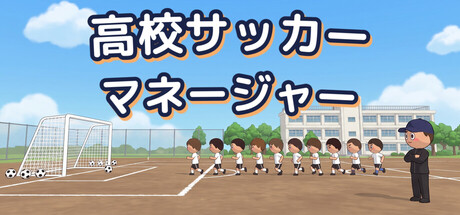
We used generative AI during development. The title logo image was created with a
generative AI image tool. Sound effects in the game and in the trailer are synthesised
by a script that was written with AI coding assistance. The nine non-Japanese interface
translations and the store text were produced by AI. AI coding assistance was used
throughout development. The game does not generate any content with AI while it runs.
Some of this game's content was created with the help of generative AI tools during development:
- Artwork: some of the visual art in the game.
- Text: parts of the in-game writing, and the Simplified Chinese translation.
- Audio: a small number of sound effects. Most of the game's sound was made without AI.
Nothing is generated by AI while you play.
Atharia uses generative AI tools under the developer's constant direction. The combat animations are AI-generated video clips, converted into sprites and integrated into custom-built staging. Background environments and interface elements are also created with AI assistance. Every asset is art-directed, selected and validated by the developer before it enters the game.
AI tools were used to help draft and edit some English text: store page copy and some in-game UI strings such as hints, item descriptions and dialogs. All text was reviewed and edited by the developer. All art, models, audio and music are human-made or licensed assets. The game does not generate any content with AI at runtime.
Deep Lantern contains some pre-generated visual assets created or assisted with generative AI, including certain textures, interface or illustrative visual elements, which were then reviewed, edited, and integrated manually by the developer.
The game does not use live generative AI during gameplay, and players cannot generate content in-game using AI.
The game engine is written with substantial AI assistance.
Some dialogues and quest texts are AI generated, and are successively replaced by human-written dialogue. Every piece of flavor text has a label that states the author (human or ai).
The 3D character models are currently generated with AI, and then transformed through a custom pipeline to work with the text-based graphics and CPU rendering. It is possible to replace them with manually crafted models.
Pre-generated AI tools were used during development to create portions of the game's static 2D artwork and music, including some environment and character images, store marketing art, and achievement icons. The outputs were selected, edited, integrated, and reviewed by the developer. No content is generated while the game is running, and the game does not send player prompts or player data to any AI service.
Portraits of characters and creatures are generated using Stable Diffusion. They appear in-game and in store page materials. I plan to replace all generated portraits with hand-drawn art.
Some in-game labels and text descriptions are placeholders generated by an LLM. I am gradually rewriting them by hand.
Generative AI was used during development to create or assist with some in-game artwork, promotional images, written content, and localization. The game does not use generative AI to generate content during gameplay.
Generative AI tools assisted development and the creation of promotional artwork and some written content. Screenshots and gameplay footage show the actual game. No AI content is generated during gameplay, and the game does not connect to external AI services.
During development, this game used generative AI tools to assist in creating some content: some card illustrations, character art, and scene images were initially generated by AI, then manually selected, redrawn, and post-processed by the developer. Some music, sound effects, and text were also created with AI assistance and finalized after item-by-item revisions by the developer. Some assets used on the store page and promotional images were also produced with the assistance of the above tools. The game does not contain any AI content generated in real time at runtime, and does not use any third-party copyrighted characters, assets, or trademarks.
Hexpanse is a solo developer's experiment in building a game 100% with AI, and it is developed with AI assistance (including its source code). The game itself is built almost entirely from procedural, code-generated pixel art and synthesized audio — produced algorithmically by our own code, not by AI. Generative AI was used in two limited, pre-rendered ways: (1) as a starting point for some ship and station part illustrations, later cleaned up, processed and integrated by hand; and (2) to produce the neural text-to-speech voice-over of the intro cinematic. In Early Access, the community feedback I find relevant feeds the AI-assisted development. No generative AI runs while you play — nothing is generated live in-game.
Generative AI tools were used to create some pre-generated static artwork displayed as mission images in the campaign menu. All gameplay visuals, screenshots, and gameplay footage are rendered directly from the game. No AI-generated content is created during gameplay
Generative AI was used as a supporting tool for selected elements of the artwork. Most elements were extensively modified and adapted through substantial hands-on work, including repainting, rigging, and animation.
Generative AI tools were used during development to assist with draft text, localization, concept references, and asset iteration. All final content included in the game has been reviewed and edited by the developer. The game does not generate AI content during gameplay.
Some images were created with AI image generation: the crew portraits, loading-screen image, and the current store capsule artwork and logo (commissioned artwork will replace the capsule). The game's code was written with AI coding assistants under the developer's direction; ships, weapons and effects are drawn procedurally by that code. All in-game text is written by the developer.
The developer uses generative AI during development for prototyping (placeholder models/assets), and some current store‑page marketing images are AI‑composed. No generative AI runs during gameplay.
The game includes pre-generated sound effects created with generative AI. Some store and promotional artwork was also created with AI tools. No content is generated by AI during gameplay.
Some of the artwork in this game was created with the assistance of generative AI tools. This includes character and enemy models, visual effects, skill icons, and key art. All generated material was reviewed, edited, and integrated by the developer. No AI-generated content is produced while the game is running.
Some pre-generated content — the fictional league, club and player name pools, portions of descriptive and flavour copy, the arena photograph used on the title and store presentation, and parts of the store description — was created with generative-AI assistance during development, then selected, reviewed and edited by the developer. No content is generated at runtime, and no player data is sent to any AI service.
Intergalactic Burger Joint has been a labor of love, with a lot of time, attention, and care put into bringing this little corner of the galaxy to life.
The game’s 3D characters, environments, and props use licensed Synty assets. Generative AI helped create achievement icons, some interface and branding artwork, Steam store images, music, ambient audio, sound effects, and chef and customer voices. It also helped us write in-game text and dialogue.
Choosing what belonged, refining the details, and bringing everything together into a game took time, experimentation, and care. We hope you feel that love in the little details as you play.
All AI-generated content was created during development. Nothing is generated live while you play.
I used an AI coding assistant while building the game, and it helped come up with the achievement names and descriptions, which I edited. Nothing else in the game is AI generated: the soundtrack is licensed from its creators, the radio voices are my own recordings, and the art and sounds are produced by the game's own code.
Generative AI tools were used during development to help create visual assets, interface artwork, decorative themes, and audio elements. AI tools also assisted with localization and store page text. These materials were prepared in advance under the developer’s direction. The game does not generate AI content during gameplay or connect to external AI services.
Spellsanity is made by one person and uses generative AI as a tool, not as a substitute for design.
Art: Much of the pixel art (enemies, bosses, characters, portraits, story stills, environment details) was produced with AI image generators and then reworked by hand: reduced to the game's colour palette, corrected pixel by pixel, animated and fitted into the game. Some of the art (surfaces, effects, UI frames) was drawn without AI or generated procedurally.
Text: Dialogue, descriptions and help texts were written with AI assistance and revised by the developer. The translations from English (German, Spanish, Portuguese, Russian, Chinese) were produced with AI and spot-checked; please report mistakes.
Code: AI assistants were used during programming.
Music and sound are not AI: the music is licensed work by Kevin MacLeod (incompetech.com), the sound effects are synthesized.
No AI runs inside the game. All content is shipped with the game and was reviewed before release; nothing is generated at runtime.
Generative AI tools were used throughout development: the game's code and its in-game text, the paintings, icons and interface art, the 3D models, and the music and sound effects. Everything was reviewed, edited and tested, and ships as fixed content. Nothing is generated while you play: the game runs no model and makes no network call.
Some cosmetic artwork and icons, and the original music soundtrack, were created with generative AI tools during development. These assets are pre-generated. The game does not generate AI content during gameplay or connect to an AI service.
Due to budget constraints, I’ve had to rely on AI to create the soundtrack and translate the game into languages I don’t speak (all languages except English and Spanish).
I know it’s not the same as working with professional musicians and translators, and I’d really like to change that in the future. If the game is well received and gets enough support, I’ll be more than happy to invest part of that support into working with professionals and replacing these AI-generated elements.
Thank you for giving the game a chance and for supporting this indie project.
We use generative AI as a reference and drafting tool, and always finish by hand. Early in development we generated AI concept images to explore ideas and mood; those are reference only. All in-game models, animation and UI are built by hand in 3D by the two of us. Some in-game textures were first generated with AI as a guide and then retouched by hand. The store key art is rendered from the game's own 3D characters and scenes, run through an AI tool for style, then composited and retouched by hand. Store text was drafted with an AI assistant and rewritten by us. The game does not use generative AI while you play.
The store artwork (key art, capsule images, logo) was created with the help of generative AI and then selected and edited by hand. AI tools assisted with programming, in-game text and translations; all content was reviewed and revised by the developer. The in-game 3D models, textures and animations come from licensed asset packs and are not AI-generated. No content is generated by AI during gameplay.
The developer used generative AI tools during the development process to assist in creating pre-generated 2D visual assets (such as backgrounds and promotional art) and to help generate programming code. All AI-generated content was heavily modified, curated, and reviewed by the developer to fit the game's cyberpunk setting. There is no live-generated AI content in this game.
We used AI to generate initial music tracks, concept art, and temporary translations into some languages.
All materials were then thoroughly edited, reworked, and finalized by humans.
Nothing went straight from the generator into the game.
KAPUT is made by a small team, and we use AI coding assistants as a programming tool during development — to help write, refactor and review parts of the game's code and internal documentation. Every change is reviewed, tested and integrated by our developers, who are responsible for the final result.
The game's art, animation, music, sound design and writing are made by the team. No content is generated by AI while you play
Generative AI tools were used to help create some pre-made sound effects and marketing materials, including store-page text and promotional artwork. These are fixed assets prepared during development. The game does not generate AI content during gameplay; its random holes and boundaries are created by procedural game code.
Generative AI tools were used during development to assist with some artwork, text, localization, and other game content. All AI-assisted content is reviewed and edited by the developers before inclusion in the game.
Some pre-production assets were generated with AI tools and then hand-finished by the team: 3D character bodies (Tripo) that were re-rigged, textured and animated by hand; concept and brand imagery (OpenAI image generation) redrawn or composited by hand; voice lines and sound effects (ElevenLabs); and music (Suno) under a commercial licence. No AI content is generated during gameplay, and the game connects to no AI service.
Generative AI tools were used during development to assist with pre-generated assets:
- Visual Assets & 3D Models: Concept art, 2D UI elements/icons, and base 3D models and textures were created with the assistance of generative AI tools, then manually and AI assisted cleaned, rigged, and optimized for the engine.
- Narrative & Writing: In-game lore, quest descriptions, and unit flavor text were drafted and refined with AI assistance.
All AI-assisted content is created prior to release and manually curated. There is no real-time or live AI content generation during gameplay.
Some of the store artwork, the game icon and some sound effects were created with generative AI tools and then edited by hand before release. The simulation, the program code, the 3D models and the text in the game were made without generative AI. Nothing is generated by AI while you play.
We used generative AI during development. The title logo image was created with a
generative AI image tool. Sound effects in the game and in the trailer are synthesised
by a script that was written with AI coding assistance. The nine non-Japanese interface
translations and the store text were produced by AI. AI coding assistance was used
throughout development. The game does not generate any content with AI while it runs.