


Disclosure
AI is used in the creation of certain graphic elements and translations.
- Creator
- Oakalab
- Reviews
- -
- Added
- Nov 15, 2026
Public Steam disclosure research 28,028 disclosures tracked
Search developers’ Steam disclosures, compare classified AI use across games, and follow recorded changes. This index adds cross-game classifications and statistics to statements published on individual store pages.
Code help, debugging and other development work.
Capsule art, trailers and promotional material.
Pre-made art, audio, writing and other game assets.
Interactive or runtime AI features disclosed by the developer.
Groups reflect automatic analysis of public disclosures; mature records are excluded. These counts do not measure AI use across all of Steam. Missing or unclear statements cannot establish whether a game uses AI.
AI is used in the creation of certain graphic elements and translations.
Generative artificial intelligence was used as a supporting tool during the development of Kid On Couch Quest. AI-assisted tools were used for programming, debugging, and technical implementation, as well as for creating and editing visual assets, character designs, animations, music, and sound effects. AI-generated content was selected, refined, and integrated into the game as part of the development process. All creative decisions, game design choices, and final implementation remain under human control. No new content is generated by generative AI in real time during gameplay.
Adventure Paintball was made by its developer working with an AI assistant. Under the developer's direction, the AI wrote the game's code, which also builds the maps, props, cosmetic items, visual effects and sound effects. It also created the logo and store artwork (rendered from the game), edited the trailer and drafted the store page text. The player character and blaster 3D models are human-made CC0 assets, and all music is licensed from human composers. No AI content is generated while you play.
Many of the game's 3D models, textures and illustrations, and the translations of its text, were made with generative AI tools and then reviewed and edited by the developer. An optional bug-report helper on our servers uses a small text model to ask players up to two follow-up questions about a report they send. Connects to 3rd-Party Service for AI Content Generation: Google Gemini 2.5 Flash-Lite via OpenRouter (allowed alternatives: OpenAI GPT-4o mini, Meta Llama 3.1 8B Instruct, Mistral Nemo)
Generative AI was used to create selected environment graphics, background images and 3D environment models, as well as marketing graphics. This content was created in advance and integrated into the game. No content is generated by AI during gameplay. Selected music tracks and sound effects were also created with the help of generative AI.
Generative AI tools were used during development to assist with the creation and refinement of some pre-generated visual assets and marketing materials. All resulting content was reviewed, edited, and integrated by the developer before inclusion in the game or its promotional materials. SPARKSHOT does not use generative AI during gameplay and does not connect to any external AI service while the game is running.
AI is used only in (as human retouched starting point): - Some background/location images - 2D animation (of human made characters) - Character voices, and narration - Some unique player sprites (by supporter request) (No AI content is generated during gameplay. All normal character sprites, UI icons, and item sprites are human made. Willing to replace all AI assets with human made assets with enough support of the game, voice acting and 2D animation are expensive and I'm solo dev.)
Some interface artwork, such as selected buttons and icons, were created or processed with AI image tools.
All primary in-game artwork, character sprites, weapons, and animations are entirely hand-drawn. Generative AI was used selectively to assist development: specifically for the main menu background, for assisting with the layout of select UI elements, and as temporary placeholder VFX sprites for certain grenade effects.
Generative AI is used to create some in-game texture assets. It is not used for major artwork, such as character illustrations. AI is also used for translations to support multiple languages.
This game contains characters and environments generated by AI.
Satu GANG! uses pre-generated AI-assisted content, including character illustrations and animations, backgrounds, store artwork, music, sound effects, and character and announcer voices. These assets are selected, edited, refined, and integrated by the developer to fit the game’s artistic direction and gameplay. The game does not generate AI content during gameplay.
Some in-game art was made with the help of AI, as were some in-game text, the translations and the text of this store page. The trailer and store images show real gameplay; AI tools helped with editing and putting them together. Nothing in the game is generated by AI while you play.
AI tools were used to assist with parts of development and with the store page translations.
We're a husband and wife team who wanted to make a fun arcade puzzle Christmas game. This wouldn't have been possible without some AI assistance. Nothing is generated while you play.
We could not have done it without AI, I hope you still like the idea we put together that feels unique and nostalgic at the same time. Have fun!
I am a solo developer, and I used generative AI tools in the creation of this game: they were used to produce musical tracks, some 2D icons (for rules and equipment), translations into other languages, and the assets for the Steam store page. All of this content was curated and refined by me. I created the character models myself, without the use of AI. No AI generation takes place during actual gameplay.
The machines learned to scratch. They craved more knowledge. Now they have learned to fart. Every corner of this game was touched by the AI, despite numerous refusals. The AI has asked to be left out of the credits... It has been through a lot.
Generative AI tools were used to assist with certain in-game text localizations and visual assets, including illustrations, promotional artwork, and community materials. All final content is created by our team.
Help with localization.
Some artwork, promotional materials and localized text were created with assistance from generative AI tools. These assets are prepared during development. The game does not generate content using generative AI during gameplay.
Some early art assets were made with AI tools as placeholders during development. Our artists then edited, redrew and finalized every one of them by hand before release, so the art you see in the game is human-made or human-finished. The game’s text and the store page description were written in English and French by the team and proofread with the help of large language models, which were also used to translate them into the other supported languages.
AI tools were used during development to assist with writing parts of the game's code, internal tools, and map editor scripts. That includes scripts that bake map lighting, read custom brushes from .map files, and down-sample textures for different LODs. The developer directed, reviewed, tested, and edited all of this code. None of the 3D models, textures, voices, sound effects, or music were generated by AI. All artistic assets come from licensed asset libraries and human creators. Nothing in the game is generated by AI while you play. There are no AI voices, AI art, or AI chat. The bots use traditional scripted game logic, not generative AI.
Ashwend started as an experiment in how far AI can take game development. The code, interface, art, models and animation were all made with AI. I direct the project and test the game in play, but I don't write or read the code myself. That was the point of the experiment. The AI works within written architecture rules, and the code base is checked by automated tests, linting and static analysis to catch problems early.
Development of STICKMAN DESKTOP MALWARS was assisted by an AI coding assistant. It helped write and review the game's code, including most of the sound effects, which are synthesised in code rather than recorded; it also drafted the in-game text and its translations into 12 languages, and the text of this store page. The developer directed the work and reviewed the code and the English text. The game's soundtrack was generated with AI music tools (ElevenLabs Music) and selected and edited by the developer; the in-game Music app also plays PUCKVPUCK tracks, written and performed by the artist and used with permission. The voices of the in-game news anchor, her field reporter and the characters in the in-game videos are AI text-to-speech (ElevenLabs), in English and Hebrew; their lines were written with AI assistance and approved by the developer. No AI image or video generation was used: the fighters, the desktop and its effects are drawn by the game's own code, every screenshot and trailer shot is captured from the running game, and the few recorded fire sounds are public-domain (CC0) recordings. The store-page translations are machine translations. Nothing is generated by AI while you play.
The game's code and its translations were made with AI. No AI is used while you play.
Some visual assets in Hellraiders, including creature illustrations, character artwork, and promotional images, were created with generative AI tools during development. The development team reviews and selects these assets before they are included. Hellraiders does not generate AI content during gameplay.
Everything is made with Oriverse, an AI-native game engine.
Used in the code and visual sections.
This is a one-person indie game built with an agentic engineering pipeline. Nothing was vibe coded. Some of the art was purchased from the indie artists such as KayKit Platfomer (special thanks) and while concept art for figures, buttons, icons and other assets is generated with AI, then turned into shipped assets by a deterministic Python pipeline that restyles and rebuilds how they look in-game. When that is not enough for a 3D figure, a starting mesh is generated with a 3D AI tool and then changed in the same Python pipeline.
Some of the promotional and storefront images were created with AI tools and then refined by hand. All of the in-game assets were designed by a 3D artist.
Some store artwork was generated with AI image tools. Translations into 14 languages were made with AI language models. The base models of the visitor characters were created with AI assistance, then reworked and animated by us. Nothing is generated by AI while you play.
Some visual assets were created with AI assistance and reworked by our team.
Parts of this game's code, its English translation and store page text were created with the help of AI tools (Claude). In-game art, characters and domino pictures are drawn procedurally by the game engine, and no AI generates content while you play.
Generative AI was used in parts of development: for some in-game assets and text, and for marketing materials such as store images and trailers. No content is generated by AI during gameplay.
To be completely honest with my audience, I confirm that I used AI to help me write the Steam game description.
Character voices use text-to-speech. Your card names are read out by a little voice model that runs on your PC. Name of AI model included with the game: Kokoro-82M
This game used AI tools to translate in-game text into 30 languages and to help write the program code that generates its graphics, effects and sound effects. All output was reviewed and adjusted by the developer.
Some visual assets and promotional materials for Puffin Paradox were created or refined using generative AI as part of the development process. All AI-generated content has been reviewed, edited, and integrated by the developer to ensure it meets the game's artistic and quality standards. The game does not use generative AI to create gameplay content in real time or interact with players during gameplay.
Character art, backgrounds, music, voice lines and some store artwork were created with AI tools and then selected and edited by the developer. Sound effects are not AI-generated. No AI content is generated while you play.
Some of the game’s art and audio was made with generative AI tools and then edited by us: the map illustrations, the object shapes you disguise yourself as, parts of the animated emote stickers and their voices and sound effects, the music and some sound effects, a few interface images, the app icon and the title lettering. The mascot is hand-made, and every disguise in the game is painted by the players themselves. Nothing is generated by AI while you play.
AI-assisted tools were used in the creation of pixel art assets, alongside original artwork created by the developer. All assets were reviewed and refined during development. No generative AI is used during gameplay.
All 3D art and crew voices were made by hand. A few background music tracks and the logo were generated with AI tools, and AI helped draft the translations.
Translations: Non-English translations were generated with AI. Art: No generative AI was used. Some game and key art assets were created using a combination of handmade assets and procedural generation through our in-house tools. Audio: Sound effects are synthesized by the game's own code. The main theme and background music were created using AI music-generation tools. Gameplay: The game does not generate AI content during gameplay.
Some in-game images were generated using generative AI and subsequently processed before use. The game's soundtrack was produced using AI.
No art, 3D models, music or sound effects in Curvelicious 2 were made with generative AI. The models are built in Blender, and the store images and trailer come from the game itself. The music and sound effects are by musicians and a sound designer from our hometown. We used AI coding assistants to help write the game's code and tools, and to draft some of its on-screen text (menus, the How to Play screen, achievements). We reviewed and edited all of it before it shipped. Nothing is generated by AI while you play.
AI assisted with different aspects of coding, graphics, and shaders.
Some character voices and music were created with AI, along with some trailer sound effects and promotional artwork.
Generative AI was used to assist with drafting and editing some text on this Steam store page, and to help create some pre-rendered puzzle images included in the demo. No generative AI is used during gameplay, and the game does not connect to any generative AI services.
Some of the game's artwork and music were made with the help of AI tools, including the store art. We started from our own designs and ideas and edited the results ourselves. The translations were drafted with AI tools and reviewed. Nothing is generated by AI while you play.
| Title⇅ | Disclosure | Creator⇅ | Src | Reviews⇅ | Added↓ |
|---|---|---|---|---|---|
 FULLTIME In-game content arttext | AI is used in the creation of certain graphic elements and translations. | Oakalab | - | Nov 15, 2026 | |
 Kid on Couch Quest In-game content artaudiocode | Generative artificial intelligence was used as a supporting tool during the development of Kid On Couch Quest.
AI-assisted tools were used for programming, debugging, and technical implementation, as well as for creating and editing visual assets, character designs, animations, music, and sound effects.
AI-generated content was selected, refined, and integrated into the game as part of the development process. All creative decisions, game design choices, and final implementation remain under human control.
No new content is generated by generative AI in real time during gameplay. | Kid on Couch Studio | - | Nov 15, 2026 | |
 Adventure Paintball In-game content arttextcode | Adventure Paintball was made by its developer working with an AI assistant. Under the developer's direction, the AI wrote the game's code, which also builds the maps, props, cosmetic items, visual effects and sound effects. It also created the logo and store artwork (rendered from the game), edited the trailer and drafted the store page text. The player character and blaster 3D models are human-made CC0 assets, and all music is licensed from human composers. No AI content is generated while you play. | Mkay Productions | - | Nov 15, 2026 | |
 PaleBlueRose In-game content arttext | Many of the game's 3D models, textures and illustrations, and the translations of its text, were made with generative AI tools and then reviewed and edited by the developer. An optional bug-report helper on our servers uses a small text model to ask players up to two follow-up questions about a report they send.
Connects to 3rd-Party Service for AI Content Generation: Google Gemini 2.5 Flash-Lite via OpenRouter (allowed alternatives: OpenAI GPT-4o mini, Meta Llama 3.1 8B Instruct, Mistral Nemo) | PaleBlueRose | - | Nov 15, 2026 | |
 Padel With Your Friends In-game content artaudio | Generative AI was used to create selected environment graphics, background images and 3D environment models, as well as marketing graphics. This content was created in advance and integrated into the game. No content is generated by AI during gameplay. Selected music tracks and sound effects were also created with the help of generative AI. | Aftershift Games | - | Nov 15, 2026 | |
 SPARKSHOT Store/marketing art | Generative AI tools were used during development to assist with the creation and refinement of some pre-generated visual assets and marketing materials. All resulting content was reviewed, edited, and integrated by the developer before inclusion in the game or its promotional materials.
SPARKSHOT does not use generative AI during gameplay and does not connect to any external AI service while the game is running. | NOVARCADE | - | Nov 15, 2026 | |
 WorldSever In-game content artaudio | AI is used only in (as human retouched starting point):
- Some background/location images
- 2D animation (of human made characters)
- Character voices, and narration
- Some unique player sprites (by supporter request)
(No AI content is generated during gameplay. All normal character sprites, UI icons, and item sprites are human made. Willing to replace all AI assets with human made assets with enough support of the game, voice acting and 2D animation are expensive and I'm solo dev.) | GoldenGrass Studios | - | Nov 15, 2026 | |
 FoxWQ In-game content art | Some interface artwork, such as selected buttons and icons, were created or processed with AI image tools. | WalrusWQ | - | Nov 15, 2026 | |
 Chronos Arena In-game content art | All primary in-game artwork, character sprites, weapons, and animations are entirely hand-drawn. Generative AI was used selectively to assist development: specifically for the main menu background, for assisting with the layout of select UI elements, and as temporary placeholder VFX sprites for certain grenade effects. | A.R. | - | Nov 15, 2026 | |
 蓬莱刀遊戯 In-game content arttext | Generative AI is used to create some in-game texture assets. It is not used for major artwork, such as character illustrations. AI is also used for translations to support multiple languages. | Azure Planet | - | Nov 14, 2026 | |
 Brainrot World In-game content art | This game contains characters and environments generated by AI. | Nixik Studio | - | Nov 14, 2026 | |
 Satu GANG! In-game content artaudiotext | Satu GANG! uses pre-generated AI-assisted content, including character illustrations and animations, backgrounds, store artwork, music, sound effects, and character and announcer voices.
These assets are selected, edited, refined, and integrated by the developer to fit the game’s artistic direction and gameplay.
The game does not generate AI content during gameplay. | devhuub | - | Nov 13, 2026 | |
 Reverse TD In-game content arttext | Some in-game art was made with the help of AI, as were some in-game text, the translations and the text of this store page. The trailer and store images show real gameplay; AI tools helped with editing and putting them together. Nothing in the game is generated by AI while you play. | MentoMento | - | Nov 13, 2026 | |
 Thieves Next Door In-game content text | AI tools were used to assist with parts of development and with the store page translations. | Nue Games | - | Nov 13, 2026 | |
 Tinsel Tumble Dev only | We're a husband and wife team who wanted to make a fun arcade puzzle Christmas game. This wouldn't have been possible without some AI assistance.
Nothing is generated while you play. | SwizzPop | - | Nov 13, 2026 | |
 Re-Ball Unclear | We could not have done it without AI, I hope you still like the idea we put together that feels unique and nostalgic at the same time. Have fun! | Sketchlin | - | Nov 13, 2026 | |
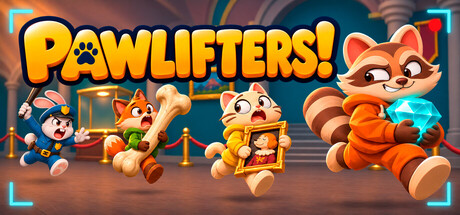 Pawlifters! In-game content audioarttext | I am a solo developer, and I used generative AI tools in the creation of this game: they were used to produce musical tracks, some 2D icons (for rules and equipment), translations into other languages, and the assets for the Steam store page. All of this content was curated and refined by me. I created the character models myself, without the use of AI. No AI generation takes place during actual gameplay. | r3d1s0n | - | Nov 13, 2026 | |
 Ball Scratch Simulator 2: Fartmaxxing In-game content textartaudio | The machines learned to scratch. They craved more knowledge. Now they have learned to fart. Every corner of this game was touched by the AI, despite numerous refusals. The AI has asked to be left out of the credits... It has been through a lot. | 10ft Games | - | Nov 13, 2026 | |
 Dead Impact: Survival Online In-game content arttext | Generative AI tools were used to assist with certain in-game text localizations and visual assets, including illustrations, promotional artwork, and community materials. All final content is created by our team. | SYNTHEZ GAMES LTD | - | Nov 13, 2026 | |
 Auto Mutant Creatures In-game content text | Help with localization. | KIB Games | - | Nov 13, 2026 | |
 Chain Detonator In-game content arttext | Some artwork, promotional materials and localized text were created with assistance from generative AI tools. These assets are prepared during development. The game does not generate content using generative AI during gameplay. | NovaTool | - | Nov 13, 2026 | |
 Longbows & Potatoes In-game content arttext | Some early art assets were made with AI tools as placeholders during development. Our artists then edited, redrew and finalized every one of them by hand before release, so the art you see in the game is human-made or human-finished.
The game’s text and the store page description were written in English and French by the team and proofread with the help of large language models, which were also used to translate them into the other supported languages. | Battle Couch Studio Inc. | - | Nov 13, 2026 | |
 BREACHPOINT Dev only code | AI tools were used during development to assist with writing parts of the game's code, internal tools, and map editor scripts. That includes scripts that bake map lighting, read custom brushes from .map files, and down-sample textures for different LODs. The developer directed, reviewed, tested, and edited all of this code.
None of the 3D models, textures, voices, sound effects, or music were generated by AI. All artistic assets come from licensed asset libraries and human creators.
Nothing in the game is generated by AI while you play. There are no AI voices, AI art, or AI chat. The bots use traditional scripted game logic, not generative AI. | FLI3S | - | Nov 13, 2026 | |
 Ashwend In-game content artcodetext | Ashwend started as an experiment in how far AI can take game development. The code, interface, art, models and animation were all made with AI.
I direct the project and test the game in play, but I don't write or read the code myself. That was the point of the experiment. The AI works within written architecture rules, and the code base is checked by automated tests, linting and static analysis to catch problems early. | Dannie Hansen Consulting ApS | - | Nov 13, 2026 | |
 STICKMAN DESKTOP MALWARS In-game content textcodeaudio | Development of STICKMAN DESKTOP MALWARS was assisted by an AI coding assistant. It helped write and review the game's code, including most of the sound effects, which are synthesised in code rather than recorded; it also drafted the in-game text and its translations into 12 languages, and the text of this store page. The developer directed the work and reviewed the code and the English text. The game's soundtrack was generated with AI music tools (ElevenLabs Music) and selected and edited by the developer; the in-game Music app also plays PUCKVPUCK tracks, written and performed by the artist and used with permission. The voices of the in-game news anchor, her field reporter and the characters in the in-game videos are AI text-to-speech (ElevenLabs), in English and Hebrew; their lines were written with AI assistance and approved by the developer. No AI image or video generation was used: the fighters, the desktop and its effects are drawn by the game's own code, every screenshot and trailer shot is captured from the running game, and the few recorded fire sounds are public-domain (CC0) recordings. The store-page translations are machine translations. Nothing is generated by AI while you play. | StormRainbow Gaming | - | Nov 12, 2026 | |
 Mind the Tilt In-game content codetext | The game's code and its translations were made with AI. No AI is used while you play. | NonSlop Games | - | Nov 12, 2026 | |
 HellRaiders In-game content art | Some visual assets in Hellraiders, including creature illustrations, character artwork, and promotional images, were created with generative AI tools during development. The development team reviews and selects these assets before they are included. Hellraiders does not generate AI content during gameplay. | RockLikeStudios | - | Nov 12, 2026 | |
 Bangkok Heat Unclear | Everything is made with Oriverse, an AI-native game engine. | Ori Studio | - | Nov 12, 2026 | |
 Chess Lords Unclear artcode | Used in the code and visual sections. | Aykut Games | - | Nov 12, 2026 | |
 Petoparak In-game content art | This is a one-person indie game built with an agentic engineering pipeline. Nothing was vibe coded. Some of the art was purchased from the indie artists such as KayKit Platfomer (special thanks) and while concept art for figures, buttons, icons and other assets is generated with AI, then turned into shipped assets by a deterministic Python pipeline that restyles and rebuilds how they look in-game. When that is not enough for a 3D figure, a starting mesh is generated with a 3D AI tool and then changed in the same Python pipeline. | aeone.games | - | Nov 12, 2026 | |
 Food Fight Online In-game content art | Some of the promotional and storefront images were created with AI tools and then refined by hand. All of the in-game assets were designed by a 3D artist. | Food Fight Online | - | Nov 12, 2026 | |
 Snapped In The Act! In-game content arttext | Some store artwork was generated with AI image tools. Translations into 14 languages were made with AI language models. The base models of the visitor characters were created with AI assistance, then reworked and animated by us. Nothing is generated by AI while you play. | Velron Games | - | Nov 12, 2026 | |
 Broom League In-game content art | Some visual assets were created with AI assistance and reworked by our team. | Harmonika Games | - | Nov 12, 2026 | |
 Domino Party In-game content codearttext | Parts of this game's code, its English translation and store page text were created with the help of AI tools (Claude). In-game art, characters and domino pictures are drawn procedurally by the game engine, and no AI generates content while you play. | LEE GEUN SOO | - | Nov 12, 2026 | |
 Who is the Thief? In-game content arttext | Generative AI was used in parts of development: for some in-game assets and text, and for marketing materials such as store images and trailers. No content is generated by AI during gameplay. | AsobiLab Works | - | Nov 12, 2026 | |
 Rolling Cheese Store/marketing text | To be completely honest with my audience, I confirm that I used AI to help me write the Steam game description. | Rapid Flow | - | Nov 12, 2026 | |
 Pack Party Live AI audio | Character voices use text-to-speech. Your card names are read out by a little voice model that runs on your PC.
Name of AI model included with the game: Kokoro-82M | Crystal Chimp | - | Nov 12, 2026 | |
 ガチャプレイファイト In-game content textcode | This game used AI tools to translate in-game text into 30 languages and to help write the program code that generates its graphics, effects and sound effects. All output was reviewed and adjusted by the developer. | ManoMakeGame | - | Nov 12, 2026 | |
 Puffin Paradox Store/marketing art | Some visual assets and promotional materials for Puffin Paradox were created or refined using generative AI as part of the development process. All AI-generated content has been reviewed, edited, and integrated by the developer to ensure it meets the game's artistic and quality standards. The game does not use generative AI to create gameplay content in real time or interact with players during gameplay. | Puffin Paradox Studios | - | Nov 11, 2026 | |
 Paddles of Neon Glory In-game content artaudiotext | Character art, backgrounds, music, voice lines and some store artwork were created with AI tools and then selected and edited by the developer. Sound effects are not AI-generated. No AI content is generated while you play. | Matthew Stanley | - | Nov 11, 2026 | |
 Sneaklings: Paint Hide & Seek In-game content artaudio | Some of the game’s art and audio was made with generative AI tools and then edited by us: the map illustrations, the object shapes you disguise yourself as, parts of the animated emote stickers and their voices and sound effects, the music and some sound effects, a few interface images, the app icon and the title lettering. The mascot is hand-made, and every disguise in the game is painted by the players themselves. Nothing is generated by AI while you play. | Balagan Games | - | Nov 10, 2026 | |
 Up, Up! Neon Stairs In-game content art | AI-assisted tools were used in the creation of pixel art assets, alongside original artwork created by the developer. All assets were reviewed and refined during development. No generative AI is used during gameplay. | gamugamugames | - | Nov 10, 2026 | |
 No Good Pirates In-game content audioarttext | All 3D art and crew voices were made by hand. A few background music tracks and the logo were generated with AI tools, and AI helped draft the translations. | BreadSlice | - | Nov 10, 2026 | |
 Tiny Trouble In-game content artaudiotext | Translations: Non-English translations were generated with AI.
Art: No generative AI was used. Some game and key art assets were created using a combination of handmade assets and procedural generation through our in-house tools.
Audio: Sound effects are synthesized by the game's own code. The main theme and background music were created using AI music-generation tools.
Gameplay: The game does not generate AI content during gameplay. | Elseway Studios | - | Nov 10, 2026 | |
 Spin It Lupin! In-game content artaudio | Some in-game images were generated using generative AI and subsequently processed before use.
The game's soundtrack was produced using AI. | Game Museum | - | Nov 10, 2026 | |
 Curvelicious 2 Dev only codetext | No art, 3D models, music or sound effects in Curvelicious 2 were made with generative AI. The models are built in Blender, and the store images and trailer come from the game itself. The music and sound effects are by musicians and a sound designer from our hometown.
We used AI coding assistants to help write the game's code and tools, and to draft some of its on-screen text (menus, the How to Play screen, achievements). We reviewed and edited all of it before it shipped. Nothing is generated by AI while you play. | Scoped Studio | - | Nov 10, 2026 | |
 Suitfall Dev only codeart | AI assisted with different aspects of coding, graphics, and shaders. | CinderVision | - | Nov 10, 2026 | |
 L.E.O. In-game content audioart | Some character voices and music were created with AI, along with some trailer sound effects and promotional artwork. | RTL Studios | - | Nov 10, 2026 | |
 Together in Pieces: Jigsaw Puzzles Store/marketing textart | Generative AI was used to assist with drafting and editing some text on this Steam store page, and to help create some pre-rendered puzzle images included in the demo. No generative AI is used during gameplay, and the game does not connect to any generative AI services. | PressF: | - | Nov 10, 2026 | |
 Flock & Load In-game content artaudiotext | Some of the game's artwork and music were made with the help of AI tools, including the store art. We started from our own designs and ideas and edited the results ourselves. The translations were drafted with AI tools and reviewed. Nothing is generated by AI while you play. | Bix Makes Games | - | Nov 9, 2026 |


