Public Steam disclosure research25,376 disclosures tracked
Where do games disclose AI use?
Search developers’ Steam disclosures, compare classified AI use across
games, and follow recorded changes.
This index adds cross-game classifications and statistics to
statements published on individual store pages.
Groups reflect automatic analysis of public disclosures; mature records are excluded. These counts do not measure AI use across all of Steam.
Missing or unclear statements cannot establish whether a game uses AI.
Generative AI tools were used during development to assist with some pre-generated 2D artwork and UI imagery, 3D models and animations, instrumental music and sound effects, localization drafts, and portions of the game code. As a solo developer, I selected, edited, integrated, and reviewed all of these outputs before inclusion. The game does not generate content at runtime and does not send player input to generative AI services.
Some fixed music tracks and selected pre-rendered promotional and manual artwork were created with generative AI tools. No AI content is generated during gameplay.
This game uses content created or assisted by generative AI. Generative AI was used to help create and edit some visual assets, music/sound materials, and scripts. All final content was reviewed, selected, and adjusted by the developer before being included in the game.
Generative AI was used exclusively for marketing and promotional materials. This includes the store page capsule art, translations and the background music featured in the promotional trailer.
No AI generated assets, imagery or audio are used within the actual game build, game screenshots or gameplay experience.
Generative AI was only utilized to assist with programming and coding during development. No AI-generated assets, such as images, graphics, or audio, were used in this game.
2D artwork for this game and its Steam store page — including the logo, store capsules, key art, and in-game textures — was created using generative AI image tools, generated ahead of time during development. The 3D models are stock/CC0 assets and the dust-bunny character is procedural/code-generated. Screenshots are captures of actual gameplay. No generative AI runs at runtime. All AI-generated images were reviewed to ensure they do not reproduce third-party intellectual property.
Some 2D images and promotional artwork used in the game and on the Steam store page were created or assisted using generative AI tools and then reviewed, modified, and integrated by the developer. No real-time AI-generated content is created during gameplay.
SonderSoft uses generative AI for localization to make Arena Bot Manager accessible to more players worldwide. ABM features an optional AI voice-commentator for arena events that can be disabled as per player preference.
SonderSoft pays artists to participate in the creative process, and some artists may choose on their own to use generative AI as part of their workflow; SonderSoft respects the creative tools artists choose in order to realize their own artistic vision.
Whenever possible, SonderSoft prioritizes paying artists, creators, and actors.
A pre-rendered cinematic intro sequence was created with the assistance of AI-based video generation tools. Some visual assets were generated or refined using AI image generation.
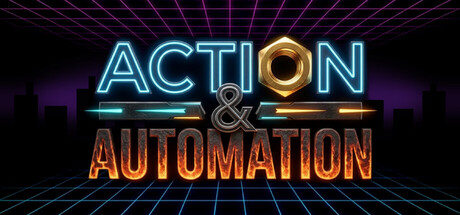
Action & Automation is not only how the game plays, it is how the game was made.
As the game’s sole human developer, game director, and system architect, I designed the core gameplay systems, software architecture, worldbuilding, narrative framework, story design, and gameplay balance. That is the Action.
For the Automation, I deliberately pushed generative AI throughout the production pipeline, with quality and player experience as the only limits. Following my direction and specifications, AI produced much of the code, artwork, animation, VFX, and UI, and was used for text polishing and localization.
No generative AI model or external AI service runs during gameplay. The game requires no AI account, API key, subscription, or token credits. Any apparent AI thinking or reasoning is scripted or driven by conventional game AI systems.
Human-designed. AI-produced. That is Action & Automation.
Generative AI was used to assist with writing, editing, and translating store page text and marketing copy. No generative AI content is generated in real time during gameplay.
Some store page marketing images, capsule assets, and promotional screenshots were created or edited with generative AI and then reviewed and adjusted for layout, sizing, and text. The game does not use live generative AI during gameplay, and it does not connect to any third-party AI service while players are playing.
Some of the promotional and storefront images were created with AI tools and then refined by hand. All of the in-game assets were designed by a 3D artist. Some of the audio files are AI generated.
Some 2D store and marketing assets — such as store capsule images, achievement icons, and key art — were created using AI image-generation tools and then refined and composited by hand. All gameplay, code, level design, and game systems are made by the developer without generative AI. All AI-assisted assets are reviewed to ensure they are appropriate and comply with Steam's rules.
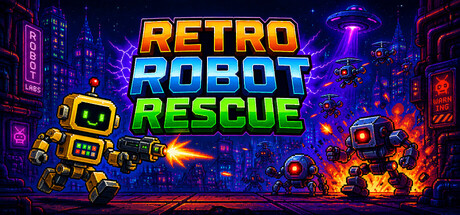
Retro Robot Rescue was developed with the assistance of generative AI tools. AI assisted tools were used during development to help create and refine certain visual assets, music, sound effects, localization content, marketing materials, and portions of the game's code. All content included in the final game was selected, reviewed, edited, and integrated by the developer.
Some visual and audio assets used in the game and its marketing materials were created or refined with the assistance of generative AI tools. All content is reviewed, edited, and integrated by the developer.
AI-assisted tools were used during development to help create certain cinematic images, visual effects, music, and localization content. Some cinematic sequences incorporate AI-generated imagery or AI-assisted animation techniques.
The majority of the game’s artwork, environments, gameplay content, puzzle design, story content, and overall development were created by hand by the development team. Some music was also created by human collaborators.
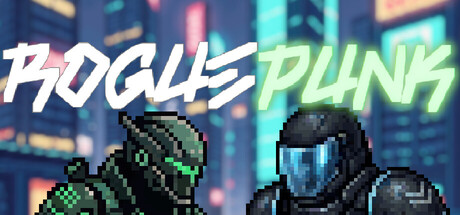
RoguePunk is an independent project, and its visual and audio content including pixel-art characters, enemies, environments, music, and sound effects was created with the help of generative AI tools, then selected, arranged, edited, and integrated by hand to fit the game's world and feel.
I see these tools the way earlier developers saw new engines, samplers, and digital art software: as a way for solo developers to bring an ambitious, fully-realized world to players who might otherwise never get to see it.
We used generative AI mainly for generating code. It has also been used for writing flavour text, many interface descriptions and some lines for an AI character. Finally it has also been used for proofreading.
FOCUS uses generative AI to assist in creating some in-game texture/background assets and the store capsule art. These are hand-edited and finalized by the developer. All design, code, and gameplay are human-made, and no AI content is generated at runtime.
As a small independent development team, we used generative AI as a supporting production tool during development.
All creative direction, game design, asset selection, editing, integration, and final approval were handled by the development team. AI-generated material was reviewed and modified by the developers before being included in the game.
The game does not generate AI content during gameplay.
We currently use AI for some of the audio dialogue as well as some of the placeholder 2D art assets. Our goal is to get art made for these where possible and we already have a voice actor and musician on board who is working on our audio.
During development, we used generative AI tools to assist in creating certain game content. This includes using AI to generate base concepts and visual assets for specific in-game items or backgrounds (which were subsequently refined manually), as well as using AI for multilingual localization and text polishing.
Generative AI was used to assist with drafts of some visual, audio, narrative, and localization assets, as well as marketing materials. All AI-assisted content was reviewed, edited, and finalized manually by the developer.
The game does not generate AI content during gameplay and does not connect to any external AI service.
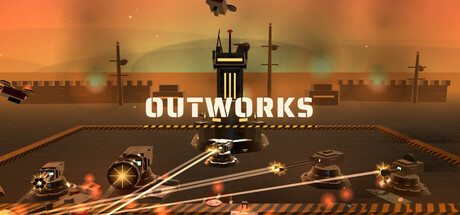
OUTWORKS was developed with the help of AI-based coding assistants, which we used to write parts of the game's source code. Everything you see and hear in the game is then generated procedurally by that code — all graphics are drawn in code (SVG/CSS) and all sound is synthesized in code (Web Audio). The game contains no AI-generated image or audio assets, and no generative AI runs while you play.
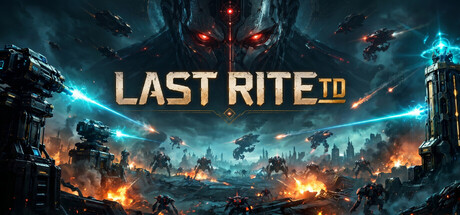
LAST RITE TD uses generative AI tools during development to assist with creating and iterating some visual concepts, marketing artwork, store capsule images, trailer-related promotional materials, voice/audio elements, and certain worldbuilding or text-drafting support.
Some voice/audio elements may also be AI-assisted. All AI-assisted content is reviewed, selected, edited, and integrated by the developer before being used in the game or on the Steam store page.
The game does not use generative AI to create unpredictable real-time gameplay content for players during normal play.
We utilize only Google AI Studio text-to-speech models during development to pre-generate voice acting files for regional localization. All generated audio files are post-processed, mixed, and hardcoded into the game build using standard engine tools before distribution. No assets infringe on existing copyrights.
The work performed by artificial intelligence (AI)
in creating the game concerns only the music and images,
including store page and library images.
AI was used to create all the music in the game;
you can listen to some of it in the videos on the store page.
The videos use the game's music.
AI was also used as an image generator
during the game's development.
The resulting images were used for the background scenery and to
create textures and geometric shapes (the 3D shape is obtained from the image).
Almost all of the game's textures were created from AI generated images.
The three dimensional geometric models were created using a
group of traditional software; these software used AI generated images as their
"source data".
In practice, many 3D objects you see in the game, such as all the bees and
all the flowers, are a three dimensional reconstruction of objects
drawn over multiple images by AI.
The AI used is that provided by the major industries in the field.
All 3D modeling software is the intellectual property of the game's author.
SonderSoft uses generative AI for localization to make games accessible to more players worldwide.
This free game with no monetization uses generated music that can be disabled in the settings. Whenever possible, SonderSoft prioritizes paying artists, creators, and actors.
Deep Breach Demo contains some pre-generated visual assets created with assistance from generative AI tools during development. These include certain static 2D visual elements such as UI icons, item and turret imagery, and promotional/store artwork. No AI-generated content is created live during gameplay.
Generative AI tools were used during development to assist with some pre-generated 2D artwork and UI imagery, 3D models and animations, instrumental music and sound effects, localization drafts, and portions of the game code. As a solo developer, I selected, edited, integrated, and reviewed all of these outputs before inclusion. The game does not generate content at runtime and does not send player input to generative AI services.
Some fixed music tracks and selected pre-rendered promotional and manual artwork were created with generative AI tools. No AI content is generated during gameplay.
This game uses content created or assisted by generative AI. Generative AI was used to help create and edit some visual assets, music/sound materials, and scripts. All final content was reviewed, selected, and adjusted by the developer before being included in the game.
Generative AI was used exclusively for marketing and promotional materials. This includes the store page capsule art, translations and the background music featured in the promotional trailer.
No AI generated assets, imagery or audio are used within the actual game build, game screenshots or gameplay experience.
Generative AI was only utilized to assist with programming and coding during development. No AI-generated assets, such as images, graphics, or audio, were used in this game.
2D artwork for this game and its Steam store page — including the logo, store capsules, key art, and in-game textures — was created using generative AI image tools, generated ahead of time during development. The 3D models are stock/CC0 assets and the dust-bunny character is procedural/code-generated. Screenshots are captures of actual gameplay. No generative AI runs at runtime. All AI-generated images were reviewed to ensure they do not reproduce third-party intellectual property.
Some 2D images and promotional artwork used in the game and on the Steam store page were created or assisted using generative AI tools and then reviewed, modified, and integrated by the developer. No real-time AI-generated content is created during gameplay.
SonderSoft uses generative AI for localization to make Arena Bot Manager accessible to more players worldwide. ABM features an optional AI voice-commentator for arena events that can be disabled as per player preference.
SonderSoft pays artists to participate in the creative process, and some artists may choose on their own to use generative AI as part of their workflow; SonderSoft respects the creative tools artists choose in order to realize their own artistic vision.
Whenever possible, SonderSoft prioritizes paying artists, creators, and actors.
A pre-rendered cinematic intro sequence was created with the assistance of AI-based video generation tools. Some visual assets were generated or refined using AI image generation.
Action & Automation is not only how the game plays, it is how the game was made.
As the game’s sole human developer, game director, and system architect, I designed the core gameplay systems, software architecture, worldbuilding, narrative framework, story design, and gameplay balance. That is the Action.
For the Automation, I deliberately pushed generative AI throughout the production pipeline, with quality and player experience as the only limits. Following my direction and specifications, AI produced much of the code, artwork, animation, VFX, and UI, and was used for text polishing and localization.
No generative AI model or external AI service runs during gameplay. The game requires no AI account, API key, subscription, or token credits. Any apparent AI thinking or reasoning is scripted or driven by conventional game AI systems.
Human-designed. AI-produced. That is Action & Automation.
Generative AI was used to assist with writing, editing, and translating store page text and marketing copy. No generative AI content is generated in real time during gameplay.
Some store page marketing images, capsule assets, and promotional screenshots were created or edited with generative AI and then reviewed and adjusted for layout, sizing, and text. The game does not use live generative AI during gameplay, and it does not connect to any third-party AI service while players are playing.
Some of the promotional and storefront images were created with AI tools and then refined by hand. All of the in-game assets were designed by a 3D artist. Some of the audio files are AI generated.
Some 2D store and marketing assets — such as store capsule images, achievement icons, and key art — were created using AI image-generation tools and then refined and composited by hand. All gameplay, code, level design, and game systems are made by the developer without generative AI. All AI-assisted assets are reviewed to ensure they are appropriate and comply with Steam's rules.
Retro Robot Rescue was developed with the assistance of generative AI tools. AI assisted tools were used during development to help create and refine certain visual assets, music, sound effects, localization content, marketing materials, and portions of the game's code. All content included in the final game was selected, reviewed, edited, and integrated by the developer.
Some visual and audio assets used in the game and its marketing materials were created or refined with the assistance of generative AI tools. All content is reviewed, edited, and integrated by the developer.
AI-assisted tools were used during development to help create certain cinematic images, visual effects, music, and localization content. Some cinematic sequences incorporate AI-generated imagery or AI-assisted animation techniques.
The majority of the game’s artwork, environments, gameplay content, puzzle design, story content, and overall development were created by hand by the development team. Some music was also created by human collaborators.
RoguePunk is an independent project, and its visual and audio content including pixel-art characters, enemies, environments, music, and sound effects was created with the help of generative AI tools, then selected, arranged, edited, and integrated by hand to fit the game's world and feel.
I see these tools the way earlier developers saw new engines, samplers, and digital art software: as a way for solo developers to bring an ambitious, fully-realized world to players who might otherwise never get to see it.
We used generative AI mainly for generating code. It has also been used for writing flavour text, many interface descriptions and some lines for an AI character. Finally it has also been used for proofreading.
FOCUS uses generative AI to assist in creating some in-game texture/background assets and the store capsule art. These are hand-edited and finalized by the developer. All design, code, and gameplay are human-made, and no AI content is generated at runtime.
As a small independent development team, we used generative AI as a supporting production tool during development.
All creative direction, game design, asset selection, editing, integration, and final approval were handled by the development team. AI-generated material was reviewed and modified by the developers before being included in the game.
The game does not generate AI content during gameplay.
We currently use AI for some of the audio dialogue as well as some of the placeholder 2D art assets. Our goal is to get art made for these where possible and we already have a voice actor and musician on board who is working on our audio.
During development, we used generative AI tools to assist in creating certain game content. This includes using AI to generate base concepts and visual assets for specific in-game items or backgrounds (which were subsequently refined manually), as well as using AI for multilingual localization and text polishing.
Generative AI was used to assist with drafts of some visual, audio, narrative, and localization assets, as well as marketing materials. All AI-assisted content was reviewed, edited, and finalized manually by the developer.
The game does not generate AI content during gameplay and does not connect to any external AI service.
OUTWORKS was developed with the help of AI-based coding assistants, which we used to write parts of the game's source code. Everything you see and hear in the game is then generated procedurally by that code — all graphics are drawn in code (SVG/CSS) and all sound is synthesized in code (Web Audio). The game contains no AI-generated image or audio assets, and no generative AI runs while you play.
LAST RITE TD uses generative AI tools during development to assist with creating and iterating some visual concepts, marketing artwork, store capsule images, trailer-related promotional materials, voice/audio elements, and certain worldbuilding or text-drafting support.
Some voice/audio elements may also be AI-assisted. All AI-assisted content is reviewed, selected, edited, and integrated by the developer before being used in the game or on the Steam store page.
The game does not use generative AI to create unpredictable real-time gameplay content for players during normal play.
We utilize only Google AI Studio text-to-speech models during development to pre-generate voice acting files for regional localization. All generated audio files are post-processed, mixed, and hardcoded into the game build using standard engine tools before distribution. No assets infringe on existing copyrights.
The work performed by artificial intelligence (AI)
in creating the game concerns only the music and images,
including store page and library images.
AI was used to create all the music in the game;
you can listen to some of it in the videos on the store page.
The videos use the game's music.
AI was also used as an image generator
during the game's development.
The resulting images were used for the background scenery and to
create textures and geometric shapes (the 3D shape is obtained from the image).
Almost all of the game's textures were created from AI generated images.
The three dimensional geometric models were created using a
group of traditional software; these software used AI generated images as their
"source data".
In practice, many 3D objects you see in the game, such as all the bees and
all the flowers, are a three dimensional reconstruction of objects
drawn over multiple images by AI.
The AI used is that provided by the major industries in the field.
All 3D modeling software is the intellectual property of the game's author.
SonderSoft uses generative AI for localization to make games accessible to more players worldwide.
This free game with no monetization uses generated music that can be disabled in the settings. Whenever possible, SonderSoft prioritizes paying artists, creators, and actors.
Deep Breach Demo contains some pre-generated visual assets created with assistance from generative AI tools during development. These include certain static 2D visual elements such as UI icons, item and turret imagery, and promotional/store artwork. No AI-generated content is created live during gameplay.