Public Steam disclosure research25,376 disclosures tracked
Where do games disclose AI use?
Search developers’ Steam disclosures, compare classified AI use across
games, and follow recorded changes.
This index adds cross-game classifications and statistics to
statements published on individual store pages.
Groups reflect automatic analysis of public disclosures; mature records are excluded. These counts do not measure AI use across all of Steam.
Missing or unclear statements cannot establish whether a game uses AI.
Some visual assets were created with the assistance of generative AI tools and then curated and edited by the developer: story illustrations, character portraits, key art / capsule backgrounds, and a small number of decorative item images.
All gameplay sprites, animations, environments, music and sound effects are human-made assets used under CC0 / open licenses (credited in-game).
Voice-over lines (English and Turkish) were generated with ElevenLabs text-to-speech under a commercial license, from scripts written by the developer.
The game does not generate any content with AI at runtime. The developer has reviewed all AI-assisted content to ensure it is not illegal or infringing.
AI was used for localization, while being manually reviewed, and as a time-saving step in the development of some image and model assets, for retopology, concepting, and inbetweening.
The game contains no unmodified AI outputs.
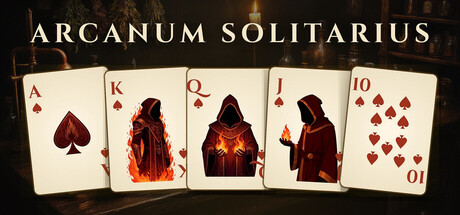
All the art in Arcanum Solitarius, from the playing cards to the Arcana and the workshop backgrounds, was made with AI image generation using a model I trained myself. I was after one specific look: a medieval alchemist's workshop by candlelight, in aged parchment and dark walnut with verdigris and old gold. Most of the music was made the same way. I used AI to draft some of the in-game writing, then rewrote it into my own words. I picked and edited every piece before it went into the game, and the images on this page come from those same assets. Nothing is generated while you play.
Generative AI tools were used during development to assist with selected pre-generated 3D assets, translations into additional languages, and marketing artwork. Polish and English source texts were written by the developer. All AI-assisted content was reviewed, edited, and integrated by the developer. The game does not generate AI content during gameplay.
Character and environment art and animations are AI-generated as a starting point (PixelLab, ComfyUI), then reworked, corrected and integrated by hand by the solo developer. The same applies to store page and marketing artwork. All AI-assisted content is pre-generated and finalized before shipping — no content is generated at runtime on the player's machine.
AI helped with some writing, troubleshooting, localization, and the Steam store page. All art, animation, music, sound effects, and level design were created entirely by me. I reviewed and edited everything AI assisted with, and several translations were also checked by native speakers. The game does not generate AI content during gameplay and does not connect to any external AI services.
Some image assets (such as the apparitions and the hanging scroll artwork) and some audio assets (music and sound effects) in this game were created using generative AI. All generated material was selected and edited by the developer before use, and only models licensed for commercial use were used.
No generative AI runs while you play. Everything shipped in the game is pre-generated and fixed, and the game never sends your input to an AI service.
AI was occasionally used to assist in the creation of certain textures. However, these instances are light-hearted and do not impact the creative vision of Static Field Interactive.
Generative AI tools were used in parts of this game's development, always under human creative direction.
Art: The game's visual design is led by a classically trained 2D artist acting as art director. The UI style, overall color palette, character art, and environment style are all conceived and directed by a human, starting from hand-drawn sketches and detailed art direction. Generative AI is used only as an execution tool carrying out that direction—the distinctive style and texture of the game come from human artistic judgment, and every asset is directed, selected, and refined by the artist.
Music: The main melodies are composed by us by ear. Generative AI is then directed—with specific guidance on mood, instrumentation, and arrangement—to help realize the finished tracks.
Code: The game's code was generated using AI coding tools.
All content is reviewed and integrated by the developers before inclusion. The game contains no content generated live by AI during gameplay.
Generative AI tools were used during development to assist with programming tasks and to generate some reference assets and 3D models. All AI-generated content was reviewed, modified, and integrated by the developers.
Some 3D prop assets and promotional artwork were created with the assistance of generative AI tools. All AI-assisted content was manually reviewed, edited, and integrated by the developer. No content is generated during gameplay.
The game contains content created with the assistance of AI tools. AI-assisted tools were used during development, including programming assistance and the creation of some audio and 3D assets. These assets were reviewed, edited, and integrated into the game by the developers.
Ai was used to develop the code, artwork, various events, and dialogue in the game. Most player-facing text was reviewed by humans and many of the events and conversations were approved, improved, or rewritten by humans. There is no run-time AI usage, everything was created before the game runs, only standard computer actions are done at runtime. ex. selections and randomization of existing content.
This game is being developed solo. As an independent developer working with limited resources and budget, AI tools have been used in the production of some visual and musical assets:
Some character concept art, store page marketing materials, and background/atmospheric visuals were created using AI visual generation tools, then edited and integrated by the developer to fit the game's art direction.
Some visuals are included as placeholders and will be changed during development.
Some background music tracks were created using AI music generation tools.
The game's codebase, gameplay mechanics, character design, dialogue writing, and overall creative direction were all created manually by the developer alone. AI tools were used as a tool where access to a professional art/sound team was not possible as a solo developer; final decisions, edits, and the overall creative direction of the game were shaped by the developer.
This game was developed with the assistance of generative AI tools.
Generative AI tools assisted with the creation of skill icons, terrain textures, some in-game 3D assets and visual effects, and translated localization text. All final assets and translations included in the game were selected, edited, and reviewed by the developer before integration.
The game does not use any AI features that generate images, text, audio, or other content in real time in response to player input.
AI support was used solely for coding support during the game's development process. There is no AI system actively running during gameplay, generating real-time content, or connecting to an external AI service. Beyond the game's coding, the graphics, story, music, and other creative content were entirely created by human effort.
استُخدمت أدوات الذكاء الاصطناعي أثناء التطوير للمساعدة في كتابة أجزاء من كود اللعبة وبعض النصوص داخلها، مثل التلميحات ورسائل الواجهة، وكذلك في إنشاء بعض النماذج ثلاثية الأبعاد والخامات (التكستشر). جميع المحتوى المُنجز بمساعدة الذكاء الاصطناعي تمت مراجعته وتعديله واعتماده من المطوّر. قصة اللعبة وتصميمها وإخراجها من صنع الإنسان بالكامل، ولا يتم توليد أي محتوى بالذكاء الاصطناعي أثناء اللعب.
Generative AI tools were used during the development process to assist in creating and refining some visual assets. All AI-assisted content was reviewed, edited, and curated by the developer before being included in the game or its promotional materials.
One promotional artwork seen on the store page has been created with the help of AI tools. We are actively working on replacing it within the coming days.
The game's programming, gameplay mechanics, system design, and overall game logic were developed by me using the Unity game engine. Generative AI tools were used only as an assistive resource for coding suggestions, debugging, optimization, and technical explanations. All AI-generated code was reviewed, modified, tested, and manually integrated into the project by me. The final implementation, design decisions, and gameplay systems were created and validated by the developer.
This game uses prerendered visual content, store assets, and translations assisted by generative AI. All AI-assisted content is created before release. It is not generated dynamically during gameplay. The game does not connect to external AI services during gameplay.
Backswamps contains some pre-generated visual assets created with the assistance of generative AI, including certain textures and interface artwork. All AI-assisted content has been reviewed, curated, and integrated by the developer. The game does not generate AI content during gameplay.
In the development process of this game, we utilized pre-generated AI tools as follows:
* 2D Assets (Backgrounds, Photos, Various Images): After generating base images using AI, we manually added, modified, and processed them before implementing them in the game.
* 3D Assets: AI generation was used for some 3D models, and the output models were then manually adjusted and processed before use.
* Audio: Generation AI tools (text-to-speech and speech synthesis) were used for some sound effects (SE) and character voices.
Please note that we did not use any live-generated AI systems that generate content in real time during game execution.
Some visual concepts, promotional artwork, and certain written materials used for the game's presentation were created or refined with the assistance of generative AI. All AI-assisted content has been carefully reviewed, edited, and approved by the development team to ensure artistic consistency, originality, and quality. The gameplay, design decisions, and final player experience are fully curated by the developers.
The art, audio, and writing in Refund Speedrun are created by hand. Generative AI was used only for the voice-over narration in our promotional teaser trailer (ElevenLabs). The game does not generate any content using AI at runtime.
Generative AI was used during development to create a limited number of in-game images and to generate translations for multiple languages. All AI-generated content was reviewed and edited as needed by the development team.
Generative AI is used as a production support tool throughout development. It assists with localization, workflow acceleration, and the integration of assets across multiple disciplines into a consistent production pipeline. All AI-assisted content is reviewed, edited, integrated, and quality-controlled by the development team before being included in the final game.
Generative AI was used to create the Library Hero artwork, the background image displayed in the main menu, and a short pre-rendered video shown at the beginning of the “Demo Night” scene. All of these assets are pre-generated and no content is generated by AI during gameplay.
AI was used to translate the game into certain languages. When selecting one of these languages for the first time, a notification appears. Additionally, a marker is displayed next to the language name in the options menu.
Furthermore, AI was utilized to generate some of the graphical assets and may have been used in the creation of videos.
We used AI to generate additional chat message ideas based on the initial list we made ourselves. Relevant message ideas were added to the game, some messages were altered to fit, and rest were left on the cutting room floor.
AI tools were used during development.
The interface translations (English, French, German, Italian and Portuguese) and the log translations were generated with AI assistance, under the developer's direction and with human review. The game does not generate AI content at runtime.
Some graffiti textures were created using AI, entirely based on our own original game/licensed assets. No copyrighted or third-party materials were used in the process. All AI-generated textures have been manually reviewed, repainted, and edited.
This game utilizes generative AI technologies during development. Specifically, AI tools (such as ElevenLabs) were used to create some character voiceovers and radio dialogues. AI assistance was also employed in generating certain game assets and conceptual sketches. All AI-generated content has been manually post-processed and optimized to maintain the game's psychological horror atmosphere.
Generative AI was used to:
- Create some of 3D models
- Create some of textures
- Create some of 2D background arts
Also, some parts of the programming code was written with AI help.
During development, generative AI tools were used to create temporary 2D images, rough visual assets, and concept art.
These assets are used as prototypes and references during the development phase. In the final version of the game, they will be replaced with original, hand-crafted assets.
- Character photos and video clips shown in the in-game Stories feed were generated using AI tools (image and video generation), then reviewed, edited, and composited by the developer to fit the game's art direction.
- AI-assisted tools were used in parts of the development process.
Some static store and marketing assets were created with AI-assisted tools, then reviewed, edited, and integrated by the developer. The game does not generate AI content during gameplay.
We used a Gen AI powered tool to localize the following:
- (in some languages) In-game text
- (in some languages) Steam store descriptions
We plan to replace these with human translation and LQA when we can afford it.
Until then, we are using Gen AI temporarily.
Some visual assets were created with the assistance of generative AI tools and then curated and edited by the developer: story illustrations, character portraits, key art / capsule backgrounds, and a small number of decorative item images.
All gameplay sprites, animations, environments, music and sound effects are human-made assets used under CC0 / open licenses (credited in-game).
Voice-over lines (English and Turkish) were generated with ElevenLabs text-to-speech under a commercial license, from scripts written by the developer.
The game does not generate any content with AI at runtime. The developer has reviewed all AI-assisted content to ensure it is not illegal or infringing.
AI was used for localization, while being manually reviewed, and as a time-saving step in the development of some image and model assets, for retopology, concepting, and inbetweening.
The game contains no unmodified AI outputs.
All the art in Arcanum Solitarius, from the playing cards to the Arcana and the workshop backgrounds, was made with AI image generation using a model I trained myself. I was after one specific look: a medieval alchemist's workshop by candlelight, in aged parchment and dark walnut with verdigris and old gold. Most of the music was made the same way. I used AI to draft some of the in-game writing, then rewrote it into my own words. I picked and edited every piece before it went into the game, and the images on this page come from those same assets. Nothing is generated while you play.
Generative AI tools were used during development to assist with selected pre-generated 3D assets, translations into additional languages, and marketing artwork. Polish and English source texts were written by the developer. All AI-assisted content was reviewed, edited, and integrated by the developer. The game does not generate AI content during gameplay.
Character and environment art and animations are AI-generated as a starting point (PixelLab, ComfyUI), then reworked, corrected and integrated by hand by the solo developer. The same applies to store page and marketing artwork. All AI-assisted content is pre-generated and finalized before shipping — no content is generated at runtime on the player's machine.
AI helped with some writing, troubleshooting, localization, and the Steam store page. All art, animation, music, sound effects, and level design were created entirely by me. I reviewed and edited everything AI assisted with, and several translations were also checked by native speakers. The game does not generate AI content during gameplay and does not connect to any external AI services.
Some image assets (such as the apparitions and the hanging scroll artwork) and some audio assets (music and sound effects) in this game were created using generative AI. All generated material was selected and edited by the developer before use, and only models licensed for commercial use were used.
No generative AI runs while you play. Everything shipped in the game is pre-generated and fixed, and the game never sends your input to an AI service.
AI was occasionally used to assist in the creation of certain textures. However, these instances are light-hearted and do not impact the creative vision of Static Field Interactive.
Generative AI tools were used in parts of this game's development, always under human creative direction.
Art: The game's visual design is led by a classically trained 2D artist acting as art director. The UI style, overall color palette, character art, and environment style are all conceived and directed by a human, starting from hand-drawn sketches and detailed art direction. Generative AI is used only as an execution tool carrying out that direction—the distinctive style and texture of the game come from human artistic judgment, and every asset is directed, selected, and refined by the artist.
Music: The main melodies are composed by us by ear. Generative AI is then directed—with specific guidance on mood, instrumentation, and arrangement—to help realize the finished tracks.
Code: The game's code was generated using AI coding tools.
All content is reviewed and integrated by the developers before inclusion. The game contains no content generated live by AI during gameplay.
Generative AI tools were used during development to assist with programming tasks and to generate some reference assets and 3D models. All AI-generated content was reviewed, modified, and integrated by the developers.
Some 3D prop assets and promotional artwork were created with the assistance of generative AI tools. All AI-assisted content was manually reviewed, edited, and integrated by the developer. No content is generated during gameplay.
The game contains content created with the assistance of AI tools. AI-assisted tools were used during development, including programming assistance and the creation of some audio and 3D assets. These assets were reviewed, edited, and integrated into the game by the developers.
Ai was used to develop the code, artwork, various events, and dialogue in the game. Most player-facing text was reviewed by humans and many of the events and conversations were approved, improved, or rewritten by humans. There is no run-time AI usage, everything was created before the game runs, only standard computer actions are done at runtime. ex. selections and randomization of existing content.
This game is being developed solo. As an independent developer working with limited resources and budget, AI tools have been used in the production of some visual and musical assets:
Some character concept art, store page marketing materials, and background/atmospheric visuals were created using AI visual generation tools, then edited and integrated by the developer to fit the game's art direction.
Some visuals are included as placeholders and will be changed during development.
Some background music tracks were created using AI music generation tools.
The game's codebase, gameplay mechanics, character design, dialogue writing, and overall creative direction were all created manually by the developer alone. AI tools were used as a tool where access to a professional art/sound team was not possible as a solo developer; final decisions, edits, and the overall creative direction of the game were shaped by the developer.
This game was developed with the assistance of generative AI tools.
Generative AI tools assisted with the creation of skill icons, terrain textures, some in-game 3D assets and visual effects, and translated localization text. All final assets and translations included in the game were selected, edited, and reviewed by the developer before integration.
The game does not use any AI features that generate images, text, audio, or other content in real time in response to player input.
AI support was used solely for coding support during the game's development process. There is no AI system actively running during gameplay, generating real-time content, or connecting to an external AI service. Beyond the game's coding, the graphics, story, music, and other creative content were entirely created by human effort.
استُخدمت أدوات الذكاء الاصطناعي أثناء التطوير للمساعدة في كتابة أجزاء من كود اللعبة وبعض النصوص داخلها، مثل التلميحات ورسائل الواجهة، وكذلك في إنشاء بعض النماذج ثلاثية الأبعاد والخامات (التكستشر). جميع المحتوى المُنجز بمساعدة الذكاء الاصطناعي تمت مراجعته وتعديله واعتماده من المطوّر. قصة اللعبة وتصميمها وإخراجها من صنع الإنسان بالكامل، ولا يتم توليد أي محتوى بالذكاء الاصطناعي أثناء اللعب.
Generative AI tools were used during the development process to assist in creating and refining some visual assets. All AI-assisted content was reviewed, edited, and curated by the developer before being included in the game or its promotional materials.
One promotional artwork seen on the store page has been created with the help of AI tools. We are actively working on replacing it within the coming days.
The game's programming, gameplay mechanics, system design, and overall game logic were developed by me using the Unity game engine. Generative AI tools were used only as an assistive resource for coding suggestions, debugging, optimization, and technical explanations. All AI-generated code was reviewed, modified, tested, and manually integrated into the project by me. The final implementation, design decisions, and gameplay systems were created and validated by the developer.
This game uses prerendered visual content, store assets, and translations assisted by generative AI. All AI-assisted content is created before release. It is not generated dynamically during gameplay. The game does not connect to external AI services during gameplay.
Backswamps contains some pre-generated visual assets created with the assistance of generative AI, including certain textures and interface artwork. All AI-assisted content has been reviewed, curated, and integrated by the developer. The game does not generate AI content during gameplay.
In the development process of this game, we utilized pre-generated AI tools as follows:
* 2D Assets (Backgrounds, Photos, Various Images): After generating base images using AI, we manually added, modified, and processed them before implementing them in the game.
* 3D Assets: AI generation was used for some 3D models, and the output models were then manually adjusted and processed before use.
* Audio: Generation AI tools (text-to-speech and speech synthesis) were used for some sound effects (SE) and character voices.
Please note that we did not use any live-generated AI systems that generate content in real time during game execution.
Some visual concepts, promotional artwork, and certain written materials used for the game's presentation were created or refined with the assistance of generative AI. All AI-assisted content has been carefully reviewed, edited, and approved by the development team to ensure artistic consistency, originality, and quality. The gameplay, design decisions, and final player experience are fully curated by the developers.
The art, audio, and writing in Refund Speedrun are created by hand. Generative AI was used only for the voice-over narration in our promotional teaser trailer (ElevenLabs). The game does not generate any content using AI at runtime.
Generative AI was used during development to create a limited number of in-game images and to generate translations for multiple languages. All AI-generated content was reviewed and edited as needed by the development team.
Generative AI is used as a production support tool throughout development. It assists with localization, workflow acceleration, and the integration of assets across multiple disciplines into a consistent production pipeline. All AI-assisted content is reviewed, edited, integrated, and quality-controlled by the development team before being included in the final game.
Generative AI was used to create the Library Hero artwork, the background image displayed in the main menu, and a short pre-rendered video shown at the beginning of the “Demo Night” scene. All of these assets are pre-generated and no content is generated by AI during gameplay.
AI was used to translate the game into certain languages. When selecting one of these languages for the first time, a notification appears. Additionally, a marker is displayed next to the language name in the options menu.
Furthermore, AI was utilized to generate some of the graphical assets and may have been used in the creation of videos.
We used AI to generate additional chat message ideas based on the initial list we made ourselves. Relevant message ideas were added to the game, some messages were altered to fit, and rest were left on the cutting room floor.
AI tools were used during development.
The interface translations (English, French, German, Italian and Portuguese) and the log translations were generated with AI assistance, under the developer's direction and with human review. The game does not generate AI content at runtime.
Some graffiti textures were created using AI, entirely based on our own original game/licensed assets. No copyrighted or third-party materials were used in the process. All AI-generated textures have been manually reviewed, repainted, and edited.
This game utilizes generative AI technologies during development. Specifically, AI tools (such as ElevenLabs) were used to create some character voiceovers and radio dialogues. AI assistance was also employed in generating certain game assets and conceptual sketches. All AI-generated content has been manually post-processed and optimized to maintain the game's psychological horror atmosphere.
Generative AI was used to:
- Create some of 3D models
- Create some of textures
- Create some of 2D background arts
Also, some parts of the programming code was written with AI help.
During development, generative AI tools were used to create temporary 2D images, rough visual assets, and concept art.
These assets are used as prototypes and references during the development phase. In the final version of the game, they will be replaced with original, hand-crafted assets.
- Character photos and video clips shown in the in-game Stories feed were generated using AI tools (image and video generation), then reviewed, edited, and composited by the developer to fit the game's art direction.
- AI-assisted tools were used in parts of the development process.
Some static store and marketing assets were created with AI-assisted tools, then reviewed, edited, and integrated by the developer. The game does not generate AI content during gameplay.
We used a Gen AI powered tool to localize the following:
- (in some languages) In-game text
- (in some languages) Steam store descriptions
We plan to replace these with human translation and LQA when we can afford it.
Until then, we are using Gen AI temporarily.