Public Steam disclosure research25,508 disclosures tracked
Where do games disclose AI use?
Search developers’ Steam disclosures, compare classified AI use across
games, and follow recorded changes.
This index adds cross-game classifications and statistics to
statements published on individual store pages.
Groups reflect automatic analysis of public disclosures; mature records are excluded. These counts do not measure AI use across all of Steam.
Missing or unclear statements cannot establish whether a game uses AI.
Artificial intelligence was used during development to generate some of the game's background music and some decorative environmental elements, such as certain statues and environmental objects. All generated content was reviewed, selected, and integrated manually by the development team. Artificial intelligence is not used during gameplay, nor does it dynamically generate content for players.
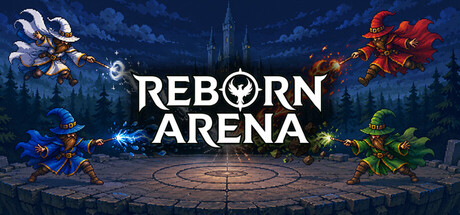
Generative AI was used exclusively to assist in creating the promotional cover art (capsule images) for the Steam store page. All in-game assets are human-crafted and contain no AI-generated content.
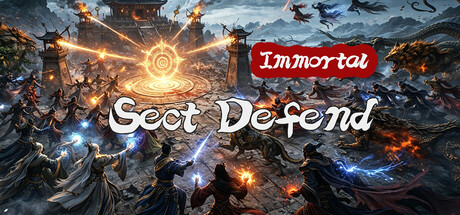
Some promotional images and video materials for this game were created with the assistance of generative AI. All content has been reviewed and modified by human editors.
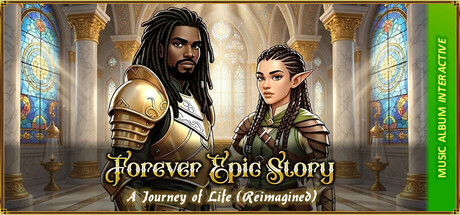
The album "Forever Epic Story: A Journey of Life (Reimagined)" is a remake of the original album that was released many years ago back in 2002. Now using the assistance of AI for both beats and vocals, the album is now "reimagined" in an interactive experience. *AI was used in the development of the cover art and video animations.
This game was built with the assistance of AI tools. Visual assets including character models, ability icons, and promotional art were generated using AI image generation. Game code, systems design, and implementation were developed with AI coding assistance. All gameplay mechanics, class balance, and game design decisions were directed by the developer.
Some visual assets in this game were created or enhanced using generative AI tools during development. These assets were reviewed and refined by the development team before being included in the final product.
The game does not use AI to generate content during gameplay.
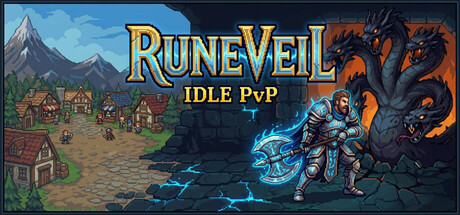
Runeveil: Idle PvP uses generative AI tools only during the design phase of 2D pixel art assets (characters, monsters, items, environments and icons). These visuals serve as a working base and are then edited, integrated and manually reviewed by the team before being added to the game.
No generative AI is used for the game's code, for generating content in real time during gameplay, nor for the soundtrack, narrative text or translations. All content you see in the game has been checked and assembled by hand.
AI used for artwork and logo that used in Steam page. In-game, placeholder narrative dialogue sounds are AI generated and will be replaced further in development.
AI was used for multilingual localization work and during the prototyping and implementation of in-game systems. All AI-generated outputs were directly reviewed and modified by the developer before final integration.
We have utilized AI tools during development to help make our peaceful sanctuary accessible to players worldwide in their native languages. All AI-assisted elements fall under pre-generated content:
In-Game Translations: Game texts and quests were translated from the Slovak original using AI. We actively work with community volunteers to review these. Any languages that have not yet undergone human verification are clearly marked within the game settings as AI/machine translations.
Marketing Copy: AI was used extensively to draft and translate store descriptions and marketing materials for international storefronts (without subsequent human verification).
The core game design, mechanics, storyline, and atmosphere are entirely our own original work. AI served purely as a technical tool to deliver faster localization.
Some visual assets, including loading screen images and menu screen artwork, were developed with the assistance of AI image generation tools. AI video generation tools were also used to assist in the production of opening, ending, and promotional trailer videos. All content was created and directed by the developer, with AI serving as a supporting tool to realize the game's creative vision.
All art and music in the game other than icons and sound effects were generated with AI. While I would prefer to ship the game with human artistry, I do not have the means at this time.
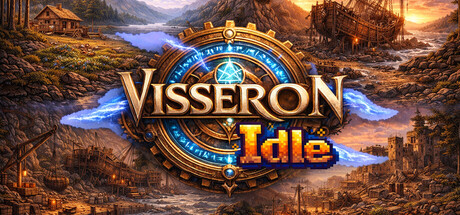
I use AI agents to aid in development of Visseron Idle as well. I am the brains, it is my hands when I need it.
During development, AI-assisted tools were used as part of the creative workflow for concept exploration and reference generation. Extensive photobashing, manual editing, and traditional artistic techniques were used throughout development, and every final image, texture, and 3D model was individually refined, finished, or recreated by an artist. AI serves as a supporting tool in the production process rather than replacing artistic craftsmanship.
This game uses generative AI (Grok Imagine by xAI) to create visual assets for the Steam store page, including the header, capsules, background images, and logos.
Live in-game: NPC conversations are generated in real time by a large language model. Every dialogue you have with a villager is dynamically written rather than scripted, and NPCs remember what you've said to them across the playthrough. Conversations are filtered for safety, but as with any AI-generated text, responses may occasionally be unexpected.
Pre-rendered during development: Character and creature sprites, ambient music, and some background artwork were created with the assistance of generative AI tools and then hand-curated, edited, and integrated by the developer.
AI tools were used only to assist in the creation of certain marketing artwork for the Steam store page.
All in-game content, screenshots, and trailer were created without the use of generative AI.
As an indie non-english speaker, AI was used for polishing game store page and texts inside game. Images in game and gameplay in game are not affected by AI.
The developer uses AI tools (such as ChatGPT, Claude, and Cursor) to assist with writing code, drafting in-game text like card effect descriptions, and brainstorming narrative elements. Additionally, AI is utilized to provide draft localizations for various languages.
However, all graphical assets (including character illustrations and monster designs) and audio are entirely human-made. No AI-generated images, pre-rendered graphics, or sound files are used in this game.
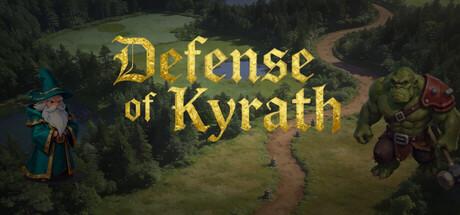
Defense of Kyrath uses AI-assisted tools in parts of its art and audio pipeline. Some character sprites, character voice lines, select background imagery, and background music are AI-generated, and refined or curated by the developer. All AI-generated content is pre-generated at authoring time. Terrain, environment art, and level layouts come from TiGen - a custom procedural generation pipeline that is purely algorithmic, not AI. All game design, writing, and gameplay systems are human-crafted.
No real-time generative AI in the client. Static in-game and store art/audio may include material initially produced with generative AI, revised and approved by the developer before release.
How does this game use generative AI?
-Musical Content: The soundtrack was generated using AI tools (Suno), then curated and produced to match the game's atmosphere and biomes.
-Visual Content and Assets: AI tools were used as a base for some illustrations and visual elements. All of these assets have been manually reviewed, edited, and refined by the developer to ensure final quality and consistency with the project's art style.
AI tools were utilized to assist with text correction and translation. Additionally, AI was used to refine certain artwork, as well as to generate certain audio elements.
All other aspects of the project, from creative direction and story to core gameplay and scripting, represent the dedicated, hand-crafted effort of a solo developer.
This game utilizes generative AI tools to assist in the creation of select 2D artwork, specifically some UI icons, league background themes, and store page promotional materials. Other in-game assets, such as enemy art and player icon and GUI, were acquired through licensed asset stores.
This game uses generative AI during development for certain 2D icons, concept art, placeholder graphics, and text. All AI-generated content has been manually reviewed, edited, and adapted by the developer before being included in the final game.
Some content in this game, including text and certain assets, was created with the assistance of AI tools during development. All AI-generated content has been reviewed, edited, and integrated by the developer to ensure quality and consistency.
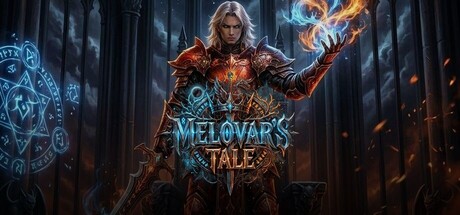
A lot of the artwork in Melovar's Tale, including the card, relic and character illustrations were created with the assistance of AI tools. All AI Generated items were reviewed, curated, and refined to ensure they meet the game visual and thematic standards. There isn't any AI content generated live during the game.
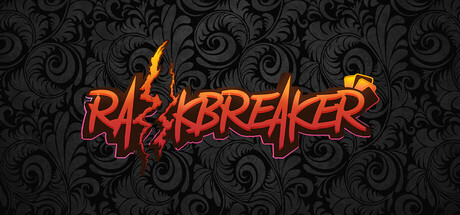
In development and early prototyping, Rankbreaker used some generative art assets. These are being actively replaced with original work created by professional artists, and this transition is already underway.
Current contributions include:
Leonardo Veronesi: Disruptors “Void,” “Raven,” “Recoil,” and character card “Axl Rydell”
Samuele Colombini: Character cards “Bloodthirst,” “Ironjaw,” “Riff the Cat,” and “Stonewhal”
Richard Kessler: Location art “Deadspace,” “Sepulcher,” and “The Arc”
All generative assets are being phased out in favor of fully original artwork as development continues.
Some artwork used in store page capsule images and card illustrations was created with the assistance of AI image generation tools. All AI-generated assets were reviewed, curated, and edited by the developer. No AI is used during gameplay.
Some of the art assets in this game were created with the assistance of generative AI. All assets have undergone manual selection and post-production adjustments to ensure consistency with the overall game style.
Artificial intelligence was used during development to generate some of the game's background music and some decorative environmental elements, such as certain statues and environmental objects. All generated content was reviewed, selected, and integrated manually by the development team. Artificial intelligence is not used during gameplay, nor does it dynamically generate content for players.
Generative AI was used exclusively to assist in creating the promotional cover art (capsule images) for the Steam store page. All in-game assets are human-crafted and contain no AI-generated content.
Some promotional images and video materials for this game were created with the assistance of generative AI. All content has been reviewed and modified by human editors.
The album "Forever Epic Story: A Journey of Life (Reimagined)" is a remake of the original album that was released many years ago back in 2002. Now using the assistance of AI for both beats and vocals, the album is now "reimagined" in an interactive experience. *AI was used in the development of the cover art and video animations.
This game was built with the assistance of AI tools. Visual assets including character models, ability icons, and promotional art were generated using AI image generation. Game code, systems design, and implementation were developed with AI coding assistance. All gameplay mechanics, class balance, and game design decisions were directed by the developer.
Some visual assets in this game were created or enhanced using generative AI tools during development. These assets were reviewed and refined by the development team before being included in the final product.
The game does not use AI to generate content during gameplay.
Runeveil: Idle PvP uses generative AI tools only during the design phase of 2D pixel art assets (characters, monsters, items, environments and icons). These visuals serve as a working base and are then edited, integrated and manually reviewed by the team before being added to the game.
No generative AI is used for the game's code, for generating content in real time during gameplay, nor for the soundtrack, narrative text or translations. All content you see in the game has been checked and assembled by hand.
AI used for artwork and logo that used in Steam page. In-game, placeholder narrative dialogue sounds are AI generated and will be replaced further in development.
AI was used for multilingual localization work and during the prototyping and implementation of in-game systems. All AI-generated outputs were directly reviewed and modified by the developer before final integration.
We have utilized AI tools during development to help make our peaceful sanctuary accessible to players worldwide in their native languages. All AI-assisted elements fall under pre-generated content:
In-Game Translations: Game texts and quests were translated from the Slovak original using AI. We actively work with community volunteers to review these. Any languages that have not yet undergone human verification are clearly marked within the game settings as AI/machine translations.
Marketing Copy: AI was used extensively to draft and translate store descriptions and marketing materials for international storefronts (without subsequent human verification).
The core game design, mechanics, storyline, and atmosphere are entirely our own original work. AI served purely as a technical tool to deliver faster localization.
Some visual assets, including loading screen images and menu screen artwork, were developed with the assistance of AI image generation tools. AI video generation tools were also used to assist in the production of opening, ending, and promotional trailer videos. All content was created and directed by the developer, with AI serving as a supporting tool to realize the game's creative vision.
All art and music in the game other than icons and sound effects were generated with AI. While I would prefer to ship the game with human artistry, I do not have the means at this time.
I use AI agents to aid in development of Visseron Idle as well. I am the brains, it is my hands when I need it.
During development, AI-assisted tools were used as part of the creative workflow for concept exploration and reference generation. Extensive photobashing, manual editing, and traditional artistic techniques were used throughout development, and every final image, texture, and 3D model was individually refined, finished, or recreated by an artist. AI serves as a supporting tool in the production process rather than replacing artistic craftsmanship.
This game uses generative AI (Grok Imagine by xAI) to create visual assets for the Steam store page, including the header, capsules, background images, and logos.
Live in-game: NPC conversations are generated in real time by a large language model. Every dialogue you have with a villager is dynamically written rather than scripted, and NPCs remember what you've said to them across the playthrough. Conversations are filtered for safety, but as with any AI-generated text, responses may occasionally be unexpected.
Pre-rendered during development: Character and creature sprites, ambient music, and some background artwork were created with the assistance of generative AI tools and then hand-curated, edited, and integrated by the developer.
AI tools were used only to assist in the creation of certain marketing artwork for the Steam store page.
All in-game content, screenshots, and trailer were created without the use of generative AI.
As an indie non-english speaker, AI was used for polishing game store page and texts inside game. Images in game and gameplay in game are not affected by AI.
The developer uses AI tools (such as ChatGPT, Claude, and Cursor) to assist with writing code, drafting in-game text like card effect descriptions, and brainstorming narrative elements. Additionally, AI is utilized to provide draft localizations for various languages.
However, all graphical assets (including character illustrations and monster designs) and audio are entirely human-made. No AI-generated images, pre-rendered graphics, or sound files are used in this game.
Defense of Kyrath uses AI-assisted tools in parts of its art and audio pipeline. Some character sprites, character voice lines, select background imagery, and background music are AI-generated, and refined or curated by the developer. All AI-generated content is pre-generated at authoring time. Terrain, environment art, and level layouts come from TiGen - a custom procedural generation pipeline that is purely algorithmic, not AI. All game design, writing, and gameplay systems are human-crafted.
No real-time generative AI in the client. Static in-game and store art/audio may include material initially produced with generative AI, revised and approved by the developer before release.
How does this game use generative AI?
-Musical Content: The soundtrack was generated using AI tools (Suno), then curated and produced to match the game's atmosphere and biomes.
-Visual Content and Assets: AI tools were used as a base for some illustrations and visual elements. All of these assets have been manually reviewed, edited, and refined by the developer to ensure final quality and consistency with the project's art style.
AI tools were utilized to assist with text correction and translation. Additionally, AI was used to refine certain artwork, as well as to generate certain audio elements.
All other aspects of the project, from creative direction and story to core gameplay and scripting, represent the dedicated, hand-crafted effort of a solo developer.
This game utilizes generative AI tools to assist in the creation of select 2D artwork, specifically some UI icons, league background themes, and store page promotional materials. Other in-game assets, such as enemy art and player icon and GUI, were acquired through licensed asset stores.
This game uses generative AI during development for certain 2D icons, concept art, placeholder graphics, and text. All AI-generated content has been manually reviewed, edited, and adapted by the developer before being included in the final game.
Some content in this game, including text and certain assets, was created with the assistance of AI tools during development. All AI-generated content has been reviewed, edited, and integrated by the developer to ensure quality and consistency.
A lot of the artwork in Melovar's Tale, including the card, relic and character illustrations were created with the assistance of AI tools. All AI Generated items were reviewed, curated, and refined to ensure they meet the game visual and thematic standards. There isn't any AI content generated live during the game.
In development and early prototyping, Rankbreaker used some generative art assets. These are being actively replaced with original work created by professional artists, and this transition is already underway.
Current contributions include:
Leonardo Veronesi: Disruptors “Void,” “Raven,” “Recoil,” and character card “Axl Rydell”
Samuele Colombini: Character cards “Bloodthirst,” “Ironjaw,” “Riff the Cat,” and “Stonewhal”
Richard Kessler: Location art “Deadspace,” “Sepulcher,” and “The Arc”
All generative assets are being phased out in favor of fully original artwork as development continues.
Some artwork used in store page capsule images and card illustrations was created with the assistance of AI image generation tools. All AI-generated assets were reviewed, curated, and edited by the developer. No AI is used during gameplay.
Some of the art assets in this game were created with the assistance of generative AI. All assets have undergone manual selection and post-production adjustments to ensure consistency with the overall game style.