Public Steam disclosure research25,394 disclosures tracked
Where do games disclose AI use?
Search developers’ Steam disclosures, compare classified AI use across
games, and follow recorded changes.
This index adds cross-game classifications and statistics to
statements published on individual store pages.
Groups reflect automatic analysis of public disclosures; mature records are excluded. These counts do not measure AI use across all of Steam.
Missing or unclear statements cannot establish whether a game uses AI.
This game was developed with the assistance of AI tools. Character sprites and visual assets were generated using AI image tools and further edited using image editing software. The game's soundtrack was created using AI music generation tools. Game code was written with AI coding assistance. The game's story, narrative, and gameplay design are entirely original and created by the developer.
Some of the visual assets in this game, including character sprites, backgrounds, and building illustrations, were created with the assistance of AI image generation tools. All generated assets were reviewed and curated by the developer.
We use AI tools as a support system for our small development team to enhance the quality and balance of the game. Specifically:
Balancing & Math: We use AI to help calculate and balance the game ecosystem (drop rates, damage scaling, and economy).
Concepting: AI is used to generate reference images and mood boards to inspire our artists. The final in-game visual assets are hand-crafted or manually refined based on these concepts.
Drafting: AI assists in drafting initial marketing copy and lore structures, which are then finalized by our writers.
AI was used to generate content that ships with the game:
- NPC portrait artwork (AI-generated illustrations)
- Localization / translation assistance
- Marketing copy and store page text
Our core development is currently taking place in Unreal Engine 5.7. We are utilizing its full suite of tools, including the new AI features that assist us with Blueprint scripting and setting up cinematics in the Movie Render Queue.
Overall, we treat AI strictly as an assistive tool rather than relying on it to fully generate assets from scratch. Since our game is deeply rooted in folklore, it demands highly specific characteristics and a precise visual identity for the characters, which AI alone cannot accurately reproduce.
Some in-game visual assets, including background images and thematic artwork, were created using generative AI tools and are included as part of the game’s environment and UI customization themes. All AI-generated content was reviewed and edited prior to inclusion.
AI is used to assist in development across all departments. Our team is small, but dedicated and fiercely dedicated to providing the best games possible, using whatever tools are available.
Generative AI has been used for translations into certain languages and as support for various aspects of the implementation.
Detailed breakdown : https://www.reddit.com/r/incremental_games/comments/1sty0xg/ai_disclosure_on_loopbound/
We use AI selectively to generate pre-rendered backgrounds for our games, as well as supporting assets for store page, marketing materials and game assets, while ensuring all content is polished to maintain a consistent artistic style.
Images: Partially created with AI assistance, then manually redrawn and refined.
Music: A combination of licensed asset packs and AI-assisted production.
Text: Localized text translated with AI assistance and manually reviewed for accuracy.
Generative AI tools were used during development to assist in creating art, 3D models, music, and code. All AI-assisted content was manually reviewed and altered for optimization to align with the aesthetic and vision for the game.
We used AI assistance for multilingual translation of promotional texts, for visual style suggestions, and for the creation of capsule and library assets. We also used AI tools during development for in-game text localization, as well as for generating certain audio elements and textures/visual content.
Only used strictly as a foundational tool to assist in creating base concepts for certain 2D sprites and background textures. Every AI-assisted asset was heavily modified, color-corrected, and manually integrated to fit the retro aesthetic.
I make use of AI-powered tools during the promotional process of my game. Additionally, the in-game background music was created with the assistance of generative AI. All content produced with the help of AI is reviewed and refined by me before being finalized.
AI was used to assist with writing/editing text (I’m a non-native English speaker), as well as for calculations and development troubleshooting. No AI-generated art, audio, or in-game writing is included in the game, and the game does not generate AI content during gameplay.
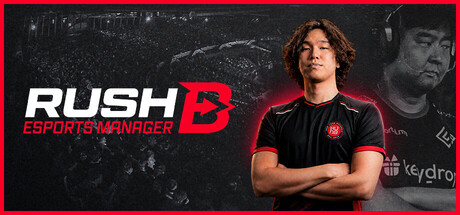
Image generation for fictional players (“NEWgens”) – creating visual portraits for entirely fictional characters.
Localization support – assisting in the translation and adaptation of in-game text into different languages.
Generative AI was used to help code the game, create music, create sound effects (including voice lines), and create marketing assets such as the capsule and other images.
Some promotional visual assets (such as capsule images and store graphics) were created with the assistance of generative AI tools and were then reviewed, edited, and finalized by the development team.
No generative AI is used during gameplay or to create real-time in-game content.
Generative AI was used strictly as a technical tool to digitize original, hand-drawn pencil sketches. Each asset in the game reflects the developer’s physical drawings 1:1, with AI only assisting in the translation of paper lines into a clean digital format. No additional details or artistic elements were generated by the AI. All final styling, including the 'blueprint' aesthetic, was performed manually by the developer in graphic design software
This demo includes a limited number of pre-generated AI-assisted art assets used as placeholders (e.g., some concept/illustration elements and textures). These assets are not generated in real time and do not affect gameplay. We plan to replace AI-assisted placeholder assets with original final assets for the full release.
This game does not contain any AI-generated visual or audio assets.
AI tools were used solely as development assistance for:
• Translation assistance
• Text proofreading and wording suggestions
• Code review, debugging, and programming assistance
• Brainstorming and general development support
All game content, assets, and code were created, reviewed, and curated by the developer. Any AI-assisted output was subject to human review and modification before inclusion in the game.
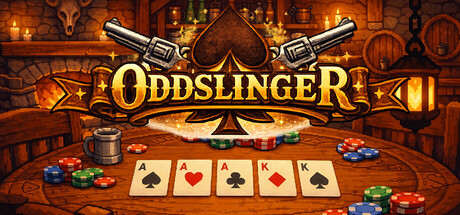
Some 2D visuals in Oddslinger were created with the help of generative AI tools (primarily background art and a small number of UI icons, such as card suit symbols) and then curated/edited by the developer
"We utilize AI tools for art styling and prototyping to optimize development efficiency and reduce costs. This ensures our small team can dedicate our limited manpower to conceptualizing and expanding the game's core content, ultimately delivering a much richer narrative depth and a significantly larger script."
AI tools were used in various stages of development, including prototyping, localization and the creation of some visual assets. The project is developed by a single creator, and AI-assisted tools are part of the workflow. All gameplay systems and implementation are authored and controlled by the developer. No generative AI is used at runtime.
We have used generative AI to create reference images of Promo materials, which were later redrawn by an artist, and for creating item frames. We are also utilizing several assets that contain UI images that were created using AI and edited by hand afterwards.
Some Steam Store materials have been created using generative AI.
Some in-game assets (descriptions, textures, music) have been created using generative AI.
Some visual assets and parts of the code for this game were created with the help of AI tools during development. No generative AI is used during gameplay, and players do not interact with AI systems directly.
This game was developed with the assistance of AI tools. Character sprites and visual assets were generated using AI image tools and further edited using image editing software. The game's soundtrack was created using AI music generation tools. Game code was written with AI coding assistance. The game's story, narrative, and gameplay design are entirely original and created by the developer.
Some of the visual assets in this game, including character sprites, backgrounds, and building illustrations, were created with the assistance of AI image generation tools. All generated assets were reviewed and curated by the developer.
We use AI tools as a support system for our small development team to enhance the quality and balance of the game. Specifically:
Balancing & Math: We use AI to help calculate and balance the game ecosystem (drop rates, damage scaling, and economy).
Concepting: AI is used to generate reference images and mood boards to inspire our artists. The final in-game visual assets are hand-crafted or manually refined based on these concepts.
Drafting: AI assists in drafting initial marketing copy and lore structures, which are then finalized by our writers.
AI was used to generate content that ships with the game:
- NPC portrait artwork (AI-generated illustrations)
- Localization / translation assistance
- Marketing copy and store page text
Our core development is currently taking place in Unreal Engine 5.7. We are utilizing its full suite of tools, including the new AI features that assist us with Blueprint scripting and setting up cinematics in the Movie Render Queue.
Overall, we treat AI strictly as an assistive tool rather than relying on it to fully generate assets from scratch. Since our game is deeply rooted in folklore, it demands highly specific characteristics and a precise visual identity for the characters, which AI alone cannot accurately reproduce.
Some in-game visual assets, including background images and thematic artwork, were created using generative AI tools and are included as part of the game’s environment and UI customization themes. All AI-generated content was reviewed and edited prior to inclusion.
AI is used to assist in development across all departments. Our team is small, but dedicated and fiercely dedicated to providing the best games possible, using whatever tools are available.
Generative AI has been used for translations into certain languages and as support for various aspects of the implementation.
Detailed breakdown : https://www.reddit.com/r/incremental_games/comments/1sty0xg/ai_disclosure_on_loopbound/
We use AI selectively to generate pre-rendered backgrounds for our games, as well as supporting assets for store page, marketing materials and game assets, while ensuring all content is polished to maintain a consistent artistic style.
Images: Partially created with AI assistance, then manually redrawn and refined.
Music: A combination of licensed asset packs and AI-assisted production.
Text: Localized text translated with AI assistance and manually reviewed for accuracy.
Generative AI tools were used during development to assist in creating art, 3D models, music, and code. All AI-assisted content was manually reviewed and altered for optimization to align with the aesthetic and vision for the game.
We used AI assistance for multilingual translation of promotional texts, for visual style suggestions, and for the creation of capsule and library assets. We also used AI tools during development for in-game text localization, as well as for generating certain audio elements and textures/visual content.
Only used strictly as a foundational tool to assist in creating base concepts for certain 2D sprites and background textures. Every AI-assisted asset was heavily modified, color-corrected, and manually integrated to fit the retro aesthetic.
I make use of AI-powered tools during the promotional process of my game. Additionally, the in-game background music was created with the assistance of generative AI. All content produced with the help of AI is reviewed and refined by me before being finalized.
AI was used to assist with writing/editing text (I’m a non-native English speaker), as well as for calculations and development troubleshooting. No AI-generated art, audio, or in-game writing is included in the game, and the game does not generate AI content during gameplay.
Image generation for fictional players (“NEWgens”) – creating visual portraits for entirely fictional characters.
Localization support – assisting in the translation and adaptation of in-game text into different languages.
Generative AI was used to help code the game, create music, create sound effects (including voice lines), and create marketing assets such as the capsule and other images.
Some promotional visual assets (such as capsule images and store graphics) were created with the assistance of generative AI tools and were then reviewed, edited, and finalized by the development team.
No generative AI is used during gameplay or to create real-time in-game content.
Generative AI was used strictly as a technical tool to digitize original, hand-drawn pencil sketches. Each asset in the game reflects the developer’s physical drawings 1:1, with AI only assisting in the translation of paper lines into a clean digital format. No additional details or artistic elements were generated by the AI. All final styling, including the 'blueprint' aesthetic, was performed manually by the developer in graphic design software
This demo includes a limited number of pre-generated AI-assisted art assets used as placeholders (e.g., some concept/illustration elements and textures). These assets are not generated in real time and do not affect gameplay. We plan to replace AI-assisted placeholder assets with original final assets for the full release.
This game does not contain any AI-generated visual or audio assets.
AI tools were used solely as development assistance for:
• Translation assistance
• Text proofreading and wording suggestions
• Code review, debugging, and programming assistance
• Brainstorming and general development support
All game content, assets, and code were created, reviewed, and curated by the developer. Any AI-assisted output was subject to human review and modification before inclusion in the game.
Some 2D visuals in Oddslinger were created with the help of generative AI tools (primarily background art and a small number of UI icons, such as card suit symbols) and then curated/edited by the developer
"We utilize AI tools for art styling and prototyping to optimize development efficiency and reduce costs. This ensures our small team can dedicate our limited manpower to conceptualizing and expanding the game's core content, ultimately delivering a much richer narrative depth and a significantly larger script."
AI tools were used in various stages of development, including prototyping, localization and the creation of some visual assets. The project is developed by a single creator, and AI-assisted tools are part of the workflow. All gameplay systems and implementation are authored and controlled by the developer. No generative AI is used at runtime.
We have used generative AI to create reference images of Promo materials, which were later redrawn by an artist, and for creating item frames. We are also utilizing several assets that contain UI images that were created using AI and edited by hand afterwards.
Some Steam Store materials have been created using generative AI.
Some in-game assets (descriptions, textures, music) have been created using generative AI.
Some visual assets and parts of the code for this game were created with the help of AI tools during development. No generative AI is used during gameplay, and players do not interact with AI systems directly.