Public Steam disclosure research27,822 disclosures tracked
Where do games disclose AI use?
Search developers’ Steam disclosures, compare classified AI use across
games, and follow recorded changes.
This index adds cross-game classifications and statistics to
statements published on individual store pages.
Groups reflect automatic analysis of public disclosures; mature records are excluded. These counts do not measure AI use across all of Steam.
Missing or unclear statements cannot establish whether a game uses AI.
Some background and terrain texture images in the game were generated using AI and may have been manually edited.
The courses in this game are procedurally generated using (traditional) algorithms, not on AI-based methods."
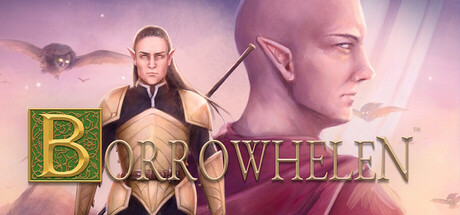
Borrowhelen uses AI only for generating and synthesizing character voices and for checking typos. All other content (graphics, music, levels, etc.) is 100% human-made.
(Newcomer uses AI in a variety of contexts. If you have moral conundrums about AI usage or you do not want to use a resource with AI translations, I recommend finding learner/teacher curated non-AI resources. Thankyou!)
Text to speech (TTS): Newcomer uses text to speech to generate voices for anything the user or NPC might say.
Translations: Newcomer uses Google's Gemini to generate translations across all content (dialogue, stories, etc.) for all language pair combinations.
Grammar Explanations: Newcomer uses Google's Gemini to allow users to click on any word to receive a localized grammar explanation.
NPC Response Generation: Beginner mode dialogue is handcrafted and planned. However, the majority of NPC responses in intermediate mode are generated using Google Gemini. This allows Newcomer to handle any type of response the player might communicate.
Developer response: I am using AI primarily to help me provide the best RPG experience I can for as many language learners as possible while I continue to build the game. Thankyou! - Jason
The use of AI in Vice Undercover was strictly limited to enhancing a limited number of database images, such as some faces, objects, and locations. All images began with original photographs taken by the team, which were then used to create datasets for generating initial concepts. These AI-generated images were not used as-is—instead, they served as a starting point for detailed, creative transformation. Every final image was extensively painted, composited, and refined using original photographs and artistic elements, ensuring that all visuals align with the game's unique style and authenticity. AI was simply one tool in a much larger creative process driven by human artistry.
I will not directly provide any AI services, but plan to only retain the interface for external AI to take over the game logic in the game. Users can use their own trained language models, and they can only solve problems such as computing power by themselves. I plan to not allow users to enter text in the game, so that users have no chance of inducing language model generation. However, some overfitting language models will ignore the prompts and output nfsw. At the same time, I used two methods: 1. Limit the output length and suppress it from the root. 2. Keyword check to see if nfsw content exists. If someone tries to report it, he should report it to the person who gave him the language model. If the user enables AI, I will change the name of the enabled AI service into a game watermark to prove that it is the user's own problem.
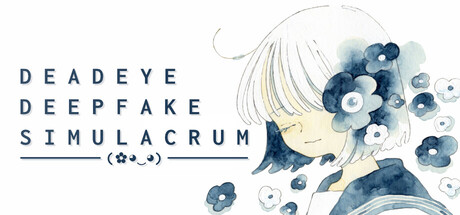
Deadeye Deepfake Simulacrum makes use of a custom built variational autoencoder to assist in the creation of character sprites, trained exclusively on the sprites I've already created. A separate generative adversarial network is used to make images that serve as the basis for some facial sprites, and background art.
During our creative processes, we may use modern digital tools that include AI-based features to assist with content creation. This helps us stay innovative without losing sight of what makes our games truly unique, while ensuring the final product preserves the distinctive style and quality our development team strives for.
Localizations to languages with an in-game marking "BETA" (French, Spanish, Italian, Swedish) have been created using generative artificial intelligence.
AI is used exclusively to assist with language localization in Siralim Ultimate. All other aspects of the game, including its artwork, writing, programming, music, and game design, are human-made.
Siralim Ultimate contains over 800,000 words of text and is developed by a single person. Professionally translating a game of this size would cost tens of thousands of dollars per language, with substantial additional costs and delays for every future update.
AI-assisted translation makes it possible to offer the game to players who would otherwise be excluded by language barriers. These translations are reviewed and edited for quality, but they may not always match the accuracy or nuance of professional localization.
I believe players deserve the opportunity to enjoy games in their own language, even when independent developers cannot afford traditional localization. The alternative isn't necessarily human translation. In many cases, it's no translation at all.
I'd rather make my game accessible to more people than deny them that opportunity simply because of the technology used to make it possible.
Generative AI was used to generate images for Store Capsule Assets and Library Capsule, Header, and Hero Assets. The game screenshots and gameplay footage (trailer) were not generated by AI and are unaffected by any AI.
The storefront Logo for this game was created with the help of AI-assisted tools and was then further developed through manual work — modified, improved, and integrated to align with the game’s overall style and vision. No other AI generation was used in the development of this game.
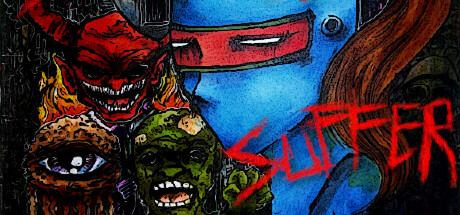
SUFFER is a solo project and I used whatever I could to help me make the game I wanted to make.
AI tools were used as part of my process for updating some of the old enemy sprites and scenery details. I also used them to help clean up a few stubborn code issues to make the game more stable and reduce frame drops.
This section exists because Valve said it has to, and I believe in being upfront. I’m not here to debate tools or trends. People have strong feelings about this stuff, and that’s fine. My goal was simple: make SUFFER look and play the way I always imagined it could, and these tools helped me get it (mostly) there.
There’s really nothing more to it. I hope you enjoy the game.