Public Steam disclosure research27,964 disclosures tracked
Where do games disclose AI use?
Search developers’ Steam disclosures, compare classified AI use across
games, and follow recorded changes.
This index adds cross-game classifications and statistics to
statements published on individual store pages.
Groups reflect automatic analysis of public disclosures; mature records are excluded. These counts do not measure AI use across all of Steam.
Missing or unclear statements cannot establish whether a game uses AI.
During development, we used some AI tools to speed things up in areas where we weren’t as experienced. That saved us a lot of time, letting us focus on the fun stuff — creating cool gameplay mechanics, improving performance, and making sure the game runs smoothly without annoying bugs.
Marketing materials, pre-rendered in-game visual effects, textures and materials for characters, props, and environments and translations are partly or completly AI-generated.
Pre-Generated:
Some of this game's art and code were made with the help of AI tools, and then edited, rigged, tested and integrated by hand.
- Character models for the police, SWAT officers, gang members and prisoners were generated with Meshy.ai, then re-rigged in AccuRIG and animated with hand-authored animation.
- The title screen background, the loading screen backgrounds and the inventory item icons were made with OpenArt.
- Parts of the game's source code were written with the help of an AI coding assistant. All of it was reviewed and tested before it shipped.
- Store page text and some marketing images were written and made with AI assistance.
Everything else — the world, the buildings, the vehicles, the weapons, the music and the sound — is either hand-made or licensed from asset marketplaces.
Live-Generated:
None. Nothing in this game is generated by AI while it is running.
The game's AI survivors are simulated characters, not a language model. What they say is a fixed set of hand-written lines chosen by what they are doing at the time, and their decisions come from an ordinary game-AI system running on the player's machine. The game makes no calls to any AI service at runtime.
Generative AI is used only during the initial creation of 2D marketing assets, UI icons, and loading screens, which are later manually refined and finalized by the development team.
We use AI translation to support multiple languages.
We use AI image generation for the illustrations and backgrounds used in the game.
Some of the game's programming is supported by AI.
There is no AI-generated content in the game itself, but there is on the store page; the photos of the store's resources and the library resources were generated by AI, as were the promotional materials.
Some visual and audio assets in this game were initially created with the assistance of AI tools. All final game content has been reviewed, edited, and refined by the development team to ensure originality and quality.
whenever I write code, I ask Ai to polish my code, because my code is not that clean.
for some of the art, I draw rough sketches and ask ai to make a more appealing version of it
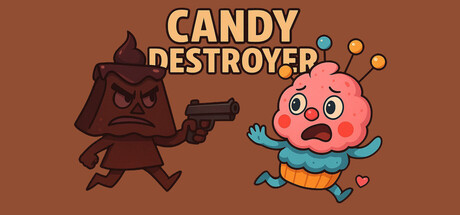
Some visual assets in Candy Destroyer, such as characters, bullets, and special abilities, were created with the assistance of AI tools and then manually refined and implemented by the developer. Other assets are sourced from licensed asset libraries like Freepik. All gameplay and game logic are fully created by the developer.
This game was developed by a solo developer using AI-assisted tools to support parts of the creative and technical workflow, including marketing materials, store page assets, music, and portions of code. All AI-assisted outputs were reviewed, refined, and integrated by the developer.
No AI systems are used to generate content during gameplay.
Some visual elements (paintings and photos) use AI-generated images. All game systems and core mechanics are handcrafted and independent of generative AI.
Generative AI tools were used to assist in creating some visual materials for the store page and marketing assets.
In addition, AI tools were utilized to generate or enhance certain pre-rendered in-game 2D assets, including some sprites, textures, and UI elements (such as profile pictures). This use is limited to non-critical graphical materials.
During development, AI was used as a tool to create pixel art drafts, which were then manually edited and finalized by the developer to ensure uniqueness and quality.
Sands of Avalon uses AI exclusively to give the gods unique personalities and dynamic voice lines. Each god reacts differently to the player’s choices, offering distinct blessings, curses, and dialogue that make every playthrough feel personal and immersive. No gameplay mechanics rely on AI and it is used only to enrich storytelling and deepen the connection between players and the divine beings in the game.
AI tools were used to support early concept exploration and visual ideation during development.
Artificial intelligence tools were used during development to assist with the creation and processing of audio content, such as sound effects and voice variations.
Images and Audio were generated using paid compliant AI that is not taught on unlicensed material. Ethically generated as needed as this is a free game and would not exist without the assistance AI provides to Indie Devs. We are just trying to give people a fun experience. As they say hate the Player don't hate the Game.
Invaders utilizes ChatGPT and Adobe Photoshop AI technologies to design and generate user interface elements and in-game imagery. These tools are used exclusively for creative and illustrative purposes to enhance the visual quality and artistic consistency of the game.
The graphic shows images of units (actions) that are created on the basis of real software features to change development time. Additionally, some functionality was ported from a raw state and refined using AI, and AI is also being used to write several of the core systems. (In the trailer, we also used some AI-generated audio and images.)
Generative AI tools were used during development to create some visual assets (such as UI artwork and promotional images). All AI-assisted assets were reviewed and manually edited to match DraQu’s style and quality standards.
Using a fully completed game design document created by a Software Engineer, 100% of the game's code was generated via an AI Coding Agent. Aside from the fonts and audio assets, all functional and visual components are the result of AI-Generated code.
All character designs are conceptually created and developed manually by our game designers. However, during the pre-production phase, AI technology is utilized to assist artists in rendering intricate character details more efficiently. No live-generated AI content is employed in the game.
Character animation production is entirely handled manually by artists. AI technology is only applied in the pre-production stage.
Scene illustrations are generated using AI (partially generated directly, and partially guided by initial scene compositions drafted by concept artists).
All AI-generated content is subsequently refined and processed by concept artists (to meet engine technical requirements). All animations are manually produced and undergo extensive polishing.
Generative AI tools were used to assist in creating some visual materials for the store page and marketing assets.
In addition, AI tools were utilized to generate or enhance certain pre-rendered in-game 2D assets, including some sprites, textures, and UI elements (such as profile pictures). This use is limited to non-critical graphical materials.
AI tools were used to assist in creating some visual and audio assets. All generated content was reviewed, edited, and curated by the solo developer. 30% of profits will be used to replace AI assets.
AI has been used to generate the images for a few of the cards as they currently exist in Nightmares. Most of the card images are created by actual artists and we're working to have the remaining generated images replaced prior to launch.
The avatar/image materials of this game are dynamically generated by AI algorithms, combined with deep learning models and art style transfer techniques to ensure that each image is unique and rich in details. AI is only used for creative assistance, and the final content is manually reviewed to ensure compliance with community standards.
"Red Chair uses AI-assisted tools (such as ChatGPT and Midjourney) during development.
AI was used to help generate story materials, detective case files, and narrative texts, as well as some promotional artworks and store capsules.
All AI-assisted content was reviewed, edited, and finalized by our writing and art team before being included in the game.
No gameplay logic, detective mechanics, or interactive features were generated by AI."