Public Steam disclosure research27,951 disclosures tracked
Where do games disclose AI use?
Search developers’ Steam disclosures, compare classified AI use across
games, and follow recorded changes.
This index adds cross-game classifications and statistics to
statements published on individual store pages.
Groups reflect automatic analysis of public disclosures; mature records are excluded. These counts do not measure AI use across all of Steam.
Missing or unclear statements cannot establish whether a game uses AI.
Our game leverages generative AI during development to create visually rich and immersive environments, character designs, and narrative elements. AI tools have been used to assist in crafting unique pre-rendered assets, such as artwork and animations, ensuring a high-quality experience while adhering to copyright and ethical guidelines.
However, the game does not use AI to generate live content or code during gameplay. All in-game interactions and mechanics are pre-designed and curated by our team, ensuring a consistent and controlled gaming experience.
By incorporating AI responsibly, we aim to deliver a creative and engaging experience while maintaining transparency and safeguarding user trust.
The game uses real-time AI models to simulate immersive conversations with the non-player characters you meet in-game. Each character has a hand-written backstory that impacts how the conversation goes. This technology complements the manual worldbuilding and lore writing, and I would love your feedback on how well you think this works!
As a small, two-person startup studio, meeting the full graphical needs of our game is a challenge. To bring our cards to life, we use a combination of original artwork and AI-generated art, ensuring a balance between creativity and efficiency.
The intro video was created by reprocessing AI-generated footage.
30% of the English and Chinese translations, excluding Korean, were generated by AI.
Other languages were mostly translated by AI.
We used generative AI for: art on the store page, and some in-game textures. Each AI-generated content was then manually adjusted by our in-house artist to ensure the presence of human input in the art and high quality of the game.
Some UI textures and the musical pieces (except theme song) have been created with the help of generative AI.
Contrary to some beliefs, all 3500 products are modelled and textured from scratch (except a few hundres which is from packs) by hired designers over the course of 3 years.
Out of a total of 12 music tracks, 9 were produced using AI. A total of 25 villager profile pictures were generated with AI. All languages except German, French, Polish, Brazilian Portuguese, and Turkish were translated using AI.
AI was used in the creation of the Steam capsule logo.
The New Boss: Football Club utilizes pre-rendered generative AI to enhance the depth and visual variety of its world. This includes:
Character Portraits: Thousands of unique AI-generated faces for players and staff to ensure every 'fake name' in our database has a distinct identity.
Environmental Artwork: AI-assisted imagery used in game menus, background art, and narrative events to create a gritty, atmospheric 5th-league experience.
Marketing Materials: Select store assets, trailers, and promotional videos have been created or enhanced using AI tools to visualize the journey of the 'New Boss.'
All AI content is pre-rendered and integrated into the game files to ensure a high-quality, stable, and consistent experience for all players.
Our game's library images (except for the logo with the words "Investormania"), images on the in-game loading screen, in-game avatars are generated with artificial intelligence.
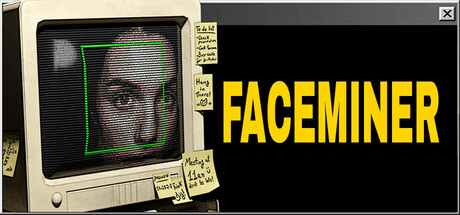
FACEMINER is a concept-driven game that directly engages with the ethics of AI. For thematic purposes, the game features faces which have been generated by a GAN (Generative Adversarial Network) trained on the FFHQ dataset, a research dataset released by NVIDIA that is the backbone of many real-world facial recognition applications. Per NVIDIA, only images under permissive licenses were collected.
The 'AI training' in this game is fictional and has been simulated for entertainment purposes. The game can be interpreted as a critique of AI specifically relating to the ecological impact of mass data hoarding, surveillance concerns, and way it is used to compound corporate power.
In this game, we incorporate artificial intelligence technology to transform port art assets into dynamic video materials, achieving cinematic dynamic effects. All AI-generated content has undergone secondary processing and in-depth optimization by our design team, seamlessly integrating into the game's overall art style. This provides players with a richer and more immersive gaming experience.
AI-generated story invention
AI generated audios
AI-generated translation
AI generated videos
AI generated images
This game use AI Art. Special Thanks to the following Creators of...
KLING AI (Videos)
Wonder AI (2D Graphics)
Runway AI (Trailer Voice)
Chat-GPT / OpenAI (Translation)
DALL-E (2D Graphics)
Replica AI (Voice)
Meshy.ai (3D Models)
Creator
Playbosh Games Entertainment UG (haftungsbeschränkt)
Colonisator has content that partly uses generative AI.
This is the case for certain images such as portraits, loading screen wallpapers, management interface backgrounds.
There is no live generated content, only prerendered content.
Full screen pictures where made using AI during the EA / prototype of the game, we are in the process of replacing them all with our artists.
Everything else is handmade.
In WE ARE FOOTBALL 2024 we use about 12,500 AI-generated realistic-looking photos for generic male and female players. These pictures are displayed, e.g., on the line-up screen or on the player profile screens.
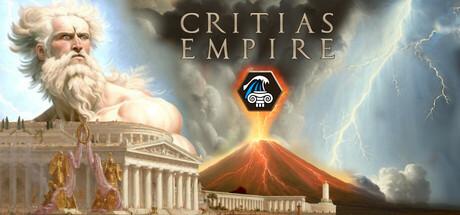
Critias Empire uses images of public domain 18th and 19th century classical oil on canvas paintings, but since there are only a limited number of these, AI generated images are used where no appropriate historical public domain image can be found. This includes backgrounds, illustrations for buildings, features, disasters, maps and characters, plus live ops, events and marketing material.
The images are generated using paid subscription to Midjourney. Crystalline Green Ltd. owns the copyright on the generated images.
We are a small independent studio with limited budget, but we appreciate not everyone is comfortable with use of AI generated images in commercial games, so we understand if you would prefer not to play our game. Feel free to contact us if you have further questions or concerns.
Various text lines in the game's "News Ticker" were pre-generated with generative AI. All generated text lines have been manually reviewed prior to being published to ensure they are free of any inappropriate or trademarked material. You can disable the game's news ticker in the in-game settings, which will prevent the display of any AI generated content.
Some sprites have been generated using artificial intelligence; however, all of them have undergone a "human" finishing process, including retouching, animation generation, transparency adjustments, etc.
The game features a small local language model used to generate dynamic storylines and events based on character traits and relationships. Generative AI is also used to assist in the creation of various 2D textures, marketing materials, portraits and UI elements.
We want to emphasize that both human-art and AI-generated content are used in the event illustrations. At the time of writing this (pre-beta), some of the illustrations in the game are still early experiments and, as such, treated as placeholders. As artists, we fully understand that AI-generated imagery is a controversial topic at the moment. We felt that by using generated art, in addition to our own art, we could create a much more vivid and immersive experience for the player. We are fully open to discussing this further and elaborating on our approach.
In Zero Factory, there is no option for users to generate content using AI or other means that could infringe on intellectual property rights. The game’s content is fully curated and controlled by the development team, ensuring that any assets or user interactions within the game are legally compliant and original.
AI voice cloning has been used, however, all acting has been performed by the voice actor, only the voice has been changed through AI technology.
ChatGPT was used to generate model numbers and descriptions for the in game parts store.
Our game leverages generative AI during development to create visually rich and immersive environments, character designs, and narrative elements. AI tools have been used to assist in crafting unique pre-rendered assets, such as artwork and animations, ensuring a high-quality experience while adhering to copyright and ethical guidelines.
However, the game does not use AI to generate live content or code during gameplay. All in-game interactions and mechanics are pre-designed and curated by our team, ensuring a consistent and controlled gaming experience.
By incorporating AI responsibly, we aim to deliver a creative and engaging experience while maintaining transparency and safeguarding user trust.
The game uses real-time AI models to simulate immersive conversations with the non-player characters you meet in-game. Each character has a hand-written backstory that impacts how the conversation goes. This technology complements the manual worldbuilding and lore writing, and I would love your feedback on how well you think this works!
As a small, two-person startup studio, meeting the full graphical needs of our game is a challenge. To bring our cards to life, we use a combination of original artwork and AI-generated art, ensuring a balance between creativity and efficiency.
The intro video was created by reprocessing AI-generated footage.
30% of the English and Chinese translations, excluding Korean, were generated by AI.
Other languages were mostly translated by AI.
We used generative AI for: art on the store page, and some in-game textures. Each AI-generated content was then manually adjusted by our in-house artist to ensure the presence of human input in the art and high quality of the game.
Some UI textures and the musical pieces (except theme song) have been created with the help of generative AI.
Contrary to some beliefs, all 3500 products are modelled and textured from scratch (except a few hundres which is from packs) by hired designers over the course of 3 years.
Out of a total of 12 music tracks, 9 were produced using AI. A total of 25 villager profile pictures were generated with AI. All languages except German, French, Polish, Brazilian Portuguese, and Turkish were translated using AI.
AI was used in the creation of the Steam capsule logo.
The New Boss: Football Club utilizes pre-rendered generative AI to enhance the depth and visual variety of its world. This includes:
Character Portraits: Thousands of unique AI-generated faces for players and staff to ensure every 'fake name' in our database has a distinct identity.
Environmental Artwork: AI-assisted imagery used in game menus, background art, and narrative events to create a gritty, atmospheric 5th-league experience.
Marketing Materials: Select store assets, trailers, and promotional videos have been created or enhanced using AI tools to visualize the journey of the 'New Boss.'
All AI content is pre-rendered and integrated into the game files to ensure a high-quality, stable, and consistent experience for all players.
Our game's library images (except for the logo with the words "Investormania"), images on the in-game loading screen, in-game avatars are generated with artificial intelligence.
FACEMINER is a concept-driven game that directly engages with the ethics of AI. For thematic purposes, the game features faces which have been generated by a GAN (Generative Adversarial Network) trained on the FFHQ dataset, a research dataset released by NVIDIA that is the backbone of many real-world facial recognition applications. Per NVIDIA, only images under permissive licenses were collected.
The 'AI training' in this game is fictional and has been simulated for entertainment purposes. The game can be interpreted as a critique of AI specifically relating to the ecological impact of mass data hoarding, surveillance concerns, and way it is used to compound corporate power.
In this game, we incorporate artificial intelligence technology to transform port art assets into dynamic video materials, achieving cinematic dynamic effects. All AI-generated content has undergone secondary processing and in-depth optimization by our design team, seamlessly integrating into the game's overall art style. This provides players with a richer and more immersive gaming experience.
AI-generated story invention
AI generated audios
AI-generated translation
AI generated videos
AI generated images
This game use AI Art. Special Thanks to the following Creators of...
KLING AI (Videos)
Wonder AI (2D Graphics)
Runway AI (Trailer Voice)
Chat-GPT / OpenAI (Translation)
DALL-E (2D Graphics)
Replica AI (Voice)
Meshy.ai (3D Models)
Playbosh Games Entertainment UG (haftungsbeschränkt)
Colonisator has content that partly uses generative AI.
This is the case for certain images such as portraits, loading screen wallpapers, management interface backgrounds.
There is no live generated content, only prerendered content.
Full screen pictures where made using AI during the EA / prototype of the game, we are in the process of replacing them all with our artists.
Everything else is handmade.
In WE ARE FOOTBALL 2024 we use about 12,500 AI-generated realistic-looking photos for generic male and female players. These pictures are displayed, e.g., on the line-up screen or on the player profile screens.
Critias Empire uses images of public domain 18th and 19th century classical oil on canvas paintings, but since there are only a limited number of these, AI generated images are used where no appropriate historical public domain image can be found. This includes backgrounds, illustrations for buildings, features, disasters, maps and characters, plus live ops, events and marketing material.
The images are generated using paid subscription to Midjourney. Crystalline Green Ltd. owns the copyright on the generated images.
We are a small independent studio with limited budget, but we appreciate not everyone is comfortable with use of AI generated images in commercial games, so we understand if you would prefer not to play our game. Feel free to contact us if you have further questions or concerns.
Various text lines in the game's "News Ticker" were pre-generated with generative AI. All generated text lines have been manually reviewed prior to being published to ensure they are free of any inappropriate or trademarked material. You can disable the game's news ticker in the in-game settings, which will prevent the display of any AI generated content.
Some sprites have been generated using artificial intelligence; however, all of them have undergone a "human" finishing process, including retouching, animation generation, transparency adjustments, etc.
The game features a small local language model used to generate dynamic storylines and events based on character traits and relationships. Generative AI is also used to assist in the creation of various 2D textures, marketing materials, portraits and UI elements.
We want to emphasize that both human-art and AI-generated content are used in the event illustrations. At the time of writing this (pre-beta), some of the illustrations in the game are still early experiments and, as such, treated as placeholders. As artists, we fully understand that AI-generated imagery is a controversial topic at the moment. We felt that by using generated art, in addition to our own art, we could create a much more vivid and immersive experience for the player. We are fully open to discussing this further and elaborating on our approach.
In Zero Factory, there is no option for users to generate content using AI or other means that could infringe on intellectual property rights. The game’s content is fully curated and controlled by the development team, ensuring that any assets or user interactions within the game are legally compliant and original.
AI voice cloning has been used, however, all acting has been performed by the voice actor, only the voice has been changed through AI technology.
ChatGPT was used to generate model numbers and descriptions for the in game parts store.