Public Steam disclosure research25,383 disclosures tracked
Where do games disclose AI use?
Search developers’ Steam disclosures, compare classified AI use across
games, and follow recorded changes.
This index adds cross-game classifications and statistics to
statements published on individual store pages.
Groups reflect automatic analysis of public disclosures; mature records are excluded. These counts do not measure AI use across all of Steam.
Missing or unclear statements cannot establish whether a game uses AI.
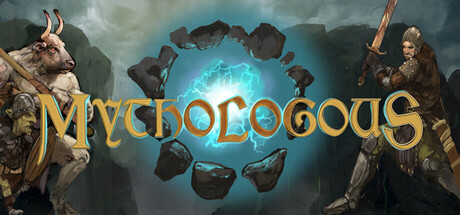
AI has been used to fill in art, music and code due to lack of sufficient resources available. This is not satisfactory in the long run.
The ambition is to eventually replace all AI content with proper man-made assets assuming the revenue increases. I apologize for the slop, but we will have to bear it for now.
The developer's description of how AI-generated content is used in the game is as follows:
Certain artistic assets in this work were produced using Stable Diffusion, including but not limited to: scene images, loading images, and select item icons.
The game uses some AI-generated text to enhance immersion through short form responsive NPC dialogue and procedurally described events. Each character’s dialogue is contextually grounded in their role, knowledge, and surroundings, keeping interactions cohesive and authentic.
Generative AI is NOT used for world narrative writing, lore, game logic, audio, images, or calculating outcomes of any kind.
AI systems ensure every player’s experience feels distinct while remaining true to the game’s established lore and tone.
This feature is experimental, and is not part of the core game.
This game used generative AI in a limited capacity during development to assist with Blueprint/code writing and debugging. It does not include any features that generate content or code in real time during gameplay, and no art, textures, sounds, story elements, marketing images were created using generative AI.
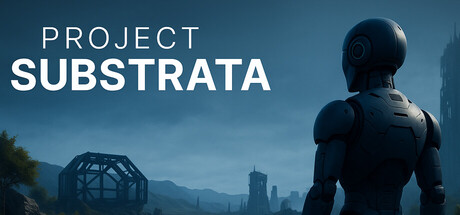
About the Use of AI
During the early stages of development, Project Substrata utilized generative AI tools (such as image generation) for concept art and idea exploration only.
All in-game assets, textures, audio, story elements, and code are manually created and refined by the development team.
Within the game world, autonomous drones and facility AIs operate as part of the gameplay and narrative systems, not as real AI services.
The game runs entirely offline, with no external data transmission or use of online AI APIs.
We used AI to generate images and for initial code reviews. Our team reviewed everything it produced, and we shipped those results in early production. It also served as a great "rubber duck" for us to work through tough problems.
Generative AI tools were used during development to assist with visual materials, texture design, localization, marketing texts, and partially for coding assistance. No AI is used during gameplay or for generating real-time content.
During development, we used some AI tools to speed things up in areas where we weren’t as experienced. That saved us a lot of time, letting us focus on the fun stuff — creating cool gameplay mechanics, improving performance, and making sure the game runs smoothly without annoying bugs.
We use — and plan to continue using — neural networks to generate various types of content. This is done primarily to optimize routine tasks, as well as time and financial costs.
The content is generated using neural networks that have been additionally trained by our team. All AI-generated content undergoes extensive refinement and manual adjustment by our developers.
Generative AI was used to assist in the creation of a few specific background art assets and the store page text. All final content was reviewed and edited by me.
During the Early Access stage, translations for languages other than English are provided using DeepL AI. We will continue to improve and refine these translations over time. No AI is used in the gameplay itself.
Some character portraits were created with the assistance of generative AI and subsequently edited by hand. All game systems, writing, and design are made entirely by humans.
In Police Chief we use AI tools to support development in creative ways, never for coding or game logic. AI helps us generate things like:
- logos and design ideas
- Randomized names, reports, and text responses
- Suggestions and advice to improve features
All core gameplay, systems, and programming are made by the development team.
AI is only used to improve content of like callouts, reaction from NPC's etc.
Spacer used AI-generated translations for interface localization in the following languages:
French, German, Italian, Japanese, Portuguese (Brazil), Portuguese (Portugal), Russian, Simplified Chinese, Spanish (Latin America), Spanish (Spain), Traditional Chinese
We only used generative AI during development on a limited basis to create early drafts (e.g., environment sketches, UI mockups, and character concept art). All final assets shipped in the game, on the store page, and in marketing materials were further edited, reworked, and reviewed by humans, and they do not infringe copyright, likeness/publicity rights, or trademarks.
During gameplay, the game does not connect to any AI services and does not produce live-generated content; players will not encounter dynamically AI-generated images or text.
AI has been used for collaborative coding, with full human review of all code. AI may also be used for image generation, video generation, and music/sound generation, with full human review of all generated content.
AI was used for some of the game's code and scarcely for grammar checking, making some dialog sound more natural and localization. No AI was used for any of the game's art, music or writing the overall narrative.
This game uses AI-assisted tools to help create some store page assets and in-game text descriptions. All gameplay, art, and systems are hand-crafted and not AI-generated during play.
AI usage (development & marketing only).
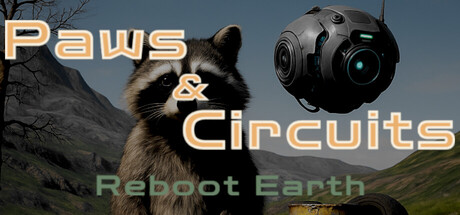
Paws & Circuits: Reboot Earth does not generate content live in-game and does not accept user prompts or inputs. During development, generative AI was used as a supportive tool (e.g., for concept iteration, text drafts, a few placeholder voice lines, and select marketing assets and occasional placeholder textures). All outputs were manually reviewed, edited, and curated. The shipped content is static, non-interactive, and contains no live AI and no user-generated content.
If any assets are flagged via Steam’s reporting tools, they will be removed or replaced promptly. Over time, placeholders will be gradually replaced with hand-crafted assets.
Content notice: Themes of environmental pollution/cleanup and survival (possible death by cold/starvation). No combat, no graphic violence.
The graphic shows images of units (actions) that are created on the basis of real software features to change development time. Additionally, some functionality was ported from a raw state and refined using AI, and AI is also being used to write several of the core systems. (In the trailer, we also used some AI-generated audio and images.)
Some writing tools and image-generation processes were used alongside our own artwork. We begin with concepts and exploratory art created in-house, and these tools help us produce consistent final assets when needed.
This game may include some AI-generated images or assets.
These are used for concept art, store page visuals, and may also appear as placeholder or supplemental content in-game. Core gameplay, characters, writing, and mechanics are handcrafted by the developer.
AI has been used to fill in art, music and code due to lack of sufficient resources available. This is not satisfactory in the long run.
The ambition is to eventually replace all AI content with proper man-made assets assuming the revenue increases. I apologize for the slop, but we will have to bear it for now.
The developer's description of how AI-generated content is used in the game is as follows:
Certain artistic assets in this work were produced using Stable Diffusion, including but not limited to: scene images, loading images, and select item icons.
The game uses some AI-generated text to enhance immersion through short form responsive NPC dialogue and procedurally described events. Each character’s dialogue is contextually grounded in their role, knowledge, and surroundings, keeping interactions cohesive and authentic.
Generative AI is NOT used for world narrative writing, lore, game logic, audio, images, or calculating outcomes of any kind.
AI systems ensure every player’s experience feels distinct while remaining true to the game’s established lore and tone.
This feature is experimental, and is not part of the core game.
This game used generative AI in a limited capacity during development to assist with Blueprint/code writing and debugging. It does not include any features that generate content or code in real time during gameplay, and no art, textures, sounds, story elements, marketing images were created using generative AI.
About the Use of AI
During the early stages of development, Project Substrata utilized generative AI tools (such as image generation) for concept art and idea exploration only.
All in-game assets, textures, audio, story elements, and code are manually created and refined by the development team.
Within the game world, autonomous drones and facility AIs operate as part of the gameplay and narrative systems, not as real AI services.
The game runs entirely offline, with no external data transmission or use of online AI APIs.
We used AI to generate images and for initial code reviews. Our team reviewed everything it produced, and we shipped those results in early production. It also served as a great "rubber duck" for us to work through tough problems.
Generative AI tools were used during development to assist with visual materials, texture design, localization, marketing texts, and partially for coding assistance. No AI is used during gameplay or for generating real-time content.
During development, we used some AI tools to speed things up in areas where we weren’t as experienced. That saved us a lot of time, letting us focus on the fun stuff — creating cool gameplay mechanics, improving performance, and making sure the game runs smoothly without annoying bugs.
We use — and plan to continue using — neural networks to generate various types of content. This is done primarily to optimize routine tasks, as well as time and financial costs.
The content is generated using neural networks that have been additionally trained by our team. All AI-generated content undergoes extensive refinement and manual adjustment by our developers.
Generative AI was used to assist in the creation of a few specific background art assets and the store page text. All final content was reviewed and edited by me.
During the Early Access stage, translations for languages other than English are provided using DeepL AI. We will continue to improve and refine these translations over time. No AI is used in the gameplay itself.
Some character portraits were created with the assistance of generative AI and subsequently edited by hand. All game systems, writing, and design are made entirely by humans.
In Police Chief we use AI tools to support development in creative ways, never for coding or game logic. AI helps us generate things like:
- logos and design ideas
- Randomized names, reports, and text responses
- Suggestions and advice to improve features
All core gameplay, systems, and programming are made by the development team.
AI is only used to improve content of like callouts, reaction from NPC's etc.
Spacer used AI-generated translations for interface localization in the following languages:
French, German, Italian, Japanese, Portuguese (Brazil), Portuguese (Portugal), Russian, Simplified Chinese, Spanish (Latin America), Spanish (Spain), Traditional Chinese
We only used generative AI during development on a limited basis to create early drafts (e.g., environment sketches, UI mockups, and character concept art). All final assets shipped in the game, on the store page, and in marketing materials were further edited, reworked, and reviewed by humans, and they do not infringe copyright, likeness/publicity rights, or trademarks.
During gameplay, the game does not connect to any AI services and does not produce live-generated content; players will not encounter dynamically AI-generated images or text.
AI has been used for collaborative coding, with full human review of all code. AI may also be used for image generation, video generation, and music/sound generation, with full human review of all generated content.
AI was used for some of the game's code and scarcely for grammar checking, making some dialog sound more natural and localization. No AI was used for any of the game's art, music or writing the overall narrative.
This game uses AI-assisted tools to help create some store page assets and in-game text descriptions. All gameplay, art, and systems are hand-crafted and not AI-generated during play.
AI usage (development & marketing only).
Paws & Circuits: Reboot Earth does not generate content live in-game and does not accept user prompts or inputs. During development, generative AI was used as a supportive tool (e.g., for concept iteration, text drafts, a few placeholder voice lines, and select marketing assets and occasional placeholder textures). All outputs were manually reviewed, edited, and curated. The shipped content is static, non-interactive, and contains no live AI and no user-generated content.
If any assets are flagged via Steam’s reporting tools, they will be removed or replaced promptly. Over time, placeholders will be gradually replaced with hand-crafted assets.
Content notice: Themes of environmental pollution/cleanup and survival (possible death by cold/starvation). No combat, no graphic violence.
The graphic shows images of units (actions) that are created on the basis of real software features to change development time. Additionally, some functionality was ported from a raw state and refined using AI, and AI is also being used to write several of the core systems. (In the trailer, we also used some AI-generated audio and images.)
Some writing tools and image-generation processes were used alongside our own artwork. We begin with concepts and exploratory art created in-house, and these tools help us produce consistent final assets when needed.
This game may include some AI-generated images or assets.
These are used for concept art, store page visuals, and may also appear as placeholder or supplemental content in-game. Core gameplay, characters, writing, and mechanics are handcrafted by the developer.