Public Steam disclosure research25,394 disclosures tracked
Where do games disclose AI use?
Search developers’ Steam disclosures, compare classified AI use across
games, and follow recorded changes.
This index adds cross-game classifications and statistics to
statements published on individual store pages.
Groups reflect automatic analysis of public disclosures; mature records are excluded. These counts do not measure AI use across all of Steam.
Missing or unclear statements cannot establish whether a game uses AI.
Some Game Assets Were Initially Designed And Planned Manually, Then Generated With Ai Assistance In The Mid-Stages, And Finally Edited Manually Using Relevant Professional Software. The Aim Is To Present The Game'S Vision To Players In A Better Way.
We used AI tools (such as ChatGPT or Claude) to assist to a certain extent with C++ and Blueprint scripting during development. No AI-generated content is present in the final game assets. All visual, audio, and narrative content was created by the development team.
We used AI to generate spotter phrases based upon the voices of real-life NASCAR spotters, with their approval. We also used AI to generate crew member photos.
This game was made by a solo developer aka human being.
Some visual and audio assets were built with AI support, then refined, edited and animated by hand.
Also, code analysis and debugging (no pun intended) was done with the support of AI.
AI Assistant helped generate store capsule art and in-game music. Technical assistance was also provided with implementation of some game systems allowing a solo dev to punch above their weight.
During development, illustrations (e.g., game over screen) were created using ChatGPT’s image generation features, based on hand-drawn sketches and developer-provided prompts. All AI-generated content was manually reviewed and selected by the developer. No AI is used during gameplay, and no live content or code is generated in-game.
Currently in our Menu Screens we are using AI Background Images as place holders for Real Images that we will create. The placeholders serve well for now and we will eventually end the use of AI for anything.
Do you use AI to generate pre-rendered content for your game, its store page, marketing materials, and/or community assets?
Yes, I've used AI to generate the images (logo, banner) for the store page.
------------------
In my game, I use AI to generate voice lines. For example, when a player presses a specific key (shortcut), it triggers an audio file that was created using AI-generated voice.
The game's store visuals were created with the help of artificial intelligence. The game's environment and characters were provided to the AI as references, and the AI generated the necessary capsule images accordingly.
Some parts of the game's code and store materials were assisted by generative AI tools during development. These tools were used as a productivity aid to help write or improve scripts. All final logic was reviewed and integrated manually. No AI is used to generate content during gameplay.
We believe AI tools can assist artists without replacing them. Every enhanced asset was originally created or directed by our team and refined using AI as a supplement—not a substitute—for creativity.
We used AI-assisted tools during development to help generate portions of our game code, synthesize the voice of our virtual guide “MiM,” and create concept artwork and UI assets. No AI runs during gameplay—these technologies were purely production aids to streamline our workflow and enhance the game’s visuals and audio.
A small number of sound effects were generated using AI. Please note all voice acting in the game was created and performed by human actors. AI was also used to translate the game from English to other languages.
During the development of this game, AI-based tools were used for assistance with the creation of a limited number of 3D models, the preparation of Steam store visuals and description texts, and certain programming-related tasks.
Generative AI is being used for asset creation during development wherever possible (e.g. sprites, backgrounds, music) to ensure that I, as a solo developer, can keep up with the rapidly evolving nature of this project and meet both my own standards and player expectations of a polished experience.
The game's store capsule image was created using AI tools. This is limited to promotional artwork only and does not affect the gameplay or in-game content.
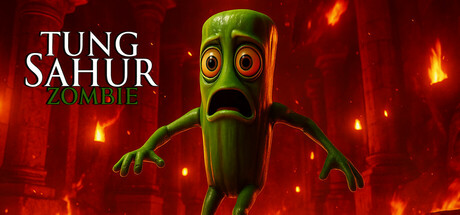
Some of the promotional materials (such as capsule images and library assets) were created using AI-based tools and then manually edited. In addition, the main character “Tung Tung Sahur” was initially generated using AI and then redesigned and animated manually. There is no AI-generated content during actual gameplay. AI usage is limited to marketing visuals and early character concept creation only.
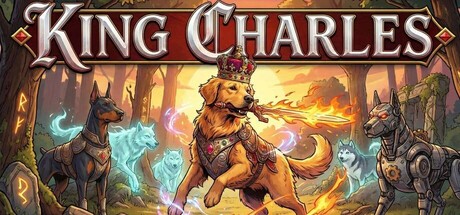
A handful of key art pieces, concept illustrations, and store-page graphics were generated with AI image-generation software to help communicate King Charles’s look and tone. This use of AI is limited strictly to marketing materials.
This game uses AI-generated sound effects (e.g., footsteps, ambient noises) to enhance the atmosphere.
All gameplay, visuals, and story content are handcrafted.
Some of the game’s 2D artwork was created by feeding my original 3D models and hand drawn sketches to a generative model. I further edited and refined the output using digital painting to match the game’s style and maintain a cohesive visual identity.
Some Game Assets Were Initially Designed And Planned Manually, Then Generated With Ai Assistance In The Mid-Stages, And Finally Edited Manually Using Relevant Professional Software. The Aim Is To Present The Game'S Vision To Players In A Better Way.
We used AI tools (such as ChatGPT or Claude) to assist to a certain extent with C++ and Blueprint scripting during development. No AI-generated content is present in the final game assets. All visual, audio, and narrative content was created by the development team.
We used AI to generate spotter phrases based upon the voices of real-life NASCAR spotters, with their approval. We also used AI to generate crew member photos.
This game was made by a solo developer aka human being.
Some visual and audio assets were built with AI support, then refined, edited and animated by hand.
Also, code analysis and debugging (no pun intended) was done with the support of AI.
AI Assistant helped generate store capsule art and in-game music. Technical assistance was also provided with implementation of some game systems allowing a solo dev to punch above their weight.
During development, illustrations (e.g., game over screen) were created using ChatGPT’s image generation features, based on hand-drawn sketches and developer-provided prompts. All AI-generated content was manually reviewed and selected by the developer. No AI is used during gameplay, and no live content or code is generated in-game.
Currently in our Menu Screens we are using AI Background Images as place holders for Real Images that we will create. The placeholders serve well for now and we will eventually end the use of AI for anything.
Do you use AI to generate pre-rendered content for your game, its store page, marketing materials, and/or community assets?
Yes, I've used AI to generate the images (logo, banner) for the store page.
------------------
In my game, I use AI to generate voice lines. For example, when a player presses a specific key (shortcut), it triggers an audio file that was created using AI-generated voice.
The game's store visuals were created with the help of artificial intelligence. The game's environment and characters were provided to the AI as references, and the AI generated the necessary capsule images accordingly.
Some parts of the game's code and store materials were assisted by generative AI tools during development. These tools were used as a productivity aid to help write or improve scripts. All final logic was reviewed and integrated manually. No AI is used to generate content during gameplay.
We believe AI tools can assist artists without replacing them. Every enhanced asset was originally created or directed by our team and refined using AI as a supplement—not a substitute—for creativity.
We used AI-assisted tools during development to help generate portions of our game code, synthesize the voice of our virtual guide “MiM,” and create concept artwork and UI assets. No AI runs during gameplay—these technologies were purely production aids to streamline our workflow and enhance the game’s visuals and audio.
A small number of sound effects were generated using AI. Please note all voice acting in the game was created and performed by human actors. AI was also used to translate the game from English to other languages.
During the development of this game, AI-based tools were used for assistance with the creation of a limited number of 3D models, the preparation of Steam store visuals and description texts, and certain programming-related tasks.
Generative AI is being used for asset creation during development wherever possible (e.g. sprites, backgrounds, music) to ensure that I, as a solo developer, can keep up with the rapidly evolving nature of this project and meet both my own standards and player expectations of a polished experience.
The game's store capsule image was created using AI tools. This is limited to promotional artwork only and does not affect the gameplay or in-game content.
Some of the promotional materials (such as capsule images and library assets) were created using AI-based tools and then manually edited. In addition, the main character “Tung Tung Sahur” was initially generated using AI and then redesigned and animated manually. There is no AI-generated content during actual gameplay. AI usage is limited to marketing visuals and early character concept creation only.
A handful of key art pieces, concept illustrations, and store-page graphics were generated with AI image-generation software to help communicate King Charles’s look and tone. This use of AI is limited strictly to marketing materials.
This game uses AI-generated sound effects (e.g., footsteps, ambient noises) to enhance the atmosphere.
All gameplay, visuals, and story content are handcrafted.
Some of the game’s 2D artwork was created by feeding my original 3D models and hand drawn sketches to a generative model. I further edited and refined the output using digital painting to match the game’s style and maintain a cohesive visual identity.