Public Steam disclosure research25,512 disclosures tracked
Where do games disclose AI use?
Search developers’ Steam disclosures, compare classified AI use across
games, and follow recorded changes.
This index adds cross-game classifications and statistics to
statements published on individual store pages.
Groups reflect automatic analysis of public disclosures; mature records are excluded. These counts do not measure AI use across all of Steam.
Missing or unclear statements cannot establish whether a game uses AI.
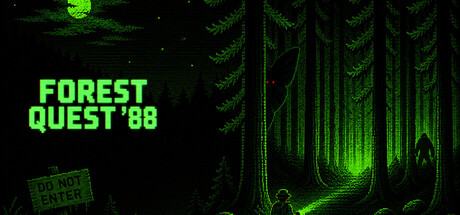
The branching narrative in FOREST QUEST '88 was generated during development using a locally-run AI language model (an offline Dolphin/LLaMA-family model via Ollama). All AI-generated text was produced ahead of time, then reviewed, edited, and curated by the developer before being baked into the finished game as fixed, hand-checked content. The shipped game contains no live AI generation — it plays back a static, pre-authored story. No player data is sent to any AI service; the game runs fully offline.
Generative AI tools were used during development to assist with programming, localization, and the creation or refinement of some 3D models and animations. All AI-assisted content is reviewed, edited, and integrated by the developer before being included in the game. The game does not use generative AI at runtime or generate live content for players.
AI is used in early visual concept explorations for certain environments.
Every aspect of the game at runtime including the story, visuals, environments, dialogues and music is all handcrafted with utmost human care.
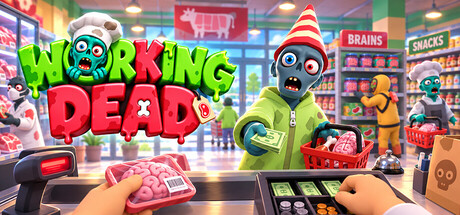
-- Store page capsule art was created in a comprehensive workflow with OpenArt.ai, using Blender and Windows Paint3D, and by employing painstakingly crafted text prompts over dozens of A.I. generations, while incorporating thousands of my own brushstrokes and adhering to my own artistic vision for composition and mood.
-- The game’s main logo texture was refined with OpenArt.ai.
-- 30+ characters may be heard with distinct voices speaking in the background, commenting generally about the situation at hand with any of dozens of phrases, or hundreds of snippets of phrases. The things they say are my creation, but as an early development budget consideration the voices were generated using OpenArt.ai. Clerk P.A. announcements are also an A.I.-generated voice.
-- Some vehicle sounds and background activity sound loops were generated using A.I. from OpenArt.ai or freesound.org.
Some store artwork (capsules, hero art, page background) was created with generative AI and then edited by hand. All in-game art, audio and text are hand-made or licensed. The game does not generate any content at runtime.
CENIZA is created using AI tools under human creative direction. Pre-generated content includes environmental textures, interface artwork, game text and translations, promotional art, and assets produced through AI-assisted modeling, coding and audio workflows. The base game does not generate content with generative AI while you play and does not connect to an AI service. Mod authors may optionally use external AI tools; manual editing and conventional tools are equally welcome.
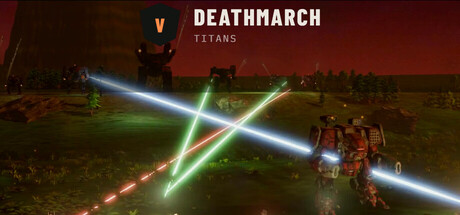
AI was used to create write parts of the game code and scripting, to refine mech textures, and for voiceover and audio content - to be used as placeholders while in playtests.
Generative AI was used as an assistive tool during development for selected visual assets and promotional materials. All AI-assisted content was reviewed and edited by the developer before use. No generative AI is used during gameplay, and the game does not connect to any external AI services.
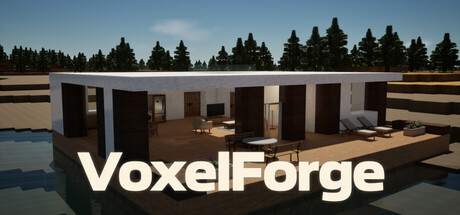
Generative AI tools were used during development to assist with some visual assets, including textures, 3D asset creation and store artwork, as well as store text and translations. Assets are reviewed and adapted before integration. VoxelForge does not generate AI content during play and does not connect to an external AI service during play.
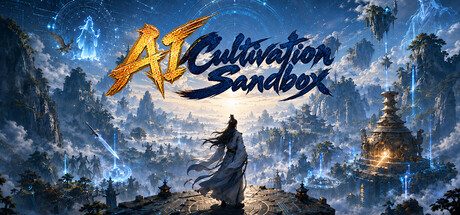
AI Cultivation Sandbox uses generative AI technology to assist in creating game content.
The AI systems in the game may generate or assist with generating character backgrounds, character dialogue, world events, story content, and visual assets.
AI-generated content is guided by game systems and safety mechanisms to create a more dynamic and personalized cultivation world experience.
We use generative AI to support the creation of promotional materials, translations, selected artwork, music, and sound effects. These tools help bring our ideas to life, while the game’s creative direction and final decisions will always remain in human hands.
Modern generative AI tools have been used alongside traditional development tools to assist with creating and modifying some visual and audio assets. This includes tasks such as retexturing assets to improve historical accuracy.
I use AI as a "better search engine" for code snippets and design research, and to create examples I can mark up to show artists what I am looking for. Paid artists create the monsters, backgrounds and UI icons, and everything else is hand-created or downloaded from asset packs or is available from free art sites. The artists also use AI in their workflows.
Designed and directed by one person. Every ship, station and planet is rendered in code, with no AI images. The soundtrack was made with Suno, an AI music tool, directed by the developer, and ships as fixed audio files. The story comes from the developer. AI helped turn it into text, tidy it up and translate the store page, like a very overqualified spell check. Nothing is generated by AI while you play.
Developer Note on AI Assistance: Gods of the Arena: Blood & Sand is crafted using a hybrid development approach, combining human game design, rigorous combat programming, and hand-tuned mechanics with generative AI tools for concept ideation and visual asset workflows.
Generative AI tools were used during development to assist in creating some pre-generated visual assets and background music. All AI-assisted content was reviewed and selected by the development team before being included in the game. Arcane Library does not generate AI content during gameplay and does not connect to external AI services while running.
Generative AI tools assisted with programming and the code used to create some in-game assets, as well as drafting and translating the store description and creating title lettering for store and library artwork. Screenshots and capsule backgrounds are captured directly from gameplay. The game does not generate AI content during play.
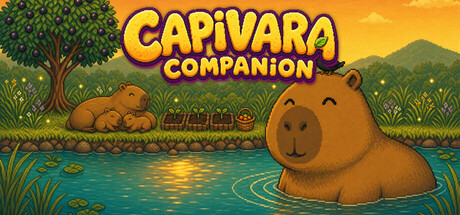
Art assets (backgrounds, capybara and object sprites, capsules, icon), the store trailer footage, sound effects, ambience and music were generated with AI tools (image and video generation, PixelLab, ElevenLabs) from the developer's own references and direction, then cropped, scaled, palette-snapped and composed by hand-written code. The translations of the game and store texts into languages other than Portuguese and English were produced with AI and reviewed by the developer. All code, game design, writing and the original Portuguese and English texts are human-made. The game does not generate any content at runtime.
Generative AI assisted with development-time content, including procedural visual assets and pre-written store-page text. Content is prepared before release; the game does not generate AI content during gameplay or connect to an external AI service.
Pre-generated AI tools were used during development to assist in creating an original instrumental Halloween background music track and certain marketing artwork. The game does not generate AI content while running.
Generative AI was used to help create capsule and library artwork, store descriptions, and screenshot accessibility text. The game itself does not use generative AI.
Generative AI tools were used to assist with drafting and revising some store-page text, interface text, and Italian/English localization. All content was reviewed and edited by the developer. The game does not generate AI content at runtime.
Generative AI was used to assist in the creation of selected Steam store promotional images, certain audio assets, and a limited number of 3D assets. No live-generated AI is used during gameplay.
This game began with my idea, brought to life over many weeks using generative AI to create its code, artwork, audio, and promotional materials. These tools made it possible for me to build the game without a programming background.
All AI-generated content was created during development. The game does not generate AI content while you build towards your achievements.
As a small development team of just two people, we used generative AI tools in limited cases to assist with the production of certain visual assets and help manage the scope of development.
All AI-assisted assets were carefully reviewed, edited, refined, and finalized by us to fit the game's established art style and direction. Generative AI was used as a supporting tool during development, rather than to define the creative direction of the game.
Generative AI was used during development for some card artwork, textures, sound effects, text, and translations. These are fixed, pre-generated assets. No generative AI runs during gameplay.
Generative AI tools were used during development to assist with some visual assets and written content. All AI-assisted content was reviewed and edited.
We are using AI to help write, structure, and/or review written code by the team. Some of the artwork in this game was produced with the help of generative AI tools.
Generative AI was used extensively during development to assist with localization, text review, and selected production/reference workflows. All code and most image assets and models were created with generative AI. All AI-assisted content included in the game was reviewed and curated by the developer. The game does not use live generative AI during gameplay.
Generative AI tools were used during development to assist with selected visual assets, written content, localization, and other parts of the production process. All AI-assisted content was reviewed, edited, and integrated by the developer. No generative AI content is created during gameplay.
The branching narrative in FOREST QUEST '88 was generated during development using a locally-run AI language model (an offline Dolphin/LLaMA-family model via Ollama). All AI-generated text was produced ahead of time, then reviewed, edited, and curated by the developer before being baked into the finished game as fixed, hand-checked content. The shipped game contains no live AI generation — it plays back a static, pre-authored story. No player data is sent to any AI service; the game runs fully offline.
Generative AI tools were used during development to assist with programming, localization, and the creation or refinement of some 3D models and animations. All AI-assisted content is reviewed, edited, and integrated by the developer before being included in the game. The game does not use generative AI at runtime or generate live content for players.
AI is used in early visual concept explorations for certain environments.
Every aspect of the game at runtime including the story, visuals, environments, dialogues and music is all handcrafted with utmost human care.
-- Store page capsule art was created in a comprehensive workflow with OpenArt.ai, using Blender and Windows Paint3D, and by employing painstakingly crafted text prompts over dozens of A.I. generations, while incorporating thousands of my own brushstrokes and adhering to my own artistic vision for composition and mood.
-- The game’s main logo texture was refined with OpenArt.ai.
-- 30+ characters may be heard with distinct voices speaking in the background, commenting generally about the situation at hand with any of dozens of phrases, or hundreds of snippets of phrases. The things they say are my creation, but as an early development budget consideration the voices were generated using OpenArt.ai. Clerk P.A. announcements are also an A.I.-generated voice.
-- Some vehicle sounds and background activity sound loops were generated using A.I. from OpenArt.ai or freesound.org.
Some store artwork (capsules, hero art, page background) was created with generative AI and then edited by hand. All in-game art, audio and text are hand-made or licensed. The game does not generate any content at runtime.
CENIZA is created using AI tools under human creative direction. Pre-generated content includes environmental textures, interface artwork, game text and translations, promotional art, and assets produced through AI-assisted modeling, coding and audio workflows. The base game does not generate content with generative AI while you play and does not connect to an AI service. Mod authors may optionally use external AI tools; manual editing and conventional tools are equally welcome.
AI was used to create write parts of the game code and scripting, to refine mech textures, and for voiceover and audio content - to be used as placeholders while in playtests.
Generative AI was used as an assistive tool during development for selected visual assets and promotional materials. All AI-assisted content was reviewed and edited by the developer before use. No generative AI is used during gameplay, and the game does not connect to any external AI services.
Generative AI tools were used during development to assist with some visual assets, including textures, 3D asset creation and store artwork, as well as store text and translations. Assets are reviewed and adapted before integration. VoxelForge does not generate AI content during play and does not connect to an external AI service during play.
AI Cultivation Sandbox uses generative AI technology to assist in creating game content.
The AI systems in the game may generate or assist with generating character backgrounds, character dialogue, world events, story content, and visual assets.
AI-generated content is guided by game systems and safety mechanisms to create a more dynamic and personalized cultivation world experience.
We use generative AI to support the creation of promotional materials, translations, selected artwork, music, and sound effects. These tools help bring our ideas to life, while the game’s creative direction and final decisions will always remain in human hands.
Modern generative AI tools have been used alongside traditional development tools to assist with creating and modifying some visual and audio assets. This includes tasks such as retexturing assets to improve historical accuracy.
I use AI as a "better search engine" for code snippets and design research, and to create examples I can mark up to show artists what I am looking for. Paid artists create the monsters, backgrounds and UI icons, and everything else is hand-created or downloaded from asset packs or is available from free art sites. The artists also use AI in their workflows.
Designed and directed by one person. Every ship, station and planet is rendered in code, with no AI images. The soundtrack was made with Suno, an AI music tool, directed by the developer, and ships as fixed audio files. The story comes from the developer. AI helped turn it into text, tidy it up and translate the store page, like a very overqualified spell check. Nothing is generated by AI while you play.
Developer Note on AI Assistance: Gods of the Arena: Blood & Sand is crafted using a hybrid development approach, combining human game design, rigorous combat programming, and hand-tuned mechanics with generative AI tools for concept ideation and visual asset workflows.
Generative AI tools were used during development to assist in creating some pre-generated visual assets and background music. All AI-assisted content was reviewed and selected by the development team before being included in the game. Arcane Library does not generate AI content during gameplay and does not connect to external AI services while running.
Generative AI tools assisted with programming and the code used to create some in-game assets, as well as drafting and translating the store description and creating title lettering for store and library artwork. Screenshots and capsule backgrounds are captured directly from gameplay. The game does not generate AI content during play.
Art assets (backgrounds, capybara and object sprites, capsules, icon), the store trailer footage, sound effects, ambience and music were generated with AI tools (image and video generation, PixelLab, ElevenLabs) from the developer's own references and direction, then cropped, scaled, palette-snapped and composed by hand-written code. The translations of the game and store texts into languages other than Portuguese and English were produced with AI and reviewed by the developer. All code, game design, writing and the original Portuguese and English texts are human-made. The game does not generate any content at runtime.
Generative AI assisted with development-time content, including procedural visual assets and pre-written store-page text. Content is prepared before release; the game does not generate AI content during gameplay or connect to an external AI service.
Pre-generated AI tools were used during development to assist in creating an original instrumental Halloween background music track and certain marketing artwork. The game does not generate AI content while running.
Generative AI was used to help create capsule and library artwork, store descriptions, and screenshot accessibility text. The game itself does not use generative AI.
Generative AI tools were used to assist with drafting and revising some store-page text, interface text, and Italian/English localization. All content was reviewed and edited by the developer. The game does not generate AI content at runtime.
Generative AI was used to assist in the creation of selected Steam store promotional images, certain audio assets, and a limited number of 3D assets. No live-generated AI is used during gameplay.
This game began with my idea, brought to life over many weeks using generative AI to create its code, artwork, audio, and promotional materials. These tools made it possible for me to build the game without a programming background.
All AI-generated content was created during development. The game does not generate AI content while you build towards your achievements.
As a small development team of just two people, we used generative AI tools in limited cases to assist with the production of certain visual assets and help manage the scope of development.
All AI-assisted assets were carefully reviewed, edited, refined, and finalized by us to fit the game's established art style and direction. Generative AI was used as a supporting tool during development, rather than to define the creative direction of the game.
Generative AI was used during development for some card artwork, textures, sound effects, text, and translations. These are fixed, pre-generated assets. No generative AI runs during gameplay.
Generative AI tools were used during development to assist with some visual assets and written content. All AI-assisted content was reviewed and edited.
We are using AI to help write, structure, and/or review written code by the team. Some of the artwork in this game was produced with the help of generative AI tools.
Generative AI was used extensively during development to assist with localization, text review, and selected production/reference workflows. All code and most image assets and models were created with generative AI. All AI-assisted content included in the game was reviewed and curated by the developer. The game does not use live generative AI during gameplay.
Generative AI tools were used during development to assist with selected visual assets, written content, localization, and other parts of the production process. All AI-assisted content was reviewed, edited, and integrated by the developer. No generative AI content is created during gameplay.