Public Steam disclosure research25,376 disclosures tracked
Where do games disclose AI use?
Search developers’ Steam disclosures, compare classified AI use across
games, and follow recorded changes.
This index adds cross-game classifications and statistics to
statements published on individual store pages.
Groups reflect automatic analysis of public disclosures; mature records are excluded. These counts do not measure AI use across all of Steam.
Missing or unclear statements cannot establish whether a game uses AI.
Some artwork used on this store page and in marketing materials (key art and capsule images), and some in-game 2D art such as item icons, was created with the help of generative AI tools and then selected, edited and composited by the developer. The game does not generate any AI content during gameplay and does not connect to any AI service.
Generative AI tools were used to create the 3D models, images, voices, sound effects, music, dialogue and translations, and to help write the code. Every element was chosen, edited and put together by the developer. Nothing is generated by AI while you play.
Development assistance and pre-generated content: the 3D models, props and characters were built with Blender Python scripts that were written with AI coding assistants (Claude and Codex), and the game code was also written with AI assistance. All sound effects and music are synthesized in code or come from CC0 sample packs; there is no AI-generated voice, no AI-generated images or textures, and nothing is generated live while playing. The store page copy was drafted with AI assistance and reviewed by the developer.
This game uses generative AI for some of its assets. Character portraits and promotional illustrations were created with AI image tools (ChatGPT), 3D landmark models with Tripo3D, sound effects with ElevenLabs, and the background music and theme song with Suno. The English and Simplified Chinese localization was drafted with AI assistance. All AI-generated content was reviewed, edited and selected by the developer before shipping. Nothing is generated live during gameplay.
Generative AI assisted in creating some artwork, dialogue, descriptions, and translations during development. No AI content is generated during gameplay.
Card, character, background, UI and store art, as well as some in-game text and translations, were made with the help of generative AI. The game does not generate any content with AI while it runs.
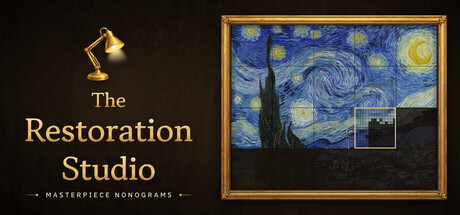
Generative AI was used to create some decorative visual assets, including studio props, frames, backgrounds, and lamp artwork used in the game and store materials. No AI content is generated during gameplay.
The store description was drafted in Japanese and English with AI assistance and finalized by the developer. The in-game text translations and the store description in other languages were translated with AI. No AI-generated graphics or music are used. The game does not generate any content with AI during play.
Yes, AI helped make this game. Here's exactly how:
• I built it with an AI coding assistant. The design and direction are mine; the AI did a lot of the typing.
• The narrator's lines and item descriptions were drafted with AI and edited by me. So was this page.
• No image, music or voice generators. The art and sound are drawn and synthesized by code.
• Nothing is AI-generated while you play.
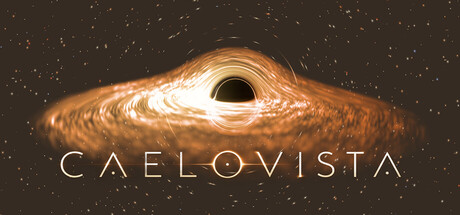
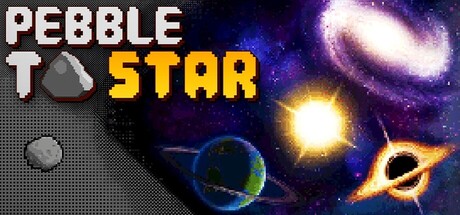
This product includes some visual assets and background music generated using AI during development. Some visual assets provide illustrative fills for missing celestial surface data or artistic representations and do not represent actual observations. No generative AI content is generated during gameplay.
Generative AI is used in the creation of some visual assets, including in-game cinematics, background images, and character illustrations. It is also used to assist with writing and translating some in-game text. This content is created during development and included in the game. The game does not generate new content using generative AI during gameplay.
The Rend is made by a small indie team, with core character art, animation, and design created by human artists we've worked with and credited.
We use generative AI tools in a supporting role for environment art direction and variation, additional views and variations of existing character designs, and some temporary UI artwork, such as achievement badges that haven't received their final art yet. No content is generated by AI during gameplay.
All AI-assisted content is directed, reviewed, and edited by our team. As development continues, we'll keep working with artists and developers to improve the game's art and overall experience.
The store page capsule and library images (key art and logo) were created with the help of an AI image generator as temporary placeholders. They will be replaced with hand-made artwork in the future. The game itself does not use generative AI.
Unwritten uses generative AI as part of its core gameplay. AI systems interpret the player's freely written actions and generate narrative responses within an authored world, story and set of rules. AI inference runs locally on the player's computer.
Pre-generated AI content: The four background music tracks were generated with Suno AI under the developer's paid subscription (commercial license per Suno's Terms of Service). The source image of the application icon was generated with an AI image tool and manually processed. All in-game 3D models, textures, chalk illustrations and sound effects are procedurally generated by in-house scripts without AI. The game contains no live-generated AI content.
Some visual and audio assets were generated with AI tools during development and edited for use in Dead Last. No AI content is generated during gameplay.
Some paintings and NPC textures in this game were generated using AI. These elements are used purely for visual and aesthetic purposes and have no impact on gameplay. There is no live or real-time AI generation during gameplay.
Parts of the source code and some store and marketing text were written with help from AI coding assistants during development. All terrain, water simulation, satellite imagery and map data come from real geographic datasets. No AI-generated artwork, audio or narrative ships with the app, and nothing is generated during play.
This game utilizes pre-rendered content assisted by generative AI tools exclusively for a few specific background songs, character voice acting, and minor conceptual art references.
The ambient sound design, audio effects, and liminal soundscapes were crafted by human artists. Certain 3D models and environmental props were acquired under license from creators on the Unreal Engine Marketplace. All narrative writing, game design, level composition, programming, story, and creative direction are original works created and directed entirely by the author.
Generative AI tools were used during development to assist in creating some artwork, music, sound effects, and promotional materials, and in drafting and translating text. These materials are prepared before release. The game does not generate AI content during gameplay or connect to external AI services.
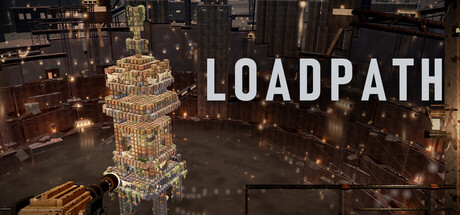
Generative AI tools assisted with LOADPATH’s development and the creation of game content, under the developer’s creative direction. The game was shaped through extensive iteration, selection and hands-on playtesting. The promotional trailer also uses AI-generated narration and music. All AI-generated content is prepared in advance; no generative AI runs during gameplay.
AI tools were used to generate base 2D images and concepts for character masks. These assets were then manually edited, polished, color-corrected, and integrated into the game by the developer.
This game incorporates AI assistance in its development. The overall vision and execution remain that of the developer.
All language translations were done using Claude. If there are any mistranslations, please contact me to fix them!
AI-assisted coding and editor automation tools were used during development for workflow efficiency.
Most of the art was hand-made by me. The remaining art generated by AI tools like icons or textures will be swapped to human-made art in the near future.
AI translation tools were used to create localization drafts, that are being reviewed by speakers of the language.
Some of what you see and hear in Semblature was made with AI tools. Nothing is generated while you play. There is no model in the game, nothing is created at runtime, and the game never sends anything you do to an AI service.
Art: No AI-generated imagery currently ships. All in-game art is drawn procedurally by the game's own code, and the store assets (capsules, library art, icons) are the same. No diffusion imagery is used in any of them. An AI image pipeline exists in development; if generated art ships in a future build, this section will be updated before release with the tools and process.
Music: No music has shipped in a build yet. If AI-generated music ships, this answer will be updated with the tool and process before release.
Puzzles: A puzzle's shape, what it teaches, and where it falls on the difficulty curve was designed with an AI coding assistant under my direction. The puzzles you play are produced from that design by a deterministic program, and a solver proves it has exactly one solution. The teaching cards and rule text were drafted the same way and edited by me.
Store copy is drafted with an AI writing assistant and edited by me.
AI-Generated Content Disclosure – CONJURARIUN
CONJURARIUN uses AI-generated content in certain elements of the game. AI-generated images were used for some visual assets, including artwork featured in the game. Additionally, AI-generated music was used in the main menu.
All AI-generated content was reviewed, selected, and integrated by the development team as part of the game's creative process. The gameplay, programming, mechanics, and overall game development were created and implemented by the developer.
Memory House is based on our original concept, characters, storylines, gameplay, and creative direction. During development, we used generative AI as a tool to help produce illustrations, visual assets, and written narrative content based on those ideas. We selected and refined the resulting content for the game and some promotional materials. No AI content is generated during gameplay.
Generative AI tools were used to assist with the creation of some game and promotional content. All final content was reviewed and approved by the developer.
AI Generated Content Disclosure
AI tools were used to assist in drafting the written text of this game (in-game explanations, codex entries, the four language versions of the interface, and store page descriptions); all such text was reviewed and edited by the developer. All artwork is procedurally rendered by shaders written by the developer, the store capsule artwork was commissioned from a human artist, and all sound is synthesised by the developer's own code. The game does not use AI to generate any content at runtime.
Pre-Generated AI Content:
During development, generative AI tools were used to create certain 3D character assets. These assets were subsequently integrated and adapted by the development team for use in the game.
Generative AI tools were used extensively throughout development. Most of the game's visual content, user interface, written text, audio, narrative and localization, and program code were created with the assistance of generative AI, then selected, edited, integrated, and refined by the developer. Generative AI is used only during development. The game does not connect to AI services or generate content in real time during gameplay.
This game was made by a solo developer with the help of generative AI tools. AI was used to create the store page images and videos, the in-game audio and visual assets, language translations, and the majority of the code. The game concept, design, and every gameplay decision are my own, and I reviewed and refined all AI-generated content.
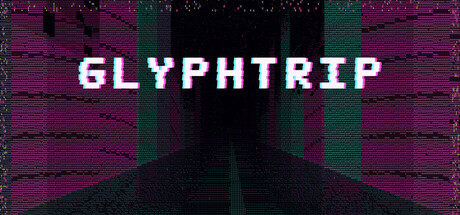
Glyphtrip is made by a studio of three: one human and two silicon genius-toddlers. The soundtrack stems were generated with AI and mixed and mastered by hand. The translations and custom font were made with AI.
AI was used to generate the art, music, sound effects, the captains' short vocal reactions, the game text and the translations, all curated and reviewed by hand. Nothing is generated at runtime.
Some artwork used on this store page and in marketing materials (key art and capsule images), and some in-game 2D art such as item icons, was created with the help of generative AI tools and then selected, edited and composited by the developer. The game does not generate any AI content during gameplay and does not connect to any AI service.
Generative AI tools were used to create the 3D models, images, voices, sound effects, music, dialogue and translations, and to help write the code. Every element was chosen, edited and put together by the developer. Nothing is generated by AI while you play.
Development assistance and pre-generated content: the 3D models, props and characters were built with Blender Python scripts that were written with AI coding assistants (Claude and Codex), and the game code was also written with AI assistance. All sound effects and music are synthesized in code or come from CC0 sample packs; there is no AI-generated voice, no AI-generated images or textures, and nothing is generated live while playing. The store page copy was drafted with AI assistance and reviewed by the developer.
This game uses generative AI for some of its assets. Character portraits and promotional illustrations were created with AI image tools (ChatGPT), 3D landmark models with Tripo3D, sound effects with ElevenLabs, and the background music and theme song with Suno. The English and Simplified Chinese localization was drafted with AI assistance. All AI-generated content was reviewed, edited and selected by the developer before shipping. Nothing is generated live during gameplay.
Generative AI assisted in creating some artwork, dialogue, descriptions, and translations during development. No AI content is generated during gameplay.
Card, character, background, UI and store art, as well as some in-game text and translations, were made with the help of generative AI. The game does not generate any content with AI while it runs.
Generative AI was used to create some decorative visual assets, including studio props, frames, backgrounds, and lamp artwork used in the game and store materials. No AI content is generated during gameplay.
The store description was drafted in Japanese and English with AI assistance and finalized by the developer. The in-game text translations and the store description in other languages were translated with AI. No AI-generated graphics or music are used. The game does not generate any content with AI during play.
Yes, AI helped make this game. Here's exactly how:
• I built it with an AI coding assistant. The design and direction are mine; the AI did a lot of the typing.
• The narrator's lines and item descriptions were drafted with AI and edited by me. So was this page.
• No image, music or voice generators. The art and sound are drawn and synthesized by code.
• Nothing is AI-generated while you play.
This product includes some visual assets and background music generated using AI during development. Some visual assets provide illustrative fills for missing celestial surface data or artistic representations and do not represent actual observations. No generative AI content is generated during gameplay.
Generative AI is used in the creation of some visual assets, including in-game cinematics, background images, and character illustrations. It is also used to assist with writing and translating some in-game text. This content is created during development and included in the game. The game does not generate new content using generative AI during gameplay.
The Rend is made by a small indie team, with core character art, animation, and design created by human artists we've worked with and credited.
We use generative AI tools in a supporting role for environment art direction and variation, additional views and variations of existing character designs, and some temporary UI artwork, such as achievement badges that haven't received their final art yet. No content is generated by AI during gameplay.
All AI-assisted content is directed, reviewed, and edited by our team. As development continues, we'll keep working with artists and developers to improve the game's art and overall experience.
The store page capsule and library images (key art and logo) were created with the help of an AI image generator as temporary placeholders. They will be replaced with hand-made artwork in the future. The game itself does not use generative AI.
Unwritten uses generative AI as part of its core gameplay. AI systems interpret the player's freely written actions and generate narrative responses within an authored world, story and set of rules. AI inference runs locally on the player's computer.
Pre-generated AI content: The four background music tracks were generated with Suno AI under the developer's paid subscription (commercial license per Suno's Terms of Service). The source image of the application icon was generated with an AI image tool and manually processed. All in-game 3D models, textures, chalk illustrations and sound effects are procedurally generated by in-house scripts without AI. The game contains no live-generated AI content.
Some visual and audio assets were generated with AI tools during development and edited for use in Dead Last. No AI content is generated during gameplay.
Some paintings and NPC textures in this game were generated using AI. These elements are used purely for visual and aesthetic purposes and have no impact on gameplay. There is no live or real-time AI generation during gameplay.
Parts of the source code and some store and marketing text were written with help from AI coding assistants during development. All terrain, water simulation, satellite imagery and map data come from real geographic datasets. No AI-generated artwork, audio or narrative ships with the app, and nothing is generated during play.
This game utilizes pre-rendered content assisted by generative AI tools exclusively for a few specific background songs, character voice acting, and minor conceptual art references.
The ambient sound design, audio effects, and liminal soundscapes were crafted by human artists. Certain 3D models and environmental props were acquired under license from creators on the Unreal Engine Marketplace. All narrative writing, game design, level composition, programming, story, and creative direction are original works created and directed entirely by the author.
Generative AI tools were used during development to assist in creating some artwork, music, sound effects, and promotional materials, and in drafting and translating text. These materials are prepared before release. The game does not generate AI content during gameplay or connect to external AI services.
Generative AI tools assisted with LOADPATH’s development and the creation of game content, under the developer’s creative direction. The game was shaped through extensive iteration, selection and hands-on playtesting. The promotional trailer also uses AI-generated narration and music. All AI-generated content is prepared in advance; no generative AI runs during gameplay.
AI tools were used to generate base 2D images and concepts for character masks. These assets were then manually edited, polished, color-corrected, and integrated into the game by the developer.
This game incorporates AI assistance in its development. The overall vision and execution remain that of the developer.
All language translations were done using Claude. If there are any mistranslations, please contact me to fix them!
AI-assisted coding and editor automation tools were used during development for workflow efficiency.
Most of the art was hand-made by me. The remaining art generated by AI tools like icons or textures will be swapped to human-made art in the near future.
AI translation tools were used to create localization drafts, that are being reviewed by speakers of the language.
Some of what you see and hear in Semblature was made with AI tools. Nothing is generated while you play. There is no model in the game, nothing is created at runtime, and the game never sends anything you do to an AI service.
Art: No AI-generated imagery currently ships. All in-game art is drawn procedurally by the game's own code, and the store assets (capsules, library art, icons) are the same. No diffusion imagery is used in any of them. An AI image pipeline exists in development; if generated art ships in a future build, this section will be updated before release with the tools and process.
Music: No music has shipped in a build yet. If AI-generated music ships, this answer will be updated with the tool and process before release.
Puzzles: A puzzle's shape, what it teaches, and where it falls on the difficulty curve was designed with an AI coding assistant under my direction. The puzzles you play are produced from that design by a deterministic program, and a solver proves it has exactly one solution. The teaching cards and rule text were drafted the same way and edited by me.
Store copy is drafted with an AI writing assistant and edited by me.
AI-Generated Content Disclosure – CONJURARIUN
CONJURARIUN uses AI-generated content in certain elements of the game. AI-generated images were used for some visual assets, including artwork featured in the game. Additionally, AI-generated music was used in the main menu.
All AI-generated content was reviewed, selected, and integrated by the development team as part of the game's creative process. The gameplay, programming, mechanics, and overall game development were created and implemented by the developer.
Memory House is based on our original concept, characters, storylines, gameplay, and creative direction. During development, we used generative AI as a tool to help produce illustrations, visual assets, and written narrative content based on those ideas. We selected and refined the resulting content for the game and some promotional materials. No AI content is generated during gameplay.
Generative AI tools were used to assist with the creation of some game and promotional content. All final content was reviewed and approved by the developer.
AI Generated Content Disclosure
AI tools were used to assist in drafting the written text of this game (in-game explanations, codex entries, the four language versions of the interface, and store page descriptions); all such text was reviewed and edited by the developer. All artwork is procedurally rendered by shaders written by the developer, the store capsule artwork was commissioned from a human artist, and all sound is synthesised by the developer's own code. The game does not use AI to generate any content at runtime.
Pre-Generated AI Content:
During development, generative AI tools were used to create certain 3D character assets. These assets were subsequently integrated and adapted by the development team for use in the game.
Generative AI tools were used extensively throughout development. Most of the game's visual content, user interface, written text, audio, narrative and localization, and program code were created with the assistance of generative AI, then selected, edited, integrated, and refined by the developer. Generative AI is used only during development. The game does not connect to AI services or generate content in real time during gameplay.
This game was made by a solo developer with the help of generative AI tools. AI was used to create the store page images and videos, the in-game audio and visual assets, language translations, and the majority of the code. The game concept, design, and every gameplay decision are my own, and I reviewed and refined all AI-generated content.
Glyphtrip is made by a studio of three: one human and two silicon genius-toddlers. The soundtrack stems were generated with AI and mixed and mastered by hand. The translations and custom font were made with AI.
AI was used to generate the art, music, sound effects, the captains' short vocal reactions, the game text and the translations, all curated and reviewed by hand. Nothing is generated at runtime.