Public Steam disclosure research25,380 disclosures tracked
Where do games disclose AI use?
Search developers’ Steam disclosures, compare classified AI use across
games, and follow recorded changes.
This index adds cross-game classifications and statistics to
statements published on individual store pages.
Groups reflect automatic analysis of public disclosures; mature records are excluded. These counts do not measure AI use across all of Steam.
Missing or unclear statements cannot establish whether a game uses AI.
This game uses AI-generated content, created during development and included as fixed, pre-generated assets in the shipped game (not generated live or dynamically during gameplay).
3D models: Unit, structure, and Titan models are generated using Meshy, an AI text/image-to-3D generation tool.
Music: The game's background soundtrack (16 tracks) is generated using Suno, an AI music generation tool.
Some of the images in the game were generated using AI during the prototype stage. Such assets may be present in the game up until the release of the demo (inclusive). During the development process, we gradually get rid of generated assets and replace them with hand-made ones. By the time of the official release, all generated content will be removed. This is a normal process for developing an indie game.
This game includes live-generated AI features that run locally on the player's computer and do not rely on external AI services.
The game uses AI to:
- interpret the player's spoken voice commands in real time to support gameplay interactions;
- generate voice audio for in-game pilot communications in real time.
The AI systems are used exclusively for these gameplay functions. They do not generate user-visible images, text, or other open-ended content.
The game is designed so that AI-generated output is limited to its intended gameplay purpose and cannot be used to create illegal, infringing, or otherwise prohibited content.
We use AI to translate the store steam page to different languages. This will be changed on release and we will hire professional translators for this purpose.
AI tools were used in a limited capacity during the development of the game, primarily to assist with certain programming tasks and the creation of temporary assets.
No AI-generated content is created in real time while playing the game.
We used generative AI mainly for generating code. It has also been used for writing flavour text, many interface descriptions and some lines for an AI character. Finally it has also been used for proofreading.
Deeprise is a solo-developed indie game. Generative AI was used as a tool in the creation of this game, specifically for:
- Concept art and illustrations (character portraits, enemy designs, environment backgrounds, building art, item icons, and research card art), generated with AI image tools and curated, edited, and integrated by the developer.
- Sound effects and voicelines, generated with AI audio tools using developer-written scripts and prompts.
- Capsule art and store page imagery, created by compositing AI-generated assets with developer-designed layouts.
All game design, systems, code, writing, lore, and creative direction are the developer's own work. AI was used to bring this solo project to a visual and audio polish that would otherwise be out of reach for a single developer, and every AI-generated asset was reviewed, selected, and integrated by hand.
Cellula was developed with the assistance of generative AI tools. The developer used AI to help write C++ code, generate 3D organelle models from text descriptions, and create UI button artwork. No AI-generated content appears in the final game without human modification, curation, and integration.
This project is itself a demonstration of how AI can democratize game development — allowing a single developer with domain expertise but limited programming experience to build something that previously required a full studio.
All game design, biological accuracy, educational content, and creative direction were provided by a human physician and educator.
Artificial Intelligence was used to help in the development of game code only. No art, sound, or other visual assets use or employed AI and were done by a real artist on the team.
Generative AI tools were used only to assist in the creation of certain store page and marketing images. No AI-generated content is created during gameplay, and the game does not use live AI systems or connect to external AI services while running.
The game's narration engine is a deterministic template system with zero runtime AI. The template/fragment library it draws from was hand-crafted in English, and then mass-localized during development using a large language model and then human-curated. No AI image generation was used: all art, icons, and store assets are procedurally rasterized from hand-authored primitive op-lists. The game contains no live/runtime AI generation.
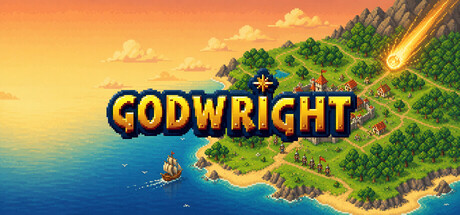
Godwright ships some generative-AI content, all pre-rendered (baked into the build, never live-generated):
Localization: the non-English UI text (Simplified Chinese, Spanish, Portuguese-BR, Russian, German, French, Japanese, Korean, Turkish, Indonesian) was machine-translated.
AI was used to create background images in the novel, as well as objects in the levels, but the levels are drawn to the final stage manually by an artist.
This project uses a mix of human-made and AI-assisted content. The majority of visual assets are human-made. Some 3D character models, item models, and textures were generated with the help of AI tools. All animation, audio, music, sound design, and writing are entirely human-made.
I am a solo developer who worked with external freelancers for art and audio. Some assets provided by these contributors might have been created or assisted by generative AI tools, though their specific workflow was not monitored.
Generative AI tools were used to assist with development, including code support, store text drafting, and some visual/marketing assets. Final content was reviewed and edited by the developer.
AI tools were used to assist in the creation of temporary promotional artwork and concept visuals for the Steam store page. Gameplay systems, implementation, balancing, and final game integration are developed manually.
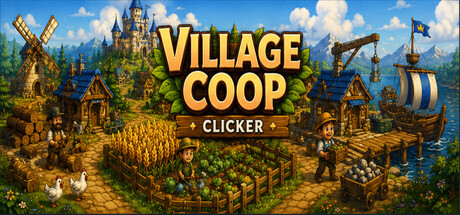
Village Coop Clicker is a small hobby project created with extensive use of AI-assisted tools for programming, artwork, audio, localization, and store assets.
The game design, balancing, progression systems, and overall creative direction were created and curated manually by the developer.
Some visual assets and promotional materials for this game were created or assisted using generative AI tools. All content was reviewed, edited, and integrated by the developer.
Character portraits and some narrative text were created with AI tool assistance during development. Game design, story direction, building sprites, music, and sound effects are human-authored. All content is reviewed and approved by the developer.
Generative AI tools were used as part of the development process.
For store page materials, AI-generated outputs were used as reference material. The final store assets were manually edited and assembled by the developer.
For the game itself, generative AI tools were used to assist with the creation of some in-game visual assets, such as sprites, and to support programming and implementation work. All AI-assisted content is reviewed, edited, and integrated by the developer before inclusion.
The game does not use live generative AI during gameplay and does not generate images, text, audio, or other content at runtime.
There's a local Large Language Model that integrates with the game's systems and is used primarily for but not limited to dialogue generation.
Several other uses are planned, including localization.
AI has been used for coding and in a limited capacity for creating placeholder assets that will be replaced at a later date.
Generative AI was used during development to assist with some visual concept art, store page images, and marketing assets. All AI-assisted content is manually reviewed, edited, and curated by the developer. The game does not include real-time generative AI content.
AI was NOT used to generate code, text, art or music for the game itself. It was also NOT used for any artwork used on Steam.
I'm rubbish at marketing so I used it to help write the store descriptions (this is literally the only thing steam related I used it for) and to help develop a marketing plan for me.
In-game visuals and music were produced with generative AI tools under the developer’s direction, then selected, edited, and integrated into the game. The game does not use AI to generate new images, audio, or text while you play.
LLM was used for translation to languages except English and Russian.
Pixelated character portraits were made based on generative pictures from this person does not exist web site
This game uses AI-generated content, created during development and included as fixed, pre-generated assets in the shipped game (not generated live or dynamically during gameplay).
3D models: Unit, structure, and Titan models are generated using Meshy, an AI text/image-to-3D generation tool.
Music: The game's background soundtrack (16 tracks) is generated using Suno, an AI music generation tool.
Some of the images in the game were generated using AI during the prototype stage. Such assets may be present in the game up until the release of the demo (inclusive). During the development process, we gradually get rid of generated assets and replace them with hand-made ones. By the time of the official release, all generated content will be removed. This is a normal process for developing an indie game.
This game includes live-generated AI features that run locally on the player's computer and do not rely on external AI services.
The game uses AI to:
- interpret the player's spoken voice commands in real time to support gameplay interactions;
- generate voice audio for in-game pilot communications in real time.
The AI systems are used exclusively for these gameplay functions. They do not generate user-visible images, text, or other open-ended content.
The game is designed so that AI-generated output is limited to its intended gameplay purpose and cannot be used to create illegal, infringing, or otherwise prohibited content.
We use AI to translate the store steam page to different languages. This will be changed on release and we will hire professional translators for this purpose.
AI tools were used in a limited capacity during the development of the game, primarily to assist with certain programming tasks and the creation of temporary assets.
No AI-generated content is created in real time while playing the game.
We used generative AI mainly for generating code. It has also been used for writing flavour text, many interface descriptions and some lines for an AI character. Finally it has also been used for proofreading.
Deeprise is a solo-developed indie game. Generative AI was used as a tool in the creation of this game, specifically for:
- Concept art and illustrations (character portraits, enemy designs, environment backgrounds, building art, item icons, and research card art), generated with AI image tools and curated, edited, and integrated by the developer.
- Sound effects and voicelines, generated with AI audio tools using developer-written scripts and prompts.
- Capsule art and store page imagery, created by compositing AI-generated assets with developer-designed layouts.
All game design, systems, code, writing, lore, and creative direction are the developer's own work. AI was used to bring this solo project to a visual and audio polish that would otherwise be out of reach for a single developer, and every AI-generated asset was reviewed, selected, and integrated by hand.
Cellula was developed with the assistance of generative AI tools. The developer used AI to help write C++ code, generate 3D organelle models from text descriptions, and create UI button artwork. No AI-generated content appears in the final game without human modification, curation, and integration.
This project is itself a demonstration of how AI can democratize game development — allowing a single developer with domain expertise but limited programming experience to build something that previously required a full studio.
All game design, biological accuracy, educational content, and creative direction were provided by a human physician and educator.
Artificial Intelligence was used to help in the development of game code only. No art, sound, or other visual assets use or employed AI and were done by a real artist on the team.
Generative AI tools were used only to assist in the creation of certain store page and marketing images. No AI-generated content is created during gameplay, and the game does not use live AI systems or connect to external AI services while running.
The game's narration engine is a deterministic template system with zero runtime AI. The template/fragment library it draws from was hand-crafted in English, and then mass-localized during development using a large language model and then human-curated. No AI image generation was used: all art, icons, and store assets are procedurally rasterized from hand-authored primitive op-lists. The game contains no live/runtime AI generation.
Godwright ships some generative-AI content, all pre-rendered (baked into the build, never live-generated):
Localization: the non-English UI text (Simplified Chinese, Spanish, Portuguese-BR, Russian, German, French, Japanese, Korean, Turkish, Indonesian) was machine-translated.
AI was used to create background images in the novel, as well as objects in the levels, but the levels are drawn to the final stage manually by an artist.
This project uses a mix of human-made and AI-assisted content. The majority of visual assets are human-made. Some 3D character models, item models, and textures were generated with the help of AI tools. All animation, audio, music, sound design, and writing are entirely human-made.
I am a solo developer who worked with external freelancers for art and audio. Some assets provided by these contributors might have been created or assisted by generative AI tools, though their specific workflow was not monitored.
Generative AI tools were used to assist with development, including code support, store text drafting, and some visual/marketing assets. Final content was reviewed and edited by the developer.
AI tools were used to assist in the creation of temporary promotional artwork and concept visuals for the Steam store page. Gameplay systems, implementation, balancing, and final game integration are developed manually.
Village Coop Clicker is a small hobby project created with extensive use of AI-assisted tools for programming, artwork, audio, localization, and store assets.
The game design, balancing, progression systems, and overall creative direction were created and curated manually by the developer.
Some visual assets and promotional materials for this game were created or assisted using generative AI tools. All content was reviewed, edited, and integrated by the developer.
Character portraits and some narrative text were created with AI tool assistance during development. Game design, story direction, building sprites, music, and sound effects are human-authored. All content is reviewed and approved by the developer.
Generative AI tools were used as part of the development process.
For store page materials, AI-generated outputs were used as reference material. The final store assets were manually edited and assembled by the developer.
For the game itself, generative AI tools were used to assist with the creation of some in-game visual assets, such as sprites, and to support programming and implementation work. All AI-assisted content is reviewed, edited, and integrated by the developer before inclusion.
The game does not use live generative AI during gameplay and does not generate images, text, audio, or other content at runtime.
There's a local Large Language Model that integrates with the game's systems and is used primarily for but not limited to dialogue generation.
Several other uses are planned, including localization.
AI has been used for coding and in a limited capacity for creating placeholder assets that will be replaced at a later date.
Generative AI was used during development to assist with some visual concept art, store page images, and marketing assets. All AI-assisted content is manually reviewed, edited, and curated by the developer. The game does not include real-time generative AI content.
AI was NOT used to generate code, text, art or music for the game itself. It was also NOT used for any artwork used on Steam.
I'm rubbish at marketing so I used it to help write the store descriptions (this is literally the only thing steam related I used it for) and to help develop a marketing plan for me.
In-game visuals and music were produced with generative AI tools under the developer’s direction, then selected, edited, and integrated into the game. The game does not use AI to generate new images, audio, or text while you play.
LLM was used for translation to languages except English and Russian.
Pixelated character portraits were made based on generative pictures from this person does not exist web site