Public Steam disclosure research27,951 disclosures tracked
Where do games disclose AI use?
Search developers’ Steam disclosures, compare classified AI use across
games, and follow recorded changes.
This index adds cross-game classifications and statistics to
statements published on individual store pages.
Groups reflect automatic analysis of public disclosures; mature records are excluded. These counts do not measure AI use across all of Steam.
Missing or unclear statements cannot establish whether a game uses AI.
Pre-generated AI content: Generative AI tools were used extensively during development to create and assist with artwork, game assets, music, written content, and promotional materials. AI-assisted development tools were also used. All content in the final game was reviewed and curated by the development team. The game does not generate AI content during gameplay.
This game uses generative AI for some background images and landscape assets. All AI-generated materials are reviewed and edited by the developer before being used in the game. Generative AI is not used during gameplay, and the game does not connect to external AI services to generate content.
Some of PitWal's artwork and store images were made with help from AI tools and then finished by a person. PitWal's in-app commentary lines were also written with help from AI during development and ship as a fixed set. While you play, PitWal picks from those prewritten lines and fills in your own numbers from your own driving.
PitWal does not run any AI while you play and does not send your data to any AI service. If you want, PitWal lets you connect your own AI assistant, such as Claude or a coding agent local or paid, to read your own data on your own machine. That is optional, uses your own tool, and is never required to use PitWal.
Epoch Studio is a private writing and worldbuilding studio. When you ask it to, it can generate text suggestions and illustrations to help you develop your own manuscript. All generation runs locally on your own machine using bundled, permissively-licensed AI models — or optional cloud providers you connect with your own API key. Nothing is generated on its own: every suggestion is a deliberate action you take, and you review, edit, and decide what becomes part of your book. Your writing never leaves your device and is never used to train any AI model.
This game uses generative AI-assisted tools for certain visual assets and promotional materials, including some artwork shown in the store page and trailer. All AI-assisted content has been reviewed, selected, edited, and integrated by the developer.
Store assets, quiz content, and general layout of application generated with AI to help with design and formatting. Human review and edit before any code implemented. This game does not have any AI models running in the background or in-game. All scriptures are public domain.
Some in-game images, depicting traditional dress, festivals, food, and cultural artifacts, were created using an AI image generation pipeline (Google Gemini through an automated workflow). Every generated image was reviewed, curated, and approved by the developer before it was added to the game. No AI content is generated live during gameplay.
Generative AI tools were used to assist in the creation and refinement of some visual assets, including illustrations, user interface elements, and marketing materials.
Generative AI tools were used during the development of this game to assist in creating selected pre-generated content, including images and illustrations, character visuals, 3D characters, models and assets, textures, cinematic videos, narration and voice elements, soundtrack/music, and selected textual or narrative content. All AI-assisted content was reviewed, selected, edited, and integrated by the developer before being included in the final game. Generative AI is not used to create content or code during gameplay.
The key art used for this game's store capsules and Steam library images was produced with the help of a generative AI image tool, then composed and finished by hand. In the game itself, all visuals are drawn procedurally at runtime and all tap sounds are synthesised in code; no AI content is generated while you play.
Generative AI tools were used during development to assist in creating some of the game's visual art assets, primarily including certain card illustrations and related image assets. AI-generated content is used only during the development process and is not generated live while the game is running. All AI-assisted assets included in the final game are manually reviewed, selected, adjusted, and approved by the developer before being added to the game.
All simulation, art, audio and text in Terra Logic are hand-made — the game ships with no AI-generated content and makes no network requests by default. One optional feature can generate text at runtime: the "whisper" narrator, a single one-line ambient caption. By default it composes lines from a built-in, hand-written phrase library. Players who supply their own Anthropic (Claude) API key in a local config file may enable AI-generated phrasing for that one caption line; without a key the AI path is fully inactive. AI output never affects simulation, gameplay, art, audio, or any other text.
SpaceBell was Agentically Engineered! The custom engine, game loop, and the entire process to make the game is documented on the studios' X page. Far from vibed, the game has been in active dev for 2yrs.
This game has been developed using AI programming agents, and also contains audio and image files generated by AI. No AI contents are generated during gameplay.
Music and lyrics written by Richard Robledo. Music composed by hand in LMMS digital audio workstation, and orchestrated into larger pieces with Suno AI. Pixel art depictions of authors generated by Nano Banana 2.
Generative AI was used to draft this game's localized interface text (English, Japanese and Simplified Chinese); every line was reviewed and edited by the developer before shipping. The Han character data, spell descriptions and store artwork are not AI-generated: the characters come from Unicode IDS and public dictionary data, the spell descriptions are assembled by a deterministic algorithm from hand-written word pools, and the store images and trailer are drawn programmatically from real in-game captures. No AI runs during gameplay, and the game does not connect to any external AI service.
I used generative AI tools to assist in the creation of the graphical assets for this game, including the store page banners and library icons. The AI was used to generate base concepts and visual elements, which were then refined and adjusted to match the game's theme and branding.
Generative AI tools were used during development to create or process some pre-generated voice audio and selected 2D visual assets, including stylized character and news-related images.
All AI-assisted content is created before release and manually reviewed, edited, and curated by the developer before being included in the game.
No generative AI runs during gameplay, and no player input or data is sent to generative AI services.
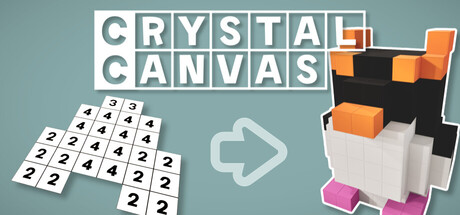
CrystalCanvas uses generative AI in parts of its development process.
For the sound effects played when placing voxels, we aimed to create sounds that remain pleasant and unobtrusive even during extended play sessions. After exploring a variety of sound assets and recordings, we ultimately used generative AI as part of the sound design process to achieve the desired result.
Generative AI is also used as a development aid through Claude Code for generating and assisting with parts of the code related to voxel space management and rendering.
Generative AI is not used to generate the voxel artwork or gameplay content itself.
3D models used in the game were pre-generated or generated with the assistance of AI technology prior to build deployment. All models have been reviewed, integrated, and verified to ensure they comply with rights, quality standards, and platform policies.
The in-game voiceover is pre-recorded using a text-to-speech AI model.
Assets including models, images, music, and UIs are generated by AI, then reviewed and adjusted by human professionals.
Some store page art and description text were produced with AI assistance. All in-game art, audio and text are hand-authored or procedurally generated.
AI-assisted tools were used during the development of this game to help with portions of the programming process, the creation of some visual assets, and certain audio assets. All AI-assisted content was reviewed, refined, and integrated by the development team before release. The game does not use generative AI to create content during gameplay and does not rely on external AI services while running.
Generative AI was used during game development to assist with programming and to create some pre-generated promotional artwork. All AI-assisted outputs were reviewed and edited by the developer before release.
- Some of the 3D materials sold in the in-game market were generated with an AI mesh
tool to widen the catalogue, then retopologised, textured and scale-calibrated
by hand in Blender.
- Localisation outside English is machine-translated.
Some promotional artwork on the store page (capsule images and logo) was created with the assistance of generative AI tools, based on the game's own original key art and branding. The game itself contains no AI-generated content: all gameplay, music, visuals, and levels are hand-crafted.
Generative AI tools were used to assist in creating some store page artwork and marketing materials, as well as parts of the game's word content. All AI-assisted content was reviewed, edited, and integrated by the developer. Game design, programming, and final implementation were created by the developer.
Some store, library, and marketing images were created with a generative image tool, then cropped and composited to Steam sizes. The playable game does not generate AI content at runtime. In-game planets, textures, and simulation are not live AI.
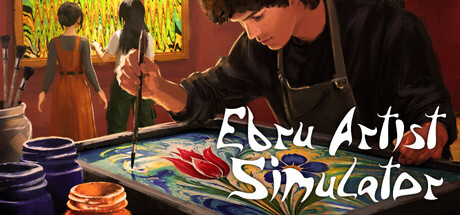
Ebru Artist Simulator uses generative AI-assisted artwork for a small number of textures and UI icons. AI is not used in any other aspect of the game, and we are currently working to replace these AI-assisted visuals before the full release.
Some of the art assets in TETWORD were created with the help of generative AI tools. Certain textures and 2D artwork were produced using AI image-generation tools, and some 3D models were generated using Meshy AI. Generative AI assistants (ChatGPT and Claude) were also used during development. All AI-assisted assets were reviewed, edited, and curated by the developer before being included in the game. The game's design, code, gameplay, and word content were created by the developer.
AI tools (Claude, Gemini, Copilot) were used to assist with game source code development. No visual or audio content is generated by AI at runtime.
Narzędzia AI (Claude, Gemini, Copilot) były wykorzystywane jako wsparcie przy tworzeniu kodu źródłowego gry. Treści wizualne i dźwiękowe nie są generowane przez AI w czasie rzeczywistym.
Some marketing assets on the store page (capsules, logo) were produced with a generative AI tool, based on screenshots and 3D renders from the game itself.
Part of the in-game text (encyclopaedia entries and mission briefings) was drafted with the assistance of a large language model, then reviewed and edited by the developer.
The 3D parts, textures and the simulation itself are authored. Nothing is generated while the game is running.
Generative AI was used as a writing and translation aid during development, always under human direction and review: in-game lesson and interface text, their translations into the supported languages, achievement text, and this store page. All of it was reviewed by the developer. The game itself does not use AI at runtime — nothing is generated while you play, and every level is deterministic.
Generative AI tools were used during development to assist with the creation and refinement of some pre-generated visual artwork and marketing assets. All AI-assisted content was reviewed, edited, and integrated by the developer. Ancient Duel does not generate AI content during gameplay.
Some pre-generated game assets, artwork and translations were created or assisted using generative AI. All AI-generated content has been reviewed, edited and integrated by the developer. QuizForge does not use generative AI to create live in-game content during gameplay.
MindUP uses some pre-rendered AI-assisted visual, audio, and promotional assets. The game does not use live generative AI during gameplay, and no player prompts or AI-generated gameplay content are created at runtime.
Root Cause is utilizes AI assets in the game. This content, when utilized, is generated during development, then curated, edited, and committed to the project before release. Nothing is generated while the game is running.
Items that may be generated:
Illustrated art.
UI/Interfaces
Icon Sets
Sounds and Music
Dialogue, case briefings, case content, and interface copy