Public Steam disclosure research27,951 disclosures tracked
Where do games disclose AI use?
Search developers’ Steam disclosures, compare classified AI use across
games, and follow recorded changes.
This index adds cross-game classifications and statistics to
statements published on individual store pages.
Groups reflect automatic analysis of public disclosures; mature records are excluded. These counts do not measure AI use across all of Steam.
Missing or unclear statements cannot establish whether a game uses AI.
The shop graphics (game logo) were generated as a concept, which was then reworked by our graphic designer.
Name of AI model included with the game: ElevenLabs - Players can select and enable the AI narrator or disable it. In near future we’ll be adding our own voice (the developer’s voice) to accompany players throughout the game.
Generative AI tools were used during development to create some visual assets and to assist with writing, modifying, and debugging code. All AI-generated or AI-assisted content was reviewed, adjusted, and integrated by the developer. The game does not use generative AI to create content during gameplay.
Port Control is a solo project, with help from a few freelancers.
I designed Rail Route (2018-2024), and that's where I learned how to make proper games. I use AI to improve my workflows and as a tool in the creative process. I review and approve everything that goes into the game, and its design follows my own creative direction.
Bitrich.info Ltd owns, or is licensed to use, all content in the game. The game does not generate any AI content while you play, and none of your data is sent to AI services.
Some 3D models in the game were built using AI-assisted modelling scripts, and some sound effects were created with AI-written sound synthesis code rather than recorded. All of this content was reviewed and edited by the developer. Most characters, buildings and environment art come from licensed, human-made asset packs. The game does not generate any content with AI while you play.
Some interface art (window and button icons, the game logo, the window header pattern and decorations such as pins, tape and clips) and the game's translations were created with the help of AI tools, then integrated by our team. The same art also appears on our store page and in our update announcements. Since version 3.1, the textures of the floors, walls, outdoor paths and grass in the game were also created with AI tools. The artwork of our Steam Trading Cards (the cards, badges, emoticons and profile backgrounds) was also created with AI tools. The game's 3D models, characters and gameplay were not made with AI, and no AI content is generated while you play.
AI is NOT used for any art, music, story, or creative direction.
AI is used mainly for the coding support, debugging, and technical aspects.
It is also used for general technical dialog, translation, and grammar review.
Everything is reviewed by humans.
All game ideas and assets came from us humans.
We strongly believe anything that requires creativity should be done by humans only.
AI tools were used in the creation of textures and UI, as well as in the localization of Tidy Master. We also plan to make extensive use of AI tools during the development of future multiplayer features.
Generative AI tools were used to assist in creating some 3D models during the development of Crew Out. These assets were refined and adapted by our development team to match the game's visual style.
Generative AI tools were also used to assist in creating some promotional artwork featured on the Steam store page.
The core gameplay mechanics, systems, and game design are developed by our team.
Generative AI was used extensively to assist with writing the game's programming code. It was also used to assist with certain aspects of the visual production process, the creation and editing of Steam store page descriptions, English translation, and the editing and PDF formatting of the accompanying README.
The character designs, illustration drawing and finishing, story and script, music, and sound effects were created by the developer.
The game does not contain any finished images, music, sound effects, or story content generated entirely from scratch by AI.
No generative AI is used to generate content in real time during gameplay.
AI assistance were used during development to write code and create game assets. However the game's machanics are designed and all assets were reviewed and adjusted by the developer. No AI image, voice or music generators were used, and the game does not generate any content with AI while you play.
I'm a solo dev. The VHS covers (all original parodies, no real movie or TV covers), posters, some textures, sounds and the in-store music were made with AI tools, then picked and edited by me. I designed and built the store and played it a lot until it felt fun. No AI content is generated during gameplay.
Generative AI was used to assist with selected in-game decorative artwork, including posters, promotional artwork for the Steam store page, and text localization. AI-assisted content is prepared in advance and reviewed before use. The game does not use generative AI during gameplay.
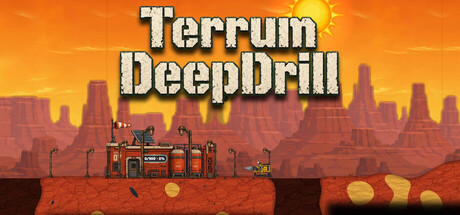
Some artwork in the game and on this store page was created with generative AI tools and then edited. Terrum DeepDrill does not generate images, text, audio, or code while you play, and it does not connect to an external AI service.
Some of the 2D artwork in My Gaming Shop was created with the help of generative AI tools: textures, posters, product packaging and interface icons. Every generated image was reviewed, edited and integrated by hand, and none of it is produced while the game is running
Generative AI tools were used during development to assist in creating some 3D models, vector graphics, and sound effects, as well as to assist with programming and localization.
The idea, the design, the gameplay, the visual style, the balancing and the playtesting are mine. When writing the code, i used an AI coding assistant (iteratively in small steps from my own written design).
Some of what you see and hear is created by that code: the planet, the airship, the engine sound, the icons, the badges and the shaders. I specified each of them and tuned them until they looked and sounded right. The store page artwork was made the same way, by the coding assistant following my layouts and style choices.
The Japanese and Portuguese translations in the game were drafted with AI, but they are currently re-phrased by native-speaking proof-readers and will be replaced soon.
No image, music or voice generator was used. The music, the recorded sound effects and the 3D models were made by human artists, are used under licence and are credited in the game.
Nothing is generated by AI while you play. The game contains no AI model and needs no internet connection.
Generative AI was used to create some in-game visual assets, including restaurant backgrounds and customer artwork, as well as store promotional artwork. AI tools also assisted with writing and translating store descriptions. These materials were prepared during development; the game does not generate AI content during gameplay.
Tidy Up Santa's Workshop utilized AI as an assistant for code development. The code related to wrapping-paper shaders (the designs printed on the presents) and the map had AI assistance during the coding process.
All present models, map textures, and music are human made. No AI image-generation or audio generation was used.
Pre-generated content only (nothing is generated live while playing):
- Character voice lines and some sound effects were created with AI voice/sound tools (ElevenLabs) from scripts written by the developer and selected/edited by hand.
- Some 2D artwork (e.g. the menu emblem) was made with AI image tools and edited by the developer.
- Development was assisted by an AI coding assistant, including scripts that procedurally build the low-poly 3D models; the developer directed and reviewed all content.
- Store page capsules and screenshots are rendered from the game itself.
Generative AI tools were used to assist with a limited portion of the game's user interface content, as well as store copy and promotional artwork. All such content is prepared in advance. The game does not generate AI content during gameplay or connect to external AI services.
Ai was used for coding, modelling and UI elements.
Everything was then picked or modified by me to keep a coherent artistic direction.
If you want more precise information on my use of AI, don't hesitate to contact me.
The game uses a pre-generated application icon, and AI tools assisted with some player-facing text and localization work. The content is reviewed before release. The game does not call generative AI services during gameplay.
Parts of the game's written text were translated with the help of an AI writing assistant, then edited and approved by the developer. Some textures were created with generative AI and then reviewed and edited by the developer. We did not use generative AI to create the game's 3D models, music or sound effects.
All character voice lines in this game were synthesized using text-to-speech (TTS) and voice-cloning technology rather than recorded by human performers. Some background artwork and store marketing images were created with AI image-generation tools, then manually selected and retouched. All writing, code, game design, and ending structure are the developer's own work. This game does not generate AI content at runtime.
Generative AI tools were used during development to create and edit some pre-generated artwork, including fictional banknote illustrations, interface artwork, and Steam store promotional images, and to assist with localization. These assets are reviewed and incorporated into the game by the developer. The game does not generate AI content during play or connect to external generative AI services.
During development, generative AI was used to create fictional customer portraits, in-game workshop and shop backgrounds, and some prop and tool icons. Some sound effects, ambience, and background music were also generated in advance. These in-game images are edited into fixed assets. Current store capsules, backgrounds, and icons are rendered from real in-game 3D scenes, and the title is typeset using fonts. Stable Audio Open Small was used for some effects and ambience, and ACE-Step 1.5 for music. These assets are not generated during gameplay. The game does not call generative AI models or external AI services at runtime. The developer will review the pre-generated content and its usage rights before release. AI writing assistance was also used for localized store descriptions.
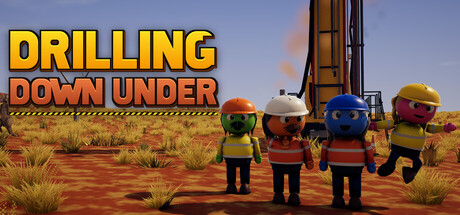
I'm a geologist and hydrogeologist who worked FIFO (fly-in fly-out) from Perth to the Pilbara. I designed, directed and playtested Drilling Down Under myself, and the drilling, the geology and the camp and pub life in it come from my own time on site and the stories I heard there.
Generative AI helped me build it. The code, including the scripts that make the 3D models, was written with an AI coding assistant. The music was made with Google's Lyria from my own prompts, and AI helped with the in-game writing and the store page translations. No AI image or 3D generators were used, and nothing in the game uses AI while you play.
Golden Pan is made by a one-person studio. Visual assets were generated with AI image tools, then hand-selected, edited and composed by the developer. All music and sound effects were produced with AI audio tools (ElevenLabs). Store and in-game text was written by the developer in English/Turkish; the other 15 languages were AI-translated and reviewed. All game design, code logic, level layout and economy tuning are the developer's own work. No AI content is generated while the game runs.
Some of the game's content was created with the help of AI tools during development. Most 3D models and textures (the shop, products, props, buildings and street scenery) were generated by scripts written with AI assistance. Sound effects and ambience were synthesized by scripts written with AI assistance. Game text and store text were written or edited with AI assistance and reviewed by the developer. The monster characters and their animations come from CC0 asset packs by Quaternius (not AI-generated). The game does not generate any content with AI while it is running.