Public Steam disclosure research25,376 disclosures tracked
Where do games disclose AI use?
Search developers’ Steam disclosures, compare classified AI use across
games, and follow recorded changes.
This index adds cross-game classifications and statistics to
statements published on individual store pages.
Groups reflect automatic analysis of public disclosures; mature records are excluded. These counts do not measure AI use across all of Steam.
Missing or unclear statements cannot establish whether a game uses AI.
Some text in this game — the store page, in-game UI labels and menus, and the English translation — was drafted with the help of an AI assistant and then reviewed and edited by the developer. AI coding assistants were also used during development. All in-game art, 3D models, textures and sounds are hand-made, generated procedurally by the game's own code, or licensed third-party assets; none of them are AI-generated. No AI is used to generate content during gameplay.
Battles of Arunia uses AI-generated artwork created during development, including card illustrations, character portraits, backgrounds and interface artwork. We plan to replace some placeholder artwork during Early Access, including through voluntary community contributions used with permission. The game does not generate AI content during gameplay.
Some visual and audio assets were generated with AI tools during development and edited for use in Dead Last. No AI content is generated during gameplay.
Every part of this game's concept, design, and features was created by humans. The ideas, the gameplay, the look and feel, and every decision about how it all fits together came from us.
For the programming itself, we use AI coding agents to help us write code. They speed up development and let us focus our time on what matters most: making the game fun to play.
Generative AI tools were used as part of the development of Warstead to support the creation of visual content, sound effects, and video content such as trailers, helping to speed up the development process.
Generative AI was used during development for the following:
- Music: The background music was created with an AI music generation tool (Suno).
- Word definitions: The definitions shown in the game were written with the assistance of AI, using the public dictionary data JMdict as a reference, and were reviewed and corrected by the developer.
- Programming: AI was used as a development aid.
No content is generated by AI during gameplay. All puzzles, word data, and visuals are pre-made.
AI tools were used during development to assist in creating and iterating on some pre-generated assets. These assets were subsequently selected, edited, integrated, and reviewed by the developers before inclusion in the game. The game does not generate AI content during gameplay.
MARCO is made by a solo developer. Its characters, core concepts, and art direction are my original work.
I used AI tools, guided by my own artwork and creative direction, to help create additional 3D models, props, textures, concept art, and some store-page and marketing images. I reviewed, selected, and refined these assets to fit MARCO’s style before including them.
No content is generated by AI during gameplay.
As a solo developer with limited time and resources, these tools helped me turn a game I’d imagined for years into something people can actually play.
Generative AI tools were used during development to create some in-game artwork and sound effects, as well as some store and promotional visual assets. Generative AI also assisted with drafting store descriptions and translating them into English. This content is pre-generated. The game does not generate AI content or connect to external generative AI services during gameplay.
Generative AI was used to assist with the creation of the game logo and some promotional assets for the Steam store. The generated materials were selected, edited, and further processed by the developer before use.
Generative AI was also used during development to assist with programming and debugging.
No generative AI is used to generate content during gameplay.
"Generative AI was used to create the game's cover art and the free scenario assets (such as character images). We plan to replace these art resources as soon as possible."
AI-assisted coding and editor automation tools were used during development for workflow efficiency.
Most of the art was hand-made by me. The remaining art generated by AI tools like icons or textures will be swapped to human-made art in the near future.
AI translation tools were used to create localization drafts, that are being reviewed by speakers of the language.
Generative AI tools were used during development to assist with the creation and editing of some text content and graphical materials used in the game and its related assets.
Some visual assets were created with the help of generative AI and then edited by the developer. A few sprite animations (doors opening, the ghost, the dynamite fuse and explosion, the turret turning) were generated with PixelLab from our own hand-made sprites, and some store artwork was made with AI image tools. Parts of the in-game text were written with AI assistance and reviewed by the developer. The game does not generate any content with AI while you play.
Generative AI was used as a tool during production. AI assisted with portions of the game's script writing, some of the original music (vocal music only), voice production, and some images used in the game and store materials. All AI-generated content was reviewed, edited, integrated, and approved by the developer before inclusion in the final product.
Generative AI was used to assist with localization and to create some sprites included in this demo. We plan to replace these icons with original artwork for the full release.
Void Runners was developed with the help of AI coding tools. The game's art, music and sound effects are generated procedurally by code written with those tools; no AI model runs in the game, and no content is generated live while you play.
開発では生成 AI を使っています。生成 AI で作った素材を、開発チームが選んで調整し、ゲームに入れています。
対象は、カードとリーダーのイラスト、キャラクターボイス、BGM です。
ゲーム内の説明文の一部も生成 AI で下書きし、開発チームが確認して直しています。ゲームのルールとカードの効果は、開発チームが決めています。
対戦相手の AI の一部は、手を選ぶために外部の AI サービスを使っています。AI が選ぶのはルール上できる手の中からだけで、絵・文章・音声は作りません。
Use of Generative AI & AI Credits
This game uses AI to generate in-game dialogue text and small gameplay extension modules ("evolution modules"). AI features consume AI credits.
You can get AI credits via small in-game purchases processed by Steam, or connect your own AI service at no extra cost — the settings menu lets you enter a custom API URL and key (any OpenAI-compatible endpoint), in which case usage is billed directly by your provider and no credits are consumed.
AI-generated code runs in a strictly sandboxed environment with a limited set of game APIs, and every output must pass the game's validation and test gates before taking effect. AI features can be disabled at any time.
Terafom was developed with the help of generative AI tools. Some of the artwork, 3D models, in-game text and translations, voice, music and sound effects were created with AI assistance and reviewed by the developer. During gameplay, the in-game AI helper character answers players' questions about the game using third-party AI services (Google Gemini, DeepSeek, OpenAI), and its answers are spoken with an AI-generated voice.
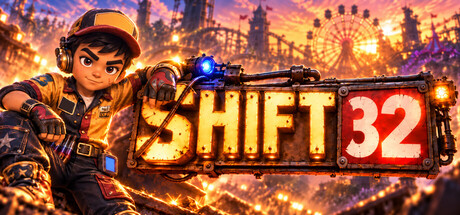
Shift32 is being developed by a solo developer. Generative AI tools were used selectively during development to create and iterate on some in-game assets, including certain 3D models and textures, as well as some promotional and Steam store artwork. No generative AI is used during gameplay, and the game does not connect to external AI services while running.
Some scenery, creature and equipment sprites, as well as some quest texts, were created with the help of generative AI tools, then manually edited and reviewed before integration. Playable characters (Liberated Pixel Cup), music and main texts are human-created works.
During play, some NPCs offer optional, private text conversations generated by external AI services through our game server. A short memory summary may be generated to help that NPC remember previous conversations with the same player. These conversations are separate from scripted quest dialogue and cannot grant quests, items or rewards. This feature has usage limits and carries no additional charge.
Some of our store and marketing artwork (such as capsule images, library artwork and event banners) was created with the help of AI image-generation tools. Our art team used the game's own characters and hand-drawn art as the basis, and edited, reviewed and finalized every image before release.
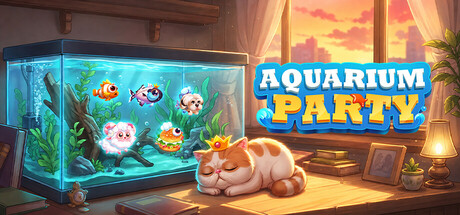
In the game, the high-resolution aquarium backgrounds used in the optional Zen (immersive) mode were produced by upscaling our original hand-drawn backgrounds with an AI super-resolution tool. No new artwork was generated; the upscaled images were reviewed by our team, and the standard backgrounds remain the original art.
All gameplay, characters, fish designs, story text and music were created by our team or licensed from human creators.
AI was used as a support tool during development (code assistance and initial image generation). All artwork was individually reworked by hand, and no content is generated live during gameplay.
Current development builds include one AI-generated splash-screen image and a small number of prerecorded soldier voice lines created using generative AI. No content is generated by AI during gameplay.
Kana Cross uses generative AI in the following ways, all reviewed by a person before release:
• Music: the game's background music was created using generative AI music tools.
• Localization: some of the Visual Novel and game's dictionary word meanings and translations.
HOW THIS GAME WAS MADE
Lane Siege is a one-person project built with an AI assistant, and it seems only fair to say exactly where that line falls.
Written with AI: the game's code, the logo and store artwork, the in-game text, and the balance numbers. Every one of those was directed, reviewed and playtested by me, and the design decisions are mine.
Made by people, not AI: every 3D model, sound effect and music track in the game is the work of named human artists, used under open licences and credited in full.
And nothing is generated while you play. The opponent you fight is ordinary game AI - rules it follows and a small table of what has worked against players before. No AI model runs while the game is running, and Lane Siege never connects to an AI service.
We used an AI assistant (Claude) during development. No image-generating AI was used, and the game contains no AI-generated images, music, sound effects or voices. Nothing is generated by AI while you play.
- 3D shapes: The puppet parts and board objects are built from simple geometric shapes by scripts that the AI assistant helped write. The developer reviewed and adjusted every result.
- Text and translation: In-game text was drafted with the assistant, and the Japanese and English versions were translated with its help. The developer reviewed and edited all text.
- Studio logo: Built from basic shapes as code written with the same assistant.
All sound effects and music are recorded and made by the developer.
Some game assets were created using AI generative tools. AI-generated visual assets were subsequently painted over, edited, and composited manually by the developer in Photoshop/Photopea. AI was also used to assist with localized text translations.
All visual assets, audio, text, and promotional materials in this game were created using generative AI tools. The developer selected, edited, refined, and integrated the generated content into the final game. The game does not use generative AI to generate content in real time during gameplay.
AI was used as a supporting tool during the development of this game. However, the original game idea and its underlying concept were created several years ago and were developed entirely independently of AI.
The entire project is being created by a solo developer with a university degree in Game Design. Over the years, several hundred hours of work, experience, creativity, and personal passion have gone into the concept, development, and realization of the game.
AI was used to assist with certain parts of the development process. This includes support with coding as well as some aspects of soundtrack and visual asset creation. Many of the visual assets were subsequently edited, refined, adapted, or partially recreated manually using image editing software to achieve the intended style and quality.
AI was also used as a supporting tool for written content, primarily to make minor improvements to texts written by the developer and to correct grammar and wording.
AI therefore serves as an additional tool within the development process. The original game concept, game design, creative decisions, final direction, and implementation of the game remain the work of the developer. Various sounds and some of the soundtracks used in the game were also created and composed by the developer.
Generative AI tools were used during the development of this game to help create some store artwork, user interface (UI) concepts, and cover designs. All AI-generated content was reviewed, edited, and finalized by humans. The game does not generate any AI content dynamically or in real time during gameplay.
Some text in this game — the store page, in-game UI labels and menus, and the English translation — was drafted with the help of an AI assistant and then reviewed and edited by the developer. AI coding assistants were also used during development. All in-game art, 3D models, textures and sounds are hand-made, generated procedurally by the game's own code, or licensed third-party assets; none of them are AI-generated. No AI is used to generate content during gameplay.
Battles of Arunia uses AI-generated artwork created during development, including card illustrations, character portraits, backgrounds and interface artwork. We plan to replace some placeholder artwork during Early Access, including through voluntary community contributions used with permission. The game does not generate AI content during gameplay.
Some visual and audio assets were generated with AI tools during development and edited for use in Dead Last. No AI content is generated during gameplay.
Every part of this game's concept, design, and features was created by humans. The ideas, the gameplay, the look and feel, and every decision about how it all fits together came from us.
For the programming itself, we use AI coding agents to help us write code. They speed up development and let us focus our time on what matters most: making the game fun to play.
Generative AI tools were used as part of the development of Warstead to support the creation of visual content, sound effects, and video content such as trailers, helping to speed up the development process.
Generative AI was used during development for the following:
- Music: The background music was created with an AI music generation tool (Suno).
- Word definitions: The definitions shown in the game were written with the assistance of AI, using the public dictionary data JMdict as a reference, and were reviewed and corrected by the developer.
- Programming: AI was used as a development aid.
No content is generated by AI during gameplay. All puzzles, word data, and visuals are pre-made.
AI tools were used during development to assist in creating and iterating on some pre-generated assets. These assets were subsequently selected, edited, integrated, and reviewed by the developers before inclusion in the game. The game does not generate AI content during gameplay.
MARCO is made by a solo developer. Its characters, core concepts, and art direction are my original work.
I used AI tools, guided by my own artwork and creative direction, to help create additional 3D models, props, textures, concept art, and some store-page and marketing images. I reviewed, selected, and refined these assets to fit MARCO’s style before including them.
No content is generated by AI during gameplay.
As a solo developer with limited time and resources, these tools helped me turn a game I’d imagined for years into something people can actually play.
Generative AI tools were used during development to create some in-game artwork and sound effects, as well as some store and promotional visual assets. Generative AI also assisted with drafting store descriptions and translating them into English. This content is pre-generated. The game does not generate AI content or connect to external generative AI services during gameplay.
Generative AI was used to assist with the creation of the game logo and some promotional assets for the Steam store. The generated materials were selected, edited, and further processed by the developer before use.
Generative AI was also used during development to assist with programming and debugging.
No generative AI is used to generate content during gameplay.
"Generative AI was used to create the game's cover art and the free scenario assets (such as character images). We plan to replace these art resources as soon as possible."
AI-assisted coding and editor automation tools were used during development for workflow efficiency.
Most of the art was hand-made by me. The remaining art generated by AI tools like icons or textures will be swapped to human-made art in the near future.
AI translation tools were used to create localization drafts, that are being reviewed by speakers of the language.
Generative AI tools were used during development to assist with the creation and editing of some text content and graphical materials used in the game and its related assets.
Some visual assets were created with the help of generative AI and then edited by the developer. A few sprite animations (doors opening, the ghost, the dynamite fuse and explosion, the turret turning) were generated with PixelLab from our own hand-made sprites, and some store artwork was made with AI image tools. Parts of the in-game text were written with AI assistance and reviewed by the developer. The game does not generate any content with AI while you play.
Generative AI was used as a tool during production. AI assisted with portions of the game's script writing, some of the original music (vocal music only), voice production, and some images used in the game and store materials. All AI-generated content was reviewed, edited, integrated, and approved by the developer before inclusion in the final product.
Generative AI was used to assist with localization and to create some sprites included in this demo. We plan to replace these icons with original artwork for the full release.
Void Runners was developed with the help of AI coding tools. The game's art, music and sound effects are generated procedurally by code written with those tools; no AI model runs in the game, and no content is generated live while you play.
開発では生成 AI を使っています。生成 AI で作った素材を、開発チームが選んで調整し、ゲームに入れています。
対象は、カードとリーダーのイラスト、キャラクターボイス、BGM です。
ゲーム内の説明文の一部も生成 AI で下書きし、開発チームが確認して直しています。ゲームのルールとカードの効果は、開発チームが決めています。
対戦相手の AI の一部は、手を選ぶために外部の AI サービスを使っています。AI が選ぶのはルール上できる手の中からだけで、絵・文章・音声は作りません。
Use of Generative AI & AI Credits
This game uses AI to generate in-game dialogue text and small gameplay extension modules ("evolution modules"). AI features consume AI credits.
You can get AI credits via small in-game purchases processed by Steam, or connect your own AI service at no extra cost — the settings menu lets you enter a custom API URL and key (any OpenAI-compatible endpoint), in which case usage is billed directly by your provider and no credits are consumed.
AI-generated code runs in a strictly sandboxed environment with a limited set of game APIs, and every output must pass the game's validation and test gates before taking effect. AI features can be disabled at any time.
Terafom was developed with the help of generative AI tools. Some of the artwork, 3D models, in-game text and translations, voice, music and sound effects were created with AI assistance and reviewed by the developer. During gameplay, the in-game AI helper character answers players' questions about the game using third-party AI services (Google Gemini, DeepSeek, OpenAI), and its answers are spoken with an AI-generated voice.
Shift32 is being developed by a solo developer. Generative AI tools were used selectively during development to create and iterate on some in-game assets, including certain 3D models and textures, as well as some promotional and Steam store artwork. No generative AI is used during gameplay, and the game does not connect to external AI services while running.
Some scenery, creature and equipment sprites, as well as some quest texts, were created with the help of generative AI tools, then manually edited and reviewed before integration. Playable characters (Liberated Pixel Cup), music and main texts are human-created works.
During play, some NPCs offer optional, private text conversations generated by external AI services through our game server. A short memory summary may be generated to help that NPC remember previous conversations with the same player. These conversations are separate from scripted quest dialogue and cannot grant quests, items or rewards. This feature has usage limits and carries no additional charge.
Some of our store and marketing artwork (such as capsule images, library artwork and event banners) was created with the help of AI image-generation tools. Our art team used the game's own characters and hand-drawn art as the basis, and edited, reviewed and finalized every image before release.
In the game, the high-resolution aquarium backgrounds used in the optional Zen (immersive) mode were produced by upscaling our original hand-drawn backgrounds with an AI super-resolution tool. No new artwork was generated; the upscaled images were reviewed by our team, and the standard backgrounds remain the original art.
All gameplay, characters, fish designs, story text and music were created by our team or licensed from human creators.
AI was used as a support tool during development (code assistance and initial image generation). All artwork was individually reworked by hand, and no content is generated live during gameplay.
Current development builds include one AI-generated splash-screen image and a small number of prerecorded soldier voice lines created using generative AI. No content is generated by AI during gameplay.
Kana Cross uses generative AI in the following ways, all reviewed by a person before release:
• Music: the game's background music was created using generative AI music tools.
• Localization: some of the Visual Novel and game's dictionary word meanings and translations.
HOW THIS GAME WAS MADE
Lane Siege is a one-person project built with an AI assistant, and it seems only fair to say exactly where that line falls.
Written with AI: the game's code, the logo and store artwork, the in-game text, and the balance numbers. Every one of those was directed, reviewed and playtested by me, and the design decisions are mine.
Made by people, not AI: every 3D model, sound effect and music track in the game is the work of named human artists, used under open licences and credited in full.
And nothing is generated while you play. The opponent you fight is ordinary game AI - rules it follows and a small table of what has worked against players before. No AI model runs while the game is running, and Lane Siege never connects to an AI service.
We used an AI assistant (Claude) during development. No image-generating AI was used, and the game contains no AI-generated images, music, sound effects or voices. Nothing is generated by AI while you play.
- 3D shapes: The puppet parts and board objects are built from simple geometric shapes by scripts that the AI assistant helped write. The developer reviewed and adjusted every result.
- Text and translation: In-game text was drafted with the assistant, and the Japanese and English versions were translated with its help. The developer reviewed and edited all text.
- Studio logo: Built from basic shapes as code written with the same assistant.
All sound effects and music are recorded and made by the developer.
Some game assets were created using AI generative tools. AI-generated visual assets were subsequently painted over, edited, and composited manually by the developer in Photoshop/Photopea. AI was also used to assist with localized text translations.
All visual assets, audio, text, and promotional materials in this game were created using generative AI tools. The developer selected, edited, refined, and integrated the generated content into the final game. The game does not use generative AI to generate content in real time during gameplay.
AI was used as a supporting tool during the development of this game. However, the original game idea and its underlying concept were created several years ago and were developed entirely independently of AI.
The entire project is being created by a solo developer with a university degree in Game Design. Over the years, several hundred hours of work, experience, creativity, and personal passion have gone into the concept, development, and realization of the game.
AI was used to assist with certain parts of the development process. This includes support with coding as well as some aspects of soundtrack and visual asset creation. Many of the visual assets were subsequently edited, refined, adapted, or partially recreated manually using image editing software to achieve the intended style and quality.
AI was also used as a supporting tool for written content, primarily to make minor improvements to texts written by the developer and to correct grammar and wording.
AI therefore serves as an additional tool within the development process. The original game concept, game design, creative decisions, final direction, and implementation of the game remain the work of the developer. Various sounds and some of the soundtracks used in the game were also created and composed by the developer.
Generative AI tools were used during the development of this game to help create some store artwork, user interface (UI) concepts, and cover designs. All AI-generated content was reviewed, edited, and finalized by humans. The game does not generate any AI content dynamically or in real time during gameplay.