Public Steam disclosure research25,376 disclosures tracked
Where do games disclose AI use?
Search developers’ Steam disclosures, compare classified AI use across
games, and follow recorded changes.
This index adds cross-game classifications and statistics to
statements published on individual store pages.
Groups reflect automatic analysis of public disclosures; mature records are excluded. These counts do not measure AI use across all of Steam.
Missing or unclear statements cannot establish whether a game uses AI.
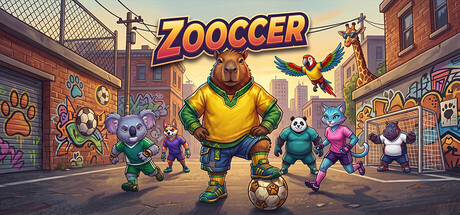
Some of the game's 3D models, some of its music tracks and parts of the user interface were created with the help of generative AI tools, then selected, edited and integrated by our team. Some of the artwork on this store page (capsule and promotional images) was also created with the help of generative AI and edited by our team. AI coding assistants were also used during programming, with all code reviewed and directed by our team. Everything else (game design, level design and the remaining art, music and sound effects) was made by the Domp Studio team. No AI is used to generate content while you play.
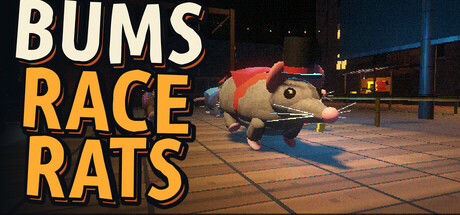
The game's code, which procedurally generates all 3D models, textures, sound effects and music at runtime, was written with the help of an AI coding assistant, as were the store description, marketing images and trailer. No AI generation happens while the game is running.
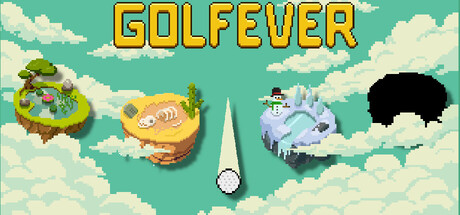
Some of the pixel art in this game started from initial references (the first version you can find in newgrounds, was not pixel art) or silhouettes created with generative AI tools. This only is done to: Islands + main menu frog and clouds.
Those references were then redrawn and refined by hand, pixel by pixel, into the final art you see in the game.
Everything else is handcrafted, including the tiles & obstacles, which were painful to make them connect :(
No other player-facing content uses generative AI, and the game does not generate any content with AI while you play.
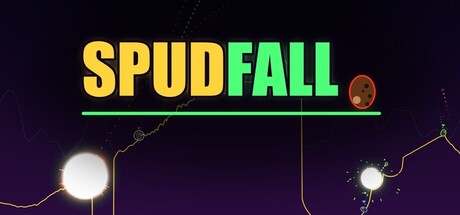
Spudfall's visuals and music are created entirely by the game's own code as you play. There are no image, sprite, or audio files. The developer used an AI assistant to help design and write that code, including the neon visual style and the synthesized soundtrack, and to draft the store page text. Trailers and screenshots show real gameplay. The game does not generate any content with AI while you play.
During development we use AI assistance in certain tasks, such as generative fill to extend artist drawn artwork. All major art has been drawn by human artists.
The game has optional computer generated voice overs.
本项目在研发阶段使用生成式人工智能工具辅助生成了部分 2D 美术概念立绘与宣传图形资产,所有生成内容均经过人工审核、精修与合规审查,不包含任何侵权、成人或违法敏感内容。游戏在运行过程中不会实时调用生成式 AI。
Generative AI Disclosure:
During the development phase, generative artificial intelligence tools were used to assist in creating certain 2D concept art and promotional graphical assets. All generated content has been manually reviewed, polished, and vetted for compliance, containing no infringing, adult, or illegal sensitive content. The game does not call generative AI services during runtime.
Gród is designed, built and tested by a solo developer. Every rule, system and pixel of the game follows my own vision.
AI tools helped with parts of the production: the voice lines, the music and some store artwork were created with generative AI, then selected, edited and fitted into the game by me. The in-game pixel art is drawn by the game's own code, with no AI image generators.
Screenshots and GIFs show real gameplay. The game does not use generative AI while you play.
AI-assisted tools were utilized during the development of this game (including visual art, sound design, and workflow optimization) to achieve higher quality. Every final element has been curated, reviewed, and integrated under the direct supervision of the development team.
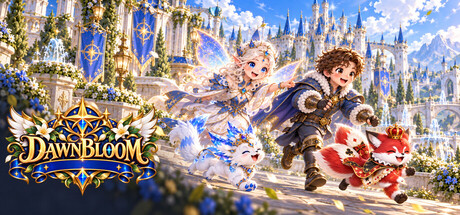
DAWNBLOOM uses generative AI-assisted tools during the development of certain game content. The in-game “Dawnbloom Spirit” feature connects to a generative AI service to provide real-time text responses to players’ game-related questions, including game knowledge, gameplay explanations, and general guidance. This feature generates auxiliary text content only. It does not generate or modify game code, nor does it directly control game rules, character data, or player assets.
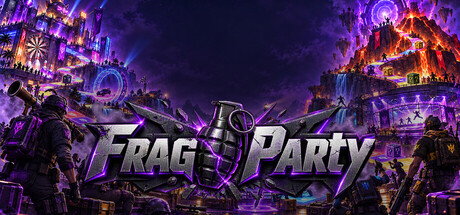
Parts of Frag Party's artwork and translated text were produced with generative AI tools.
Artwork: the promotional key art that the store capsules are composed from, and a small number of
static wallpaper images used as backdrops behind a few of the challenges.
Text: the non-English interface translations (Spanish, French, Portuguese, Russian, Arabic and
Simplified Chinese). English is the original and was written by hand.
Everything else is human-made: all gameplay and code, the 3D characters, weapons and environments,
animation, interface layout and audio. Nothing is generated while you play, and the game does not
connect to any AI service.
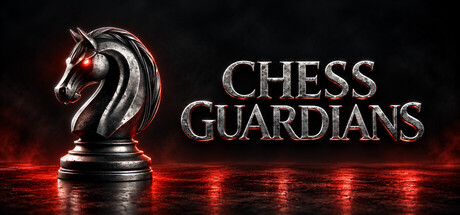
Powered by some of the most advanced chess engines ever created. It also uses two neural networks to recognize chess positions directly from game diagrams, turning images into playable positions in seconds.
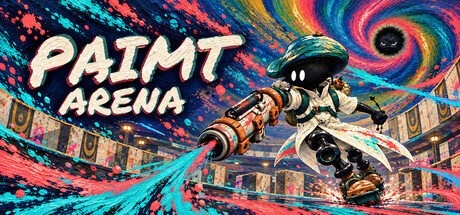
Some of PAIMT ARENA's 3D weapon models started as AI-generated meshes (Tripo) that were then hand-edited, retopologized, textured and rigged by the team. Some store and library artwork was produced with AI image tools and then edited by hand. No content is generated during play; gameplay, code, level design and UI are human-authored.
Pre-generated content only. No AI generated content is produced at runtime during gameplay.
Some in-game text and its English localization were drafted with AI assistance and edited by the team.
All art, including card art, backgrounds, icons and UI, is created by our artist. AI image tools were used as visual reference during concept work only; no AI generated image ships in the game. No AI models are used for music or sound effects.
The illustrated character portraits used as player avatars (also shown in our store and library artwork) were created with AI image generation (Google Gemini) and then cropped and adjusted by the developer. Some store text and interface translations were drafted with AI assistance. The game does not generate any AI content while you play.
Generative AI tools were used during the development of SCRAPBOX to assist with programming, UI design, voice acting, music, and the creation of some 3D models and other game assets. The game does not generate AI content during gameplay.
Hero Chains of Destiny includes pre-generated content created with the assistance of generative AI tools during development. This includes selected artwork, music, and sound effects. All generated content is reviewed, curated, and approved by the developer before being included in the game.
AI is used solely to assist with development, such as for some localization and the creation of internal tools.
The game does not include any features that automatically generate content in real-time during gameplay.
AI tools assisted historical card wording, interface and rules text, Japanese translations, and original procedural game and marketing artwork. Cards include source references. No generative AI runs during gameplay.
Generative AI tools were used during development to help create portions of the artwork and promotional imagery, prerecorded voice-over, and some game text and localization. These materials are prepared in advance. The game does not generate AI content during gameplay or connect to external generative AI services.
Most of the game's visual art and sound was pre-generated with AI tools and then selected, edited and placed by the developer: the dungeon panoramas, room props, floors, town and building plates, character portraits, walk and combat sprite sheets, monster, boss and villager sprites, item, skill and stack icons, combat and reward effects, and the store page art were generated with the FLUX.1 image model through fal.ai and animated with AutoSprite; the sound effects, ambience beds, voice barks and music were generated with ElevenLabs. Every generated file, the tool that made it and the prompt that asked for it are recorded in the game's files (assets/README.md and assets/PROMPTS.md). All game text, design, rules and code are written by people. Nothing is generated while you play: the game contains no live AI generation and calls no AI service at runtime.
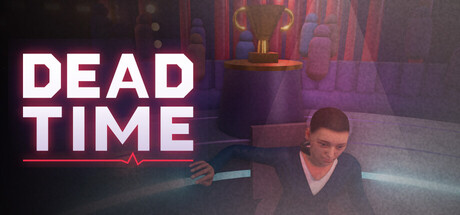
No art or audio in DEAD TIME is AI-generated: the music and sound effects are CC0 files from Freesound and Kenney, the characters and animations come from Adobe Mixamo, and every set, prop and the logo itself are drawn procedurally by the game's own code.
Generative AI was used as a writing assistant for text: the host's lines, the rules manual, the interface strings, their translation into the game's 12 languages, and this store description. Nothing is generated while you play, and the game never connects to an AI service.
AI tools were used as supportive tools during the development process, including assistance with code, and music. All AI-assisted content was reviewed, edited, and integrated by our development team before being included in the game.
Generative AI tools were used during development to help write portions of the game's code and create some UI elements and store promotional materials. These materials were created before release. The game does not generate content with AI during gameplay.
Generative AI tools were used during development to create or assist with pre-made visual artwork, interface artwork and icons, procedural 3D modeling scripts, prerecorded faction voice lines, sound effects, and music. This includes voice lines and sound effects generated with ElevenLabs. These assets are prepared and integrated into the game before release. The game does not generate AI content during play or connect to an AI generation service. Computer-controlled opponents use scripted game logic.
Some promotional artwork and visual assets were created with the assistance of generative AI and have been reviewed, refined, and integrated by the developer. No generative AI is used during gameplay.
- Localization (translation) of in-game text from the original Japanese into [English, Chinese, etc.]The original Japanese text was written by the developer without AI. All AI-generated translations were reviewed and adjusted by the developer before being included in the game. If you find any translation issues, please let us know via the Steam discussions.
Hexpanse is a solo developer's experiment in building a game 100% with AI, and it is developed with AI assistance (including its source code). The game itself is built almost entirely from procedural, code-generated pixel art and synthesized audio — produced algorithmically by our own code, not by AI. Generative AI was used in two limited, pre-rendered ways: (1) as a starting point for some ship and station part illustrations, later cleaned up, processed and integrated by hand; and (2) to produce the neural text-to-speech voice-over of the intro cinematic. In Early Access, the community feedback I find relevant feeds the AI-assisted development. No generative AI runs while you play — nothing is generated live in-game.
Generative AI tools were used during development to create and revise some character artwork, backgrounds, icons, visual-effect assets, and promotional images, and to assist with localization. These assets and texts are prepared before release. The game does not generate AI content during gameplay or connect to a generative AI service during gameplay.
Generative AI was used during development for a small number of visual assets and background music. All AI-generated content was carefully directed, reviewed, and edited by the developer to maintain the game's quality, consistency, and artistic vision. No AI-generated content is created during gameplay.
Generative AI was used as a production aid for some images, music, localization, and related content. All generated materials were reviewed and edited by the developer before being used in the game or related assets. No AI-generated content is created during gameplay.
The game's user-interface text was written in English and Thai by the developer. The other 12 language files (interface and subtitles) were machine-translated with an AI language model, then reviewed and corrected by the developer. No artwork, music, sound, characters, game rules, or store assets were generated by AI. The game does not generate any content with AI at runtime and does not connect to any AI service.
Parts of this game's content were produced with generative AI tools.
No content is generated at runtime. Every asset shipped with the game was produced, reviewed and approved prior to release.
Some promotional artwork for this game (such as the store capsule image)
was created with the help of generative AI tools and then edited by hand.
All in-game content — 3D models, animations, sound effects, interface and
code — was created without generative AI. The game does not use AI during
gameplay and does not connect to any external AI service.
Generative AI tools were used during development to create portions of the game's visual artwork, sound effects, music, and localized text, as well as promotional artwork for the Steam store page. This includes pre-rendered background illustrations, promotional capsule images, audio assets, and AI-generated translations.
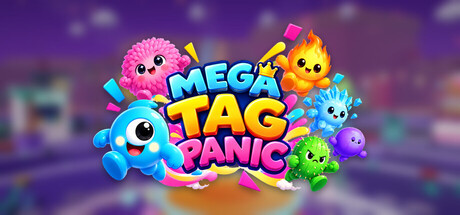
AI was used for three things only: the first draft of the character models, the two main-menu music tracks, and the game and studio logos. No AI runs while you play.
Everything you actually play was designed, built and balanced by the developer: the growing-tagger rule and the charged slap at the heart of the game; 6 game modes; 12 maps that each play by their own rules — a rolling ship, a flooding water tower, an arena that collapses ring by ring, lava that launches you skyward; 10 characters with 10 distinct powers, tuned one by one; bots with three difficulty levels that make the game fully playable solo; 2–10 player online play; a level and shop progression; match photos, match history and replays; and a 15-language localization. The character models were then hand-edited, rigged, height-matched and animated by the developer. The trailer and all screenshots are real gameplay. Sound effects and fonts come from CC0 / open-licensed sources.
We use generative AI for player-facing content: in-game art (sprites, UI, backgrounds) and marketing (Steam capsules, store images). Some store-page translations may also be AI-assisted. We select, review, and place everything ourselves — nothing is generated while the game is running. Gameplay, timing, and controls are designed by us. AI coding tools are used internally only and do not create runtime game content.
Some of the game's 3D models, some of its music tracks and parts of the user interface were created with the help of generative AI tools, then selected, edited and integrated by our team. Some of the artwork on this store page (capsule and promotional images) was also created with the help of generative AI and edited by our team. AI coding assistants were also used during programming, with all code reviewed and directed by our team. Everything else (game design, level design and the remaining art, music and sound effects) was made by the Domp Studio team. No AI is used to generate content while you play.
The game's code, which procedurally generates all 3D models, textures, sound effects and music at runtime, was written with the help of an AI coding assistant, as were the store description, marketing images and trailer. No AI generation happens while the game is running.
Some of the pixel art in this game started from initial references (the first version you can find in newgrounds, was not pixel art) or silhouettes created with generative AI tools. This only is done to: Islands + main menu frog and clouds.
Those references were then redrawn and refined by hand, pixel by pixel, into the final art you see in the game.
Everything else is handcrafted, including the tiles & obstacles, which were painful to make them connect :(
No other player-facing content uses generative AI, and the game does not generate any content with AI while you play.
Spudfall's visuals and music are created entirely by the game's own code as you play. There are no image, sprite, or audio files. The developer used an AI assistant to help design and write that code, including the neon visual style and the synthesized soundtrack, and to draft the store page text. Trailers and screenshots show real gameplay. The game does not generate any content with AI while you play.
During development we use AI assistance in certain tasks, such as generative fill to extend artist drawn artwork. All major art has been drawn by human artists.
The game has optional computer generated voice overs.
本项目在研发阶段使用生成式人工智能工具辅助生成了部分 2D 美术概念立绘与宣传图形资产,所有生成内容均经过人工审核、精修与合规审查,不包含任何侵权、成人或违法敏感内容。游戏在运行过程中不会实时调用生成式 AI。
Generative AI Disclosure:
During the development phase, generative artificial intelligence tools were used to assist in creating certain 2D concept art and promotional graphical assets. All generated content has been manually reviewed, polished, and vetted for compliance, containing no infringing, adult, or illegal sensitive content. The game does not call generative AI services during runtime.
Gród is designed, built and tested by a solo developer. Every rule, system and pixel of the game follows my own vision.
AI tools helped with parts of the production: the voice lines, the music and some store artwork were created with generative AI, then selected, edited and fitted into the game by me. The in-game pixel art is drawn by the game's own code, with no AI image generators.
Screenshots and GIFs show real gameplay. The game does not use generative AI while you play.
AI-assisted tools were utilized during the development of this game (including visual art, sound design, and workflow optimization) to achieve higher quality. Every final element has been curated, reviewed, and integrated under the direct supervision of the development team.
DAWNBLOOM uses generative AI-assisted tools during the development of certain game content. The in-game “Dawnbloom Spirit” feature connects to a generative AI service to provide real-time text responses to players’ game-related questions, including game knowledge, gameplay explanations, and general guidance. This feature generates auxiliary text content only. It does not generate or modify game code, nor does it directly control game rules, character data, or player assets.
Parts of Frag Party's artwork and translated text were produced with generative AI tools.
Artwork: the promotional key art that the store capsules are composed from, and a small number of
static wallpaper images used as backdrops behind a few of the challenges.
Text: the non-English interface translations (Spanish, French, Portuguese, Russian, Arabic and
Simplified Chinese). English is the original and was written by hand.
Everything else is human-made: all gameplay and code, the 3D characters, weapons and environments,
animation, interface layout and audio. Nothing is generated while you play, and the game does not
connect to any AI service.
Powered by some of the most advanced chess engines ever created. It also uses two neural networks to recognize chess positions directly from game diagrams, turning images into playable positions in seconds.
Some of PAIMT ARENA's 3D weapon models started as AI-generated meshes (Tripo) that were then hand-edited, retopologized, textured and rigged by the team. Some store and library artwork was produced with AI image tools and then edited by hand. No content is generated during play; gameplay, code, level design and UI are human-authored.
Pre-generated content only. No AI generated content is produced at runtime during gameplay.
Some in-game text and its English localization were drafted with AI assistance and edited by the team.
All art, including card art, backgrounds, icons and UI, is created by our artist. AI image tools were used as visual reference during concept work only; no AI generated image ships in the game. No AI models are used for music or sound effects.
The illustrated character portraits used as player avatars (also shown in our store and library artwork) were created with AI image generation (Google Gemini) and then cropped and adjusted by the developer. Some store text and interface translations were drafted with AI assistance. The game does not generate any AI content while you play.
Generative AI tools were used during the development of SCRAPBOX to assist with programming, UI design, voice acting, music, and the creation of some 3D models and other game assets. The game does not generate AI content during gameplay.
Hero Chains of Destiny includes pre-generated content created with the assistance of generative AI tools during development. This includes selected artwork, music, and sound effects. All generated content is reviewed, curated, and approved by the developer before being included in the game.
AI is used solely to assist with development, such as for some localization and the creation of internal tools.
The game does not include any features that automatically generate content in real-time during gameplay.
AI tools assisted historical card wording, interface and rules text, Japanese translations, and original procedural game and marketing artwork. Cards include source references. No generative AI runs during gameplay.
Generative AI tools were used during development to help create portions of the artwork and promotional imagery, prerecorded voice-over, and some game text and localization. These materials are prepared in advance. The game does not generate AI content during gameplay or connect to external generative AI services.
Most of the game's visual art and sound was pre-generated with AI tools and then selected, edited and placed by the developer: the dungeon panoramas, room props, floors, town and building plates, character portraits, walk and combat sprite sheets, monster, boss and villager sprites, item, skill and stack icons, combat and reward effects, and the store page art were generated with the FLUX.1 image model through fal.ai and animated with AutoSprite; the sound effects, ambience beds, voice barks and music were generated with ElevenLabs. Every generated file, the tool that made it and the prompt that asked for it are recorded in the game's files (assets/README.md and assets/PROMPTS.md). All game text, design, rules and code are written by people. Nothing is generated while you play: the game contains no live AI generation and calls no AI service at runtime.
No art or audio in DEAD TIME is AI-generated: the music and sound effects are CC0 files from Freesound and Kenney, the characters and animations come from Adobe Mixamo, and every set, prop and the logo itself are drawn procedurally by the game's own code.
Generative AI was used as a writing assistant for text: the host's lines, the rules manual, the interface strings, their translation into the game's 12 languages, and this store description. Nothing is generated while you play, and the game never connects to an AI service.
AI tools were used as supportive tools during the development process, including assistance with code, and music. All AI-assisted content was reviewed, edited, and integrated by our development team before being included in the game.
Generative AI tools were used during development to help write portions of the game's code and create some UI elements and store promotional materials. These materials were created before release. The game does not generate content with AI during gameplay.
Generative AI tools were used during development to create or assist with pre-made visual artwork, interface artwork and icons, procedural 3D modeling scripts, prerecorded faction voice lines, sound effects, and music. This includes voice lines and sound effects generated with ElevenLabs. These assets are prepared and integrated into the game before release. The game does not generate AI content during play or connect to an AI generation service. Computer-controlled opponents use scripted game logic.
Some promotional artwork and visual assets were created with the assistance of generative AI and have been reviewed, refined, and integrated by the developer. No generative AI is used during gameplay.
- Localization (translation) of in-game text from the original Japanese into [English, Chinese, etc.]The original Japanese text was written by the developer without AI. All AI-generated translations were reviewed and adjusted by the developer before being included in the game. If you find any translation issues, please let us know via the Steam discussions.
Hexpanse is a solo developer's experiment in building a game 100% with AI, and it is developed with AI assistance (including its source code). The game itself is built almost entirely from procedural, code-generated pixel art and synthesized audio — produced algorithmically by our own code, not by AI. Generative AI was used in two limited, pre-rendered ways: (1) as a starting point for some ship and station part illustrations, later cleaned up, processed and integrated by hand; and (2) to produce the neural text-to-speech voice-over of the intro cinematic. In Early Access, the community feedback I find relevant feeds the AI-assisted development. No generative AI runs while you play — nothing is generated live in-game.
Generative AI tools were used during development to create and revise some character artwork, backgrounds, icons, visual-effect assets, and promotional images, and to assist with localization. These assets and texts are prepared before release. The game does not generate AI content during gameplay or connect to a generative AI service during gameplay.
Generative AI was used during development for a small number of visual assets and background music. All AI-generated content was carefully directed, reviewed, and edited by the developer to maintain the game's quality, consistency, and artistic vision. No AI-generated content is created during gameplay.
Generative AI was used as a production aid for some images, music, localization, and related content. All generated materials were reviewed and edited by the developer before being used in the game or related assets. No AI-generated content is created during gameplay.
The game's user-interface text was written in English and Thai by the developer. The other 12 language files (interface and subtitles) were machine-translated with an AI language model, then reviewed and corrected by the developer. No artwork, music, sound, characters, game rules, or store assets were generated by AI. The game does not generate any content with AI at runtime and does not connect to any AI service.
Parts of this game's content were produced with generative AI tools.
No content is generated at runtime. Every asset shipped with the game was produced, reviewed and approved prior to release.
Some promotional artwork for this game (such as the store capsule image)
was created with the help of generative AI tools and then edited by hand.
All in-game content — 3D models, animations, sound effects, interface and
code — was created without generative AI. The game does not use AI during
gameplay and does not connect to any external AI service.
Generative AI tools were used during development to create portions of the game's visual artwork, sound effects, music, and localized text, as well as promotional artwork for the Steam store page. This includes pre-rendered background illustrations, promotional capsule images, audio assets, and AI-generated translations.
AI was used for three things only: the first draft of the character models, the two main-menu music tracks, and the game and studio logos. No AI runs while you play.
Everything you actually play was designed, built and balanced by the developer: the growing-tagger rule and the charged slap at the heart of the game; 6 game modes; 12 maps that each play by their own rules — a rolling ship, a flooding water tower, an arena that collapses ring by ring, lava that launches you skyward; 10 characters with 10 distinct powers, tuned one by one; bots with three difficulty levels that make the game fully playable solo; 2–10 player online play; a level and shop progression; match photos, match history and replays; and a 15-language localization. The character models were then hand-edited, rigged, height-matched and animated by the developer. The trailer and all screenshots are real gameplay. Sound effects and fonts come from CC0 / open-licensed sources.
We use generative AI for player-facing content: in-game art (sprites, UI, backgrounds) and marketing (Steam capsules, store images). Some store-page translations may also be AI-assisted. We select, review, and place everything ourselves — nothing is generated while the game is running. Gameplay, timing, and controls are designed by us. AI coding tools are used internally only and do not create runtime game content.