Public Steam disclosure research25,508 disclosures tracked
Where do games disclose AI use?
Search developers’ Steam disclosures, compare classified AI use across
games, and follow recorded changes.
This index adds cross-game classifications and statistics to
statements published on individual store pages.
Groups reflect automatic analysis of public disclosures; mature records are excluded. These counts do not measure AI use across all of Steam.
Missing or unclear statements cannot establish whether a game uses AI.
This is my first game, and I used AI as a learning assistant throughout development — from understanding basic programming concepts to improving my workflow. Some visual assets were initially generated with AI and then refined by hand. I also used AI to brainstorm ideas and help navigate the process of bringing this game to Steam. All in-game content is fully controlled, reviewed, and finalized by me.
The game does not generate content at runtime using AI.
Generative AI tools were used only during development to assist with the creation of visual assets.
All AI-assisted assets were reviewed, edited, and finalized by the development team to ensure originality and compliance with copyright laws.
Players cannot generate or upload AI-generated content within the game.
During development, an AI writing assistant was used to draft and polish in-game text, including item descriptions, dialogues, and system logs. All text was then manually proofread, edited, and verified by the developers.
Pre-Generated AI was used for:
- Background artwork
- Character illustrations
All AI-generated content was reviewed and edited by the developer.
No Live-Generated AI is used in this game.
Some visual assets used in Static Watch were created with the assistance of generative AI tools and then manually edited and integrated by the developer.
Generative AI is not used during gameplay, and no content is generated dynamically or in real time for players.
Parts of the background image of characters are generated by AI. All the Localizations are generated by AI. Others assets like character image/UI/voice are hand-made.
If you could peek inside my code or topology, you would BEG me to use AI to fix it. BUT NO. This crap is handmade and stays that way! The soundtrack, however, is a hybrid: I used generative AI to create raw textures, which I then manually arranged and mixed.
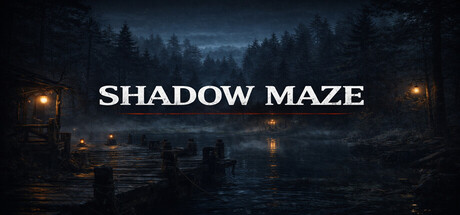
During the development of "SHADOW MAZE Descent into Fear", AI tools were used in the following ways:
1. **Design & planning**: ChatGPT was used as a brainstorming assistant for game design ideas, mechanics, and narrative concepts.
2. **Visual concepts**: One initial store capsule image was generated using an AI image tool (Midjourney/DALL-E) during early prototyping. This image has since been replaced with original, human-created artwork and in-game screenshots.
3. **Code assistance**: ChatGPT provided examples and explanations for basic scripting and debugging.
All AI-generated visual content has been removed from the final store page and game build. The current store assets are original or gameplay screenshots. No AI-generated content remains in the publicly available version of the game.
The game utilizes pre-generated AI content during the development process. Specifically, we use Adobe Photoshop's AI features to assist in editing, retouching 2D images, and creating specific visual text elements. All AI-assisted assets are manually reviewed and modified by the development team before implementation.
All in-game covers, library assets, art, and sound effect resources are generated by AI and modified manually. The music, text and other materials are all original works of the team. All materials have obtained usage permission through formal authorized channels.
This game uses artificial intelligence to create unique artwork, including cover art, menus, and visual elements. AI was employed as a creative tool to bring the project's artistic style to life, offering a unique and innovative identity to the experience.
This game uses some pre-rendered UI icons and promotional images created with generative AI tools. No AI is used during gameplay. All in-game content is static and pre-made, with no real-time generation.
I want to be fully transparent with you. Some of the visual assets in this game were created with the help of generative AI tools. However, AI was used strictly as a tool, not as a replacement for creativity or craftsmanship.
No image generated by AI was used “as is.” Every asset went through heavy manual modification, repainting, redesigning, compositional changes, color correction, detailing, and integration into the game’s visual language.
I spent hundreds of hours in GIMP reworking compositions, adjusting lighting and color palettes, redrawing shapes and much more.
The final result you see in the game is the outcome of extensive manual work and artistic decisions. I'm not an artist at all, and AI simply helped accelerate early-stage iteration. Without this help the game could not exist.
The game’s design, mechanics, balance, progression systems, and overall vision are entirely human-made.
Thank you for supporting indie development.
In The Last Frame, generative AI is used only for selected audio elements.
The accompanying background voice as well as certain sound effects, background music, and atmospheric sounds were created with ElevenLabs (Text-to-Speech and audio generation). The AI is used exclusively for speech and sound synthesis.
No further content (images, models, textures, story, or visual assets) was generated with generative AI. All other elements are handcrafted or licensed.
The developer confirms that the use of AI complies with Steam guidelines and does not infringe any copyrights.
This game uses AI tools during development to assist with programming support and to generate some visual and textual assets. No live or in-game AI content is generated during gameplay. All AI-assisted content is manually reviewed and integrated to ensure it meets the game’s design and quality standards.
This game uses AI to drive enemy behavior and adaptive difficulty, optimize level and card spawn probabilities, and provide gameplay-based intelligent hints to enhance the player experience and educational outcomes. AI is used only for internal game algorithms and experience optimization; it is not used to generate player-visible free-form text or to send player content for external training. The game will not transmit personally identifiable data to third parties for AI training, and any network or cloud features will be clearly disclosed in the privacy policy.
Some static artwork used on the store page and marketing materials was created with AI-assisted tools. These images were manually edited, reviewed, and finalized by the developer.
About 30% of the total artwork was created with AI assistance by generating concept art, which was then hand-drawn over to turn it into the desired pixel art.”
Generative AI was used during the development process as an assistant for writing code scripts and debugging. Additionally, AI tools were utilized to assist with the translation of in-game text for localization purposes. All AI-generated content has been reviewed and edited by the developers.
This is my first game, and I used AI as a learning assistant throughout development — from understanding basic programming concepts to improving my workflow. Some visual assets were initially generated with AI and then refined by hand. I also used AI to brainstorm ideas and help navigate the process of bringing this game to Steam. All in-game content is fully controlled, reviewed, and finalized by me.
The game does not generate content at runtime using AI.
Generative AI tools were used only during development to assist with the creation of visual assets.
All AI-assisted assets were reviewed, edited, and finalized by the development team to ensure originality and compliance with copyright laws.
Players cannot generate or upload AI-generated content within the game.
During development, an AI writing assistant was used to draft and polish in-game text, including item descriptions, dialogues, and system logs. All text was then manually proofread, edited, and verified by the developers.
Pre-Generated AI was used for:
- Background artwork
- Character illustrations
All AI-generated content was reviewed and edited by the developer.
No Live-Generated AI is used in this game.
Some visual assets used in Static Watch were created with the assistance of generative AI tools and then manually edited and integrated by the developer.
Generative AI is not used during gameplay, and no content is generated dynamically or in real time for players.
Parts of the background image of characters are generated by AI. All the Localizations are generated by AI. Others assets like character image/UI/voice are hand-made.
If you could peek inside my code or topology, you would BEG me to use AI to fix it. BUT NO. This crap is handmade and stays that way! The soundtrack, however, is a hybrid: I used generative AI to create raw textures, which I then manually arranged and mixed.
During the development of "SHADOW MAZE Descent into Fear", AI tools were used in the following ways:
1. **Design & planning**: ChatGPT was used as a brainstorming assistant for game design ideas, mechanics, and narrative concepts.
2. **Visual concepts**: One initial store capsule image was generated using an AI image tool (Midjourney/DALL-E) during early prototyping. This image has since been replaced with original, human-created artwork and in-game screenshots.
3. **Code assistance**: ChatGPT provided examples and explanations for basic scripting and debugging.
All AI-generated visual content has been removed from the final store page and game build. The current store assets are original or gameplay screenshots. No AI-generated content remains in the publicly available version of the game.
The game utilizes pre-generated AI content during the development process. Specifically, we use Adobe Photoshop's AI features to assist in editing, retouching 2D images, and creating specific visual text elements. All AI-assisted assets are manually reviewed and modified by the development team before implementation.
All in-game covers, library assets, art, and sound effect resources are generated by AI and modified manually. The music, text and other materials are all original works of the team. All materials have obtained usage permission through formal authorized channels.
This game uses artificial intelligence to create unique artwork, including cover art, menus, and visual elements. AI was employed as a creative tool to bring the project's artistic style to life, offering a unique and innovative identity to the experience.
This game uses some pre-rendered UI icons and promotional images created with generative AI tools. No AI is used during gameplay. All in-game content is static and pre-made, with no real-time generation.
I want to be fully transparent with you. Some of the visual assets in this game were created with the help of generative AI tools. However, AI was used strictly as a tool, not as a replacement for creativity or craftsmanship.
No image generated by AI was used “as is.” Every asset went through heavy manual modification, repainting, redesigning, compositional changes, color correction, detailing, and integration into the game’s visual language.
I spent hundreds of hours in GIMP reworking compositions, adjusting lighting and color palettes, redrawing shapes and much more.
The final result you see in the game is the outcome of extensive manual work and artistic decisions. I'm not an artist at all, and AI simply helped accelerate early-stage iteration. Without this help the game could not exist.
The game’s design, mechanics, balance, progression systems, and overall vision are entirely human-made.
Thank you for supporting indie development.
In The Last Frame, generative AI is used only for selected audio elements.
The accompanying background voice as well as certain sound effects, background music, and atmospheric sounds were created with ElevenLabs (Text-to-Speech and audio generation). The AI is used exclusively for speech and sound synthesis.
No further content (images, models, textures, story, or visual assets) was generated with generative AI. All other elements are handcrafted or licensed.
The developer confirms that the use of AI complies with Steam guidelines and does not infringe any copyrights.
This game uses AI tools during development to assist with programming support and to generate some visual and textual assets. No live or in-game AI content is generated during gameplay. All AI-assisted content is manually reviewed and integrated to ensure it meets the game’s design and quality standards.
This game uses AI to drive enemy behavior and adaptive difficulty, optimize level and card spawn probabilities, and provide gameplay-based intelligent hints to enhance the player experience and educational outcomes. AI is used only for internal game algorithms and experience optimization; it is not used to generate player-visible free-form text or to send player content for external training. The game will not transmit personally identifiable data to third parties for AI training, and any network or cloud features will be clearly disclosed in the privacy policy.
Some static artwork used on the store page and marketing materials was created with AI-assisted tools. These images were manually edited, reviewed, and finalized by the developer.
About 30% of the total artwork was created with AI assistance by generating concept art, which was then hand-drawn over to turn it into the desired pixel art.”
Generative AI was used during the development process as an assistant for writing code scripts and debugging. Additionally, AI tools were utilized to assist with the translation of in-game text for localization purposes. All AI-generated content has been reviewed and edited by the developers.