Public Steam disclosure research25,383 disclosures tracked
Where do games disclose AI use?
Search developers’ Steam disclosures, compare classified AI use across
games, and follow recorded changes.
This index adds cross-game classifications and statistics to
statements published on individual store pages.
Groups reflect automatic analysis of public disclosures; mature records are excluded. These counts do not measure AI use across all of Steam.
Missing or unclear statements cannot establish whether a game uses AI.
DuoQ. uses on-device transcription, activated by the player via push-to-talk, to transcribe the player's voice. That transcription is sent directly to a cloud LLM, which tells Tala what action to take next. All transcription data is discarded immediately after use.
AI was used to create translation, some game item icons, avatars and backgrounds for news. All locations, monsters, characters and items, as well as all original texts are created entirely by human artists.
Some of the game's visual elements were created using AI tools during the development stage (for example, the design of Albums). Artists manually refined all such materials. Generative AI is not used in the gameplay and does not generate any content during the game.
Some of the game's visual elements were created using AI tools during the development stage (for example, the design of Albums). Artists manually refined all such materials. Generative AI is not used in the gameplay and does not generate any content during the game.
AI used for store page
AI used for descriptions
AI used for some logos
AI used for some background and text visuals
AI used for Code Debugging
AI used for Code development
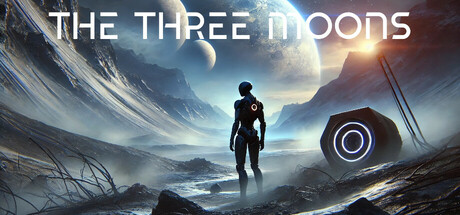
The Three Moons uses AI-generated artwork and icons for promotional and temporary in-game visuals. These assets are placeholders and will be replaced with hand-crafted versions before the full release. No AI is used in gameplay.
This game uses AI-generated character art assets to enhance visual content and speed up development. All AI-generated assets were carefully curated, refined, and integrated by the developer to ensure consistency with the game’s style and quality. No gameplay or narrative content is AI-generated — all design, mechanics, and storytelling are handcrafted.
Some of the visual assets featured in our game have been created using AI-powered tools.
We believe in blending human creativity with cutting-edge technology to deliver a unique visual experience. While most of the game’s art is handcrafted by our team, select elements were enhanced or generated with the help of AI to push artistic boundaries and streamline production.
Thank you for your continued support and feedback!
Generative AI was used in a limited capacity during development. The final game does not include AI-generated art, audio, dialogue, or live AI-driven content.
We used AI for generating concept art, but not in realtime.
We used AI for generating voice overs, but not in realtime.
We used AI for language translations, but not in realtime.
Graphical assets were made with the help of AI, since as an indie developer I have the know-how in coding but I am missing the skill to provide effective and appealing sprite assets.
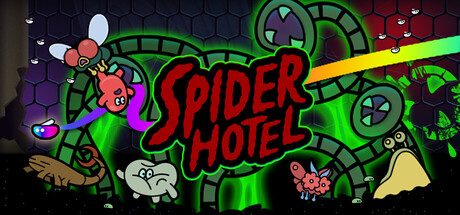
In developing “SPIDER HOTEL,” we used Adobe’s generative-AI tools, which provide commercial-use licensing, to assist in creating the following static asset:
• background textures for player nameplates
After generation, all assets were reviewed and further edited by the development team to ensure originality and compliance with Valve guidelines and Adobe’s licensing terms. No generative AI runs while the game is being played, and no player data is ever sent to external AI services.
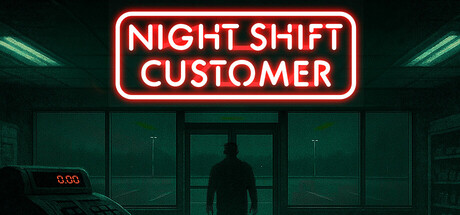
In our game, you’ll need to interact with customers, whose responses are generated by AI. The AI is designed to assume a specific persona to deliver the most realistic simulation of customer interactions.
- Creating immersive interactions and dialogues with NPCs
- Generating Dynamic Missions for players
- Assisting players with providing game information
All of the game models and image assets were initially generated using the latest generation of AI technologies, then heavily modified and polished to meet high-quality visual standards and ensure consistency with the game's art style.
A few placeholder graphics make use of a generated picture, that was then manually adjusted in photoshop and drawn upon to create a different artwork. These are planned to be replaced.
Some promotional images and artwork shown on the store page, as well as a few ability icons, were created using generative AI tools.
AI is not used during gameplay — all mechanics, systems, and bot behavior are fully handcrafted.
There is some writing which is provided for the player to simulate the conversational style of LLMs when the player is pretending to be the ship's computer. This text was generated via LLM.
Generative AI tools were used during development to assist in the creation of some 3D models and sound effects. These assets were generated prior to release and no real-time AI-generated content is produced during gameplay. All content has been manually reviewed and curated.
DuoQ. uses on-device transcription, activated by the player via push-to-talk, to transcribe the player's voice. That transcription is sent directly to a cloud LLM, which tells Tala what action to take next. All transcription data is discarded immediately after use.
AI was used to create translation, some game item icons, avatars and backgrounds for news. All locations, monsters, characters and items, as well as all original texts are created entirely by human artists.
Some of the game's visual elements were created using AI tools during the development stage (for example, the design of Albums). Artists manually refined all such materials. Generative AI is not used in the gameplay and does not generate any content during the game.
Some of the game's visual elements were created using AI tools during the development stage (for example, the design of Albums). Artists manually refined all such materials. Generative AI is not used in the gameplay and does not generate any content during the game.
AI used for store page
AI used for descriptions
AI used for some logos
AI used for some background and text visuals
AI used for Code Debugging
AI used for Code development
The Three Moons uses AI-generated artwork and icons for promotional and temporary in-game visuals. These assets are placeholders and will be replaced with hand-crafted versions before the full release. No AI is used in gameplay.
This game uses AI-generated character art assets to enhance visual content and speed up development. All AI-generated assets were carefully curated, refined, and integrated by the developer to ensure consistency with the game’s style and quality. No gameplay or narrative content is AI-generated — all design, mechanics, and storytelling are handcrafted.
Some of the visual assets featured in our game have been created using AI-powered tools.
We believe in blending human creativity with cutting-edge technology to deliver a unique visual experience. While most of the game’s art is handcrafted by our team, select elements were enhanced or generated with the help of AI to push artistic boundaries and streamline production.
Thank you for your continued support and feedback!
Generative AI was used in a limited capacity during development. The final game does not include AI-generated art, audio, dialogue, or live AI-driven content.
We used AI for generating concept art, but not in realtime.
We used AI for generating voice overs, but not in realtime.
We used AI for language translations, but not in realtime.
Graphical assets were made with the help of AI, since as an indie developer I have the know-how in coding but I am missing the skill to provide effective and appealing sprite assets.
In developing “SPIDER HOTEL,” we used Adobe’s generative-AI tools, which provide commercial-use licensing, to assist in creating the following static asset:
• background textures for player nameplates
After generation, all assets were reviewed and further edited by the development team to ensure originality and compliance with Valve guidelines and Adobe’s licensing terms. No generative AI runs while the game is being played, and no player data is ever sent to external AI services.
In our game, you’ll need to interact with customers, whose responses are generated by AI. The AI is designed to assume a specific persona to deliver the most realistic simulation of customer interactions.
- Creating immersive interactions and dialogues with NPCs
- Generating Dynamic Missions for players
- Assisting players with providing game information
All of the game models and image assets were initially generated using the latest generation of AI technologies, then heavily modified and polished to meet high-quality visual standards and ensure consistency with the game's art style.
A few placeholder graphics make use of a generated picture, that was then manually adjusted in photoshop and drawn upon to create a different artwork. These are planned to be replaced.
Some promotional images and artwork shown on the store page, as well as a few ability icons, were created using generative AI tools.
AI is not used during gameplay — all mechanics, systems, and bot behavior are fully handcrafted.
There is some writing which is provided for the player to simulate the conversational style of LLMs when the player is pretending to be the ship's computer. This text was generated via LLM.
Generative AI tools were used during development to assist in the creation of some 3D models and sound effects. These assets were generated prior to release and no real-time AI-generated content is produced during gameplay. All content has been manually reviewed and curated.