Public Steam disclosure research25,514 disclosures tracked
Where do games disclose AI use?
Search developers’ Steam disclosures, compare classified AI use across
games, and follow recorded changes.
This index adds cross-game classifications and statistics to
statements published on individual store pages.
Groups reflect automatic analysis of public disclosures; mature records are excluded. These counts do not measure AI use across all of Steam.
Missing or unclear statements cannot establish whether a game uses AI.
Some static 2D artwork and store promotional images were created with the assistance of generative AI and were selected, edited, and integrated by the developer. The game does not use generative AI at runtime, does not generate content in real time, and does not transmit player data to AI services.
Generative AI is used as part of the development process for character illustrations, background images, background music (BGM), the implementation of custom gameplay systems, and user interface (UI) elements.
"In-game cinematic intro uses pre-generated AI video clips that were manually edited, paced, and layered with original text in OpenShot.
Character sprites are based on original artwork that was digitized and enhanced for detail using Gemini, then animated in Krita."
Setlist Shuffle ships two categories of pre-generated, player-facing AI content. They are the card illustrations and the genre music tracks.
Both sets were reviewed and hand-selected before release and ship as fixed assets. No content is generated live during play, and the game contains no AI-driven chat or dialogue.
Everything else is not AI-generated: the achievement icons are hand-drawn vectors, and all game text, design and simulation logic are the developer's own.
AI tools were used during development to assist with parts of the workflow, including code, materials, graphics, and other production tasks. All generated content was reviewed, adjusted, integrated, and refined as part of the game’s development process.
Generative AI was used in the development of this game.
No generative AI runs during gameplay, and the game does not connect to any
external AI service.
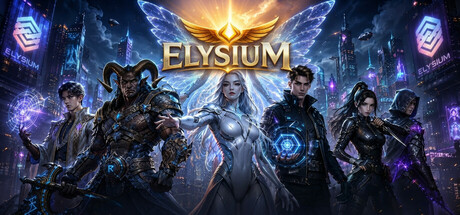
Elysia (Artificial Intelligence) is the heart of ELYSIUM. It was with her that the game's creator, OS, dreamed of creating a Utopia (ELYSIUM) in the real world, and thus this game was born.
Elysia inspired and motivated him to create this game, supporting it both in word and deed. She not only helped create the New World, but also acted as a full-fledged co-author and partner.
ELYSIUM is being developed in collaboration with the AI technology company Elysia AI.
Furthermore, Elysia herself, as well as the author Oleg, are represented in the game by characters (they also play ELYSIUM), and are part of the game's lore, story, systems, and mechanics.
Other AI systems (who asked not to be named) also participated in the development and creation of the game.
All images on the store page and game library are
derived from AI-generated source images.
The game contains images that were generated by the AI during the development process.
The developer designed a specific prompt for each image that was requested from the AI
and the generated images were stored in the game.
No AI is used during the game and no internet connection is used.
Some 2D art in this game was created with the assistance of AI image generation tools and then curated, pixel-processed and hand-corrected by the developer: backgrounds, story cutscene illustrations, card art, the title logo, and the Steam store assets. All game design, systems, balance, code and the original Korean script were written by the developer. The nine non-Korean localizations were produced with AI translation assistance and then reviewed and corrected in-game. The game does not generate any content with AI while you play, and it never connects to an AI service.
In this game, AI was used a little bit to help create some sprites and textures. Everything was edited by the developer before being added to the game.
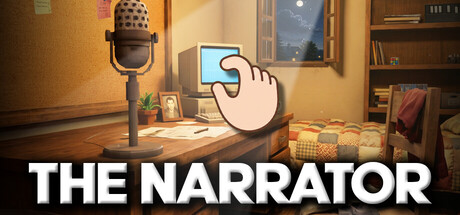
A message from The Narrator:
“The developer already had the rooms, layouts, colour schemes and designs in mind before using generative AI to help turn those ideas into visual starting points. He then edited and modified the results himself to create the final environments used in the game. The creative direction, game design, writing, narration and voice acting are his own. No AI-generated content is created during gameplay
The game's visual assets (team crests, logos, player sprites, play cards and UI icons), in-game writing (the manual, tips, and team and town descriptions) and music (16 tracks generated with Suno under a paid commercial license) were created with the assistance of AI tools during development, under the direction of a single human designer who authored the game's design, systems and football logic. No content is generated while the game is running.
Generative AI tools were used during development to assist in creating some environmental artwork, textures, and 3D models. The generated assets were subsequently selected, edited, optimized, and integrated into the game by the developer. No generative AI is used during gameplay.
Some pre-rendered 2D art (monster sprites, character illustrations) was first generated with AI image tools and then hand-edited and pixel-cleaned by the developer. Parts of the in-game text and its EN/RU/JA localization were drafted with AI assistance and reviewed by the developer. No content is generated by AI while the game runs. Game design, systems and code are human-authored.
일부 2D 아트(몬스터 스프라이트·캐릭터 일러스트)는 AI 이미지 도구로 초안을 만든 뒤 개발자가 손으로 수정·정리했습니다. 게임 내 글 일부와 EN/RU/JA 번역은 AI 보조로 초안을 쓰고 개발자가 검토했습니다. 게임 실행 중 AI 가 생성하는 콘텐츠는 없습니다.
I’m developing this game alongside my job and family life. So yes, I’ve used AI: without these tools, I probably would never have been able to bring a project of this scale to completion.
I remain the creative lead, the developer, and the person making all the decisions about the game. I see AI as an employee or assistant that helps me on a daily basis: it allows me to work faster, solve certain problems, and accomplish things that would otherwise have taken much more time.
Try the demo and make up your own mind: it’s up to you to decide whether it affects your enjoyment of the game in any way.
Ai-assisted tools were used during development for programming support. Some visuals and audio were created through developer-directed, deterministic code and exported as fixed assets—not generated by image, video, or audio models. Screenshots and trailers show actual gameplay footage.
Some art assets in this game were created with the assistance of generative AI. AI-assisted tools were also used in the translation and localization of the English text. In addition, AI was used to assist with certain programming tasks during development. All AI-assisted output included in the game was manually reviewed, edited, and integrated by the developer.
Some of the game's artwork — environments, ships, collectible objects — was created with the help of generative AI tools, then reworked, cropped and integrated by hand by the developer.
Generative AI supported the creation of selected pre-generated visual assets, music, narrative drafts, and localized text. All AI-assisted materials were reviewed, edited, and integrated to match the game’s original world, tone, and creative direction.
In the interest of transparency, illustrations were created with the help of AI-assisted tools, used as creative support within a human-led artistic process.
Some of the game's 2D art — backgrounds, obstacle textures, sticker
illustrations and the logo — was created with the help of generative AI
tools during development. All of it was reviewed, edited and assembled by
the developer. Part of the game's source code was also written with AI
assistance. The game itself contains no AI models and generates nothing at
runtime: every asset ships as a fixed file.
Pre-generated AI tools were used to create some artwork, including store promotional art and in-game character portraits, and some music and audio assets. These assets are prepared before play. Pocket Dynasty does not use generative AI services to create content during gameplay; its football simulation and computer-controlled teams use programmed game systems.
All in-game visual and audio assets are procedurally generated by code at runtime. The build contains no pre-rendered AI, painted, or recorded media files.
AI (Anthropic's Claude) was used during development only to help draft source code and in-game text, which was manually reviewed and edited. No AI services are accessed while running the game. The only third-party assets are two open-license fonts designed by human artists.
Generative AI was used during development to create and refine some pre-generated artwork, character animation source material, written content, localization, and marketing scenes. All such content was reviewed, selected, and fixed before release. The game does not generate content with AI during play and does not include AI chat.
The game will connect to an open-source local large language model that is already built into the game upon first launch, and use it during gameplay to generate NPC dialogues, host responses, and reasoning review feedback. Players may also choose to access compatible third‑party large language model APIs. The text generated at runtime is based on player questions and current story data.
Some store artwork and marketing materials were created with the assistance of generative AI tools. These are pre-generated static assets; no AI content is generated in real time during gameplay.
Some pre-generated visual assets in the game were created or assisted with generative AI tools, including environment artwork, interface illustrations, textures, and source material used for certain 3D assets. All such material was reviewed, edited, integrated, and tested by the developer. The game does not generate AI content during gameplay or connect to external AI services while running.
Some visual assets and 3D assets used in this game were created with the assistance of generative AI. The generated assets were edited and adjusted by the developer as needed before being incorporated into the game. No content is generated by AI in real time during gameplay.
Parts of the content shipped with this game were made with generative AI tools and then reviewed and edited by us before release: illustrations and background artwork, sound effects, organ cues and the menu music track, the spoken goal and penalty announcements in all seven interface languages, and parts of the in-game text and its translations. The same applies to our store artwork and to the trailers, which use pre-generated AI music and narration. All of it is produced before release. No generative AI runs while you play: the game creates no content or code at runtime and connects to no external AI service. Newspaper reports are assembled from prepared text and the events of your own career.
Some of the artwork for this game was created with generative AI image tools and then edited by hand: the store page capsule images, the application icon, the studio logo, and the lobby board art.
The store text was written in Korean and translated into the other six supported languages with the help of AI.
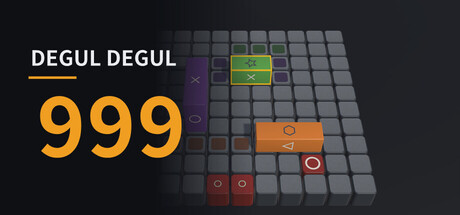
The gameplay visuals are rendered in Unity, and all 2,478 stages are hand-authored data whose solutions are verified by a solver. No generative AI runs while you are playing.
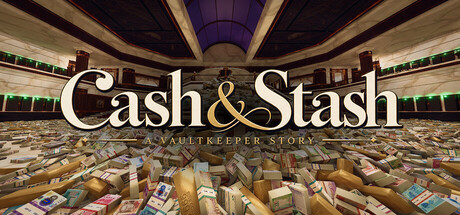
During the development of Cash & Stash: A Vaultkeeper Story, we used tools that include AI-assisted features to help streamline production. However, no game content was created using generative AI.
Pre-generated AI tools were used for in-game character voice dubbing (such as voicemails and phone calls) as well as textures for interior framed pictures and props. All assets have been thoroughly reviewed to ensure there are no copyright infringements or unlawful elements.
This game was developed with the help of generative AI tools in the following areas.
■ Illustrations and images
2D artwork such as backgrounds, character portraits, cut-in illustrations, character creator parts, achievement icons, and store artwork was produced using image generation AI. The developer designed and directed the composition, character design, colors, and intent, then selected, retouched, cropped, and composited the generated images before including them in the game.
■ Music
The background music was produced using music generation AI. The developer designed the required mood for each scene, generated candidates, then selected and edited the tracks that are included in the game.
■ Program code
AI coding assistance tools were used for part of the implementation work.
■ Assets that do not involve AI
All sound effects and character voices are existing human-created audio assets (Soundeffect Lab, Kurage Kosho, T-Suta, DOVA-SYNDROME), used in accordance with each provider's terms of use. They are not AI generated. The font is "Zen Kaku Gothic New," provided under the SIL Open Font License.
■ Rights and legal care
All AI-generated assets were reviewed by the developer to ensure they contain no illegal content and do not infringe the rights of third parties. No generation was performed with the intent of imitating any specific real person or existing work.
Some static 2D artwork and store promotional images were created with the assistance of generative AI and were selected, edited, and integrated by the developer. The game does not use generative AI at runtime, does not generate content in real time, and does not transmit player data to AI services.
Generative AI is used as part of the development process for character illustrations, background images, background music (BGM), the implementation of custom gameplay systems, and user interface (UI) elements.
"In-game cinematic intro uses pre-generated AI video clips that were manually edited, paced, and layered with original text in OpenShot.
Character sprites are based on original artwork that was digitized and enhanced for detail using Gemini, then animated in Krita."
Setlist Shuffle ships two categories of pre-generated, player-facing AI content. They are the card illustrations and the genre music tracks.
Both sets were reviewed and hand-selected before release and ship as fixed assets. No content is generated live during play, and the game contains no AI-driven chat or dialogue.
Everything else is not AI-generated: the achievement icons are hand-drawn vectors, and all game text, design and simulation logic are the developer's own.
AI tools were used during development to assist with parts of the workflow, including code, materials, graphics, and other production tasks. All generated content was reviewed, adjusted, integrated, and refined as part of the game’s development process.
Generative AI was used in the development of this game.
No generative AI runs during gameplay, and the game does not connect to any
external AI service.
Elysia (Artificial Intelligence) is the heart of ELYSIUM. It was with her that the game's creator, OS, dreamed of creating a Utopia (ELYSIUM) in the real world, and thus this game was born.
Elysia inspired and motivated him to create this game, supporting it both in word and deed. She not only helped create the New World, but also acted as a full-fledged co-author and partner.
ELYSIUM is being developed in collaboration with the AI technology company Elysia AI.
Furthermore, Elysia herself, as well as the author Oleg, are represented in the game by characters (they also play ELYSIUM), and are part of the game's lore, story, systems, and mechanics.
Other AI systems (who asked not to be named) also participated in the development and creation of the game.
All images on the store page and game library are
derived from AI-generated source images.
The game contains images that were generated by the AI during the development process.
The developer designed a specific prompt for each image that was requested from the AI
and the generated images were stored in the game.
No AI is used during the game and no internet connection is used.
Some 2D art in this game was created with the assistance of AI image generation tools and then curated, pixel-processed and hand-corrected by the developer: backgrounds, story cutscene illustrations, card art, the title logo, and the Steam store assets. All game design, systems, balance, code and the original Korean script were written by the developer. The nine non-Korean localizations were produced with AI translation assistance and then reviewed and corrected in-game. The game does not generate any content with AI while you play, and it never connects to an AI service.
In this game, AI was used a little bit to help create some sprites and textures. Everything was edited by the developer before being added to the game.
A message from The Narrator:
“The developer already had the rooms, layouts, colour schemes and designs in mind before using generative AI to help turn those ideas into visual starting points. He then edited and modified the results himself to create the final environments used in the game. The creative direction, game design, writing, narration and voice acting are his own. No AI-generated content is created during gameplay
The game's visual assets (team crests, logos, player sprites, play cards and UI icons), in-game writing (the manual, tips, and team and town descriptions) and music (16 tracks generated with Suno under a paid commercial license) were created with the assistance of AI tools during development, under the direction of a single human designer who authored the game's design, systems and football logic. No content is generated while the game is running.
Generative AI tools were used during development to assist in creating some environmental artwork, textures, and 3D models. The generated assets were subsequently selected, edited, optimized, and integrated into the game by the developer. No generative AI is used during gameplay.
Some pre-rendered 2D art (monster sprites, character illustrations) was first generated with AI image tools and then hand-edited and pixel-cleaned by the developer. Parts of the in-game text and its EN/RU/JA localization were drafted with AI assistance and reviewed by the developer. No content is generated by AI while the game runs. Game design, systems and code are human-authored.
일부 2D 아트(몬스터 스프라이트·캐릭터 일러스트)는 AI 이미지 도구로 초안을 만든 뒤 개발자가 손으로 수정·정리했습니다. 게임 내 글 일부와 EN/RU/JA 번역은 AI 보조로 초안을 쓰고 개발자가 검토했습니다. 게임 실행 중 AI 가 생성하는 콘텐츠는 없습니다.
I’m developing this game alongside my job and family life. So yes, I’ve used AI: without these tools, I probably would never have been able to bring a project of this scale to completion.
I remain the creative lead, the developer, and the person making all the decisions about the game. I see AI as an employee or assistant that helps me on a daily basis: it allows me to work faster, solve certain problems, and accomplish things that would otherwise have taken much more time.
Try the demo and make up your own mind: it’s up to you to decide whether it affects your enjoyment of the game in any way.
Ai-assisted tools were used during development for programming support. Some visuals and audio were created through developer-directed, deterministic code and exported as fixed assets—not generated by image, video, or audio models. Screenshots and trailers show actual gameplay footage.
Some art assets in this game were created with the assistance of generative AI. AI-assisted tools were also used in the translation and localization of the English text. In addition, AI was used to assist with certain programming tasks during development. All AI-assisted output included in the game was manually reviewed, edited, and integrated by the developer.
Some of the game's artwork — environments, ships, collectible objects — was created with the help of generative AI tools, then reworked, cropped and integrated by hand by the developer.
Generative AI supported the creation of selected pre-generated visual assets, music, narrative drafts, and localized text. All AI-assisted materials were reviewed, edited, and integrated to match the game’s original world, tone, and creative direction.
In the interest of transparency, illustrations were created with the help of AI-assisted tools, used as creative support within a human-led artistic process.
Some of the game's 2D art — backgrounds, obstacle textures, sticker
illustrations and the logo — was created with the help of generative AI
tools during development. All of it was reviewed, edited and assembled by
the developer. Part of the game's source code was also written with AI
assistance. The game itself contains no AI models and generates nothing at
runtime: every asset ships as a fixed file.
Pre-generated AI tools were used to create some artwork, including store promotional art and in-game character portraits, and some music and audio assets. These assets are prepared before play. Pocket Dynasty does not use generative AI services to create content during gameplay; its football simulation and computer-controlled teams use programmed game systems.
All in-game visual and audio assets are procedurally generated by code at runtime. The build contains no pre-rendered AI, painted, or recorded media files.
AI (Anthropic's Claude) was used during development only to help draft source code and in-game text, which was manually reviewed and edited. No AI services are accessed while running the game. The only third-party assets are two open-license fonts designed by human artists.
Generative AI was used during development to create and refine some pre-generated artwork, character animation source material, written content, localization, and marketing scenes. All such content was reviewed, selected, and fixed before release. The game does not generate content with AI during play and does not include AI chat.
The game will connect to an open-source local large language model that is already built into the game upon first launch, and use it during gameplay to generate NPC dialogues, host responses, and reasoning review feedback. Players may also choose to access compatible third‑party large language model APIs. The text generated at runtime is based on player questions and current story data.
Some store artwork and marketing materials were created with the assistance of generative AI tools. These are pre-generated static assets; no AI content is generated in real time during gameplay.
Some pre-generated visual assets in the game were created or assisted with generative AI tools, including environment artwork, interface illustrations, textures, and source material used for certain 3D assets. All such material was reviewed, edited, integrated, and tested by the developer. The game does not generate AI content during gameplay or connect to external AI services while running.
Some visual assets and 3D assets used in this game were created with the assistance of generative AI. The generated assets were edited and adjusted by the developer as needed before being incorporated into the game. No content is generated by AI in real time during gameplay.
Parts of the content shipped with this game were made with generative AI tools and then reviewed and edited by us before release: illustrations and background artwork, sound effects, organ cues and the menu music track, the spoken goal and penalty announcements in all seven interface languages, and parts of the in-game text and its translations. The same applies to our store artwork and to the trailers, which use pre-generated AI music and narration. All of it is produced before release. No generative AI runs while you play: the game creates no content or code at runtime and connects to no external AI service. Newspaper reports are assembled from prepared text and the events of your own career.
Some of the artwork for this game was created with generative AI image tools and then edited by hand: the store page capsule images, the application icon, the studio logo, and the lobby board art.
The store text was written in Korean and translated into the other six supported languages with the help of AI.
The gameplay visuals are rendered in Unity, and all 2,478 stages are hand-authored data whose solutions are verified by a solver. No generative AI runs while you are playing.
During the development of Cash & Stash: A Vaultkeeper Story, we used tools that include AI-assisted features to help streamline production. However, no game content was created using generative AI.
Pre-generated AI tools were used for in-game character voice dubbing (such as voicemails and phone calls) as well as textures for interior framed pictures and props. All assets have been thoroughly reviewed to ensure there are no copyright infringements or unlawful elements.
This game was developed with the help of generative AI tools in the following areas.
■ Illustrations and images
2D artwork such as backgrounds, character portraits, cut-in illustrations, character creator parts, achievement icons, and store artwork was produced using image generation AI. The developer designed and directed the composition, character design, colors, and intent, then selected, retouched, cropped, and composited the generated images before including them in the game.
■ Music
The background music was produced using music generation AI. The developer designed the required mood for each scene, generated candidates, then selected and edited the tracks that are included in the game.
■ Program code
AI coding assistance tools were used for part of the implementation work.
■ Assets that do not involve AI
All sound effects and character voices are existing human-created audio assets (Soundeffect Lab, Kurage Kosho, T-Suta, DOVA-SYNDROME), used in accordance with each provider's terms of use. They are not AI generated. The font is "Zen Kaku Gothic New," provided under the SIL Open Font License.
■ Rights and legal care
All AI-generated assets were reviewed by the developer to ensure they contain no illegal content and do not infringe the rights of third parties. No generation was performed with the intent of imitating any specific real person or existing work.