Public Steam disclosure research25,394 disclosures tracked
Where do games disclose AI use?
Search developers’ Steam disclosures, compare classified AI use across
games, and follow recorded changes.
This index adds cross-game classifications and statistics to
statements published on individual store pages.
Groups reflect automatic analysis of public disclosures; mature records are excluded. These counts do not measure AI use across all of Steam.
Missing or unclear statements cannot establish whether a game uses AI.
I used AI-assisted tools during development to help create some visual elements. All AI-generated assets were used as a base and were optimized and refined to fit the visual style and comply with copyright standards.
AI is a tool just as any other, as a solo dev, I'm certainly going to make use of it to try to give you more of a variety of content without having to raise the price of the game due to having to hire many extra hands.
Some AI generated music compositions.
Some generated icons as well as some base art that is heavily modified.
A small number of sound effects were generated using AI. Please note all voice acting in the game was created and performed by human actors. AI was also used to translate the game from English to other languages.
Generative AI is being used for asset creation during development wherever possible (e.g. sprites, backgrounds, music) to ensure that I, as a solo developer, can keep up with the rapidly evolving nature of this project and meet both my own standards and player expectations of a polished experience.
This game used generative AI tools during development to have early placeholder UI/2D Art Assets. No generative AI is used during gameplay, and all final in-game assets were manually reviewed to ensure quality and originality.
The developer describes how AI-generated content is used in the game as follows
- Game Title Idea
- Base of Main Character Design Concepts
- Background Music (BGM)
- Some Sound Effects (SFX)
We used generative AI tools to assist with visual development and world-building.
Specifically, we used AI-generated concept art and background compositions as inspiration during early prototyping phases. These assets helped guide the tone and direction of the environments but were later refined or replaced manually to meet performance and visual standards.
We also used AI-assisted writing tools to iterate on in-game lore and placeholder dialogues, ensuring consistency in narrative tone. No generative AI was used to create final voice lines or essential gameplay mechanics.
All AI-generated content was carefully reviewed, curated, and edited by the development team before inclusion.
During the development of this game, I used artificial intelligence tools for the following purposes:
* Accelerating the coding process – AI-powered assistants supported programming, debugging, and code generation to help bring the game to life more efficiently.
* Text translation and language checking – I used AI to translate written content into multiple languages and to assist with spelling and grammar correction.
Please note that all content generated or modified with the help of AI was manually reviewed and edited to ensure quality and a consistent player experience.
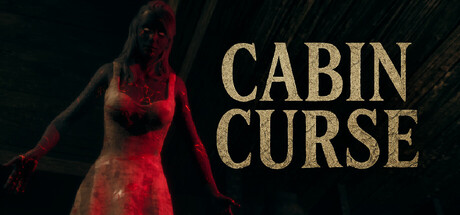
Cabin Curse uses generative AI tools to assist with development. Specifically, AI was used to help create early concept art, generate a few ambient music tracks, and design minor in-world details such as product labels on props (e.g., mugs, cereal boxes). No AI is used to generate content during gameplay, and all AI-generated assets were reviewed, edited, and integrated by the developer.
We used LLMs to help consolidate the rules engine code into one module for offline and online play. We also worked with Epidemic Sound, whose voice actors use AI to create voice content with their own voices.
Some parts of the game's description, promotional text, in-game code snippets, and localization were created with the assistance of generative AI tools. All AI-assisted content has been reviewed and edited by the developer to ensure clarity, accuracy, and functionality.
AI Usage Disclosure
The demo version of this game uses AI-generated placeholders for certain minor assets during development. No AI is used to generate gameplay, story content, or player interactions.
Some artwork and code in this game were created or assisted using generative AI tools during development. No AI-generated content is created or modified during gameplay.
We harness AI to supercharge our creative process—not to replace human artists, but to elevate them. By automating repetitive tasks, we give our team more time to focus on storytelling, world-building, and game design. Within the game itself, we leverage generative algorithms and AI to create dynamic levels, evolving enemy behavior, and unique puzzle scenarios—ensuring every playthrough feels fresh and alive.
AI Usage Overview
• Core Framework – The game is built on a licensed third-party action-RPG engine.
• Custom Code – A few ability scripts were drafted with the help of an offline AI coding assistant and then manually reviewed and tested by the developer.
• Art Prototypes – Early concept portraits were produced with an offline AI art tool; every final in-game asset will be hand-painted.
The released game never connects to any online AI services while you play, and all shipped content has passed copyright and quality checks.
As a two-person indie team, we utilize AI-assisted tools for artwork, voice acting, and select textual content. This allows us to:
✓ Maintain visual consistency
✓ Accelerate content iteration
✓ Focus on perfecting core gameplay
All AI-generated assets are manually curated to align with the game's vision. We're committed to continuously refining the final quality.
Fartal Error is developed by a very small independent studio. Due to limited resources, we occasionally rely on generative AI tools for specific visual elements, such as some in-game illustrations, assets and marketing materials.
These tools are used thoughtfully and selectively, always under human direction, to preserve a cohesive artistic vision.
We value transparency, and we encourage players to consider this information when deciding whether the game is right for them.
I used AI-assisted tools during development to help create some visual elements. All AI-generated assets were used as a base and were optimized and refined to fit the visual style and comply with copyright standards.
AI is a tool just as any other, as a solo dev, I'm certainly going to make use of it to try to give you more of a variety of content without having to raise the price of the game due to having to hire many extra hands.
Some AI generated music compositions.
Some generated icons as well as some base art that is heavily modified.
A small number of sound effects were generated using AI. Please note all voice acting in the game was created and performed by human actors. AI was also used to translate the game from English to other languages.
Generative AI is being used for asset creation during development wherever possible (e.g. sprites, backgrounds, music) to ensure that I, as a solo developer, can keep up with the rapidly evolving nature of this project and meet both my own standards and player expectations of a polished experience.
This game used generative AI tools during development to have early placeholder UI/2D Art Assets. No generative AI is used during gameplay, and all final in-game assets were manually reviewed to ensure quality and originality.
The developer describes how AI-generated content is used in the game as follows
- Game Title Idea
- Base of Main Character Design Concepts
- Background Music (BGM)
- Some Sound Effects (SFX)
We used generative AI tools to assist with visual development and world-building.
Specifically, we used AI-generated concept art and background compositions as inspiration during early prototyping phases. These assets helped guide the tone and direction of the environments but were later refined or replaced manually to meet performance and visual standards.
We also used AI-assisted writing tools to iterate on in-game lore and placeholder dialogues, ensuring consistency in narrative tone. No generative AI was used to create final voice lines or essential gameplay mechanics.
All AI-generated content was carefully reviewed, curated, and edited by the development team before inclusion.
During the development of this game, I used artificial intelligence tools for the following purposes:
* Accelerating the coding process – AI-powered assistants supported programming, debugging, and code generation to help bring the game to life more efficiently.
* Text translation and language checking – I used AI to translate written content into multiple languages and to assist with spelling and grammar correction.
Please note that all content generated or modified with the help of AI was manually reviewed and edited to ensure quality and a consistent player experience.
Cabin Curse uses generative AI tools to assist with development. Specifically, AI was used to help create early concept art, generate a few ambient music tracks, and design minor in-world details such as product labels on props (e.g., mugs, cereal boxes). No AI is used to generate content during gameplay, and all AI-generated assets were reviewed, edited, and integrated by the developer.
We used LLMs to help consolidate the rules engine code into one module for offline and online play. We also worked with Epidemic Sound, whose voice actors use AI to create voice content with their own voices.
Some parts of the game's description, promotional text, in-game code snippets, and localization were created with the assistance of generative AI tools. All AI-assisted content has been reviewed and edited by the developer to ensure clarity, accuracy, and functionality.
AI Usage Disclosure
The demo version of this game uses AI-generated placeholders for certain minor assets during development. No AI is used to generate gameplay, story content, or player interactions.
Some artwork and code in this game were created or assisted using generative AI tools during development. No AI-generated content is created or modified during gameplay.
We harness AI to supercharge our creative process—not to replace human artists, but to elevate them. By automating repetitive tasks, we give our team more time to focus on storytelling, world-building, and game design. Within the game itself, we leverage generative algorithms and AI to create dynamic levels, evolving enemy behavior, and unique puzzle scenarios—ensuring every playthrough feels fresh and alive.
AI Usage Overview
• Core Framework – The game is built on a licensed third-party action-RPG engine.
• Custom Code – A few ability scripts were drafted with the help of an offline AI coding assistant and then manually reviewed and tested by the developer.
• Art Prototypes – Early concept portraits were produced with an offline AI art tool; every final in-game asset will be hand-painted.
The released game never connects to any online AI services while you play, and all shipped content has passed copyright and quality checks.
As a two-person indie team, we utilize AI-assisted tools for artwork, voice acting, and select textual content. This allows us to:
✓ Maintain visual consistency
✓ Accelerate content iteration
✓ Focus on perfecting core gameplay
All AI-generated assets are manually curated to align with the game's vision. We're committed to continuously refining the final quality.
Fartal Error is developed by a very small independent studio. Due to limited resources, we occasionally rely on generative AI tools for specific visual elements, such as some in-game illustrations, assets and marketing materials.
These tools are used thoughtfully and selectively, always under human direction, to preserve a cohesive artistic vision.
We value transparency, and we encourage players to consider this information when deciding whether the game is right for them.