Public Steam disclosure research25,394 disclosures tracked
Where do games disclose AI use?
Search developers’ Steam disclosures, compare classified AI use across
games, and follow recorded changes.
This index adds cross-game classifications and statistics to
statements published on individual store pages.
Groups reflect automatic analysis of public disclosures; mature records are excluded. These counts do not measure AI use across all of Steam.
Missing or unclear statements cannot establish whether a game uses AI.
Development of Visual Assets:
For the original sprites (game characters/objects) designed and drawn by our team, AI support was utilized in the time-consuming stages such as coloring and shading. This allowed us to accelerate the process and experiment with different color palettes. AI was used strictly as a tool for editing and enhancing the existing artwork.
Software Development Support:
During the coding phase, AI-based code assistants were occasionally consulted to help solve specific algorithmic challenges, optimize existing code blocks, and overcome debugging difficulties.
We would like to emphasize that AI has only been employed as a source of inspiration and a productivity aid throughout these processes. All final visual and code assets included in the game have been reviewed, adjusted, and approved by our team. No AI-generated content is produced in real time during gameplay.
During development, some visual assets were created with the assistance of generative AI tools as part of the content creation process, including certain achievement icons. In all cases, the assets were reviewed, edited, and integrated by the development team. The final game experience reflects the creative direction and artistic decisions of the developers.
Pre-rendered AI content only: audio.
- Sound effects created with ElevenLabs prior to shipping.
- Background music created with Suno prior to shipping.
No live or in-game generation of content or code. No user prompts, no network calls to AI services at runtime.
All visuals, animations, 3D models, UI and gameplay code are entirely handcrafted by the developer.
I'm using an A.I. modified voice as a joke (which works great, by the way!).
I'm using A.I. generated planets, stars and asteroids - all that stuff you see on the deepest layer of background (excluding some easily recognizable hand-drawn objects here and there).
Some visual materials, such as store promotional images, are generated or enhanced using AI tools and further refined and integrated by the developers.
This game uses generative artificial intelligence to create dynamic narrative descriptions and battle outcomes during gameplay.
Player-provided words and choices are processed by an AI system to generate contextual text that reflects in-game actions, abilities, and events. All AI output is constrained by predefined game rules and moderation systems, and no AI is used to generate artwork, audio, or other visual assets.
Generative AI in this game is used strictly as a gameplay and narrative logic component, not as a chat system or content creation tool.
AI tools were used only in a few short CG trailer segments to assist production. All other parts—including gameplay footage in the trailer and the game itself—do not use AI. Even in those CG segments, the content was carefully refined and post-processed by hand to ensure quality and presentation close to human-made standards.
During the development of this game, generative AI tools were utilized to create initial concepts and base drafts for some of the visual assets. Most things were first sketched by human imagination, then professionalized by AI to give players the most flawless visual. All of these AI-generated drafts were then heavily edited, redrawn, and finalized by the developer in the pixel art program Aseprite to fully match their unique artistic vision. All final in-game assets reflect the developer's own pixel art style and effort. AI music is also included. The game does not use generative AI to create any content in real-time during gameplay.
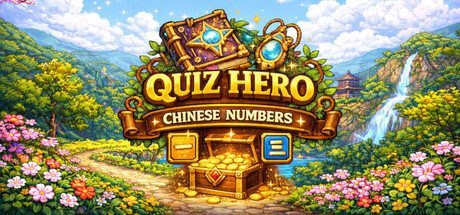
We are using an AI-generated capsule image for our market research and testing phase. Once we wrap up these tests, we will create and share the final hand-painted capsule art.
AI tools were used as a creative assistant during development for certain visual elements and text drafts. All educational content, quiz structure, and gameplay design were carefully crafted and curated by the developer.
Some icons and visual elements used in promotional materials and on the store page were created with the help of artificial intelligence tools, with the aim of complementing the visual identity of the collection. The game content itself does not use AI.
In the game, AI tools were used to assist in completing the code and drawing work, and most of the content generated by AI was manually reworked in the later stage.
Some UI elements in this game (e.g., board visuals, evidence images, etc.) were created using AI tools.
These elements are used solely as visual aids in gameplay, and no AI-generated content was used for the game's main story or text.
During development, we mainly used it to generate and complete code. We also used it to improve work efficiency by proofreading some text and converting images to black and white for verification.
We used a few pre-rendered images as internal references for proportions and framing. However, all-ingame visuals are original pixel art creations with our palettes, handcrafted by our team to ensure consistency and authenticity.
After I personally finalized the design phase, some art assets were first rendered using generative AI tools, and I then manually refined and detailed them.
Similarly, certain background music pieces were developed with the help of generative AI tools.
Should you have any concerns about these methods, please feel free to experience the game according to your own preferences. Thank you for your understanding and consideration.
Some code of the game, namely the warp door system, some internal timers, enemy logic in Level 3-4, and setting and name displays, was written by me, fed through AI, and then manually edited. No graphics or music were Ai-generated.
Some visual and textual elements in this game were created with the assistance of generative tools and were then edited, curated, and integrated as part of the overall artistic development process.
I have used AI to pre-render content. I have used AI to make some of the code that I use in the game. Such that AI has helped me make the best possible CPU and help with player physics.
During development, we used AI-assisted tools to improve some code and autocomplete features to write parts of non-core code.We use AI-assisted translation in our localization workflow; all final text is human-reviewed and edited.
As a one-person indie dev on a small island, with a clear idea, some programming skillz, minimal artistic talent, and practically zero funding, using AI has helped me actually to finish developing Lightyears of Fervent Warfare.
I started developing LoFW during COVID-19, when I began learning game development as a hobby during Seychelles' lockdown. I had coded my MSc project in C# and was able to code everything by hand. I was even able to design the pixel graphics on my own. Then COVID-19 ended, life continued, and LoFW was left in the dust.
This year, I experimented with the Cursor and Midjourney AIs and discovered that I could leverage them to continue developing my game part-time. Using Cursor to modify my existing code and generate new code via vibe coding helped me implement features quickly. This gave me the time to focus on the actual game design, the feature set, and testing. And while I still work on most of the pixel graphics by hand, using Midjourney to generate more complex graphics has helped me save time and resources that I don't yet have.
Sure, using AI still takes time; I can be pedantic and tend to modify and optimise everything manually. Chastising AIs, reviewing code, and doing manual edits to the graphics are now part of my workflow. AI shenanigans notwithstanding, I do hope that you'll support my game!
Development of Visual Assets:
For the original sprites (game characters/objects) designed and drawn by our team, AI support was utilized in the time-consuming stages such as coloring and shading. This allowed us to accelerate the process and experiment with different color palettes. AI was used strictly as a tool for editing and enhancing the existing artwork.
Software Development Support:
During the coding phase, AI-based code assistants were occasionally consulted to help solve specific algorithmic challenges, optimize existing code blocks, and overcome debugging difficulties.
We would like to emphasize that AI has only been employed as a source of inspiration and a productivity aid throughout these processes. All final visual and code assets included in the game have been reviewed, adjusted, and approved by our team. No AI-generated content is produced in real time during gameplay.
During development, some visual assets were created with the assistance of generative AI tools as part of the content creation process, including certain achievement icons. In all cases, the assets were reviewed, edited, and integrated by the development team. The final game experience reflects the creative direction and artistic decisions of the developers.
Pre-rendered AI content only: audio.
- Sound effects created with ElevenLabs prior to shipping.
- Background music created with Suno prior to shipping.
No live or in-game generation of content or code. No user prompts, no network calls to AI services at runtime.
All visuals, animations, 3D models, UI and gameplay code are entirely handcrafted by the developer.
I'm using an A.I. modified voice as a joke (which works great, by the way!).
I'm using A.I. generated planets, stars and asteroids - all that stuff you see on the deepest layer of background (excluding some easily recognizable hand-drawn objects here and there).
Some visual materials, such as store promotional images, are generated or enhanced using AI tools and further refined and integrated by the developers.
This game uses generative artificial intelligence to create dynamic narrative descriptions and battle outcomes during gameplay.
Player-provided words and choices are processed by an AI system to generate contextual text that reflects in-game actions, abilities, and events. All AI output is constrained by predefined game rules and moderation systems, and no AI is used to generate artwork, audio, or other visual assets.
Generative AI in this game is used strictly as a gameplay and narrative logic component, not as a chat system or content creation tool.
AI tools were used only in a few short CG trailer segments to assist production. All other parts—including gameplay footage in the trailer and the game itself—do not use AI. Even in those CG segments, the content was carefully refined and post-processed by hand to ensure quality and presentation close to human-made standards.
During the development of this game, generative AI tools were utilized to create initial concepts and base drafts for some of the visual assets. Most things were first sketched by human imagination, then professionalized by AI to give players the most flawless visual. All of these AI-generated drafts were then heavily edited, redrawn, and finalized by the developer in the pixel art program Aseprite to fully match their unique artistic vision. All final in-game assets reflect the developer's own pixel art style and effort. AI music is also included. The game does not use generative AI to create any content in real-time during gameplay.
We are using an AI-generated capsule image for our market research and testing phase. Once we wrap up these tests, we will create and share the final hand-painted capsule art.
AI tools were used as a creative assistant during development for certain visual elements and text drafts. All educational content, quiz structure, and gameplay design were carefully crafted and curated by the developer.
Some icons and visual elements used in promotional materials and on the store page were created with the help of artificial intelligence tools, with the aim of complementing the visual identity of the collection. The game content itself does not use AI.
In the game, AI tools were used to assist in completing the code and drawing work, and most of the content generated by AI was manually reworked in the later stage.
Some UI elements in this game (e.g., board visuals, evidence images, etc.) were created using AI tools.
These elements are used solely as visual aids in gameplay, and no AI-generated content was used for the game's main story or text.
During development, we mainly used it to generate and complete code. We also used it to improve work efficiency by proofreading some text and converting images to black and white for verification.
We used a few pre-rendered images as internal references for proportions and framing. However, all-ingame visuals are original pixel art creations with our palettes, handcrafted by our team to ensure consistency and authenticity.
After I personally finalized the design phase, some art assets were first rendered using generative AI tools, and I then manually refined and detailed them.
Similarly, certain background music pieces were developed with the help of generative AI tools.
Should you have any concerns about these methods, please feel free to experience the game according to your own preferences. Thank you for your understanding and consideration.
Some code of the game, namely the warp door system, some internal timers, enemy logic in Level 3-4, and setting and name displays, was written by me, fed through AI, and then manually edited. No graphics or music were Ai-generated.
Some visual and textual elements in this game were created with the assistance of generative tools and were then edited, curated, and integrated as part of the overall artistic development process.
I have used AI to pre-render content. I have used AI to make some of the code that I use in the game. Such that AI has helped me make the best possible CPU and help with player physics.
During development, we used AI-assisted tools to improve some code and autocomplete features to write parts of non-core code.We use AI-assisted translation in our localization workflow; all final text is human-reviewed and edited.
As a one-person indie dev on a small island, with a clear idea, some programming skillz, minimal artistic talent, and practically zero funding, using AI has helped me actually to finish developing Lightyears of Fervent Warfare.
I started developing LoFW during COVID-19, when I began learning game development as a hobby during Seychelles' lockdown. I had coded my MSc project in C# and was able to code everything by hand. I was even able to design the pixel graphics on my own. Then COVID-19 ended, life continued, and LoFW was left in the dust.
This year, I experimented with the Cursor and Midjourney AIs and discovered that I could leverage them to continue developing my game part-time. Using Cursor to modify my existing code and generate new code via vibe coding helped me implement features quickly. This gave me the time to focus on the actual game design, the feature set, and testing. And while I still work on most of the pixel graphics by hand, using Midjourney to generate more complex graphics has helped me save time and resources that I don't yet have.
Sure, using AI still takes time; I can be pedantic and tend to modify and optimise everything manually. Chastising AIs, reviewing code, and doing manual edits to the graphics are now part of my workflow. AI shenanigans notwithstanding, I do hope that you'll support my game!