Public Steam disclosure research25,376 disclosures tracked
Where do games disclose AI use?
Search developers’ Steam disclosures, compare classified AI use across
games, and follow recorded changes.
This index adds cross-game classifications and statistics to
statements published on individual store pages.
Groups reflect automatic analysis of public disclosures; mature records are excluded. These counts do not measure AI use across all of Steam.
Missing or unclear statements cannot establish whether a game uses AI.
We use AI-generated images only for some marketing materials and a few decorative textures in-game (e.g. posters/background art). All assets are manually reviewed and edited. AI is not used for gameplay, code, logic, or real-time content, and no player data is sent to external AI services.
- AI is used to score the text data entered by players.
- AI is used to generate text content based on the text data entered by players.
- Some character images and backgrounds use AI-generated images.
- Some audio narration uses AI-generated voices.
Couch Cup uses cutting-edge AI technology to bring your party game experience to life! The AI host provides dynamic commentary, witty quips, and tailored reactions to in-game events, making every playthrough unique and engaging.
In certain mini-games, AI is used for Text Generation. It will be creating custom prompts, jokes, and dialogue based on player inputs.
This use of AI ensures that every game session is fresh, entertaining, and packed with surprises, putting players at the center of the action.
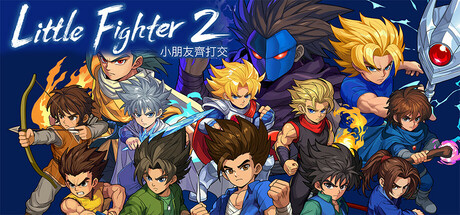
AI was used in the creation of certain visual assets, including character avatars, title screen artwork, promotional materials, and background art. However, these assets still required substantial manual work such as design, sketching, outline drawing, and polishing. The AI was used primarily as a tool for coloring and enhancement, and it did not dictate the creative direction. The visual style remains faithful to the original Little Fighter 2.
Some people assume that because AI was used in certain artwork, it must have been applied throughout the entire project. That is far from the truth. I used AI primarily for large-scale visual tasks. To give a clearer picture: the game includes over 3,000 hand-crafted sprite frames, composed from thousands of hand-drawn body parts. In contrast, only about 100 images were AI-assisted, and many of those, such as promotional artwork, don't even appear in the actual game.
I understand that some people may have concerns about the use of AI in the creative process. But I hope people can see the broader context and appreciate the amount of manual effort that went into making this game. Please know that I’m a solo developer working with a limited budget. I’ve been developing this project for around 3.5 years; even quitting my full-time job for a year to work on it full time, without expecting it to cover even half of my previous salary. I've done my best to balance quality and practicality. Your understanding and support mean a great deal to me.
AI helps me with texts on the Steam page (grammar correction, translations, and texts).
AI helps me correct errors in the game code and optimize it (Integrated Microsoft Copilot in the Visual Studio environment).
I don't use AI at all for music and sound creation.
I don't use AI at all for 3D or 2D graphics creation.
I enjoy crafting dozens of background images in the game, from personal travel photos of varied scenery,
drawings, and patiently process and mash them using AI and non AI tools. The art for the board games themselves (pawns, tiles) is abstract and simply done with gimp (traditional 2D image editor)
As a small indie team, we may use procedural and/or AI-based tools to assist with the development process. In all such cases, the final product reflects the creativity and expression of our own development team.
I am currently using ElevenLabs synthetic voices for my eight characters. The synthetic voices are generated from scratch. They are not clones of any real people. I look forward hiring professional voice actors once the game is successful.
As a small, two-person startup studio, meeting the full graphical needs of our game is a challenge. To bring our cards to life, we use a combination of original artwork and AI-generated art, ensuring a balance between creativity and efficiency.
In WE ARE FOOTBALL 2024 we use about 12,500 AI-generated realistic-looking photos for generic male and female players. These pictures are displayed, e.g., on the line-up screen or on the player profile screens.
Super Sketchy Party is using optional Image Recognition AI to guess what a player drew. The result is then presented as an additional guess the other players can pick. Especially with a small party size this gives the players more options to choose from.
It not only rewards clear drawing skills but also encourages players to think outside the box with their guesses, as the AI handles the more predictable responses.
During our creative processes, we may use modern digital tools that include AI-based features to assist with content creation. This helps us stay innovative without losing sight of what makes our games truly unique, while ensuring the final product preserves the distinctive style and quality our development team strives for.
We use AI-generated images only for some marketing materials and a few decorative textures in-game (e.g. posters/background art). All assets are manually reviewed and edited. AI is not used for gameplay, code, logic, or real-time content, and no player data is sent to external AI services.
- AI is used to score the text data entered by players.
- AI is used to generate text content based on the text data entered by players.
- Some character images and backgrounds use AI-generated images.
- Some audio narration uses AI-generated voices.
Couch Cup uses cutting-edge AI technology to bring your party game experience to life! The AI host provides dynamic commentary, witty quips, and tailored reactions to in-game events, making every playthrough unique and engaging.
In certain mini-games, AI is used for Text Generation. It will be creating custom prompts, jokes, and dialogue based on player inputs.
This use of AI ensures that every game session is fresh, entertaining, and packed with surprises, putting players at the center of the action.
AI was used in the creation of certain visual assets, including character avatars, title screen artwork, promotional materials, and background art. However, these assets still required substantial manual work such as design, sketching, outline drawing, and polishing. The AI was used primarily as a tool for coloring and enhancement, and it did not dictate the creative direction. The visual style remains faithful to the original Little Fighter 2.
Some people assume that because AI was used in certain artwork, it must have been applied throughout the entire project. That is far from the truth. I used AI primarily for large-scale visual tasks. To give a clearer picture: the game includes over 3,000 hand-crafted sprite frames, composed from thousands of hand-drawn body parts. In contrast, only about 100 images were AI-assisted, and many of those, such as promotional artwork, don't even appear in the actual game.
I understand that some people may have concerns about the use of AI in the creative process. But I hope people can see the broader context and appreciate the amount of manual effort that went into making this game. Please know that I’m a solo developer working with a limited budget. I’ve been developing this project for around 3.5 years; even quitting my full-time job for a year to work on it full time, without expecting it to cover even half of my previous salary. I've done my best to balance quality and practicality. Your understanding and support mean a great deal to me.
AI helps me with texts on the Steam page (grammar correction, translations, and texts).
AI helps me correct errors in the game code and optimize it (Integrated Microsoft Copilot in the Visual Studio environment).
I don't use AI at all for music and sound creation.
I don't use AI at all for 3D or 2D graphics creation.
I enjoy crafting dozens of background images in the game, from personal travel photos of varied scenery,
drawings, and patiently process and mash them using AI and non AI tools. The art for the board games themselves (pawns, tiles) is abstract and simply done with gimp (traditional 2D image editor)
As a small indie team, we may use procedural and/or AI-based tools to assist with the development process. In all such cases, the final product reflects the creativity and expression of our own development team.
I am currently using ElevenLabs synthetic voices for my eight characters. The synthetic voices are generated from scratch. They are not clones of any real people. I look forward hiring professional voice actors once the game is successful.
As a small, two-person startup studio, meeting the full graphical needs of our game is a challenge. To bring our cards to life, we use a combination of original artwork and AI-generated art, ensuring a balance between creativity and efficiency.
In WE ARE FOOTBALL 2024 we use about 12,500 AI-generated realistic-looking photos for generic male and female players. These pictures are displayed, e.g., on the line-up screen or on the player profile screens.
Super Sketchy Party is using optional Image Recognition AI to guess what a player drew. The result is then presented as an additional guess the other players can pick. Especially with a small party size this gives the players more options to choose from.
It not only rewards clear drawing skills but also encourages players to think outside the box with their guesses, as the AI handles the more predictable responses.
During our creative processes, we may use modern digital tools that include AI-based features to assist with content creation. This helps us stay innovative without losing sight of what makes our games truly unique, while ensuring the final product preserves the distinctive style and quality our development team strives for.