Public Steam disclosure research25,380 disclosures tracked
Where do games disclose AI use?
Search developers’ Steam disclosures, compare classified AI use across
games, and follow recorded changes.
This index adds cross-game classifications and statistics to
statements published on individual store pages.
Groups reflect automatic analysis of public disclosures; mature records are excluded. These counts do not measure AI use across all of Steam.
Missing or unclear statements cannot establish whether a game uses AI.
This game was made with the help of generative AI.
AI tools were used during development to create visual assets, sound and music, parts
of the source code, and the translations of this page and the in-game text. Everything
was chosen, edited and assembled by hand before release.
Nothing is generated while you play — all content ships with the game.
Serv-Bot's Firewall uses AI tools in its art and media pipeline, always under human direction and review:
Sprite art. The game's original hand-authored sprites were upscaled and repainted at native resolution with an image-editing model (Qwen-Image-Edit), then reviewed, corrected and in many cases restored to the originals by hand. Concept art for the six "arsenal" enemy types, the Serv-Bot HUD portraits and the achievement icon motifs were generated with local image models (Z-Image Turbo, Qwen-Image-Edit) from our own designs and reference art, then composited and finished in code. Canon elements such as the Greeb ship in the icons are the game's own sprite art, not generated.
Cutscenes. The in-game story videos come from our SIGNAL series. Keyframes were generated with a local image model trained on our own characters, motion with a local video model (Wan 2.2), narration with a text-to-speech model (Kokoro) and music with local music models (ACE-Step, Stable Audio Open). Scripts, story, character designs, editing and direction are ours.
Localization. Interface text in 28 languages was machine-translated with an AI model from our English source and has not yet been reviewed by native speakers.
Code. Parts of the game's code were written with AI coding assistance, reviewed and tested by the developer.
Sound effects are procedurally synthesised, not AI-generated. All AI generation ran on the developer's own hardware; no copyrighted third-party works were used as inputs beyond our own assets and characters.
AI is used solely to assist with development, such as for some localization and the creation of internal tools.
The game does not include any features that automatically generate content in real-time during gameplay.
Generative AI was used to create the 2D artwork and sprites used inside the game , as well as the promotional capsule images on the store page. Additionally, AI tools were used to assist with programming and code generation during development.
AI tools helped write the store page text and translate the game's text into other languages. The game's artwork and gameplay are not AI-generated, and nothing is generated by AI while you play.
This game used generative AI for asset creation during development. The HQ statue's 3D model was created with Meshy AI, and background music was composed with Suno AI. Most in-game icons and images were created using Google Gemini and ChatGPT.
Generative AI tools were used during the development of Clean Your Garden
for part of the 2D art (bug illustrations, backgrounds, weapon and
achievement icons, and store art), to assist with writing code, and to
assist with translating the game's text into English. All of it was
reviewed, edited and integrated by hand.
The game does not generate any content with AI while you play: no model
runs at runtime.
---
Durante el desarrollo de Clean Your Garden se han usado herramientas de IA
generativa para parte del arte 2D (ilustraciones de bichos, fondos, iconos
de armas y de logros, e imágenes de la ficha), para asistir en la escritura
del código, y para asistir en la traducción de los textos al inglés. Todo
ese material ha sido revisado, editado e integrado a mano.
El juego no genera contenido con IA durante la partida: no hay ningún
modelo ejecutándose en tiempo real.
Generative AI was used during development to create or assist with some in-game artwork, promotional images, written content, and localization. The game does not use generative AI to generate content during gameplay.
Generative AI tools were used to assist in creating some of this game's artwork and store page imagery, and to assist with translating its text into the supported languages. All translations were reviewed before shipping.
No content is generated by AI during gameplay.
Some promotional artwork and visual assets were created with the assistance of generative AI and have been reviewed, refined, and integrated by the developer. No generative AI is used during gameplay.
- Localization (translation) of in-game text from the original Japanese into [English, Chinese, etc.]The original Japanese text was written by the developer without AI. All AI-generated translations were reviewed and adjusted by the developer before being included in the game. If you find any translation issues, please let us know via the Steam discussions.
AI tools assisted with pre-rendered artwork, character illustrations, UI, achievement icons, narrative and marketing materials. No AI content is generated during gameplay.
Generative AI tools were used to create some pre-generated static artwork displayed as mission images in the campaign menu. All gameplay visuals, screenshots, and gameplay footage are rendered directly from the game. No AI-generated content is created during gameplay
The game's original languages are Portuguese and English. Generative AI was used exclusively to translate and localize the text into the other supported languages, making the game accessible to more players worldwide at launch. All code, game design, artwork, audio, and original Portuguese and English text were created by humans.
HYALOSFALL uses generative AI in part of its audio and text.
Music. The eleven soundtrack recordings were created with Suno by the developer, under a paid subscription that grants commercial rights. The fallback synthesiser melodies — played when a recording is unavailable — are derived from those same pieces.
Translations. The in-game text was translated into twelve languages with AI assistance. The Spanish source text is written by hand.
Store and marketing material. The trailer music was created with Suno, and the studio intro animation with Grok.
Everything else is not AI-generated. The 3D models, textures, visual effects, sound effects and level designs are produced by the project's own code and tools.
Nothing is generated while you play. The game ships no AI models and makes no network connections.
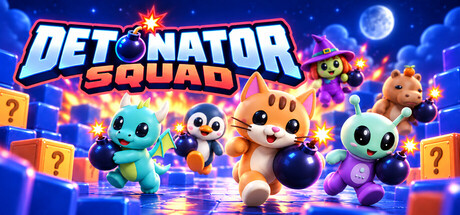
Detonator Squad was developed almost entirely using AI tools, under extensive human direction, ongoing refinement and review. The game is built on my own custom 3D engine that I have been working on for a while, using AI coding tools. AI was also used to create interface and promotional artwork and to author or assist with code, 3D assets, level layouts, game text, music and sound effects. The original core game logic was handwritten for an earlier project, then ported and adapted using AI. All content is supplied with the game; no content is generated by an AI service during gameplay.
We use generative AI for player-facing content: in-game art (sprites, UI, backgrounds) and marketing (Steam capsules, store images). Some store-page translations may also be AI-assisted. We select, review, and place everything ourselves — nothing is generated while the game is running. Gameplay, timing, and controls are designed by us. AI coding tools are used internally only and do not create runtime game content.
All graphics in the game are hand-pixelled. The soundtrack was created with generative AI. Some images for the Steam store and library were expanded using AI to fit the required aspect ratios. No content is generated by AI during gameplay.
Generative AI was used only to create artwork for the Steam store page and marketing materials. No generative AI is used in the game or during gameplay.
The game's 2D artwork (characters, environments, and title lettering) and music were created with the assistance of generative AI tools, then curated, edited, and animated by the developer. All AI-assisted content is pre-rendered; nothing is generated by AI while you play.
Generative AI tools were used during development to create images, textures, 3D models and music, and to assist with translations. This content is prepared in advance. The game does not generate AI content during gameplay or connect to external AI services.
Some steps of the art production used AI tools, for example to create or upscale backgrounds and illustrations that were then refined by hand, and for first drafts of language translations. No AI content is generated during gameplay.
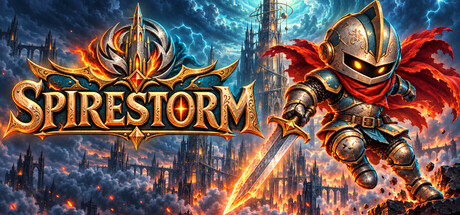
Spirestorm uses pre-generated AI-assisted artwork for characters, enemies, environments, interface illustrations, and promotional images. These assets were selected, edited, animated, and integrated during development. No AI content is generated during gameplay.
Some of the game's 3D models were created using generative AI (Tripo3D). The English localization and store page text were also prepared with the help of an AI assistant and reviewed by hand. The audio and gameplay were made without generative AI.
Часть 3D-моделей в игре создана с помощью генеративного ИИ (Tripo3D). Английская локализация и тексты для страницы в магазине также подготовлены с помощью ИИ-ассистента и вычитаны вручную. Звук и геймплей созданы без генеративного ИИ.
Intergalactic Burger Joint has been a labor of love, with a lot of time, attention, and care put into bringing this little corner of the galaxy to life.
The game’s 3D characters, environments, and props use licensed Synty assets. Generative AI helped create achievement icons, some interface and branding artwork, Steam store images, music, ambient audio, sound effects, and chef and customer voices. It also helped us write in-game text and dialogue.
Choosing what belonged, refining the details, and bringing everything together into a game took time, experimentation, and care. We hope you feel that love in the little details as you play.
All AI-generated content was created during development. Nothing is generated live while you play.
The game uses generative AI to create some of the 2D pixel-art sprites and character animations. All such content is manually reviewed and edited before being included in the game.
Generative AI tools were used during development to assist with the creation of various in-game assets and some localization text. All content was reviewed and edited by the developer.
Generative AI tools were used during development to assist with programming, debugging, in-game text, and localization. All AI-assisted output was reviewed, edited, and integrated by the developer. The game does not use generative AI during gameplay, and no content is generated from player input at runtime.
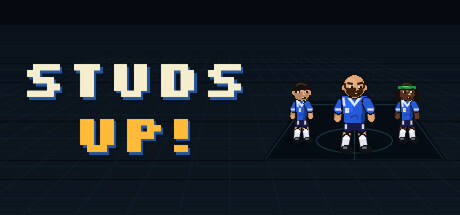
Studs Up! ships some pre-generated AI content. All of it was reviewed and edited by hand before it went into the game:
- Player portraits and the end-of-season win/loss backdrops: image generation, converted down to the game's limited-palette pixel formats.
- The match music loop and the match sound effects: audio generation, edited and loudness-normalised.
- The announcer voice in the trailer: voice generation.
No AI runs while you play. The game is fully offline and generates nothing at runtime.
This game contains content created with the assistance of AI tools. AI was used during development to assist with programming, visual assets, and other creative elements. All generated content was reviewed, edited, and integrated by the dev.
Roadshift was developed with assistance from generative AI tools (such as Large Language Models) to help write and structure the source code and draft store descriptions, as well as generating in-game images, assets, art, and 3D models. The game does not feature live, runtime generative AI.
This game was made with the help of generative AI.
AI tools were used during development to create visual assets, sound and music, parts
of the source code, and the translations of this page and the in-game text. Everything
was chosen, edited and assembled by hand before release.
Nothing is generated while you play — all content ships with the game.
Serv-Bot's Firewall uses AI tools in its art and media pipeline, always under human direction and review:
Sprite art. The game's original hand-authored sprites were upscaled and repainted at native resolution with an image-editing model (Qwen-Image-Edit), then reviewed, corrected and in many cases restored to the originals by hand. Concept art for the six "arsenal" enemy types, the Serv-Bot HUD portraits and the achievement icon motifs were generated with local image models (Z-Image Turbo, Qwen-Image-Edit) from our own designs and reference art, then composited and finished in code. Canon elements such as the Greeb ship in the icons are the game's own sprite art, not generated.
Cutscenes. The in-game story videos come from our SIGNAL series. Keyframes were generated with a local image model trained on our own characters, motion with a local video model (Wan 2.2), narration with a text-to-speech model (Kokoro) and music with local music models (ACE-Step, Stable Audio Open). Scripts, story, character designs, editing and direction are ours.
Localization. Interface text in 28 languages was machine-translated with an AI model from our English source and has not yet been reviewed by native speakers.
Code. Parts of the game's code were written with AI coding assistance, reviewed and tested by the developer.
Sound effects are procedurally synthesised, not AI-generated. All AI generation ran on the developer's own hardware; no copyrighted third-party works were used as inputs beyond our own assets and characters.
AI is used solely to assist with development, such as for some localization and the creation of internal tools.
The game does not include any features that automatically generate content in real-time during gameplay.
Generative AI was used to create the 2D artwork and sprites used inside the game , as well as the promotional capsule images on the store page. Additionally, AI tools were used to assist with programming and code generation during development.
AI tools helped write the store page text and translate the game's text into other languages. The game's artwork and gameplay are not AI-generated, and nothing is generated by AI while you play.
This game used generative AI for asset creation during development. The HQ statue's 3D model was created with Meshy AI, and background music was composed with Suno AI. Most in-game icons and images were created using Google Gemini and ChatGPT.
Generative AI tools were used during the development of Clean Your Garden
for part of the 2D art (bug illustrations, backgrounds, weapon and
achievement icons, and store art), to assist with writing code, and to
assist with translating the game's text into English. All of it was
reviewed, edited and integrated by hand.
The game does not generate any content with AI while you play: no model
runs at runtime.
---
Durante el desarrollo de Clean Your Garden se han usado herramientas de IA
generativa para parte del arte 2D (ilustraciones de bichos, fondos, iconos
de armas y de logros, e imágenes de la ficha), para asistir en la escritura
del código, y para asistir en la traducción de los textos al inglés. Todo
ese material ha sido revisado, editado e integrado a mano.
El juego no genera contenido con IA durante la partida: no hay ningún
modelo ejecutándose en tiempo real.
Generative AI was used during development to create or assist with some in-game artwork, promotional images, written content, and localization. The game does not use generative AI to generate content during gameplay.
Generative AI tools were used to assist in creating some of this game's artwork and store page imagery, and to assist with translating its text into the supported languages. All translations were reviewed before shipping.
No content is generated by AI during gameplay.
Some promotional artwork and visual assets were created with the assistance of generative AI and have been reviewed, refined, and integrated by the developer. No generative AI is used during gameplay.
- Localization (translation) of in-game text from the original Japanese into [English, Chinese, etc.]The original Japanese text was written by the developer without AI. All AI-generated translations were reviewed and adjusted by the developer before being included in the game. If you find any translation issues, please let us know via the Steam discussions.
AI tools assisted with pre-rendered artwork, character illustrations, UI, achievement icons, narrative and marketing materials. No AI content is generated during gameplay.
Generative AI tools were used to create some pre-generated static artwork displayed as mission images in the campaign menu. All gameplay visuals, screenshots, and gameplay footage are rendered directly from the game. No AI-generated content is created during gameplay
The game's original languages are Portuguese and English. Generative AI was used exclusively to translate and localize the text into the other supported languages, making the game accessible to more players worldwide at launch. All code, game design, artwork, audio, and original Portuguese and English text were created by humans.
HYALOSFALL uses generative AI in part of its audio and text.
Music. The eleven soundtrack recordings were created with Suno by the developer, under a paid subscription that grants commercial rights. The fallback synthesiser melodies — played when a recording is unavailable — are derived from those same pieces.
Translations. The in-game text was translated into twelve languages with AI assistance. The Spanish source text is written by hand.
Store and marketing material. The trailer music was created with Suno, and the studio intro animation with Grok.
Everything else is not AI-generated. The 3D models, textures, visual effects, sound effects and level designs are produced by the project's own code and tools.
Nothing is generated while you play. The game ships no AI models and makes no network connections.
Detonator Squad was developed almost entirely using AI tools, under extensive human direction, ongoing refinement and review. The game is built on my own custom 3D engine that I have been working on for a while, using AI coding tools. AI was also used to create interface and promotional artwork and to author or assist with code, 3D assets, level layouts, game text, music and sound effects. The original core game logic was handwritten for an earlier project, then ported and adapted using AI. All content is supplied with the game; no content is generated by an AI service during gameplay.
We use generative AI for player-facing content: in-game art (sprites, UI, backgrounds) and marketing (Steam capsules, store images). Some store-page translations may also be AI-assisted. We select, review, and place everything ourselves — nothing is generated while the game is running. Gameplay, timing, and controls are designed by us. AI coding tools are used internally only and do not create runtime game content.
All graphics in the game are hand-pixelled. The soundtrack was created with generative AI. Some images for the Steam store and library were expanded using AI to fit the required aspect ratios. No content is generated by AI during gameplay.
Generative AI was used only to create artwork for the Steam store page and marketing materials. No generative AI is used in the game or during gameplay.
The game's 2D artwork (characters, environments, and title lettering) and music were created with the assistance of generative AI tools, then curated, edited, and animated by the developer. All AI-assisted content is pre-rendered; nothing is generated by AI while you play.
Generative AI tools were used during development to create images, textures, 3D models and music, and to assist with translations. This content is prepared in advance. The game does not generate AI content during gameplay or connect to external AI services.
Some steps of the art production used AI tools, for example to create or upscale backgrounds and illustrations that were then refined by hand, and for first drafts of language translations. No AI content is generated during gameplay.
Spirestorm uses pre-generated AI-assisted artwork for characters, enemies, environments, interface illustrations, and promotional images. These assets were selected, edited, animated, and integrated during development. No AI content is generated during gameplay.
Some of the game's 3D models were created using generative AI (Tripo3D). The English localization and store page text were also prepared with the help of an AI assistant and reviewed by hand. The audio and gameplay were made without generative AI.
Часть 3D-моделей в игре создана с помощью генеративного ИИ (Tripo3D). Английская локализация и тексты для страницы в магазине также подготовлены с помощью ИИ-ассистента и вычитаны вручную. Звук и геймплей созданы без генеративного ИИ.
Intergalactic Burger Joint has been a labor of love, with a lot of time, attention, and care put into bringing this little corner of the galaxy to life.
The game’s 3D characters, environments, and props use licensed Synty assets. Generative AI helped create achievement icons, some interface and branding artwork, Steam store images, music, ambient audio, sound effects, and chef and customer voices. It also helped us write in-game text and dialogue.
Choosing what belonged, refining the details, and bringing everything together into a game took time, experimentation, and care. We hope you feel that love in the little details as you play.
All AI-generated content was created during development. Nothing is generated live while you play.
The game uses generative AI to create some of the 2D pixel-art sprites and character animations. All such content is manually reviewed and edited before being included in the game.
Generative AI tools were used during development to assist with the creation of various in-game assets and some localization text. All content was reviewed and edited by the developer.
Generative AI tools were used during development to assist with programming, debugging, in-game text, and localization. All AI-assisted output was reviewed, edited, and integrated by the developer. The game does not use generative AI during gameplay, and no content is generated from player input at runtime.
Studs Up! ships some pre-generated AI content. All of it was reviewed and edited by hand before it went into the game:
- Player portraits and the end-of-season win/loss backdrops: image generation, converted down to the game's limited-palette pixel formats.
- The match music loop and the match sound effects: audio generation, edited and loudness-normalised.
- The announcer voice in the trailer: voice generation.
No AI runs while you play. The game is fully offline and generates nothing at runtime.
This game contains content created with the assistance of AI tools. AI was used during development to assist with programming, visual assets, and other creative elements. All generated content was reviewed, edited, and integrated by the dev.
Roadshift was developed with assistance from generative AI tools (such as Large Language Models) to help write and structure the source code and draft store descriptions, as well as generating in-game images, assets, art, and 3D models. The game does not feature live, runtime generative AI.