Public Steam disclosure research25,380 disclosures tracked
Where do games disclose AI use?
Search developers’ Steam disclosures, compare classified AI use across
games, and follow recorded changes.
This index adds cross-game classifications and statistics to
statements published on individual store pages.
Groups reflect automatic analysis of public disclosures; mature records are excluded. These counts do not measure AI use across all of Steam.
Missing or unclear statements cannot establish whether a game uses AI.
Portions of the game's artwork and promotional graphics were created with the assistance of generative AI and then reviewed, edited, and integrated by the developer. No live AI-generated content is produced during gameplay.
Generative AI tools were used during development to assist with the creation of certain visual assets, 3D assets, textures, localization text, and other pre-generated content included with the product. All such content has been manually reviewed, selected, and edited by the developer to ensure quality and to avoid illegal, infringing, or impersonating content.
StorySmith uses generative AI to write its stories live as you and your Twitch chat make choices. The AI model runs locally on your machine by default, with an optional bring-your-own-key cloud option — so your playthroughs stay private and no two are ever the same.
Mars Directive features autonomous AI characters powered by Large Language Models. They don't just generate dialogue—they can observe their surroundings, reason about situations, make independent decisions, interact with the environment, and communicate naturally with both the player and each other. Their behavior is guided by character definitions, gameplay context, and behavioral rules to ensure a consistent gameplay experience.
Generative AI tools were used during development to assist with writing, reviewing, and optimizing portions of the game’s code. All AI-assisted code was manually reviewed, modified, and tested by the developer. Generative AI is not used to generate content while the game is running, nor was it used to create player-facing artwork, audio, narrative, or other text content.
This application uses generative AI technology (Large Language Models), such as Google Gemini, for character interaction and to enable characters to understand and react to your desktop environment.
Character Chat: The AI generates real-time responses based on character personalities in response to player input.
Visual Understanding (Optional): Only with player permission, the AI analyzes desktop screens or webcam images to provide context-aware reactions.
Web Search: The AI may utilize real-time internet searches to retrieve up-to-date information.
To ensure the prevention of inappropriate content generation, we have implemented custom prompt restrictions and usage limits (quotas) in addition to the standard safety filters of the AI service.
Generative AI tools were used to assist with the localization of store page text and the creation or refinement of certain marketing materials. All AI-assisted content was reviewed and edited by the development team before publication. No content is generated by AI during gameplay.
During development of this game, generative AI was used to assist with writing portions of the source code. All AI-generated code was reviewed, modified, tested, and approved by the developer before being incorporated into the game. The game's design, functionality, and overall quality are the result of developer oversight and implementation.
In keeping with the game's premise, many of the in-game AI opponent's answers — along with question prompts, post-game flavor text, and portions of the French localization — were written with the help of generative AI, reviewed and directed throughout by the developer.
The characters in Conversation Simulator are played live by an AI language model that runs entirely on your computer — no cloud AI service is involved. All character dialogue and end-of-session feedback is generated locally during play. A built-in safety policy that cannot be disabled keeps generated content within a PG/PG-13 boundary: no sexual content, no content involving minors, no impersonation of real people, no voice cloning, and no claims to be a real therapist, doctor, or lawyer. Self-harm and crisis topics are intercepted and answered with a resource message instead of AI-generated content.
This game includes pre-generated AI-assisted visual/audio/text assets that were selected, edited, and integrated by the developer. The game does not use live-generated AI during play.
This game is intended as a criticism of generative AI. The main premise of the game is fighting AI Slop as such we used existing AI images for the enemies and environment. We did not generate any of these images ourselves. All AI art used in the game is pre-existing and found on the internet.
Generative AI was used during development to assist with localization and the creation of character voices. During gameplay, AI generates Amber’s dialogue and speech in real time and determines her actions and facial expressions based on the player’s interactions.
Some visual assets in the game were created with the assistance of generative AI tools. All gameplay systems, mechanics, and interactive content were developed by the team.
This game uses content created or assisted by generative AI. Generative AI was used to help create and edit some visual assets, music/sound materials, and scripts. All final content was reviewed, selected, and adjusted by the developer before being included in the game.
3d Models for Space Ships created with Meshy.
cooperation in Thinking, design and balance.
C# coding.
Unity Editor Agent for crafting suns and planets out of bought Unity Asset Store Assets.
This application uses AI-powered text-to-speech (Microsoft Edge-TTS) to read
aloud text files that you import yourself. An on-device language model (or an
optional API you configure) analyzes the imported text to identify speakers and
assign voices. The app does not generate any original story, art, or music
content — all audio is synthesized from text you provide.
This game uses generative AI only for in-game character dialogue. Players can communicate with certain characters using natural language, and the AI generates text responses based on the game's setting and the current conversation context. Apart from character dialogue text, the game's artwork, music, sound effects, code, store page assets, and marketing materials are not generated by AI.
This game's code was written with the assistance of generative AI. No AI-generated artwork or audio is used.
The visuals are hand-coded by the developer and the music is procedurally generated. AI also assisted with some in-game text and its French translation.
The game's fighters are controlled by AI models (LLMs) chosen by the player and reached through their own OpenRouter API key. During a match the model decides the character's actions and writes the short taunts shown on screen (text only). The game does not generate images, audio, music or voices with AI: every character, arena, soundtrack and sound effect is authored in advance and ships with the game. Every AI-generated line goes through an illegal content filter before it is displayed, on the player's computer and again on the server that hosts online matches, and online matches have a report system reviewed by a human team.
P·A·L - Personal Artificial Lifeform is a generative AI software suite. P·A·L generates written word, spoken word, voice to text, generative images, generative music and sound, game code, and is capable of learning through user choices.
Always use AI responsibly.
The AI model has been fine-tuned with multiple safety measures — including prompt restrictions, keyword filtering, and compliance safeguards — to ensure all generated content remains appropriate.
If you encounter any inappropriate or non-compliant content during gameplay, please report it to our support team, and we will promptly review and make the necessary adjustments.
Thank you for your understanding!
AI tools were used in writing the game's code. No AI generated images, music, audio, or models were used. All artwork is Public-Domain paintings from famous, historical artists.
Generative AI was used during development to create a limited number of in-game images and to generate translations for multiple languages. All AI-generated content was reviewed and edited as needed by the development team.
Pocket Chief! uses generative AI for optional text conversations, activity summaries, and task organization. Some artwork and localization used in the product and its marketing were also created with AI assistance. Users can choose Pocket Chief Cloud, connect their own compatible model provider (BYOK), or use a local model endpoint.
AI was used to generate background images, music, and audio.
Converting player drawings into AI renderings is optional and requires the host to have a Gemini API key.
Some store artwork and promotional assets were created with the assistance of AI tools. The final game content, gameplay, and mechanics were developed by our team.
Generative AI was used during the development process to create a portion of the textures used in the game environments. These assets were subsequently reviewed and refined by our development team to ensure quality and originality.
Generative AI tools were used during the development of this game to assist with early concept art generation, texture optimization, and fine-tuning certain visual assets. All final in-game assets have been reviewed and refined by the development team.
Some graphical assets (capsule images, etc.) and music tracks
were created using AI generation tools.
No AI generates content in real time during gameplay.
All AI-generated materials were reviewed and selected by a human.
Players may select a preset worldview and character template, or customize their own worldview and character settings before starting the game. They can interact via text typing in the in-game chat window, as well as click AI-provided options to engage with AI-generated content.
The Steam version provides only local generative AI that runs on the user’s device. It does not include third-party online AI services or support the configuration of external API keys.**[Important Information Before Purchase]:** The response speed of local models will vary depending on your device’s CPU, GPU, and memory configuration. The intelligence level of the built-in local models differs significantly from that of large online models.
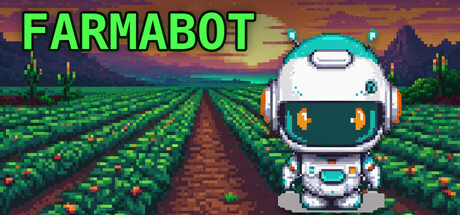
Some of the 2D art in Farmabot — including certain character, creature and crop sprites, cutscene background illustrations, and the game's store page / marketing images (capsules, icon, key art) — was produced with the assistance of locally-run generative AI image tools (Stable Diffusion). All AI-assisted assets are pre-generated (there is no live or runtime AI generation in the game); every asset was curated, edited, and assembled by the developer before inclusion.
Campaign Forge uses generative AI as a core, opt-in feature. Worlds, characters, regions, and stories are generated live, on demand, at the player's direction, using an AI provider and model the player chooses (paid cloud, free cloud, or a fully local/offline model — bring your own API key or run locally).
AI writing tools were used to assist in drafting store page descriptions and marketing copy. All game content, code, artwork, and audio were created without generative AI.
Portions of the game's artwork and promotional graphics were created with the assistance of generative AI and then reviewed, edited, and integrated by the developer. No live AI-generated content is produced during gameplay.
Generative AI tools were used during development to assist with the creation of certain visual assets, 3D assets, textures, localization text, and other pre-generated content included with the product. All such content has been manually reviewed, selected, and edited by the developer to ensure quality and to avoid illegal, infringing, or impersonating content.
StorySmith uses generative AI to write its stories live as you and your Twitch chat make choices. The AI model runs locally on your machine by default, with an optional bring-your-own-key cloud option — so your playthroughs stay private and no two are ever the same.
Mars Directive features autonomous AI characters powered by Large Language Models. They don't just generate dialogue—they can observe their surroundings, reason about situations, make independent decisions, interact with the environment, and communicate naturally with both the player and each other. Their behavior is guided by character definitions, gameplay context, and behavioral rules to ensure a consistent gameplay experience.
Generative AI tools were used during development to assist with writing, reviewing, and optimizing portions of the game’s code. All AI-assisted code was manually reviewed, modified, and tested by the developer. Generative AI is not used to generate content while the game is running, nor was it used to create player-facing artwork, audio, narrative, or other text content.
This application uses generative AI technology (Large Language Models), such as Google Gemini, for character interaction and to enable characters to understand and react to your desktop environment.
Character Chat: The AI generates real-time responses based on character personalities in response to player input.
Visual Understanding (Optional): Only with player permission, the AI analyzes desktop screens or webcam images to provide context-aware reactions.
Web Search: The AI may utilize real-time internet searches to retrieve up-to-date information.
To ensure the prevention of inappropriate content generation, we have implemented custom prompt restrictions and usage limits (quotas) in addition to the standard safety filters of the AI service.
Generative AI tools were used to assist with the localization of store page text and the creation or refinement of certain marketing materials. All AI-assisted content was reviewed and edited by the development team before publication. No content is generated by AI during gameplay.
During development of this game, generative AI was used to assist with writing portions of the source code. All AI-generated code was reviewed, modified, tested, and approved by the developer before being incorporated into the game. The game's design, functionality, and overall quality are the result of developer oversight and implementation.
In keeping with the game's premise, many of the in-game AI opponent's answers — along with question prompts, post-game flavor text, and portions of the French localization — were written with the help of generative AI, reviewed and directed throughout by the developer.
The characters in Conversation Simulator are played live by an AI language model that runs entirely on your computer — no cloud AI service is involved. All character dialogue and end-of-session feedback is generated locally during play. A built-in safety policy that cannot be disabled keeps generated content within a PG/PG-13 boundary: no sexual content, no content involving minors, no impersonation of real people, no voice cloning, and no claims to be a real therapist, doctor, or lawyer. Self-harm and crisis topics are intercepted and answered with a resource message instead of AI-generated content.
This game includes pre-generated AI-assisted visual/audio/text assets that were selected, edited, and integrated by the developer. The game does not use live-generated AI during play.
This game is intended as a criticism of generative AI. The main premise of the game is fighting AI Slop as such we used existing AI images for the enemies and environment. We did not generate any of these images ourselves. All AI art used in the game is pre-existing and found on the internet.
Generative AI was used during development to assist with localization and the creation of character voices. During gameplay, AI generates Amber’s dialogue and speech in real time and determines her actions and facial expressions based on the player’s interactions.
Some visual assets in the game were created with the assistance of generative AI tools. All gameplay systems, mechanics, and interactive content were developed by the team.
This game uses content created or assisted by generative AI. Generative AI was used to help create and edit some visual assets, music/sound materials, and scripts. All final content was reviewed, selected, and adjusted by the developer before being included in the game.
3d Models for Space Ships created with Meshy.
cooperation in Thinking, design and balance.
C# coding.
Unity Editor Agent for crafting suns and planets out of bought Unity Asset Store Assets.
This application uses AI-powered text-to-speech (Microsoft Edge-TTS) to read
aloud text files that you import yourself. An on-device language model (or an
optional API you configure) analyzes the imported text to identify speakers and
assign voices. The app does not generate any original story, art, or music
content — all audio is synthesized from text you provide.
This game uses generative AI only for in-game character dialogue. Players can communicate with certain characters using natural language, and the AI generates text responses based on the game's setting and the current conversation context. Apart from character dialogue text, the game's artwork, music, sound effects, code, store page assets, and marketing materials are not generated by AI.
This game's code was written with the assistance of generative AI. No AI-generated artwork or audio is used.
The visuals are hand-coded by the developer and the music is procedurally generated. AI also assisted with some in-game text and its French translation.
The game's fighters are controlled by AI models (LLMs) chosen by the player and reached through their own OpenRouter API key. During a match the model decides the character's actions and writes the short taunts shown on screen (text only). The game does not generate images, audio, music or voices with AI: every character, arena, soundtrack and sound effect is authored in advance and ships with the game. Every AI-generated line goes through an illegal content filter before it is displayed, on the player's computer and again on the server that hosts online matches, and online matches have a report system reviewed by a human team.
P·A·L - Personal Artificial Lifeform is a generative AI software suite. P·A·L generates written word, spoken word, voice to text, generative images, generative music and sound, game code, and is capable of learning through user choices.
Always use AI responsibly.
The AI model has been fine-tuned with multiple safety measures — including prompt restrictions, keyword filtering, and compliance safeguards — to ensure all generated content remains appropriate.
If you encounter any inappropriate or non-compliant content during gameplay, please report it to our support team, and we will promptly review and make the necessary adjustments.
Thank you for your understanding!
AI tools were used in writing the game's code. No AI generated images, music, audio, or models were used. All artwork is Public-Domain paintings from famous, historical artists.
Generative AI was used during development to create a limited number of in-game images and to generate translations for multiple languages. All AI-generated content was reviewed and edited as needed by the development team.
Pocket Chief! uses generative AI for optional text conversations, activity summaries, and task organization. Some artwork and localization used in the product and its marketing were also created with AI assistance. Users can choose Pocket Chief Cloud, connect their own compatible model provider (BYOK), or use a local model endpoint.
AI was used to generate background images, music, and audio.
Converting player drawings into AI renderings is optional and requires the host to have a Gemini API key.
Some store artwork and promotional assets were created with the assistance of AI tools. The final game content, gameplay, and mechanics were developed by our team.
Generative AI was used during the development process to create a portion of the textures used in the game environments. These assets were subsequently reviewed and refined by our development team to ensure quality and originality.
Generative AI tools were used during the development of this game to assist with early concept art generation, texture optimization, and fine-tuning certain visual assets. All final in-game assets have been reviewed and refined by the development team.
Some graphical assets (capsule images, etc.) and music tracks
were created using AI generation tools.
No AI generates content in real time during gameplay.
All AI-generated materials were reviewed and selected by a human.
Players may select a preset worldview and character template, or customize their own worldview and character settings before starting the game. They can interact via text typing in the in-game chat window, as well as click AI-provided options to engage with AI-generated content.
The Steam version provides only local generative AI that runs on the user’s device. It does not include third-party online AI services or support the configuration of external API keys.**[Important Information Before Purchase]:** The response speed of local models will vary depending on your device’s CPU, GPU, and memory configuration. The intelligence level of the built-in local models differs significantly from that of large online models.
Some of the 2D art in Farmabot — including certain character, creature and crop sprites, cutscene background illustrations, and the game's store page / marketing images (capsules, icon, key art) — was produced with the assistance of locally-run generative AI image tools (Stable Diffusion). All AI-assisted assets are pre-generated (there is no live or runtime AI generation in the game); every asset was curated, edited, and assembled by the developer before inclusion.
Campaign Forge uses generative AI as a core, opt-in feature. Worlds, characters, regions, and stories are generated live, on demand, at the player's direction, using an AI provider and model the player chooses (paid cloud, free cloud, or a fully local/offline model — bring your own API key or run locally).
AI writing tools were used to assist in drafting store page descriptions and marketing copy. All game content, code, artwork, and audio were created without generative AI.