Public Steam disclosure research27,951 disclosures tracked
Where do games disclose AI use?
Search developers’ Steam disclosures, compare classified AI use across
games, and follow recorded changes.
This index adds cross-game classifications and statistics to
statements published on individual store pages.
Groups reflect automatic analysis of public disclosures; mature records are excluded. These counts do not measure AI use across all of Steam.
Missing or unclear statements cannot establish whether a game uses AI.
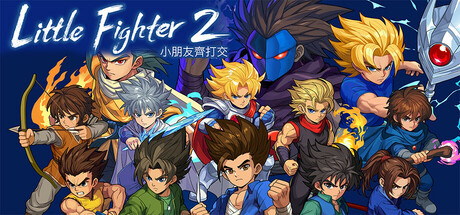
AI was used in the creation of certain visual assets, including character avatars, title screen artwork, promotional materials, and background art. However, these assets still required substantial manual work such as design, sketching, outline drawing, and polishing. The AI was used primarily as a tool for coloring and enhancement, and it did not dictate the creative direction. The visual style remains faithful to the original Little Fighter 2.
Some people assume that because AI was used in certain artwork, it must have been applied throughout the entire project. That is far from the truth. I used AI primarily for large-scale visual tasks. To give a clearer picture: the game includes over 3,000 hand-crafted sprite frames, composed from thousands of hand-drawn body parts. In contrast, only about 100 images were AI-assisted, and many of those, such as promotional artwork, don't even appear in the actual game.
I understand that some people may have concerns about the use of AI in the creative process. But I hope people can see the broader context and appreciate the amount of manual effort that went into making this game. Please know that I’m a solo developer working with a limited budget. I’ve been developing this project for around 3.5 years; even quitting my full-time job for a year to work on it full time, without expecting it to cover even half of my previous salary. I've done my best to balance quality and practicality. Your understanding and support mean a great deal to me.
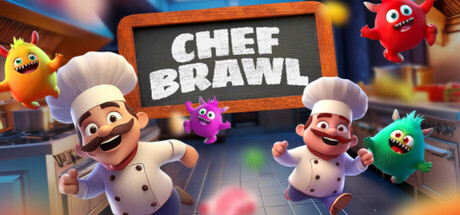
"In Chef Brawl, we have utilized AI in the following ways:
Content Generation: Some game content was initially generated using AI tools. This served as a starting point for our creative process.
Design References: AI was used to create design references and inspiration for our final product.
Human Refinement: While AI assisted in the initial stages, all AI-generated content and designs were reviewed, refined, and finalized by our human development team to ensure quality and coherence with our game vision.
No core gameplay mechanics or critical narrative elements rely on real-time AI processing. The AI was primarily used as a tool in our development process to enhance creativity and efficiency."
We have used AI to generate a part of the story text, story images and story voice. We are also using AI to make the opponents move automatically in direction of the player.
Only the character art in the logo was generated by AI.
Even the logo title text, I created myself in Photoshop.
I created all the characters in Aseprite, without AI.
I scripted the game, designed, and built it myself, and leveraged asset packs.
In the development of our game, we utilized AI-generated content to enhance various aspects of the game's production. Specifically, AI tools were used under a licensed agreement with Yakno to assist in generating vocals, lyrics, and certain visual elements.
The AI-generated vocals and lyrics served as a creative foundation, providing inspiration and support in crafting the final musical pieces featured in the game. Additionally, AI was employed to create preliminary images, which were further refined by our design team to achieve the desired artistic vision.
We use AI for audio and for some of the pictures. However, most content is made by artists. Since we are a parody game, we modify any content to fit the parody. We also try our best to make sure nothing is an immediate copy, and that we are generating unique content.
I use AI for the character portrait graphics and for artwork images. As a solo developer, AI presents numerous opportunities to develop my project in a cost-effective, swift, and efficient manner. Some components of this game feature a mix of human and AI-generated content; nothing is solely produced by AI. It's important to me to use as little AI as possible, ensuring that 95 percent of my content is generated without AI.
I am currently using ElevenLabs synthetic voices for my eight characters. The synthetic voices are generated from scratch. They are not clones of any real people. I look forward hiring professional voice actors once the game is successful.
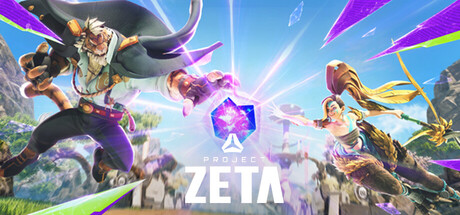
In Project ZETA, AI-generated content is actively utilized across various domains, including animation, sound, character design, and VFX. However, such content is employed solely to enhance development efficiency; all final art assets are meticulously reviewed and completed by designers to align with the project’s creative direction.
The game uses generative AI to generate store page images for the game, as well as Steam community assets and marketing materials and parts of the game UI
The game uses generative AI to generate store page images for the game, as well as Steam community assets and marketing materials and parts of the game UI
We are using AI for testing content and ideas, our future focus is to make all of the content traditionally by hand to bring a good work like early stages of development in the game.
AI usage is mainly used for concept content and support during the most complicated parts from the development of the game, the entirety of Ghoul Fright core is hand made
In the development of this title, generative AI has been used in the following areas:
- Reference images for background graphics
- Programming assistance
- Translation assistance