Public Steam disclosure research25,380 disclosures tracked
Where do games disclose AI use?
Search developers’ Steam disclosures, compare classified AI use across
games, and follow recorded changes.
This index adds cross-game classifications and statistics to
statements published on individual store pages.
Groups reflect automatic analysis of public disclosures; mature records are excluded. These counts do not measure AI use across all of Steam.
Missing or unclear statements cannot establish whether a game uses AI.
StreamLay does not include AI-generated art, audio, or video assets.
Users provide character sprites or create them independently.
AI assistance was used during development to
help write code and draft store page text and documentation only.
Some of the artwork in Clash of Crests was produced with generative AI image tools and then cropped, composited, retouched and finished by the developer. This includes unit and character portraits, faction crests, campaign banners and key art, and some environment and prop art. Parts of the in-game lore and flavour text were drafted with AI assistance and then edited by the developer. Nothing is generated by AI while you play: all content ships with the game as fixed, pre-made assets.
Generative AI tools were used during development to assist with creating and refining a limited number of sprites, images, and sound effects. All resulting assets were reviewed, edited where necessary, and approved before inclusion in the game. The game does not generate AI content during gameplay.
"The game uses artificial intelligence generation tools to create pre-rendered 2D content, specifically the game's logo and graphic elements for the store page."
The music for this game has been created with AI through serious prompting and critical listening.
Want to donate your own electric swing music to this game? Contact us on Discord :)
Generative AI was used during production to create license icons and to assist with store descriptions and Chinese and English text. The icons were selected, edited and integrated as fixed assets. The AI use described here takes place during production.
Generative AI was used to create portions of the Steam store capsule and library artwork and the achievement icon artwork. The final assets were reviewed, composed, cropped, and branded by the developer. The game itself does not generate AI content during gameplay.
The background music in this game was pre-generated with a generative AI tool. No AI-generated content is used for visuals, characters, environments, icons, store artwork, or text, and the game does not generate content at runtime or connect to external AI services.
Generative AI tools were used during development to assist with portions of the game’s source code, narrative, quest text, NPC dialogue, interface copy, and promotional artwork. All AI-assisted content was reviewed and incorporated by the developer before release. The game does not generate content using AI while it is running.
This game uses generative AI for some pre-produced visual assets, including character artwork and backgrounds, and for text generated during gameplay. A language model running locally on your computer generates VTuber dialogue and responses based on player input, character settings, and the current game situation. Generated dialogue can vary between playthroughs.
Generative AI was used to assist with the development of this game and with the creation of some of its visual assets.
The game includes an optional custom character feature. Players may enter text descriptions and provide reference images to generate character visuals. Players may also use text descriptions together with character reference images to create custom cinematic videos for their characters’ special moves.
These materials are generated by generative AI through an online service during gameplay. Once generation is complete, the resulting content is provided to the player for use as part of their custom character data.
I used AI to help draft written text across the game: NPC dialogue and names, skill and talent descriptions, item and weapon flavor text, quest and lore text, and location names. I design the overall story beats and character interactions myself; AI helps draft the individual lines, especially useful since English isn't my first language. Everything shipped was reviewed by me, with many lines kept close to their original draft and others rewritten to better fit the game. All artwork, including the key art, logo, and icons, was made entirely by hand by a human illustrator. The world map was assembled by me using licensed 2D art assets.
AI tools were primarily used as assistance during the coding and development process. Additionally, AI was used to a very limited extent for a small number of 2D visual assets within the game.
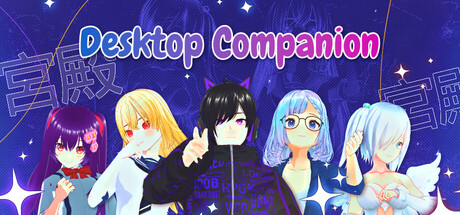
Desktop Companion uses generative AI: your companion's replies are generated live by a large language model that runs entirely on your own PC. The app ships with its own safety-tuned model; nothing is sent to an external AI service. Built-in, application-level safeguards screen generated content to block prohibited output.
Portions of the game's 2D artwork were created with the assistance of generative AI image tools, then curated, edited, and integrated by the developer. Text localization into non-English languages was produced with AI translation assistance under developer review.
AI was used mainly for localization and for drafting written content, which the developer reviewed and edited.
No generative image, audio or video models were used. The game's sprites, item icons and zone backdrops are drawn procedurally by code. the sound effects and the trailer's audio bed are synthesised from waveform formulas.
There is no run-time AI in the shipped product - nothing is generated on the player's machine.
Lost Gaijin uses generative AI during development and gameplay. Selected pre-generated visual and audio assets used in the game and its Steam materials were created or edited with generative AI tools and reviewed by the developer. During play, text-generating AI responds to player input and game state to create dynamic story content and personalized Japanese-language coaching. Live-generated text is provided through OpenRouter and may vary between playthroughs.
Q-Rely uses locally running artificial intelligence to provide interactive AI-generated responses during use. The AI can generate text responses based on the user's input and, depending on the user's configuration, can also generate voice output using locally installed Text-to-Speech (TTS) engines.
Generative AI was used during development to assist in creating the application's logo. The logo is a fixed visual asset and is not generated or modified by generative AI during use of the application.
Q-Rely does not use generative AI to create the application's default character artwork, backgrounds, or other visual assets during use. The application's AI-generated content is primarily conversational text and, when voice output is enabled, synthesized speech.
Q-Rely is designed to allow users to run AI models locally on their own computer. Users can select and install compatible AI models and configure the application's AI and voice settings according to their preferences.
Some background music and visual assets included with the game or used in its marketing materials were created using generative AI and selected or edited by the developer. Generative AI is not used during gameplay, and no player input is sent to an AI service.
I built every environment, HUD and system in MOGGED by hand over months. I even placed the individual pingpong balls and the patches of grass myself.
But two things did involve AI: A few decals and icons, made for comedic effect. And several voice lines: narrator and NPC barks. If the game does well, I'm hiring proper voice acting.
Everything I did not make myself is properly licensed and credited to the people who did.
AI was used to create write parts of the game code and scripting, to refine mech textures, and for voiceover and audio content - to be used as placeholders while in playtests.
Generative AI tools were used during development to assist with some visual assets, including textures, 3D asset creation and store artwork, as well as store text and translations. Assets are reviewed and adapted before integration. VoxelForge does not generate AI content during play and does not connect to an external AI service during play.
I use AI as a "better search engine" for code snippets and design research, and to create examples I can mark up to show artists what I am looking for. Paid artists create the monsters, backgrounds and UI icons, and everything else is hand-created or downloaded from asset packs or is available from free art sites. The artists also use AI in their workflows.
We are using AI to help write, structure, and/or review written code by the team. Some of the artwork in this game was produced with the help of generative AI tools.
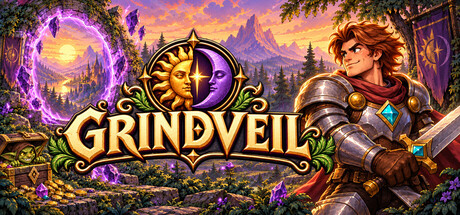
Grindveil's art is made with generative AI tools. We generate, then pick, crop, recolour and optimise every piece by hand before it ships, and we throw out the ones that do not fit. The same goes for part of the writing: item and location names, some of the lore in the in-game Codex, and the interface translations for our fourteen languages are drafted with AI help and reviewed by us.
Nothing is generated while you play. No AI runs on your machine, nothing you type is sent to an AI service, and every image and every line of text in the game was made and checked before release.
This game uses generative AI tools to assist with the creation of some visual assets, promotional images, sound effects, and localization drafts. All AI-assisted content is reviewed, edited, and integrated by the developer before release. The game does not use generative AI to create real-time user-facing content during gameplay.
This game utilized generative AI tools to assist with code writing. All AI-generated content has been strictly tested, reviewed, and optimized to ensure game quality and stability.
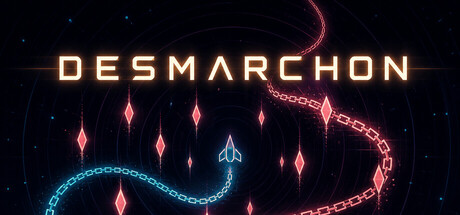
Desmarchon currently includes pre-generated AI images for the store page and achievement images, as well as AI-generated promotional artwork and icons, and some text. Everything has been reviewed by a human.
Generative AI tools were used to assist in the production and refinement of selected promotional and marketing materials for United Football. AI-assisted outputs were reviewed and edited by the development team before use. Generative AI is not used to generate live gameplay content.
Generative AI tools were used during development to create or refine selected visual and text assets. All such content was pre-generated, reviewed, and edited before use; the game does not use live generative AI.
We occasionally used generative AI as an assistive tool to refine certain visual assets, enhance texture resolutions, and process minor audio elements. These tools were used sparingly to support our production workflow, and all final content has been manually reviewed and polished by our team to ensure it meets our quality and legal standards.
DeepL was used for language translation of the subtitles and also for the text in the Steam store. Some of the voice acting was generated using a paid ElevenLabs subscription.
Usage of AI-assisted coding tools were used to help debug, and write some lengthy aspects of the game. But all creative work (art, animation, music, sound effects, and all writing and dialogue) is made by hand, without any generative AI whatsoever.
StreamLay does not include AI-generated art, audio, or video assets.
Users provide character sprites or create them independently.
AI assistance was used during development to
help write code and draft store page text and documentation only.
Some of the artwork in Clash of Crests was produced with generative AI image tools and then cropped, composited, retouched and finished by the developer. This includes unit and character portraits, faction crests, campaign banners and key art, and some environment and prop art. Parts of the in-game lore and flavour text were drafted with AI assistance and then edited by the developer. Nothing is generated by AI while you play: all content ships with the game as fixed, pre-made assets.
Generative AI tools were used during development to assist with creating and refining a limited number of sprites, images, and sound effects. All resulting assets were reviewed, edited where necessary, and approved before inclusion in the game. The game does not generate AI content during gameplay.
"The game uses artificial intelligence generation tools to create pre-rendered 2D content, specifically the game's logo and graphic elements for the store page."
The music for this game has been created with AI through serious prompting and critical listening.
Want to donate your own electric swing music to this game? Contact us on Discord :)
Generative AI was used during production to create license icons and to assist with store descriptions and Chinese and English text. The icons were selected, edited and integrated as fixed assets. The AI use described here takes place during production.
Generative AI was used to create portions of the Steam store capsule and library artwork and the achievement icon artwork. The final assets were reviewed, composed, cropped, and branded by the developer. The game itself does not generate AI content during gameplay.
The background music in this game was pre-generated with a generative AI tool. No AI-generated content is used for visuals, characters, environments, icons, store artwork, or text, and the game does not generate content at runtime or connect to external AI services.
Generative AI tools were used during development to assist with portions of the game’s source code, narrative, quest text, NPC dialogue, interface copy, and promotional artwork. All AI-assisted content was reviewed and incorporated by the developer before release. The game does not generate content using AI while it is running.
This game uses generative AI for some pre-produced visual assets, including character artwork and backgrounds, and for text generated during gameplay. A language model running locally on your computer generates VTuber dialogue and responses based on player input, character settings, and the current game situation. Generated dialogue can vary between playthroughs.
Generative AI was used to assist with the development of this game and with the creation of some of its visual assets.
The game includes an optional custom character feature. Players may enter text descriptions and provide reference images to generate character visuals. Players may also use text descriptions together with character reference images to create custom cinematic videos for their characters’ special moves.
These materials are generated by generative AI through an online service during gameplay. Once generation is complete, the resulting content is provided to the player for use as part of their custom character data.
I used AI to help draft written text across the game: NPC dialogue and names, skill and talent descriptions, item and weapon flavor text, quest and lore text, and location names. I design the overall story beats and character interactions myself; AI helps draft the individual lines, especially useful since English isn't my first language. Everything shipped was reviewed by me, with many lines kept close to their original draft and others rewritten to better fit the game. All artwork, including the key art, logo, and icons, was made entirely by hand by a human illustrator. The world map was assembled by me using licensed 2D art assets.
AI tools were primarily used as assistance during the coding and development process. Additionally, AI was used to a very limited extent for a small number of 2D visual assets within the game.
Desktop Companion uses generative AI: your companion's replies are generated live by a large language model that runs entirely on your own PC. The app ships with its own safety-tuned model; nothing is sent to an external AI service. Built-in, application-level safeguards screen generated content to block prohibited output.
Portions of the game's 2D artwork were created with the assistance of generative AI image tools, then curated, edited, and integrated by the developer. Text localization into non-English languages was produced with AI translation assistance under developer review.
AI was used mainly for localization and for drafting written content, which the developer reviewed and edited.
No generative image, audio or video models were used. The game's sprites, item icons and zone backdrops are drawn procedurally by code. the sound effects and the trailer's audio bed are synthesised from waveform formulas.
There is no run-time AI in the shipped product - nothing is generated on the player's machine.
Lost Gaijin uses generative AI during development and gameplay. Selected pre-generated visual and audio assets used in the game and its Steam materials were created or edited with generative AI tools and reviewed by the developer. During play, text-generating AI responds to player input and game state to create dynamic story content and personalized Japanese-language coaching. Live-generated text is provided through OpenRouter and may vary between playthroughs.
Q-Rely uses locally running artificial intelligence to provide interactive AI-generated responses during use. The AI can generate text responses based on the user's input and, depending on the user's configuration, can also generate voice output using locally installed Text-to-Speech (TTS) engines.
Generative AI was used during development to assist in creating the application's logo. The logo is a fixed visual asset and is not generated or modified by generative AI during use of the application.
Q-Rely does not use generative AI to create the application's default character artwork, backgrounds, or other visual assets during use. The application's AI-generated content is primarily conversational text and, when voice output is enabled, synthesized speech.
Q-Rely is designed to allow users to run AI models locally on their own computer. Users can select and install compatible AI models and configure the application's AI and voice settings according to their preferences.
Some background music and visual assets included with the game or used in its marketing materials were created using generative AI and selected or edited by the developer. Generative AI is not used during gameplay, and no player input is sent to an AI service.
I built every environment, HUD and system in MOGGED by hand over months. I even placed the individual pingpong balls and the patches of grass myself.
But two things did involve AI: A few decals and icons, made for comedic effect. And several voice lines: narrator and NPC barks. If the game does well, I'm hiring proper voice acting.
Everything I did not make myself is properly licensed and credited to the people who did.
AI was used to create write parts of the game code and scripting, to refine mech textures, and for voiceover and audio content - to be used as placeholders while in playtests.
Generative AI tools were used during development to assist with some visual assets, including textures, 3D asset creation and store artwork, as well as store text and translations. Assets are reviewed and adapted before integration. VoxelForge does not generate AI content during play and does not connect to an external AI service during play.
I use AI as a "better search engine" for code snippets and design research, and to create examples I can mark up to show artists what I am looking for. Paid artists create the monsters, backgrounds and UI icons, and everything else is hand-created or downloaded from asset packs or is available from free art sites. The artists also use AI in their workflows.
We are using AI to help write, structure, and/or review written code by the team. Some of the artwork in this game was produced with the help of generative AI tools.
Grindveil's art is made with generative AI tools. We generate, then pick, crop, recolour and optimise every piece by hand before it ships, and we throw out the ones that do not fit. The same goes for part of the writing: item and location names, some of the lore in the in-game Codex, and the interface translations for our fourteen languages are drafted with AI help and reviewed by us.
Nothing is generated while you play. No AI runs on your machine, nothing you type is sent to an AI service, and every image and every line of text in the game was made and checked before release.
This game uses generative AI tools to assist with the creation of some visual assets, promotional images, sound effects, and localization drafts. All AI-assisted content is reviewed, edited, and integrated by the developer before release. The game does not use generative AI to create real-time user-facing content during gameplay.
This game utilized generative AI tools to assist with code writing. All AI-generated content has been strictly tested, reviewed, and optimized to ensure game quality and stability.
Desmarchon currently includes pre-generated AI images for the store page and achievement images, as well as AI-generated promotional artwork and icons, and some text. Everything has been reviewed by a human.
Generative AI tools were used to assist in the production and refinement of selected promotional and marketing materials for United Football. AI-assisted outputs were reviewed and edited by the development team before use. Generative AI is not used to generate live gameplay content.
Generative AI tools were used during development to create or refine selected visual and text assets. All such content was pre-generated, reviewed, and edited before use; the game does not use live generative AI.
We occasionally used generative AI as an assistive tool to refine certain visual assets, enhance texture resolutions, and process minor audio elements. These tools were used sparingly to support our production workflow, and all final content has been manually reviewed and polished by our team to ensure it meets our quality and legal standards.
DeepL was used for language translation of the subtitles and also for the text in the Steam store. Some of the voice acting was generated using a paid ElevenLabs subscription.
Usage of AI-assisted coding tools were used to help debug, and write some lengthy aspects of the game. But all creative work (art, animation, music, sound effects, and all writing and dialogue) is made by hand, without any generative AI whatsoever.