Public Steam disclosure research27,951 disclosures tracked
Where do games disclose AI use?
Search developers’ Steam disclosures, compare classified AI use across
games, and follow recorded changes.
This index adds cross-game classifications and statistics to
statements published on individual store pages.
Groups reflect automatic analysis of public disclosures; mature records are excluded. These counts do not measure AI use across all of Steam.
Missing or unclear statements cannot establish whether a game uses AI.
Some 3D models, textures, voices, sound effects and music in this game and its trailers were made with the help of generative AI tools, as were parts of the store page text and its translations. Everything was reviewed and edited by the developer. The game does not generate any content with AI while you play.
As a small independent studio, we used generative AI tools offline to assist with a limited set of assets, including select 2D and promotional artwork, voice lines, and a handful of 3D environmental landmarks. Everything was directed, edited, and integrated by hand. No generative AI runs during gameplay, and all core ships, characters, and game systems are built from custom code and licensed art assets.
Steam asks only about AI-made content that players see or hear: art, sound, writing, translation and store marketing. AI tools used only to work faster, such as coding help, do not need to be listed.
Some 2D art assets in the game and on the store page (such as stamps, frames, icons, achievement icons and some UI decorations) were created with the help of Google Flow image generation, then selected and edited by the developer. All gameplay, balloon toons, 3D models and game design are made by the developer. The game does not generate any AI content while you play.
During the development of this game, we used AI as a reference tool to explore ideas and support the development process. AI served as an aid to the reference process, while the final decisions regarding the game's design and development were made by us.
The game logo, the app icon, the store capsule images and some of our marketing materials were created with the help of AI tools and then edited by our team.
AI tools were used during development as assistants: to help write and debug program code, and to help edit some marketing materials for the store page. The music in the store trailer was generated with AI. All game content, including characters, environments, mini-games and gameplay, was created and reviewed by the development team.
Some of the game’s base images were generated using AI, then refined and polished by hand by experienced artists. AI has also been used as a coding partner throughout development. All code is either written or reviewed by a developer. The game itself contains no AI-generated or AI-driven content or systems.
Some news and event images, shown on the store page and occasionally in the game, were created using generative AI tools and reviewed by our team before release.
Localization - The localization is made by a mix of various contractors, crowd localization websites and volunteers. They might or might not used AI (LLM) or Machine Translation (statistical analysis) to do it in full or in part. I have no way of knowing or verifying this. In short, I have no clue. Note: v1.13 uses (in part) placeholder low quality locale (Machine Translation).
During development, we used generative AI tools for some UI image assets, 3D models and promotional images. Some of the English text was also first drafted with generative AI.
All generated assets and translations were manually edited, refined and quality-checked by our developers before being added to the game.
The game does not use AI to generate any content during play.
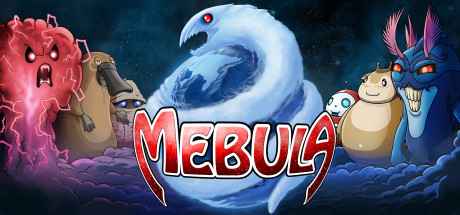
Mebula has been around for a long time: we have been developing the game since 2013, and it launched in 2017. The Mebulys and the game world are carefully drawn by hand. Today we use generative AI to translate the game texts into other languages. AI tools also help us write, revise and proofread texts for the game, the store page and announcements. The short intro and ending of our trailer (clouds, motion and sound) were created with AI. All content was selected, edited and reviewed by our team.
We wrote small recoloring scripts with help from AI coding tools to create different color versions of art, such as recolored enemies. The scripts only shift the colors of our existing pixel art. We did not use AI image generators. Our artists checked every variant before it went into the game.
We're just two indie devs making games we love. All 3D models and UI were handmade by artists. We used AI tools to help with backgrounds, portraits, icons, translations and some text, but everything was reviewed and polished by hand.
Generative AI tools were used to assist in creating promotional artwork for the game's Steam store page, including capsule images and other marketing graphics.
AI-generated artwork is limited to promotional materials and is not used in the game's actual gameplay, environments, characters, or other in-game assets.
Some content in CoFishing was created with the help of generative AI tools during development: character voices, some 2D art and textures, music and sound effects, some in-game text. This includes content seen in the trailers and on this page. Everything was reviewed and put together by our team.
Generative AI tools assisted development, including the creation of vector artwork, game text, translations, and code used to produce visual and audio content. These tools were used under the developer’s direction, with human review and creative decisions. The game does not use live generative AI during gameplay.
The background music, the story mode illustrations, the title logo, the achievement icons and the store page artwork (capsule and library images) were created with generative AI tools, then designed and edited by the developer. No content is generated by AI while you play.
Some content in SIGNCLASH was created with generative AI tools and then reworked by hand. The 3D models of the fighters, the player avatars, the accessories and part of the scenery were generated with Tripo and Meshy, then rigged, corrected and animated by hand. Some interface art (the logo, the four hand-sign icons, the story mode frames and buttons) and the store capsule artwork were made with AI image generators, starting from our own in-game characters. The combat music was generated with AI. The French translation and parts of the in-game and store page text were written with the help of AI tools. No AI runs while you play: nothing is generated on your machine.
Visual art and UI were created with the help of AI tools. Everything else was made by hand by a solo developer: the gameplay, the evolution stages, quests, puzzles, lore and many more. Nothing in the game is generated by AI while you play.
Some of the game's content was made with the help of generative AI tools during development (Google Gemini). This includes the painted background illustrations used in story scenes, decorative ornaments in the user interface, song cover art, and the music. All AI-assisted content was reviewed, edited and put together by the developer. The 3D characters, outfits, venues, gameplay and code were made by the developer. The game does not generate any content with AI while it is running.
Bad Credit? No Problem! is made by a one-person studio, with help from artists, musicians, translators and playtesters along the way.
AI tools were used in some places. The BETA translations, for example, started as machine translation and were corrected by volunteer proofreaders where we had them.
Generative AI was used to create the tower models, code support, and most of the 2D graphics. Certainly most of the marketing. It's wildly helpful for a solo developer.
AI tools were used during development to assist with writing code and shaders (including fire effects, goal nets, webcam distortion filters and paint).
During Early Access we use AI-generated 2D concept art as temporary background images on some menu screens while we settle on the game's final art direction.
These are placeholders. Once we have feedback from players on the direction we are taking, our 2D artist will replace them with final, hand-made artwork created without AI.
No content is generated by AI while you play — the game ships with a fixed set of assets.
Donut was developed with extensive help from Anthropic's Claude AI, directed and reviewed by our developer. The original card game was designed by hand, and version 2 onward was built with AI. most of the game's code was written with AI, and the card designs, table felts, venue backdrops, game logo and in-game items are drawn by code that AI wrote - no image-generation models were used. Character names, personalities and dialogue, plus much of the game's text, were written with AI. All music and sound effects were created with ElevenLabs. The icon, store art, screenshots, and trailer were produced with AI-written tools from real engine footage.
Tropalm was made with AI, all the way through. Under the developer's direction, large language models (mainly Anthropic's Claude) wrote the game: its code, every 3D model and animation, the programs that draw its textures and icons, the programs that synthesize its sounds and music, and its translations. The game uses no images made by image-generation AI and no sounds made by music-generation AI: every picture is drawn by code or rendered from the game itself, and every sound is synthesized. The fonts are licensed work by others.
While you play, your AI companions' words and actions are generated live by a language model (Tropalm Cloud AI, or a local or other model you choose), and their voices by text-to-speech. The trailer's voices were made with text-to-speech as well.
Connects to 3rd-Party Service for AI Content Generation: Tropalm Cloud AI, or a model that runs on the player's own PC
Generative AI was used to create and edit illustrative artwork used in the Steam store and library branding. These promotional illustrations are not gameplay screenshots.
AI image generation was used to create and modify art assets for use in the steam capsule and related marketing material. Some 3D models and in-game assets were created and modified using AI generative tools and cleaned up in Blender.
Generative AI tools were used during development to create music and visual assets, and to assist with store-page text. This content is generated in advance and included in the game or its store materials. The game does not generate AI content during gameplay.
Some sound effects, a few UI images and some background models were created with the help of generative AI tools. Store page text and translations were also produced with AI assistance and reviewed by our team. Characters, gameplay, maps and everything else were made by humans.
Generative AI was used to translate the store page and to edit the videos. The original character artwork, UI, and world design are hand-drawn by FUCHI (FUCHI COMPANY), and everything else was finished by BottleCube's designers. The game does not generate any content with AI during gameplay.
Generative AI tools assisted with selected, limited artwork and environmental texture effects, a Local LLM running through Piper TTS using my own voice was used for character voices during development. This was an artistic choice to get a genuine sounding AI voice for characters that require it AI artwork for lore reasons and will be self explanatory in game. These assets were selected, edited and integrated by the very fallible and human development team. No content is generated during gameplay.
The LastShard uses generative AI for some content made in advance. Music, sound effects, creature voices and trailer narration were generated with ElevenLabs. Some 2D artwork was generated with OpenAI's image tools: the key art and story illustrations, spell, skill and action icons, a few interface panels, and website artwork. Some in-game text was drafted with AI help. Everything is reviewed by the developer. The 3D world, characters, creatures and animations are licensed asset packs and our own work. Nothing is generated by AI while you play: computer-controlled players speak pre-written lines.
Translations were made on the game’s own translation website, which offers optional AI-generated suggestions that can be turned off. Every translation that ships with the game was either written from scratch by a human translator, or is an AI suggestion that a human translator edited or approved. The developer then approved each translation under a four-eyes principle.
No other content in the game or on the store page was made by generative AI. The AI drivers use traditional machine learning, trained on the developer’s own machines using only the game itself as their environment and data.
The in-game text (names and descriptions, in Japanese and English) and its translations into ten more languages, the store page text and the trailer captions were written with the help of a generative AI assistant (Claude). The illustration, 3D model, music and sound effect assets used in the game are human-made.
Generative AI tools were used during development to assist with creating and refining portions of the game’s 2D artwork and promotional imagery. All included outputs were reviewed, edited, selected, and integrated by the developer. The game does not generate AI content while running and does not provide players with live AI generation features.
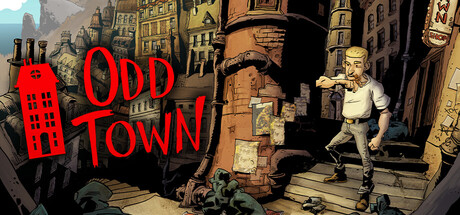
Some dialogue in the early part of Odd Town was created with assistance from LLM during development of the original demo and carried over into the full game. We are reviewing the script to identify all affected dialogue and replace it with original, human-written text in an upcoming update.
No other content in the released version of Odd Town was generated or created with AI assistance.
Some content was created with the help of AI tools and reviewed by the developer, including parts of the text, translations, voice, sound and music. No AI content is generated during gameplay.