Public Steam disclosure research25,380 disclosures tracked
Where do games disclose AI use?
Search developers’ Steam disclosures, compare classified AI use across
games, and follow recorded changes.
This index adds cross-game classifications and statistics to
statements published on individual store pages.
Groups reflect automatic analysis of public disclosures; mature records are excluded. These counts do not measure AI use across all of Steam.
Missing or unclear statements cannot establish whether a game uses AI.
Quillzyra: Character Studio uses generative AI locally on the user's computer to create and interact with fictional characters. The application may generate character dialogue, personality text, memory summaries, character descriptions, and optional 2D character portraits based on user input.
The AI features are intended for fictional character creation, simulation, and conversation. The application does not rely on an external AI service during gameplay.
StorySmith uses generative AI to write its stories live as you and your Twitch chat make choices. The AI model runs locally on your machine by default, with an optional bring-your-own-key cloud option — so your playthroughs stay private and no two are ever the same.
Certain visual assets in the game are created with the assistance of generative artificial intelligence tools. These assets are reviewed, edited, and integrated by the developers to ensure they meet quality standards and remain consistent with the overall artistic direction of the game.
Ai was used to develop the code, artwork, various events, and dialogue in the game. Most player-facing text was reviewed by humans and many of the events and conversations were approved, improved, or rewritten by humans. There is no run-time AI usage, everything was created before the game runs, only standard computer actions are done at runtime. ex. selections and randomization of existing content.
Some of this game's content was created with generative AI tools and then reviewed and edited by the developer. This includes visual assets (2D art, 3D models and characters), some in-game text and localization, and some audio. No content is generated by AI during gameplay.
1453 contains pre-generated AI content: in-game illustrations and short ambient video clips created with generative image/video tools, curated and edited under human art direction and reviewed for historical accuracy. The narrative text is human–AI co-written and human-edited under the author's direction; the game design is the author's. No AI content is generated at runtime.
Generative AI tools were used to create selected pre rendered promotional artwork displayed on the Steam Store page and in marketing materials. All such content was reviewed, curated and integrated by the developer. The game does not generate AI content during gameplay.
Some art assets in this game were created with the aid of AI image-generation tools, then edited and composited by the developer. The musical score was composed using Suno. All writing, design, and direction are by the developer. We have taken steps to ensure the AI tools used were operated in a manner consistent with their terms of service.
This game includes pre-generated AI-assisted visual/audio/text assets that were selected, edited, and integrated by the developer. The game does not use live-generated AI during play.
The game's concept, worldbuilding, narrative, game design, and art direction were planned and developed directly by the development team.
Generative AI was used as an assistive tool in the production and refinement of pre-generated content, including character and environment imagery, cinematic sequences, anomaly effects, and selected music.
All content, including AI-assisted outputs, was curated, edited, composited, and post-processed by the development team to align with the game's creative intent and quality standards.
The game does not use generative AI at runtime, and no player input or personal data is sent to AI services.
Some visual assets, promotional artwork, and portions of the localization were created or assisted using generative AI during development. All AI-assisted content was reviewed, edited, and integrated by the development team. The game does not generate AI content during gameplay.
Many scene illustrations were generated with AI image tools, then selected, edited, and integrated by hand. Every image in the game was individually reviewed and curated by the developer.
This game uses content created or assisted by generative AI. Generative AI was used to help create and edit some visual assets, music/sound materials, and scripts. All final content was reviewed, selected, and adjusted by the developer before being included in the game.
TrueClash uses generative AI as part of its art workflow: character art and backgrounds are initially generated with AI tools, then manually reviewed, edited, and refined by our team in order to maintain the game's consistent visual style.
AI tools were also used to assist with translation and as a development aid for coding.
Some of the licensed music tracks featured in the game may have been created with AI assistance by their respective artists.
AI tools were used to assist with code development, some in-game text, and marketing visuals. All game design, story direction and gameplay mechanics were created and reviewed by the developer. No AI-generated content is produced in real-time during gameplay.
We use AI only for English Voiceover. It was trained exclusively on the voices of our Ukrainian voice actors.
We do not use AI for final art or music. Everything in the game is handcrafted by real people. Check game Credits.
A small amount of the art is generated or seeded using AI, but much of it is altered, changed or had custom things done with it. All music, sound, writing and code was made by a human.
To create realistic interrogation scenarios in this detective game, this game packages a local, offline LLM to serve as the brain of the NPC suspects. This allows the user to lead the investigation however they like. Generative AI was NOT used to create this game, but an LLM is featured as a main game mechanic in the form of freeform NPC conversation.
This game uses generative AI to pre-generate visual assets (character portraits, capsule/marketing art) and voice narration (TTS). All AI-generated content is created during development and reviewed/curated
by the developer before shipping. No generative AI runs live during gameplay. We have the necessary rights to use the AI tools and their outputs, and the content does not infringe third-party IP.
Some in-game radio/music tracks may be created with generative AI tools. These tracks are selected, reviewed and integrated manually by the development team. No live AI generation is used during gameplay.
The game's 2D artwork (character portraits, scenes, backgrounds) and music were created with generative AI tools, then curated and edited by the developer. Parts of the game's code and narrative text were written with AI assistance, under human direction, review and rewriting. All AI-assisted content is pre-generated during development: nothing is generated by AI while you play.
Generative AI was used during development to assist in creating some 2D background artwork, character images, item artwork, UI assets, and concept art. These assets were reviewed, edited, adjusted, and integrated into the game by the developer. The game does not generate AI content during gameplay.
Fateward's visuals, UI, music, sound, character voices, and Steam store assets are created using generative AI and curated by hand, from a game written and directed by the developer.
World of ClaudeCraft is, unapologetically, a game built with AI — the name is a hint. We used AI in two ways, and we want to be clear about both.
During development, the game's code was written with an AI coding assistant, and we used AI generation tools to create some of the assets that ship in the game as ordinary, fixed files:
Sound: Most in-game sound effects and all spoken NPC voice lines were generated with ElevenLabs' AI audio and text-to-speech models. The written dialogue itself is authored by us; AI produced the spoken audio.
3D models: A small number of creature models (the "Drowned Litany") were generated with Meshy AI (text-to-3D).
Everything else is either created by the game's own code (the world, towns, terrain, water, weather, and the music soundtrack are all generated procedurally at runtime) or is licensed third-party art — CC0 model, texture, and HDRI packs plus a purchased commercial icon set. That content is not AI-generated.
Critically: no generative AI runs while you play. Every AI-made asset was generated once, offline, during development and baked into the game as a static file. The running game makes no AI or LLM calls, and none of your gameplay or personal data is ever sent to an AI system. The simulation is fully deterministic — the same inputs always produce the same result.
The game includes pre-generated visual and audio assets created with the assistance of generative AI tools. These include character artwork, environmental backgrounds, music, and singing vocals. All lyrics were written entirely by the developer without the use of generative AI, while the music and vocals were created through a collaborative process involving human creative direction and generative AI tools. All AI-assisted outputs were reviewed, selected, edited, and integrated by the developer. The game does not generate content during gameplay and does not send player input to any AI service.
Although AI tools were used during the making of this game for efficiency, we have put our love, care, and effort into every part of it so players can experience the game as intended.
AI was used only as a support tool where helpful, and its use was kept minimal. All creative decisions, final content, and gameplay direction were reviewed and shaped by the developer to make sure nothing takes away from the intended player experience.
Some images used in the game were created or assisted with the help of AI-generated content. All AI-generated assets were reviewed, edited, and integrated by the developer as part of the game's final artwork.
This game is primarily built with pre-generated AI-assisted content, including artwork, text, localization, music, video, and marketing materials. All AI-assisted content is reviewed, selected, and edited by the developer before being included in the game or store page. The game does not use live-generated AI during gameplay and does not connect to any external AI service while running.
Some store artwork and promotional assets were created with the assistance of AI tools. The final game content, gameplay, and mechanics were developed by our team.
Generative AI was used during the development process to create a portion of the textures used in the game environments. These assets were subsequently reviewed and refined by our development team to ensure quality and originality.
This game uses generative artificial intelligence (Midjourney) as a supporting tool in the production of some of its artwork and illustrations. All AI-generated content is selected, edited, and art-directed by the development team, which defines composition, style, and visual coherence before it is integrated into the game.
Players may select a preset worldview and character template, or customize their own worldview and character settings before starting the game. They can interact via text typing in the in-game chat window, as well as click AI-provided options to engage with AI-generated content.
Some character illustrations were refined using generative AI as an assistive tool based on artwork originally designed and created by the developer. The final artwork was then manually reviewed and edited. Generative AI was also used to assist with the initial English localization, which was subsequently reviewed and revised before implementation in the game.
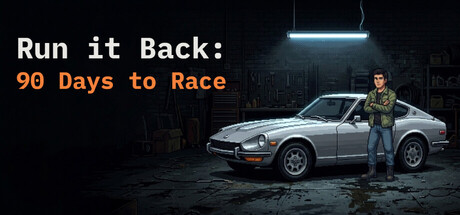
Run It Back: 90 Days to Race is developed solo. Illustrating the game's scenes, key art, and character art by hand wasn't feasible working alone, so AI image-generation tools are used as part of the art pipeline — some pieces generated directly from text prompts, others produced by restyling real photographic references into the game's illustrated art style. All AI-assisted artwork was selected and curated by the developer. No AI-generated content is created live during gameplay.
Quillzyra: Character Studio uses generative AI locally on the user's computer to create and interact with fictional characters. The application may generate character dialogue, personality text, memory summaries, character descriptions, and optional 2D character portraits based on user input.
The AI features are intended for fictional character creation, simulation, and conversation. The application does not rely on an external AI service during gameplay.
StorySmith uses generative AI to write its stories live as you and your Twitch chat make choices. The AI model runs locally on your machine by default, with an optional bring-your-own-key cloud option — so your playthroughs stay private and no two are ever the same.
Certain visual assets in the game are created with the assistance of generative artificial intelligence tools. These assets are reviewed, edited, and integrated by the developers to ensure they meet quality standards and remain consistent with the overall artistic direction of the game.
Ai was used to develop the code, artwork, various events, and dialogue in the game. Most player-facing text was reviewed by humans and many of the events and conversations were approved, improved, or rewritten by humans. There is no run-time AI usage, everything was created before the game runs, only standard computer actions are done at runtime. ex. selections and randomization of existing content.
Some of this game's content was created with generative AI tools and then reviewed and edited by the developer. This includes visual assets (2D art, 3D models and characters), some in-game text and localization, and some audio. No content is generated by AI during gameplay.
1453 contains pre-generated AI content: in-game illustrations and short ambient video clips created with generative image/video tools, curated and edited under human art direction and reviewed for historical accuracy. The narrative text is human–AI co-written and human-edited under the author's direction; the game design is the author's. No AI content is generated at runtime.
Generative AI tools were used to create selected pre rendered promotional artwork displayed on the Steam Store page and in marketing materials. All such content was reviewed, curated and integrated by the developer. The game does not generate AI content during gameplay.
Some art assets in this game were created with the aid of AI image-generation tools, then edited and composited by the developer. The musical score was composed using Suno. All writing, design, and direction are by the developer. We have taken steps to ensure the AI tools used were operated in a manner consistent with their terms of service.
This game includes pre-generated AI-assisted visual/audio/text assets that were selected, edited, and integrated by the developer. The game does not use live-generated AI during play.
The game's concept, worldbuilding, narrative, game design, and art direction were planned and developed directly by the development team.
Generative AI was used as an assistive tool in the production and refinement of pre-generated content, including character and environment imagery, cinematic sequences, anomaly effects, and selected music.
All content, including AI-assisted outputs, was curated, edited, composited, and post-processed by the development team to align with the game's creative intent and quality standards.
The game does not use generative AI at runtime, and no player input or personal data is sent to AI services.
Some visual assets, promotional artwork, and portions of the localization were created or assisted using generative AI during development. All AI-assisted content was reviewed, edited, and integrated by the development team. The game does not generate AI content during gameplay.
Many scene illustrations were generated with AI image tools, then selected, edited, and integrated by hand. Every image in the game was individually reviewed and curated by the developer.
This game uses content created or assisted by generative AI. Generative AI was used to help create and edit some visual assets, music/sound materials, and scripts. All final content was reviewed, selected, and adjusted by the developer before being included in the game.
TrueClash uses generative AI as part of its art workflow: character art and backgrounds are initially generated with AI tools, then manually reviewed, edited, and refined by our team in order to maintain the game's consistent visual style.
AI tools were also used to assist with translation and as a development aid for coding.
Some of the licensed music tracks featured in the game may have been created with AI assistance by their respective artists.
AI tools were used to assist with code development, some in-game text, and marketing visuals. All game design, story direction and gameplay mechanics were created and reviewed by the developer. No AI-generated content is produced in real-time during gameplay.
We use AI only for English Voiceover. It was trained exclusively on the voices of our Ukrainian voice actors.
We do not use AI for final art or music. Everything in the game is handcrafted by real people. Check game Credits.
A small amount of the art is generated or seeded using AI, but much of it is altered, changed or had custom things done with it. All music, sound, writing and code was made by a human.
To create realistic interrogation scenarios in this detective game, this game packages a local, offline LLM to serve as the brain of the NPC suspects. This allows the user to lead the investigation however they like. Generative AI was NOT used to create this game, but an LLM is featured as a main game mechanic in the form of freeform NPC conversation.
This game uses generative AI to pre-generate visual assets (character portraits, capsule/marketing art) and voice narration (TTS). All AI-generated content is created during development and reviewed/curated
by the developer before shipping. No generative AI runs live during gameplay. We have the necessary rights to use the AI tools and their outputs, and the content does not infringe third-party IP.
Some in-game radio/music tracks may be created with generative AI tools. These tracks are selected, reviewed and integrated manually by the development team. No live AI generation is used during gameplay.
The game's 2D artwork (character portraits, scenes, backgrounds) and music were created with generative AI tools, then curated and edited by the developer. Parts of the game's code and narrative text were written with AI assistance, under human direction, review and rewriting. All AI-assisted content is pre-generated during development: nothing is generated by AI while you play.
Generative AI was used during development to assist in creating some 2D background artwork, character images, item artwork, UI assets, and concept art. These assets were reviewed, edited, adjusted, and integrated into the game by the developer. The game does not generate AI content during gameplay.
Fateward's visuals, UI, music, sound, character voices, and Steam store assets are created using generative AI and curated by hand, from a game written and directed by the developer.
World of ClaudeCraft is, unapologetically, a game built with AI — the name is a hint. We used AI in two ways, and we want to be clear about both.
During development, the game's code was written with an AI coding assistant, and we used AI generation tools to create some of the assets that ship in the game as ordinary, fixed files:
Sound: Most in-game sound effects and all spoken NPC voice lines were generated with ElevenLabs' AI audio and text-to-speech models. The written dialogue itself is authored by us; AI produced the spoken audio.
3D models: A small number of creature models (the "Drowned Litany") were generated with Meshy AI (text-to-3D).
Everything else is either created by the game's own code (the world, towns, terrain, water, weather, and the music soundtrack are all generated procedurally at runtime) or is licensed third-party art — CC0 model, texture, and HDRI packs plus a purchased commercial icon set. That content is not AI-generated.
Critically: no generative AI runs while you play. Every AI-made asset was generated once, offline, during development and baked into the game as a static file. The running game makes no AI or LLM calls, and none of your gameplay or personal data is ever sent to an AI system. The simulation is fully deterministic — the same inputs always produce the same result.
The game includes pre-generated visual and audio assets created with the assistance of generative AI tools. These include character artwork, environmental backgrounds, music, and singing vocals. All lyrics were written entirely by the developer without the use of generative AI, while the music and vocals were created through a collaborative process involving human creative direction and generative AI tools. All AI-assisted outputs were reviewed, selected, edited, and integrated by the developer. The game does not generate content during gameplay and does not send player input to any AI service.
Although AI tools were used during the making of this game for efficiency, we have put our love, care, and effort into every part of it so players can experience the game as intended.
AI was used only as a support tool where helpful, and its use was kept minimal. All creative decisions, final content, and gameplay direction were reviewed and shaped by the developer to make sure nothing takes away from the intended player experience.
Some images used in the game were created or assisted with the help of AI-generated content. All AI-generated assets were reviewed, edited, and integrated by the developer as part of the game's final artwork.
This game is primarily built with pre-generated AI-assisted content, including artwork, text, localization, music, video, and marketing materials. All AI-assisted content is reviewed, selected, and edited by the developer before being included in the game or store page. The game does not use live-generated AI during gameplay and does not connect to any external AI service while running.
Some store artwork and promotional assets were created with the assistance of AI tools. The final game content, gameplay, and mechanics were developed by our team.
Generative AI was used during the development process to create a portion of the textures used in the game environments. These assets were subsequently reviewed and refined by our development team to ensure quality and originality.
This game uses generative artificial intelligence (Midjourney) as a supporting tool in the production of some of its artwork and illustrations. All AI-generated content is selected, edited, and art-directed by the development team, which defines composition, style, and visual coherence before it is integrated into the game.
Players may select a preset worldview and character template, or customize their own worldview and character settings before starting the game. They can interact via text typing in the in-game chat window, as well as click AI-provided options to engage with AI-generated content.
Some character illustrations were refined using generative AI as an assistive tool based on artwork originally designed and created by the developer. The final artwork was then manually reviewed and edited. Generative AI was also used to assist with the initial English localization, which was subsequently reviewed and revised before implementation in the game.
Run It Back: 90 Days to Race is developed solo. Illustrating the game's scenes, key art, and character art by hand wasn't feasible working alone, so AI image-generation tools are used as part of the art pipeline — some pieces generated directly from text prompts, others produced by restyling real photographic references into the game's illustrated art style. All AI-assisted artwork was selected and curated by the developer. No AI-generated content is created live during gameplay.