


Disclosure
Using AI to partially generate game code and character portraits.
- Creator
- LumiXL
- Reviews
- -
- Added
- Nov 26, 2026
Public Steam disclosure research 27,951 disclosures tracked
Search developers’ Steam disclosures, compare classified AI use across games, and follow recorded changes. This index adds cross-game classifications and statistics to statements published on individual store pages.
Code help, debugging and other development work.
Capsule art, trailers and promotional material.
Pre-made art, audio, writing and other game assets.
Interactive or runtime AI features disclosed by the developer.
Groups reflect automatic analysis of public disclosures; mature records are excluded. These counts do not measure AI use across all of Steam. Missing or unclear statements cannot establish whether a game uses AI.
Using AI to partially generate game code and character portraits.
Store page materails and a few of the in game visuals are created with the help of the ai.
Generative AI tools assisted development, including the creation of vector artwork, game text, translations, and code used to produce visual and audio content. These tools were used under the developer’s direction, with human review and creative decisions. The game does not use live generative AI during gameplay.
Generative AI has been used to assist in creating some ambient background music and a limited number of textures in Never Be Alone. The AI-assisted music is used to enhance the atmosphere during exploration and gameplay, while AI-assisted textures are used for certain environmental details. The game's story, missions, characters, gameplay systems, and programming are developed by the team. All main story characters are voiced by real human voice actors, with over 1,500 recorded voice lines.
Generative AI tools assisted with artwork, some music and sound effects, narrative text and localization. This content was generated during development. The game does not generate AI content or code during gameplay.
Some of this game's audio and text were produced with generative AI. Ambient sound effects and some character voice lines were generated with AI audio tools, and the English localization was produced with AI translation; all of it was reviewed and edited by the developer before release. Backgrounds, character art and the original script were created by human artists and writers. No content is generated while you play. Name of AI model included with the game: ByteDance Seed-Audio, GPT-6 Astra
No AI-generated output has been used as-is in the visual assets of ArcheAge Chronicles. During development, AI generation tools were used only as a starting point for some visual assets, and every one of them was edited, composited, retouched, or remodeled by our art team before being finalized. These include: - Item icons for items that exist only as icons, without an in-game 3D model - Some in-game images used within the UI, which were partially processed and edited with AI tools - Parts of the world map - Some 2D background decoration assets and character weapon 3D models, where AI tools were used only in the early stages of production The Portuguese (Brazil) and Japanese versions of the game currently use AI-assisted translation as a provisional measure. No AI-generated content is created during gameplay.
UI
As a micro-sized development team with only a few developers, we made limited use of generative AI for art drafts, music, and sound effects to help us enhance the game experience; however, all content has undergone multiple rounds of in-depth manual revision and refinement by our team.
Generative AI was used for art, sound, and translation.
Generative AI was used to create the thumbnails for the store page. Assist with written content. This content is included in the game ahead of time. No AI content is generated during gameplay, and the game does not connect to an AI service.
Chunk DAW's in-game UI is pre-generated with AI. Things like the loading blocks in the menus are the main visual generative AI, but all other assets and materials/sounds that are experienced in game are not. The in-game tutorial has been assisted with AI. AI was also used in development as a code assistant. While I disagree with the negative effects AI has for the environment, Chunk DAW is designed to be a creative space that encourages people to create for themselves. It is a new self-contained environment in which music and worlds can be built, shared, and experienced by anyone in the world. Chunk DAW is also a new way to make music that is accessible for neurodivergent learners who prefer to learn and create in a more tactile way, opening doors for self-expression to folks who may not be able to otherwise. In Chunk DAW, I've recorded all of the sounds with instruments in my home studio. My partner and I have walked the streets of Montreal with a hand-scanner to collect the materials used in game, and I'm in the process of refining how to capture the backgrounds with my 360 camera around Montreal. I've also spent over 20 hours refining the font you see in game. The content you experience in game is hand-crafted. If you haven't been following me for awhile, I have been playing music and creating art for 18 years. Go back in time on my Instagram to see the multi-media evolution of my creative expression that got me to where I am today. I am dedicated to the craft of making art and expressing myself, ask anyone who knows me. If you feel like you aren't comfortable participating in the experience because of this AI usage, I completely understand. I hope that Chunk DAW inspires people to reduce their AI usage and get back to what makes creativity fun in the first place: Play.
Generative AI was used to assist with programming and translation/localization during development.
What you are looking at is what came out the other side of AI and more than 2,000 prompts. As of 8 November 2026: The game code is written by AI under my direction: more than 2,000 prompts and more than 100,000 automated steps (file edits, searches, test runs) over more than 100 working days. The result so far is around 159,000 lines of game code across 420 modules. The music is AI-generated. The 3D models and textures in the game were made with the help of generative AI. The store artwork (capsules, logo and icon) and the achievement icons were made with generative AI. Every part is chosen, tested and rejected until it does what the game needs.
This game was developed with the assistance of generative AI: story text was drafted by a large language model and finalized through human editing; story videos were generated with generative video models, then selected and edited by human editors; and some cross-language subtitle translation was AI-assisted. All of this content was produced and finalized prior to release. No content is generated in real time during gameplay, and all final content was reviewed and adjusted by humans.
Generative AI was used only to assist with localization. All AI-assisted translations were reviewed and edited by the developer before release. The game does not use live-generated AI.
Generative AI was used to assist with the translation and refinement of some in-game text. All AI-assisted translations were reviewed and adjusted by the developer before being implemented in the game.
Art, video, voice acting and music were pre-generated with AI. The story concept is the author's original work; the dialogue was drafted by AI, then reviewed, revised and finalized line by line by the author. No content is generated by AI while the game is running.
Background images
The paintings and illustrations in De Tocht were created using AI, as was the voice that narrates the story. AI also assists with the writing. The ideas, research into the Elfstedentocht events of 1986 and 1997, the story itself, and the final editing are all the work of the creator. No AI content is generated during gameplay: everything in the game has been created and reviewed beforehand.
Generative AI tools were used during development as part of the production pipeline for visual assets and localization. AI-assisted visual material undergoes manual curation, editing, compositing, and final integration in image-editing software by the development team. AI-assisted localization goes through a multi-stage workflow that includes terminology and consistency checks, human proofreading, and final verification.
Some assets were created with AI tools during development and reviewed and edited by the team: background paintings, character portraits, table and building art, achievement and cosmetic icons, and music, sound effects and the trailer narration. Parts of the in-game writing were drafted with AI and edited by the developer. No generative AI runs while you play.
My AI Game Studio uses local generative AI (via Ollama) to power your studio’s employees. Each employee’s personality, skills, and role shape how the AI drives their dialogue, decisions, and work. This includes what they say when you talk to them one-on-one or call a meeting, how they react to changes in the studio, and how they contribute to the game your team is building. The playable game your studio develops, the bug reports you file, your marketing results, and your studio’s growth all change over time based on these AI-driven decisions. All AI processing runs entirely on the player’s machine. No data is sent to external servers. Because dialogue is generated live, employees may occasionally say unexpected things. The AI runs with instructions that keep employees in character and on topic, and that restrict inappropriate content.
Generative AI was used to translate and localize the game's original Japanese text and Steam store page into other languages. All scenarios and dialogue were written by the developer. No generative AI was used to create the game's artwork.
Some SFX effects and Music are made with AI.
Background artwork and character sprites were created using generative AI and then manually retouched and refined. AI tools will also assist with localization.
Networking, Promotional Artwork and base models.
AI tools were used to assist with English and Japanese localization. AI tools were used to assist with parts of the programming during development. The artwork, script, and original text were created by the developer without AI generation. The music consists of free assets sourced from the internet.
QtMesh Games uses generative AI during development to create selected visual assets, including 3D models, characters, textures, and promotional artwork. Many assets are produced and refined using QtMeshEditor, an open-source 3D editing application developed by the same independent developer behind QtMesh Games. The QtMesh asset pipeline combines custom-developed software and AI-assisted workflows with integrated AI models. Development also involves building, adapting, and improving components of these tools and pipelines. Generated assets are reviewed, edited, optimized, and integrated into the games under human creative direction. Gameplay mechanics, systems, and overall design remain developer-directed. The current games do not generate AI content dynamically during gameplay.
AI was used to provide text translations into languages other than English. If any native speakers wish to offer critique or correct these translations, we would be much obliged for your feedback and support.
In this game, AI analyzes the drawings created by players and generates feedback based on their content. This feature is designed to create an interactive experience where players can receive a variety of responses to their creative expression. Connects to 3rd-Party Service for AI Content Generation: OpenAI API
Lutrin was developed with the assistance of an AI assistant, under the direction of its author, who specified, reviewed and tested the work: code, interface text, manual and the prose of the example book. The example book's illustrations, the welcome image and the workshop backgrounds were generated with Stable Diffusion XL, locally, then chosen one by one. As an option, off by default, Lutrin can illustrate your book by sending prompts to ComfyUI, if you installed it yourself on your machine. Lutrin ships no model and connects to no online service: the images stay on your disk.
Some visual assets in Arcane Campus were created with the assistance of generative AI tools, including character illustrations and interface elements, such as those used in the character creation and selection screens. These assets are produced during development and incorporated into the game.
AI-Generated Content Some of the textures in the game were created using AI generation tools. These assets have been manually edited and adjusted to fit the game's art direction and overall design.
Since I'm not a good 3D/2D model artist and since I couldn't find free or payable assets for all models, I used AI in the making of some models and features. I try to minimize the use of it but it definitely helped me fix bugs faster and progress with new features faster than without it. Without AI, this game would be in development 5+ years and with AI I was able to get a test version ready 1 year faster. Thanks for your understanding <3
Generative AI tools were used to create selected visual assets for the game, including background illustrations, character pixel art, event badge icons, radio emblem icons, and the application icon. These assets were generated prior to release and reviewed by the developer before being incorporated into the game. The game does not use generative AI to create content during gameplay.
This game uses AI to generate content during play. Character dialogue (text) is generated by a large language model that runs entirely on the player's PC (a bundled local model, Qwen3-4B), and the generated lines are read aloud with local text-to-speech. No external AI service, account or API key is used. A system prompt and output-format restrictions keep the character to friendly small talk. No images or video are generated. AI replies may occasionally be inaccurate or unexpected. Name of AI model included with the game: Qwen3-4B (bundled local model, runs on the player's PC)
Some visual assets in EXODUS DIRECTIVE, including the intro cinematic and parts of the promotional material, were created with the help of generative AI tools. All AI-assisted content was reviewed, edited and curated by the developer. The game's design, systems and writing are created by hand.
All in-game video content, including cutscenes and story sequences, was generated using AI.
Logo and icons
This game was developed with the assistance of AI language models (LLMs) for programming, game design prototyping, text writing, and grammar corrections. All creative decisions, final designs, and implementations were reviewed and directed by a human developer. No AI-generated art, music, or sound effects are included in the game.
Generative AI tools were used during game development to assist with adapting and expanding in-game text and preparing translations. Generative AI was also used to create promotional artwork. All in-game text is prepared in advance. The game does not generate AI content during gameplay or connect to external AI services.
The images (places, characters, objects) were created with the image model FLUX.1 Krea and the short transition films with Wan 2.2, then selected, edited and integrated by hand. The texts, dialogue, rules and the English translation were written with the help of AI language models and specified, checked and revised by the developer; the village, characters and names come from the developer. Nothing is generated by AI while the game is running.
This desktop companion optionally uses AI for real‑time dialogue.
Riggin Farm: Raw Land to Riches incorporates AI-generated visual artwork created during development. These assets are incorporated into the game as pre-generated content. The game's overall concept, design, mechanics, progression systems, and creative direction are guided by the developer and inspired by real-world farming experiences. AI tools are used to assist with asset creation and development. The game does not use live generative AI to produce new content during gameplay.
I have used AI to generate the things that I currently can't do. Which is the art and audio design (I suck at that). Overal experience and cohesiveness of art are maintained and I've done a lot of checks by hand. Full transparancy; Further down the line , I would love to work with an artist to create a new style for the game. But that is only when the game generated revenue, so I can actually pay someone to do that.
Generative AI tools were used during development to assist with creating 3D models, code, and game assets.
The game uses AI technology to generate image elements.
Generative tools used to help support game development through code, a portion of the art, and marketing materials.
Pre-generated assets only. No content is generated by AI while playing. - Character, background and CG images: Stable Diffusion (illustriousPencilXL), edited. - Music and vocal ending themes: ACE-Step. - Character voices: VOICEVOX speech synthesis, credited per each character's terms of use. All content was reviewed before release. The game contains no adult content.
| Title⇅ | Disclosure | Creator⇅ | Src | Reviews⇅ | Added↓ |
|---|---|---|---|---|---|
 Rum & Rovers In-game content artcode | Using AI to partially generate game code and character portraits. | LumiXL | - | Nov 26, 2026 | |
 What Have I Become? | Store page materails and a few of the in game visuals are created with the help of the ai. | One-legged Ronin | - | Nov 26, 2026 | |
 Alone in the Nights In-game content arttextcode | Generative AI tools assisted development, including the creation of vector artwork, game text, translations, and code used to produce visual and audio content. These tools were used under the developer’s direction, with human review and creative decisions. The game does not use live generative AI during gameplay. | Cold Mass Digital Entertainment | - | Nov 23, 2026 | |
 Never Be Alone In-game content audioart | Generative AI has been used to assist in creating some ambient background music and a limited number of textures in Never Be Alone.
The AI-assisted music is used to enhance the atmosphere during exploration and gameplay, while AI-assisted textures are used for certain environmental details.
The game's story, missions, characters, gameplay systems, and programming are developed by the team. All main story characters are voiced by real human voice actors, with over 1,500 recorded voice lines. | Jonas Jensen | - | Nov 23, 2026 | |
 Is It Wrong to Make a Dying Guy Woo the Seven Deadly Sins? In-game content artaudiotext | Generative AI tools assisted with artwork, some music and sound effects, narrative text and localization. This content was generated during development. The game does not generate AI content or code during gameplay. | ZHEN CHENG XIN CO., LTD. | - | Nov 20, 2026 | |
 模联人 In-game content audiotext | Some of this game's audio and text were produced with generative AI. Ambient sound effects and some character voice lines were generated with AI audio tools, and the English localization was produced with AI translation; all of it was reviewed and edited by the developer before release. Backgrounds, character art and the original script were created by human artists and
writers. No content is generated while you play.
Name of AI model included with the game: ByteDance Seed-Audio, GPT-6 Astra | 小熊猫工作室 | - | Nov 19, 2026 | |
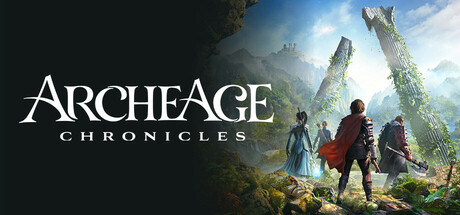 ArcheAge Chronicles In-game content arttext | No AI-generated output has been used as-is in the visual assets of ArcheAge Chronicles. During development, AI generation tools were used only as a starting point for some visual assets, and every one of them was edited, composited, retouched, or remodeled by our art team before being finalized. These include:
- Item icons for items that exist only as icons, without an in-game 3D model
- Some in-game images used within the UI, which were partially processed and edited with AI tools
- Parts of the world map
- Some 2D background decoration assets and character weapon 3D models, where AI tools were used only in the early stages of production
The Portuguese (Brazil) and Japanese versions of the game currently use AI-assisted translation as a provisional measure.
No AI-generated content is created during gameplay. | XLGAMES | 2.3k | Nov 19, 2026 | |
 Esports Career Simulator 2027 Unclear | UI | TFG | - | Nov 19, 2026 | |
 Toypact 契约玩偶 In-game content artaudio | As a micro-sized development team with only a few developers, we made limited use of generative AI for art drafts, music, and sound effects to help us enhance the game experience; however, all content has undergone multiple rounds of in-depth manual revision and refinement by our team. | UneoonGames | - | Nov 18, 2026 | |
 Seoul Zombie City In-game content artaudiotext | Generative AI was used for art, sound, and translation. | SoulSeoul | - | Nov 18, 2026 | |
 BORK In-game content arttext | Generative AI was used to create the thumbnails for the store page. Assist with written content. This content is included in the game ahead of time. No AI content is generated during gameplay, and the game does not connect to an AI service. | halfdrunkinteractive | - | Nov 15, 2026 | |
 Chunk DAW In-game content arttext | Chunk DAW's in-game UI is pre-generated with AI. Things like the loading blocks in the menus are the main visual generative AI, but all other assets and materials/sounds that are experienced in game are not. The in-game tutorial has been assisted with AI. AI was also used in development as a code assistant.
While I disagree with the negative effects AI has for the environment, Chunk DAW is designed to be a creative space that encourages people to create for themselves. It is a new self-contained environment in which music and worlds can be built, shared, and experienced by anyone in the world. Chunk DAW is also a new way to make music that is accessible for neurodivergent learners who prefer to learn and create in a more tactile way, opening doors for self-expression to folks who may not be able to otherwise.
In Chunk DAW, I've recorded all of the sounds with instruments in my home studio. My partner and I have walked the streets of Montreal with a hand-scanner to collect the materials used in game, and I'm in the process of refining how to capture the backgrounds with my 360 camera around Montreal. I've also spent over 20 hours refining the font you see in game. The content you experience in game is hand-crafted.
If you haven't been following me for awhile, I have been playing music and creating art for 18 years. Go back in time on my Instagram to see the multi-media evolution of my creative expression that got me to where I am today. I am dedicated to the craft of making art and expressing myself, ask anyone who knows me.
If you feel like you aren't comfortable participating in the experience because of this AI usage, I completely understand. I hope that Chunk DAW inspires people to reduce their AI usage and get back to what makes creativity fun in the first place: Play. | Mackenzie Gray | - | Nov 15, 2026 | |
 Zombie Craft In-game content codetext | Generative AI was used to assist with programming and translation/localization during development. | Misang | - | Nov 14, 2026 | |
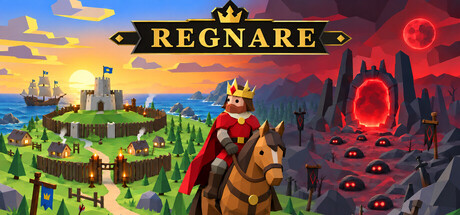 Regnare In-game content artaudiocode | What you are looking at is what came out the other side of AI and more than 2,000 prompts. As of 8 November 2026:
The game code is written by AI under my direction: more than 2,000 prompts and more than 100,000 automated steps (file edits, searches, test runs) over more than 100 working days. The result so far is around 159,000 lines of game code across 420 modules.
The music is AI-generated.
The 3D models and textures in the game were made with the help of generative AI.
The store artwork (capsules, logo and icon) and the achievement icons were made with generative AI.
Every part is chosen, tested and rejected until it does what the game needs. | S-Games | - | Nov 13, 2026 | |
 夏令营 In-game content textart | This game was developed with the assistance of generative AI:
story text was drafted by a large language model and finalized through human editing;
story videos were generated with generative video models, then selected and edited by human editors;
and some cross-language subtitle translation was AI-assisted.
All of this content was produced and finalized prior to release.
No content is generated in real time during gameplay, and all final content was reviewed and adjusted by humans. | Foldin Studio | - | Nov 9, 2026 | |
 フルボッコようちえん In-game content text | Generative AI was used only to assist with localization. All AI-assisted translations were reviewed and edited by the developer before release. The game does not use live-generated AI. | STUDIO CHARON | - | Nov 9, 2026 | |
 TheBigTittedMan In-game content text | Generative AI was used to assist with the translation and refinement of some in-game text. All AI-assisted translations were reviewed and adjusted by the developer before being implemented in the game. | Actor | - | Nov 9, 2026 | |
 沫引 Moyin In-game content artaudiotext | Art, video, voice acting and music were pre-generated with AI. The story concept is the author's original work; the dialogue was drafted by AI, then reviewed, revised and finalized line by line by the author. No content is generated by AI while the game is running. | 沫引 Moyin | - | Nov 8, 2026 | |
 Špatná noc Unclear | Background images | Jan Knytl | - | Nov 6, 2026 | |
 De Tocht In-game content artaudiotext | The paintings and illustrations in De Tocht were created using AI, as was the voice that narrates the story. AI also assists with the writing. The ideas, research into the Elfstedentocht events of 1986 and 1997, the story itself, and the final editing are all the work of the creator. No AI content is generated during gameplay: everything in the game has been created and reviewed beforehand. | Pieter Ytsma | - | Nov 6, 2026 | |
 Severed Souls — Chapter I In-game content arttext | Generative AI tools were used during development as part of the production pipeline for visual assets and localization.
AI-assisted visual material undergoes manual curation, editing, compositing, and final integration in image-editing software by the development team. AI-assisted localization goes through a multi-stage workflow that includes terminology and consistency checks, human proofreading, and final verification. | Lakos and Friends | - | Nov 4, 2026 | |
 Neon & Bones In-game content artaudiotext | Some assets were created with AI tools during development and reviewed and edited by the team: background paintings, character portraits, table and building art, achievement and cosmetic icons, and music, sound effects and the trailer narration. Parts of the in-game writing were drafted with AI and edited by the developer. No generative AI runs while you play. | One Lamp Forge | - | Nov 3, 2026 | |
 My AI Game Studio Live AI text | My AI Game Studio uses local generative AI (via Ollama) to power your studio’s employees. Each employee’s personality, skills, and role shape how the AI drives their dialogue, decisions, and work. This includes what they say when you talk to them one-on-one or call a meeting, how they react to changes in the studio, and how they contribute to the game your team is building. The playable game your studio develops, the bug reports you file, your marketing results, and your studio’s growth all change over time based on these AI-driven decisions.
All AI processing runs entirely on the player’s machine. No data is sent to external servers.
Because dialogue is generated live, employees may occasionally say unexpected things. The AI runs with instructions that keep employees in character and on topic, and that restrict inappropriate content. | b8ve | - | Nov 3, 2026 | |
 やさ死くシて In-game content text | Generative AI was used to translate and localize the game's original Japanese text and Steam store page into other languages.
All scenarios and dialogue were written by the developer. No generative AI was used to create the game's artwork. | すずはるひろみ | - | Nov 3, 2026 | |
 Cloverstead In-game content audio | Some SFX effects and Music are made with AI. | SIENTURE | - | Nov 2, 2026 | |
 池田バルブ株式会社 In-game content arttext | Background artwork and character sprites were created using generative AI and then manually retouched and refined. AI tools will also assist with localization. | Rumop | - | Oct 31, 2026 | |
 Caeldovar Online Unclear | Networking, Promotional Artwork and base models. | Raiden Games | - | Oct 31, 2026 | |
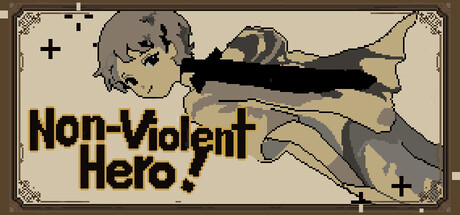 Non-violent Hero 非暴力系勇者! In-game content textcode | AI tools were used to assist with English and Japanese localization.
AI tools were used to assist with parts of the programming during development.
The artwork, script, and original text were created by the developer without AI generation.
The music consists of free assets sourced from the internet. | EightPawFish | 72 | Oct 30, 2026 | |
 QtMesh Games In-game content art | QtMesh Games uses generative AI during development to create selected visual assets, including 3D models, characters, textures, and promotional artwork.
Many assets are produced and refined using QtMeshEditor, an open-source 3D editing application developed by the same independent developer behind QtMesh Games.
The QtMesh asset pipeline combines custom-developed software and AI-assisted workflows with integrated AI models. Development also involves building, adapting, and improving components of these tools and pipelines.
Generated assets are reviewed, edited, optimized, and integrated into the games under human creative direction. Gameplay mechanics, systems, and overall design remain developer-directed.
The current games do not generate AI content dynamically during gameplay. | Fernando Tonon | - | Oct 30, 2026 | |
 The Hundred Days In-game content text | AI was used to provide text translations into languages other than English. If any native speakers wish to offer critique or correct these translations, we would be much obliged for your feedback and support. | Halcyon Redworks | 21 | Oct 30, 2026 | |
 A FAREWELL TO AI Live AI art | In this game, AI analyzes the drawings created by players and generates feedback based on their content. This feature is designed to create an interactive experience where players can receive a variety of responses to their creative expression.
Connects to 3rd-Party Service for AI Content Generation: OpenAI API | UZZ | - | Oct 30, 2026 | |
 Lutrin In-game content arttextcode | Lutrin was developed with the assistance of an AI assistant, under the direction of its author, who specified, reviewed and tested the work: code, interface text, manual and the prose of the example book. The example book's illustrations, the welcome image and the workshop backgrounds were generated with Stable Diffusion XL, locally, then chosen one by one.
As an option, off by default, Lutrin can illustrate your book by sending prompts to ComfyUI, if you installed it yourself on your machine. Lutrin ships no model and connects to no online service: the images stay on your disk. | Unidus Studio | - | Oct 28, 2026 | |
 Arcane Campus In-game content art | Some visual assets in Arcane Campus were created with the assistance of generative AI tools, including character illustrations and interface elements, such as those used in the character creation and selection screens. These assets are produced during development and incorporated into the game. | Szolun | - | Oct 28, 2026 | |
 Unfinished In-game content art | AI-Generated Content
Some of the textures in the game were created using AI generation tools. These assets have been manually edited and adjusted to fit the game's art direction and overall design. | CraftFox Creations | - | Oct 28, 2026 | |
 Windreach In-game content art | Since I'm not a good 3D/2D model artist and since I couldn't find free or payable assets for all models, I used AI in the making of some models and features. I try to minimize the use of it but it definitely helped me fix bugs faster and progress with new features faster than without it. Without AI, this game would be in development 5+ years and with AI I was able to get a test version ready 1 year faster. Thanks for your understanding <3 | Quantum Possibilities | - | Oct 28, 2026 | |
 온에어, 온기 In-game content art | Generative AI tools were used to create selected visual assets for the game, including background illustrations, character pixel art, event badge icons, radio emblem icons, and the application icon.
These assets were generated prior to release and reviewed by the developer before being incorporated into the game.
The game does not use generative AI to create content during gameplay. | KimVuelle Games | - | Oct 28, 2026 | |
 Rin: Always By Your Side Live AI text | This game uses AI to generate content during play. Character dialogue (text) is generated by a large language model that runs entirely on the player's PC (a bundled local model, Qwen3-4B), and the generated lines are read aloud with local text-to-speech. No external AI service, account or API key is used. A system prompt and output-format restrictions keep the character to friendly small talk. No images or video are generated. AI replies may occasionally be inaccurate or unexpected.
Name of AI model included with the game: Qwen3-4B (bundled local model, runs on the player's PC) | YamaStudio | - | Oct 27, 2026 | |
 Exodus Directive Store/marketing art | Some visual assets in EXODUS DIRECTIVE, including the intro cinematic and parts of the promotional material, were created with the help of generative AI tools. All AI-assisted content was reviewed, edited and curated by the developer. The game's design, systems and writing are created by hand. | Exsurge | - | Oct 27, 2026 | |
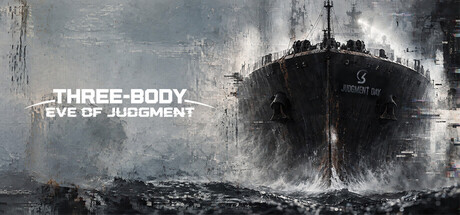 Three-Body: Eve of Judgment In-game content art | All in-game video content, including cutscenes and story sequences, was generated using AI. | Timeline | - | Oct 25, 2026 | |
 Become A Monarch In-game content art | Logo and icons | Game Dev Student BR | - | Oct 25, 2026 | |
 Doomed Village Dev only codetext | This game was developed with the assistance of AI language models (LLMs) for programming, game design prototyping, text writing, and grammar corrections.
All creative decisions, final designs, and implementations were reviewed and directed by a human developer.
No AI-generated art, music, or sound effects are included in the game. | CozyLitWindow | - | Oct 24, 2026 | |
 A Cat Lived Here In-game content textart | Generative AI tools were used during game development to assist with adapting and expanding in-game text and preparing translations. Generative AI was also used to create promotional artwork.
All in-game text is prepared in advance. The game does not generate AI content during gameplay or connect to external AI services. | Hayan Ryu | - | Oct 22, 2026 | |
 Selbstversorger In-game content arttext | The images (places, characters, objects) were created with the image model FLUX.1 Krea and the short transition films with Wan 2.2, then selected, edited and integrated by hand. The texts, dialogue, rules and the English translation were written with the help of AI language models and specified, checked and revised by the developer; the village, characters and names come from the developer. Nothing is generated by AI while the game is running. | Andreas Amon | - | Oct 22, 2026 | |
 Remilla text | This desktop companion optionally uses AI for real‑time dialogue. | Rinw | - | Oct 22, 2026 | |
 Riggin Farm: Raw Land to Riches In-game content art | Riggin Farm: Raw Land to Riches incorporates AI-generated visual artwork created during development. These assets are incorporated into the game as pre-generated content.
The game's overall concept, design, mechanics, progression systems, and creative direction are guided by the developer and inspired by real-world farming experiences. AI tools are used to assist with asset creation and development.
The game does not use live generative AI to produce new content during gameplay. | Verdant Meadow Systems | - | Oct 22, 2026 | |
 La Famiglia In-game content artaudio | I have used AI to generate the things that I currently can't do. Which is the art and audio design (I suck at that). Overal experience and cohesiveness of art are maintained and I've done a lot of checks by hand.
Full transparancy; Further down the line , I would love to work with an artist to create a new style for the game. But that is only when the game generated revenue, so I can actually pay someone to do that. | ZiBa Entertainment | - | Oct 22, 2026 | |
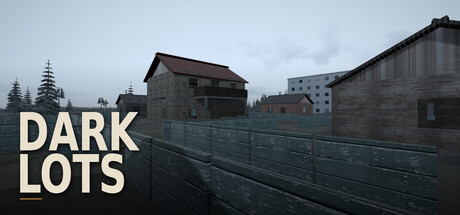 dark vacant lots In-game content artcode | Generative AI tools were used during development to assist with creating 3D models, code, and game assets. | Metamdrn Labs | - | Oct 20, 2026 | |
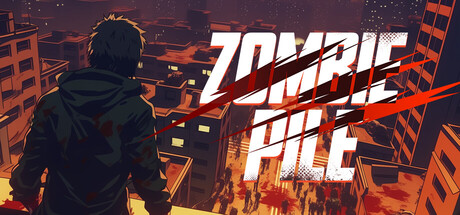 Zombie Pile Unclear art | The game uses AI technology to generate image elements. | Pixel Cattle Games | - | Oct 20, 2026 | |
 Deja-Vu of the Dead Store/marketing artcode | Generative tools used to help support game development through code, a portion of the art, and marketing materials. | Gold Brewed, LLC | - | Oct 20, 2026 | |
 きらめきクイズ 星見ヶ丘ダイアリー In-game content artaudio | Pre-generated assets only. No content is generated by AI while playing.
- Character, background and CG images: Stable Diffusion (illustriousPencilXL), edited.
- Music and vocal ending themes: ACE-Step.
- Character voices: VOICEVOX speech synthesis, credited per each character's terms of use.
All content was reviewed before release. The game contains no adult content. | kero | - | Oct 19, 2026 |


