Public Steam disclosure research25,380 disclosures tracked
Where do games disclose AI use?
Search developers’ Steam disclosures, compare classified AI use across
games, and follow recorded changes.
This index adds cross-game classifications and statistics to
statements published on individual store pages.
Groups reflect automatic analysis of public disclosures; mature records are excluded. These counts do not measure AI use across all of Steam.
Missing or unclear statements cannot establish whether a game uses AI.
Generative AI tools were used during development to assist in the creation and refinement of some pre-generated game content, including visual assets, audio, and development materials. All AI-assisted content was reviewed, edited, and integrated by the developer. No generative AI is used during gameplay.
Electric Crust was designed, built, and directed by its developer, Charles Whetstone. I used generative AI as a production assistance tool for a subset of shipping assets including some sprite artwork that began in Midjourney output before being manipulated and reworked by hand, along with soundtrack being initially created with assistance of Suno. Both were used under paid commercial licenses.
The game performs no live or runtime AI generation. Every asset is fixed and authored before release, and the game makes no network calls
of any kind.
We use AI tools to assist development. Some 3D models are generated with the assistance of AI tools (Meshy) from our own concept designs, and are then reviewed, adjusted, and integrated into the game by the team. Some store page text was drafted with AI assistance and then edited by the developers.
No generative AI runs at runtime. Players never receive AI-generated content while playing.
Generative AI was used to assist in creating some pre-rendered artwork, including environment backgrounds, menu and branding art, icons, and promotional/title-card images. These assets were reviewed and integrated by the developer. No content is generated during gameplay, and the game does not connect to external AI services.
AI was used only as a tool to speed things up.
Voice acting was done by professionals (including me).
SFX and most VFX are assets created by artists (some placeholder AI art is included to be replaced in time) and the music tracks were composed by me and rendered with an AI assisted DAW process.
All creative ideas, all mods and QoL features of this unique puzzle game were designed and built by a human mind.
Generative AI tools were used during development to assist in the creation of selected visual assets and promotional materials. All AI-assisted content was reviewed, edited, and integrated by the developer. The game does not generate AI content during gameplay and does not connect to external AI services while being played.
During development, generative AI tools were used to assist in creating fixed, pre-generated visual content, including brand illustrations, logo variants, Steam store graphics, UI decorative assets and icons, and seamless PBR material textures. All AI-assisted content was created before release and reviewed by the developer. The game does not generate AI content at runtime, does not accept player prompts for AI generation, and does not send player data to an AI service.
This game contains pre-generated AI-assisted content used during development, including gameplay code, selected in-game and UI text/localization, generated sound effects, and AI-assisted visual materials for Steam community/store assets such as achievement icons. No AI content is generated live during gameplay, and the game does not connect to external AI services at runtime.
Pre-generated AI was used for parts of the soundtrack and abstract store artwork. All content was selected and edited by the developer. No AI content is generated during gameplay.
AI-generated content in this game includes the BGM. Additionally, AI was used to assist in writing code, which was fully reviewed and verified by developer.
The key art used for this game's store capsules and Steam library images was produced with the help of a generative AI image tool, then composed and finished by hand. In the game itself, all visuals are drawn procedurally at runtime and all tap sounds are synthesised in code; no AI content is generated while you play.
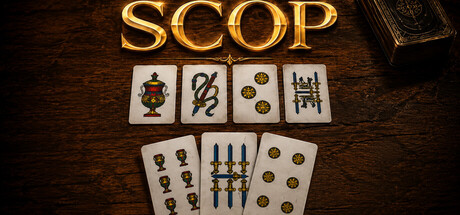
Some pre-generated visual assets in SCOP were created with the assistance of generative AI tools. These assets were reviewed, selected and edited before being integrated into the final game. SCOP does not generate AI content during gameplay.
Generative AI was used for parts of the game's 3D assets, voice and narration, ambient audio, translations, and store artwork.
All generated content was reviewed and edited by hand. No AI is used at runtime.
This game contains pre-generated 2D artwork and music created with assistance from generative AI tools and reviewed and edited by the developer. The game does not use generative AI or generate content during runtime.
All 2D art (character sprites, backgrounds, environment pieces, UI) and the current music were created during development using generative AI tools, then curated, edited, and baked into the build. No content is generated at runtime. The game design, level design, code, and writing are human-made.
The game was developed with the help of AI. The background music soundtrack is AI-generated: the pieces were created with a locally run music model, then curated and edited by hand. Puzzles, game design and gameplay are human-made.
Generative AI was used during development to assist with coding, promotional artwork, and store-page copy and localization. All outputs were reviewed by the developer.
All 3D models and textures were created by humans. Some sound assets and UI graphics were created using generative AI and edited and supervised by humans.
The development of this game makes extensive use of generative AI. AI tools were used to help create the game's art and visual assets, sound and music, text and narrative, code, and localization. All AI-assisted content is reviewed by our team before release to ensure quality and appropriateness.
Generative AI tools (OpenAI ChatGPT and Anthropic Claude) were used during development to help create or transform some visual assets and to assist in designing the procedural audio recipes used for the game’s background music and most sound effects. All AI-assisted materials were reviewed, selected, edited, and integrated by the developer, who made all final creative decisions. The game does not use generative AI during gameplay, and no player input or data is sent to AI services.
Used for steam capsule images and card artworks TEMPORARILY. All AI generated assets will be replaced on release if estimated revenue can atleast fund it.
Some pre-rendered assets were created with the help of generative AI during development: 2D line-art images (mascot sprites, badges, store artwork), portions of the game code, and drafts of store/in-game text (human-reviewed). Nothing is generated at runtime, and the game never connects to any AI service while you play. Sound effects are procedurally synthesized without AI.
Graphics (sprites, logo, artwork) were generated with Google Gemini API models,
then curated, edited, and integrated by the developer.
Music and sound effects were generated locally with ACE-Step 1.5, directed,
curated, and post-processed by the developer.
No AI runs during gameplay.
We used Claude (Anthropic) during development for the following:
- Writing the store page description
- Assisting with the translation of in-game text
- Generating some simple in-game objects
This game uses generative AI as a production tool. Character, enemy, boss, UI, and background art were created with image-generation models and then assembled, keyed, and edited by the team. Background music and in-game voice and narration (including Classical Latin lines in Purgatory) were also generated with AI and curated for the game.
Gameplay, design, writing, and programming are human-authored. The game does not generate new text, images, or audio while you play. Some store and marketing images were produced with the same tools.
Some pre-rendered 2D art was created with the assistance of generative AI tools: the playable characters' animation frames, world backgrounds and tile art were generated from the developer's original character and world designs, then hand-edited, aligned and baked into final game assets by the developer. A small number of sound effects were also created with AI audio tools and then mixed by hand. The store page capsule images are composed from the same AI-assisted paintings plus hand-set typography. All AI-assisted content is pre-rendered, was reviewed by the developer before shipping, and no content is generated by AI at runtime.
Generative AI tools were used during development to help create some content, including the English localization, music and sound effects, the 3D-rendered block art pipeline, and parts of the store/marketing materials. All AI-assisted content was reviewed and refined by the developer. No content is generated by AI at runtime.
Generative AI was used to help write portions of this game's text content, and parts of this store page. All game code, visuals, music, and sound design were created directly by the developer without generative AI. AI was used to help debug and troubleshoot code.
Generative AI technologies were utilized during the development and content creation process of our game. In addition to software development support, AI tools were used to draft in-game narratives, assist with localization, and generate store page descriptions. All AI-assisted content has been thoroughly reviewed, edited, and curated by the development team to ensure quality standards and compliance with copyright policies.
Some pre-generated visual assets used in Roulettegeddon, including portions of promotional artwork and certain in-game visual elements, were created or refined with the assistance of generative AI. The game's gameplay, mechanics, and player progression do not rely on AI-generated content during play.
Pixel art assets (characters, monsters, bosses, projectiles, spirits, tiles) were created with PixelLab, an AI pixel-art tool, and then edited by hand to fit the game. No AI is used at runtime. All code, game design, sound effects and music are human-authored (audio is synthesized in code).
All artwork (characters, monsters, environments, visual effects) and much of the game's code were created with generative AI tools. No content is AI-generated while the game runs.
Some title and UI illustration assets were created with image generation tools during development, then selected and implemented by the developer. Audio is procedurally synthesized in-engine and is not generative-AI music. The game does not generate AI content at runtime.
Some of this game's shipped assets were created with the assistance of generative AI and then manually curated and edited by the developers: background artwork (landscape silhouettes), the current music tracks (temporary, until our hand-crafted soundtrack is finished), and parts of the English localization. No content is generated by AI at runtime, and the game does not connect to any AI services.
All shipped assets are first-party or CC0/OFL-licensed human-made packs. Some 3D
meshes (enemy armor fused onto CC0 base rigs, the drone, weapon models) and the
entire soundtrack are produced by deterministic, first-party procedural build
scripts; those scripts were written with the help of an AI code assistant. No
image-, audio- or voice-generation model produced any shipped asset. The game's
written text — squad comms, item and mission descriptions, narrative screens —
and this store page's copy were drafted with AI assistance under developer
direction, then reviewed and edited by the developer. The game contains no
runtime or live AI generation.
Generative AI was used in a limited, supporting role during development:
• Portions of this store page description were drafted with the help of AI text tools and then reviewed and edited by the developer.
• A small number of icons (used on the store page) were created with the assistance of AI image generation tools and refined by the developer.
The game itself does not use generative AI at runtime.
Store page and marketing artwork (capsule images, library assets)
were created with the assistance of generative AI image tools.
Some in-game art assets were also produced with AI assistance.
All generated content was reviewed, edited, and finalized by
the developer.
We have AI placeholders for audio and visual 2D placements (i.e logo, 2D art). The rest of assets are purchased through Unity or hand made as of writing this (8/14/2026)
Some visual assets, audio, voice-over and cinematic elements were created with the assistance of generative AI tools, then selected, edited, refined and integrated by the developer. No generative AI is used live during gameplay.
Text content only, all pre-generated during development and reviewed by the developer. AI assistance was used to write the in-game story text, the user interface translations for the 8 supported languages, the achievement names and descriptions, and the store page copy. Nothing is generated live at runtime and the game does not connect to any AI service. Art, sprites, capsule images, icons and the soundtrack are NOT AI-generated: they are produced by procedural scripts written by the developer and included in the project source.
Generative AI tools were used during development to assist in the creation and refinement of some pre-generated game content, including visual assets, audio, and development materials. All AI-assisted content was reviewed, edited, and integrated by the developer. No generative AI is used during gameplay.
Electric Crust was designed, built, and directed by its developer, Charles Whetstone. I used generative AI as a production assistance tool for a subset of shipping assets including some sprite artwork that began in Midjourney output before being manipulated and reworked by hand, along with soundtrack being initially created with assistance of Suno. Both were used under paid commercial licenses.
The game performs no live or runtime AI generation. Every asset is fixed and authored before release, and the game makes no network calls
of any kind.
We use AI tools to assist development. Some 3D models are generated with the assistance of AI tools (Meshy) from our own concept designs, and are then reviewed, adjusted, and integrated into the game by the team. Some store page text was drafted with AI assistance and then edited by the developers.
No generative AI runs at runtime. Players never receive AI-generated content while playing.
Generative AI was used to assist in creating some pre-rendered artwork, including environment backgrounds, menu and branding art, icons, and promotional/title-card images. These assets were reviewed and integrated by the developer. No content is generated during gameplay, and the game does not connect to external AI services.
AI was used only as a tool to speed things up.
Voice acting was done by professionals (including me).
SFX and most VFX are assets created by artists (some placeholder AI art is included to be replaced in time) and the music tracks were composed by me and rendered with an AI assisted DAW process.
All creative ideas, all mods and QoL features of this unique puzzle game were designed and built by a human mind.
Generative AI tools were used during development to assist in the creation of selected visual assets and promotional materials. All AI-assisted content was reviewed, edited, and integrated by the developer. The game does not generate AI content during gameplay and does not connect to external AI services while being played.
During development, generative AI tools were used to assist in creating fixed, pre-generated visual content, including brand illustrations, logo variants, Steam store graphics, UI decorative assets and icons, and seamless PBR material textures. All AI-assisted content was created before release and reviewed by the developer. The game does not generate AI content at runtime, does not accept player prompts for AI generation, and does not send player data to an AI service.
This game contains pre-generated AI-assisted content used during development, including gameplay code, selected in-game and UI text/localization, generated sound effects, and AI-assisted visual materials for Steam community/store assets such as achievement icons. No AI content is generated live during gameplay, and the game does not connect to external AI services at runtime.
Pre-generated AI was used for parts of the soundtrack and abstract store artwork. All content was selected and edited by the developer. No AI content is generated during gameplay.
AI-generated content in this game includes the BGM. Additionally, AI was used to assist in writing code, which was fully reviewed and verified by developer.
The key art used for this game's store capsules and Steam library images was produced with the help of a generative AI image tool, then composed and finished by hand. In the game itself, all visuals are drawn procedurally at runtime and all tap sounds are synthesised in code; no AI content is generated while you play.
Some pre-generated visual assets in SCOP were created with the assistance of generative AI tools. These assets were reviewed, selected and edited before being integrated into the final game. SCOP does not generate AI content during gameplay.
Generative AI was used for parts of the game's 3D assets, voice and narration, ambient audio, translations, and store artwork.
All generated content was reviewed and edited by hand. No AI is used at runtime.
This game contains pre-generated 2D artwork and music created with assistance from generative AI tools and reviewed and edited by the developer. The game does not use generative AI or generate content during runtime.
All 2D art (character sprites, backgrounds, environment pieces, UI) and the current music were created during development using generative AI tools, then curated, edited, and baked into the build. No content is generated at runtime. The game design, level design, code, and writing are human-made.
The game was developed with the help of AI. The background music soundtrack is AI-generated: the pieces were created with a locally run music model, then curated and edited by hand. Puzzles, game design and gameplay are human-made.
Generative AI was used during development to assist with coding, promotional artwork, and store-page copy and localization. All outputs were reviewed by the developer.
All 3D models and textures were created by humans. Some sound assets and UI graphics were created using generative AI and edited and supervised by humans.
The development of this game makes extensive use of generative AI. AI tools were used to help create the game's art and visual assets, sound and music, text and narrative, code, and localization. All AI-assisted content is reviewed by our team before release to ensure quality and appropriateness.
Generative AI tools (OpenAI ChatGPT and Anthropic Claude) were used during development to help create or transform some visual assets and to assist in designing the procedural audio recipes used for the game’s background music and most sound effects. All AI-assisted materials were reviewed, selected, edited, and integrated by the developer, who made all final creative decisions. The game does not use generative AI during gameplay, and no player input or data is sent to AI services.
Used for steam capsule images and card artworks TEMPORARILY. All AI generated assets will be replaced on release if estimated revenue can atleast fund it.
Some pre-rendered assets were created with the help of generative AI during development: 2D line-art images (mascot sprites, badges, store artwork), portions of the game code, and drafts of store/in-game text (human-reviewed). Nothing is generated at runtime, and the game never connects to any AI service while you play. Sound effects are procedurally synthesized without AI.
Graphics (sprites, logo, artwork) were generated with Google Gemini API models,
then curated, edited, and integrated by the developer.
Music and sound effects were generated locally with ACE-Step 1.5, directed,
curated, and post-processed by the developer.
No AI runs during gameplay.
We used Claude (Anthropic) during development for the following:
- Writing the store page description
- Assisting with the translation of in-game text
- Generating some simple in-game objects
This game uses generative AI as a production tool. Character, enemy, boss, UI, and background art were created with image-generation models and then assembled, keyed, and edited by the team. Background music and in-game voice and narration (including Classical Latin lines in Purgatory) were also generated with AI and curated for the game.
Gameplay, design, writing, and programming are human-authored. The game does not generate new text, images, or audio while you play. Some store and marketing images were produced with the same tools.
Some pre-rendered 2D art was created with the assistance of generative AI tools: the playable characters' animation frames, world backgrounds and tile art were generated from the developer's original character and world designs, then hand-edited, aligned and baked into final game assets by the developer. A small number of sound effects were also created with AI audio tools and then mixed by hand. The store page capsule images are composed from the same AI-assisted paintings plus hand-set typography. All AI-assisted content is pre-rendered, was reviewed by the developer before shipping, and no content is generated by AI at runtime.
Generative AI tools were used during development to help create some content, including the English localization, music and sound effects, the 3D-rendered block art pipeline, and parts of the store/marketing materials. All AI-assisted content was reviewed and refined by the developer. No content is generated by AI at runtime.
Generative AI was used to help write portions of this game's text content, and parts of this store page. All game code, visuals, music, and sound design were created directly by the developer without generative AI. AI was used to help debug and troubleshoot code.
Generative AI technologies were utilized during the development and content creation process of our game. In addition to software development support, AI tools were used to draft in-game narratives, assist with localization, and generate store page descriptions. All AI-assisted content has been thoroughly reviewed, edited, and curated by the development team to ensure quality standards and compliance with copyright policies.
Some pre-generated visual assets used in Roulettegeddon, including portions of promotional artwork and certain in-game visual elements, were created or refined with the assistance of generative AI. The game's gameplay, mechanics, and player progression do not rely on AI-generated content during play.
Pixel art assets (characters, monsters, bosses, projectiles, spirits, tiles) were created with PixelLab, an AI pixel-art tool, and then edited by hand to fit the game. No AI is used at runtime. All code, game design, sound effects and music are human-authored (audio is synthesized in code).
All artwork (characters, monsters, environments, visual effects) and much of the game's code were created with generative AI tools. No content is AI-generated while the game runs.
Some title and UI illustration assets were created with image generation tools during development, then selected and implemented by the developer. Audio is procedurally synthesized in-engine and is not generative-AI music. The game does not generate AI content at runtime.
Some of this game's shipped assets were created with the assistance of generative AI and then manually curated and edited by the developers: background artwork (landscape silhouettes), the current music tracks (temporary, until our hand-crafted soundtrack is finished), and parts of the English localization. No content is generated by AI at runtime, and the game does not connect to any AI services.
All shipped assets are first-party or CC0/OFL-licensed human-made packs. Some 3D
meshes (enemy armor fused onto CC0 base rigs, the drone, weapon models) and the
entire soundtrack are produced by deterministic, first-party procedural build
scripts; those scripts were written with the help of an AI code assistant. No
image-, audio- or voice-generation model produced any shipped asset. The game's
written text — squad comms, item and mission descriptions, narrative screens —
and this store page's copy were drafted with AI assistance under developer
direction, then reviewed and edited by the developer. The game contains no
runtime or live AI generation.
Generative AI was used in a limited, supporting role during development:
• Portions of this store page description were drafted with the help of AI text tools and then reviewed and edited by the developer.
• A small number of icons (used on the store page) were created with the assistance of AI image generation tools and refined by the developer.
The game itself does not use generative AI at runtime.
Store page and marketing artwork (capsule images, library assets)
were created with the assistance of generative AI image tools.
Some in-game art assets were also produced with AI assistance.
All generated content was reviewed, edited, and finalized by
the developer.
We have AI placeholders for audio and visual 2D placements (i.e logo, 2D art). The rest of assets are purchased through Unity or hand made as of writing this (8/14/2026)
Some visual assets, audio, voice-over and cinematic elements were created with the assistance of generative AI tools, then selected, edited, refined and integrated by the developer. No generative AI is used live during gameplay.
Text content only, all pre-generated during development and reviewed by the developer. AI assistance was used to write the in-game story text, the user interface translations for the 8 supported languages, the achievement names and descriptions, and the store page copy. Nothing is generated live at runtime and the game does not connect to any AI service. Art, sprites, capsule images, icons and the soundtrack are NOT AI-generated: they are produced by procedural scripts written by the developer and included in the project source.