Public Steam disclosure research25,380 disclosures tracked
Where do games disclose AI use?
Search developers’ Steam disclosures, compare classified AI use across
games, and follow recorded changes.
This index adds cross-game classifications and statistics to
statements published on individual store pages.
Groups reflect automatic analysis of public disclosures; mature records are excluded. These counts do not measure AI use across all of Steam.
Missing or unclear statements cannot establish whether a game uses AI.
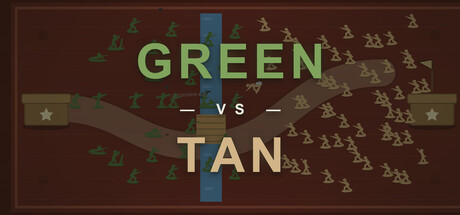
Green vs Tan was built with AI-assisted development tools under human direction. Every design decision was made and reviewed by a person.
The art you see while playing is not shipped as image files. The soldiers, vehicles, carpet and bosses are drawn procedurally by the game's own code, and the sound effects are synthesized as they play.
Some of our store and marketing artwork was AI-assisted and human-curated.
No content is generated by AI while you play, and the game never calls out to an AI service.
Generative AI was used in the following ways:
• The title logo on our store capsule images was created with an AI image
tool. Everything else in those images is real footage from the running game.
• The trailer narration was written with AI assistance and voiced using
ElevenLabs text-to-speech.
• Some in-game text event descriptions, help and interface copy was
written with AI assistance and edited by hand.
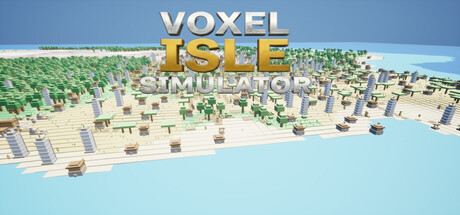
The game itself is not AI-generated. The world simulation, the voxel terrain
and its creatures, and all in-game art are hand-built. Sound effects and music
are licensed from stock audio libraries. Nothing is generated while you play.
Generative AI tools were used in the creation of certain art assets, audio materials and descriptive text during game development. All AI-generated content has been manually reviewed, edited and integrated by the developer. No new content is dynamically generated by AI while the game is running.
This game contains pre-generated AI-assisted visual assets, including promotional images, icons, artwork, character portraits, and some UI elements. No live or runtime AI is used during gameplay. All gameplay, mechanics, code, and player interactions are handcrafted.
This game utilized generative AI tools to assist with code writing and creative design during development. All AI-generated content has been strictly tested, reviewed, and optimized to ensure game quality and stability.
The game's design, rules, simulation, scenarios, and text are all authored by people. Some event background illustrations and background music were produced with generative tools run in-house by the development team, and every asset was then accepted or rejected by a human. The game does not generate any content while it runs.
Operation: Horumus is a "vibe coding" experiment. Most of the game's content — code, game design, pixel art, sound effects, procedural music, narrative writing, and all four language localizations (English, Korean, Japanese, Simplified Chinese) — was developed with extensive use of generative AI tools, under the developer's direction. Every creative and technical decision was made by the developer, and all AI-generated output was reviewed and curated before inclusion.
No AI is invoked during gameplay. The game runs entirely offline and makes no calls to external AI services.
This is a parody experiment, and the use of AI is part of the experiment itself. We disclose it here so you can decide whether that approach is interesting to you.
This game uses generative artificial intelligence in part to improve development efficiency.
It is primarily utilized to assist with programming implementation and development tasks, as well as for generating BGM melodies and assisting in the creation of in-game messages.
However, all final decisions regarding game specifications and quality control are made by the developer, and only AI-generated content that has been reviewed and adjusted by human hands is used.
Parts of this game's source code and in-game text were produced with the assistance of generative AI tools during development.
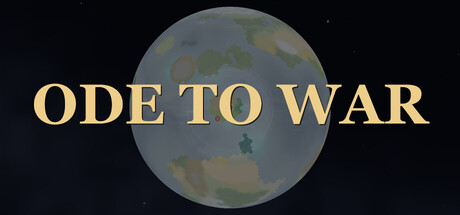
The planet itself is not AI-generated. It is built by conventional deterministic algorithms : noise functions, Voronoi tessellation, plate tectonics, erosion and climate simulation (the same family of techniques used in procedural generation for decades. Every world is reproducible from its seed).
No AI runs while you play, and the game never connects to an external AI service.
This game uses generative artificial intelligence in its development.
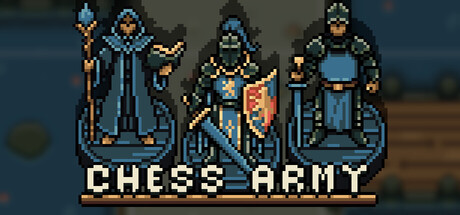
Some visual assets — including character sprites, unit artwork, and related
game graphics — were created or assisted with generative AI tools and then
integrated into the game. AI was also used during development to assist with
programming and production workflows.
Generative AI is not used to create content live during gameplay. The game
does not connect to external AI services while you are playing.
Some of this game's assets were made with the assistance of generative AI tools and were reviewed, curated and hand-finished by the developer. No content is generated while you play.
Some of the game's 2D artwork (illustrations, icons, and backgrounds) was created with the assistance of generative AI tools and then curated and edited by the development team. Some non-English text is translated with AI assistance and reviewed before shipping. No AI content is generated live during gameplay.
Blast Arena does not use AI to generate gameplay, code, or real-time content. Artificial intelligence was only used during development to help create certain promotional and marketing assets, such as concept art and store visuals. All in-game content and player experiences are fully handcrafted and not AI-generated.
Generative AI was used to assist in creating certain promotional and store page artwork. All AI-generated content was reviewed, edited, and refined by the developer. No generative AI is used during gameplay.
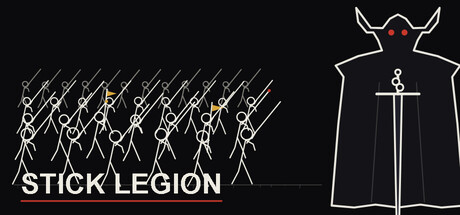
Some of Stick Legion's in-game text and promotional materials were created with the help of generative AI tools, all reviewed and edited by the developer. The game performs no live AI generation during play.
These translations were generated with the help of AI. As an indie developer, I currently don't have the budget to hire professional translators, but I hope to do so in the future.
Some pre-generated visual assets and localization text were created with the assistance of generative AI and were reviewed and edited by the developer. The game does not generate AI content during gameplay.
Generative AI was used to assist in creating certain promotional and store page artwork. All AI-generated content was reviewed, edited, and refined by the developer. No generative AI is used during gameplay.
Emergence uses generative AI as a development tool. It has been used to assist in the creation of certain visual assets (illustrations, icons, and concept art), text, and to help with software development and feature prototyping.
All content included in the game is reviewed, edited, approved, and ultimately authored by the developer. Generative AI is not used to create player-facing content during gameplay unless explicitly stated in the game's feature descriptions.
Some of the game's visual assets — UI textures, illustrations, icons and marketing artwork — were created with the assistance of generative AI tools, then manually curated, edited and integrated by the developer. All game design, writing, code and systems are human-made. No AI content is generated at runtime.
AI tools were used during development for the following assets:
Steam Store capsule images and marketing art
Game localization and text translations
Select 2D visual assets and graphics in the game
Generative AI tools assisted with portions of development, including some player-facing UI, tutorial and campaign text, and implementation code.
All output was reviewed and edited by the developer. The game does not generate AI content while running.
Maps and terrain are generated using deterministic procedural algorithms and public-domain geographic data. Audio uses licensed recordings and conventional synthesis/editing, not generative AI.
During development, some in-game surface textures (e.g. ground/terrain tile materials) were created with the assistance of generative AI image tools and then hand-edited and integrated into the game as static assets. All such content is pre-generated and fixed at ship time; the game does not generate any content live at runtime. We have reviewed this content to ensure we have the appropriate rights to use it and that it does not infringe on the rights of others.
The hero image, small capsule, main capsule, vertical capsule, library capsule, library hero image, library logo and library home page art were created with AI assistance.
The in-game warning UI and spray decals are AI-generated.
Besides this, all gameplay videos and screenshots you see in the store are captured from actual gameplay footage, with no retouching or AI generation applied.
This game uses generative AI tools during development to help create some character voice lines and cutscene video sequences. AI is not used to generate live, novel content during gameplay - all AI-assisted content is pre-produced and reviewed by the development team before shipping.
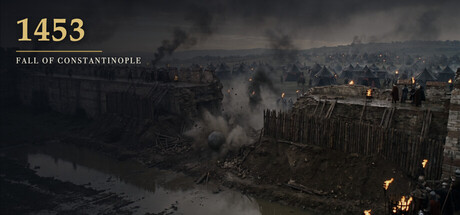
1453 contains pre-generated AI content: in-game illustrations and short ambient video clips created with generative image/video tools, curated and edited under human art direction and reviewed for historical accuracy. The narrative text is human–AI co-written and human-edited under the author's direction; the game design is the author's. No AI content is generated at runtime.
Generative AI was used during development to create some pre-generated graphical content. This includes several user interface icons used in the game and the hero banner displayed on the Steam store page. The game does not generate any content using AI during runtime.
Programming: AI tools (Cursor) were utilized to assist with drafting partial code blocks and isolated scripts. The overall core logic, architecture, and system design were manually programmed by the developer.
Art Assets: An AI image generator (PixelLab) was used to help conceptualize and generate some of the pixel art assets. These assets were manually reviewed and integrated to fit the game's retro aesthetic.
Localization / Translation: AI translation tools were used to assist in translating in-game text and store page descriptions into multiple languages.
This game used AI to help quickly iterate through designs for some UI elements using our own artwork as a baseline. AI is used to generate sound effects AI is also used to help translate the game.
The developer used generative AI as a tool during development. Store page and marketing copy was drafted with an AI writing assistant and edited by the developer. All artwork, logos, and screenshots are human-created or captured from real gameplay. The game does not use generative AI to create any content live during play all in-game text, events, and outcomes come from the developer's own hand-authored, deterministic systems. All AI-assisted content is reviewed by the developer before release.
This game was created by a solo developer with substantial help from generative AI tools. Every output was reviewed by hand.
Code: Claude Opus 4.8, Claude Fable 5.0
Writing & translation: Claude Opus 4.8, Gemini Pro 3.1
Graphics: Gemini Nano Banana 2
Music: Claude Opus 4.8
Video: Gemini Omni
Our Policy on AI & Procedural Generation
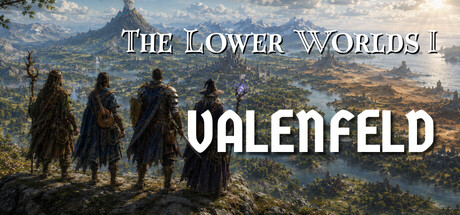
Valenfeld is built by one person, on a shoestring budget, with an Elder Scrolls–sized ambition. Here is exactly how, and why, AI fits into that.
Why we use it
Valenfeld is a solo indie project chasing a scope that normally takes a studio of dozens: a massive, hand-lorekept world you can wander for years without hitting an edge. That scope is not achievable by one person typing every tree, every ruin, and every line of dialogue by hand on a shoestring budget and an ambitious timeline. So we lean on AI-enabled workflows and, more importantly, cutting-edge procedural algorithms to scale content production and world scale to match the ambition — not to replace it.
What always stays human
Every piece of content in the game — every place, character, creature, item, quest, and line of lore — is built and overseen by a human creator and judge, grounded in our own ideas, our own lore, and our own systems design. AI does not decide what Valenfeld is. It never originates the world's canon, its themes, or its design intent on its own; it accelerates producing what we've already decided the world should be, and everything it touches is reviewed before it ships.
Not AI slop — procedural generation is the point
We're not interested in dumping raw model output into the game and calling it done. Our actual goal is an experimental, large-scale world built on cutting-edge procedural algorithms — terrain, dungeons, towns, ecosystems, even history — designed to be massively replayable for years, not a one-and-done AI slideshow. AI-assisted tooling is one part of the production pipeline that gets us there faster on a small budget; the procedural systems and the authored lore they run on are the actual craft, and that's where our attention to detail goes.
Our bet
We believe that if we focus relentlessly on delivering the best game possible — with a genuinely obsessive eye for detail on everything we ship — we can produce something great on a low budget and a small team of one. That is the bar we hold ourselves to, not "shipped fast" or "shipped cheap."
As we grow
This is how we build today, as a solo project with an ambitious scope and timeline. If and when Valenfeld earns a bigger budget for this game or for future releases, we intend to keep building just as ambitiously — with a team of art, lore, and gameplay experts working alongside these same tools, not replaced by them. Thinking about the best possible game comes first; everything else, including how we scale to build it, follows from that.
— Metatransformer Studios
Some promotional key art (store capsule illustrations and website artwork) was created with generative AI tools and then curated and edited by the developer. All in-game content - graphics (procedural vector rendering), gameplay, text, and audio - is hand-authored. The game does not generate any content with AI at runtime and does not connect to any AI service.
Generative AI tools were used to help create parts of this game, always under the developer's direction: a significant part of the artwork (such as backgrounds, unit graphics, UI elements and store page images) was created with AI assistance and then reviewed, edited and hand-tuned by the developer. AI also assisted in writing the in-game text and translating it, along with this store page, into the supported languages. Music and sound effects are not AI-generated. No AI content is generated live during gameplay.
Green vs Tan was built with AI-assisted development tools under human direction. Every design decision was made and reviewed by a person.
The art you see while playing is not shipped as image files. The soldiers, vehicles, carpet and bosses are drawn procedurally by the game's own code, and the sound effects are synthesized as they play.
Some of our store and marketing artwork was AI-assisted and human-curated.
No content is generated by AI while you play, and the game never calls out to an AI service.
Generative AI was used in the following ways:
• The title logo on our store capsule images was created with an AI image
tool. Everything else in those images is real footage from the running game.
• The trailer narration was written with AI assistance and voiced using
ElevenLabs text-to-speech.
• Some in-game text event descriptions, help and interface copy was
written with AI assistance and edited by hand.
The game itself is not AI-generated. The world simulation, the voxel terrain
and its creatures, and all in-game art are hand-built. Sound effects and music
are licensed from stock audio libraries. Nothing is generated while you play.
Generative AI tools were used in the creation of certain art assets, audio materials and descriptive text during game development. All AI-generated content has been manually reviewed, edited and integrated by the developer. No new content is dynamically generated by AI while the game is running.
This game contains pre-generated AI-assisted visual assets, including promotional images, icons, artwork, character portraits, and some UI elements. No live or runtime AI is used during gameplay. All gameplay, mechanics, code, and player interactions are handcrafted.
This game utilized generative AI tools to assist with code writing and creative design during development. All AI-generated content has been strictly tested, reviewed, and optimized to ensure game quality and stability.
The game's design, rules, simulation, scenarios, and text are all authored by people. Some event background illustrations and background music were produced with generative tools run in-house by the development team, and every asset was then accepted or rejected by a human. The game does not generate any content while it runs.
Operation: Horumus is a "vibe coding" experiment. Most of the game's content — code, game design, pixel art, sound effects, procedural music, narrative writing, and all four language localizations (English, Korean, Japanese, Simplified Chinese) — was developed with extensive use of generative AI tools, under the developer's direction. Every creative and technical decision was made by the developer, and all AI-generated output was reviewed and curated before inclusion.
No AI is invoked during gameplay. The game runs entirely offline and makes no calls to external AI services.
This is a parody experiment, and the use of AI is part of the experiment itself. We disclose it here so you can decide whether that approach is interesting to you.
This game uses generative artificial intelligence in part to improve development efficiency.
It is primarily utilized to assist with programming implementation and development tasks, as well as for generating BGM melodies and assisting in the creation of in-game messages.
However, all final decisions regarding game specifications and quality control are made by the developer, and only AI-generated content that has been reviewed and adjusted by human hands is used.
Parts of this game's source code and in-game text were produced with the assistance of generative AI tools during development.
The planet itself is not AI-generated. It is built by conventional deterministic algorithms : noise functions, Voronoi tessellation, plate tectonics, erosion and climate simulation (the same family of techniques used in procedural generation for decades. Every world is reproducible from its seed).
No AI runs while you play, and the game never connects to an external AI service.
This game uses generative artificial intelligence in its development.
Some visual assets — including character sprites, unit artwork, and related
game graphics — were created or assisted with generative AI tools and then
integrated into the game. AI was also used during development to assist with
programming and production workflows.
Generative AI is not used to create content live during gameplay. The game
does not connect to external AI services while you are playing.
Some of this game's assets were made with the assistance of generative AI tools and were reviewed, curated and hand-finished by the developer. No content is generated while you play.
Some of the game's 2D artwork (illustrations, icons, and backgrounds) was created with the assistance of generative AI tools and then curated and edited by the development team. Some non-English text is translated with AI assistance and reviewed before shipping. No AI content is generated live during gameplay.
Blast Arena does not use AI to generate gameplay, code, or real-time content. Artificial intelligence was only used during development to help create certain promotional and marketing assets, such as concept art and store visuals. All in-game content and player experiences are fully handcrafted and not AI-generated.
Generative AI was used to assist in creating certain promotional and store page artwork. All AI-generated content was reviewed, edited, and refined by the developer. No generative AI is used during gameplay.
Some of Stick Legion's in-game text and promotional materials were created with the help of generative AI tools, all reviewed and edited by the developer. The game performs no live AI generation during play.
These translations were generated with the help of AI. As an indie developer, I currently don't have the budget to hire professional translators, but I hope to do so in the future.
Some pre-generated visual assets and localization text were created with the assistance of generative AI and were reviewed and edited by the developer. The game does not generate AI content during gameplay.
Generative AI was used to assist in creating certain promotional and store page artwork. All AI-generated content was reviewed, edited, and refined by the developer. No generative AI is used during gameplay.
Emergence uses generative AI as a development tool. It has been used to assist in the creation of certain visual assets (illustrations, icons, and concept art), text, and to help with software development and feature prototyping.
All content included in the game is reviewed, edited, approved, and ultimately authored by the developer. Generative AI is not used to create player-facing content during gameplay unless explicitly stated in the game's feature descriptions.
Some of the game's visual assets — UI textures, illustrations, icons and marketing artwork — were created with the assistance of generative AI tools, then manually curated, edited and integrated by the developer. All game design, writing, code and systems are human-made. No AI content is generated at runtime.
AI tools were used during development for the following assets:
Steam Store capsule images and marketing art
Game localization and text translations
Select 2D visual assets and graphics in the game
Generative AI tools assisted with portions of development, including some player-facing UI, tutorial and campaign text, and implementation code.
All output was reviewed and edited by the developer. The game does not generate AI content while running.
Maps and terrain are generated using deterministic procedural algorithms and public-domain geographic data. Audio uses licensed recordings and conventional synthesis/editing, not generative AI.
During development, some in-game surface textures (e.g. ground/terrain tile materials) were created with the assistance of generative AI image tools and then hand-edited and integrated into the game as static assets. All such content is pre-generated and fixed at ship time; the game does not generate any content live at runtime. We have reviewed this content to ensure we have the appropriate rights to use it and that it does not infringe on the rights of others.
The hero image, small capsule, main capsule, vertical capsule, library capsule, library hero image, library logo and library home page art were created with AI assistance.
The in-game warning UI and spray decals are AI-generated.
Besides this, all gameplay videos and screenshots you see in the store are captured from actual gameplay footage, with no retouching or AI generation applied.
This game uses generative AI tools during development to help create some character voice lines and cutscene video sequences. AI is not used to generate live, novel content during gameplay - all AI-assisted content is pre-produced and reviewed by the development team before shipping.
1453 contains pre-generated AI content: in-game illustrations and short ambient video clips created with generative image/video tools, curated and edited under human art direction and reviewed for historical accuracy. The narrative text is human–AI co-written and human-edited under the author's direction; the game design is the author's. No AI content is generated at runtime.
Generative AI was used during development to create some pre-generated graphical content. This includes several user interface icons used in the game and the hero banner displayed on the Steam store page. The game does not generate any content using AI during runtime.
Programming: AI tools (Cursor) were utilized to assist with drafting partial code blocks and isolated scripts. The overall core logic, architecture, and system design were manually programmed by the developer.
Art Assets: An AI image generator (PixelLab) was used to help conceptualize and generate some of the pixel art assets. These assets were manually reviewed and integrated to fit the game's retro aesthetic.
Localization / Translation: AI translation tools were used to assist in translating in-game text and store page descriptions into multiple languages.
This game used AI to help quickly iterate through designs for some UI elements using our own artwork as a baseline. AI is used to generate sound effects AI is also used to help translate the game.
The developer used generative AI as a tool during development. Store page and marketing copy was drafted with an AI writing assistant and edited by the developer. All artwork, logos, and screenshots are human-created or captured from real gameplay. The game does not use generative AI to create any content live during play all in-game text, events, and outcomes come from the developer's own hand-authored, deterministic systems. All AI-assisted content is reviewed by the developer before release.
This game was created by a solo developer with substantial help from generative AI tools. Every output was reviewed by hand.
Code: Claude Opus 4.8, Claude Fable 5.0
Writing & translation: Claude Opus 4.8, Gemini Pro 3.1
Graphics: Gemini Nano Banana 2
Music: Claude Opus 4.8
Video: Gemini Omni
Our Policy on AI & Procedural Generation
Valenfeld is built by one person, on a shoestring budget, with an Elder Scrolls–sized ambition. Here is exactly how, and why, AI fits into that.
Why we use it
Valenfeld is a solo indie project chasing a scope that normally takes a studio of dozens: a massive, hand-lorekept world you can wander for years without hitting an edge. That scope is not achievable by one person typing every tree, every ruin, and every line of dialogue by hand on a shoestring budget and an ambitious timeline. So we lean on AI-enabled workflows and, more importantly, cutting-edge procedural algorithms to scale content production and world scale to match the ambition — not to replace it.
What always stays human
Every piece of content in the game — every place, character, creature, item, quest, and line of lore — is built and overseen by a human creator and judge, grounded in our own ideas, our own lore, and our own systems design. AI does not decide what Valenfeld is. It never originates the world's canon, its themes, or its design intent on its own; it accelerates producing what we've already decided the world should be, and everything it touches is reviewed before it ships.
Not AI slop — procedural generation is the point
We're not interested in dumping raw model output into the game and calling it done. Our actual goal is an experimental, large-scale world built on cutting-edge procedural algorithms — terrain, dungeons, towns, ecosystems, even history — designed to be massively replayable for years, not a one-and-done AI slideshow. AI-assisted tooling is one part of the production pipeline that gets us there faster on a small budget; the procedural systems and the authored lore they run on are the actual craft, and that's where our attention to detail goes.
Our bet
We believe that if we focus relentlessly on delivering the best game possible — with a genuinely obsessive eye for detail on everything we ship — we can produce something great on a low budget and a small team of one. That is the bar we hold ourselves to, not "shipped fast" or "shipped cheap."
As we grow
This is how we build today, as a solo project with an ambitious scope and timeline. If and when Valenfeld earns a bigger budget for this game or for future releases, we intend to keep building just as ambitiously — with a team of art, lore, and gameplay experts working alongside these same tools, not replaced by them. Thinking about the best possible game comes first; everything else, including how we scale to build it, follows from that.
— Metatransformer Studios
Some promotional key art (store capsule illustrations and website artwork) was created with generative AI tools and then curated and edited by the developer. All in-game content - graphics (procedural vector rendering), gameplay, text, and audio - is hand-authored. The game does not generate any content with AI at runtime and does not connect to any AI service.
Generative AI tools were used to help create parts of this game, always under the developer's direction: a significant part of the artwork (such as backgrounds, unit graphics, UI elements and store page images) was created with AI assistance and then reviewed, edited and hand-tuned by the developer. AI also assisted in writing the in-game text and translating it, along with this store page, into the supported languages. Music and sound effects are not AI-generated. No AI content is generated live during gameplay.