Public Steam disclosure research25,695 disclosures tracked
Where do games disclose AI use?
Search developers’ Steam disclosures, compare classified AI use across
games, and follow recorded changes.
This index adds cross-game classifications and statistics to
statements published on individual store pages.
Groups reflect automatic analysis of public disclosures; mature records are excluded. These counts do not measure AI use across all of Steam.
Missing or unclear statements cannot establish whether a game uses AI.
Some of this game's assets were produced with the help of generative AI during development: 2D art and illustrations, background music and sound effects, and machine-assisted translation of the in-game text into additional languages. All such assets were reviewed by the developer and are included as fixed content. No content is generated at runtime.
AI writing tools were used to assist in drafting store page descriptions and marketing copy. All game content, code, artwork, and audio were created without generative AI.
Some graffiti textures were created using AI, entirely based on our own original game/licensed assets. No copyrighted or third-party materials were used in the process. All AI-generated textures have been manually reviewed, repainted, and edited.
Space Planet Explorer uses generative AI to create assets that ship with the game, including planet surface textures, cinematic sequences, voice narration, and music. All of this content was generated during development — no AI content is generated live during gameplay. Planet visuals are AI-generated interpretations based on real scientific data, not actual NASA photography.
Generative AI was used in creating the fictional high schools, nicknames, and logos. I encourage all users to utilize the editing abilities in this game to create your very own universe. Generative AI is a great way to do this, so pick your favorite AI and build away!
Generative AI tools were used in the development of Lexip to create initial drafts and source material for parts of the project, including code, visual assets, sounds, writing, and marketing materials. These outputs were not used unchanged; they were reviewed, selected, adapted, edited, and integrated by the developer. The final implementation, design decisions, and overall tuning were done manually. The game does not generate new AI content during gameplay.
Salt and Soil uses generative AI during gameplay to create some Annual Family Council narrative text and structured choice outcomes based on the current campaign state. Generated council content is constrained by the game’s historical setting, family data, localization rules, and gameplay schema, then validated before it is shown to the player.
AI has been used in some store materials, such as audio content. However, the majority of the game’s content is not AI-generated, particularly the main characters, maps, and weapons.
Ice Cream Express uses generative AI-assisted artwork in some packaging visuals for in-game products/items. Generative AI is not used in any other part of the game, and we are working to remove these AI-assisted visuals before the full release.
Some in-game art assets were created or assisted using generative AI tools, then reviewed, edited, and integrated by the developer. AI tools were also used as development assistance for parts of the code. The game does not generate AI content during gameplay.
Pre-rendered AI-assisted promotional artwork and marketing assets may be used for the store page and promotional materials. No generative AI content is created live during gameplay.
ElevenLabs was used to create pre-recorded voice-over/narration audio, including some trailer narration.
Some existing promotional/store page images were edited with AI-assisted tools for cleanup, enhancement, and visual polishing. These images were not generated from scratch by AI.
No AI-generated content is generated live during gameplay, and the game does not use live AI systems during play.
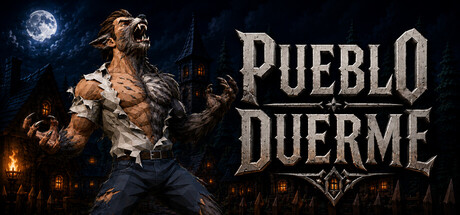
Pueblo Duerme uses generative AI during gameplay to create short in-game text chat messages for bot players in social deduction matches. The game includes local Qwen3 GGUF models that run on the player's PC through a local llama-server process, with Quality and Performance modes available in the settings menu. Player messages are not sent to an external AI service. The system is limited to gameplay dialogue and uses validation and fallback responses to keep messages within the game's rules.
Some 2D images and promotional artwork used in the game and on the Steam store page were created or assisted using generative AI tools and then reviewed, modified, and integrated by the developer. No real-time AI-generated content is created during gameplay.
I don't know how to code, and I only speak two languages (both badly, if I'm being honest). To actually get this game running properly and make it playable, I had to use AI as a technical assistant.
I wrestled with the ethics of this because I care deeply about the line between tools and art. If this game makes any money, it will go straight into hiring professional programmers, artists, and translators.
Thank you.
We used generative AI tools during development to create game icons. All assets were reviewed and integrated manually. The game does not generate content in real-time.
Some store page artwork, promotional artwork, and marketing assets for False Normality were created or assisted using generative AI tools. The game's design, writing direction, rule system, gameplay logic, editing, and final asset selection were created and curated by the developer. False Normality does not use live-generated AI during gameplay.
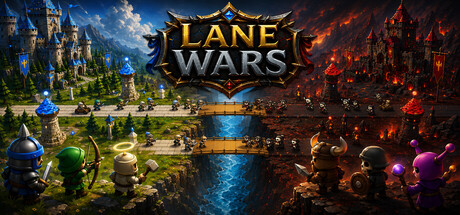
Lane Wars uses generative AI only for some pre-made 2D artwork: the game's icon, main-menu key art, and the Steam store capsule/promotional images were created with AI image-generation tools and then edited by the developer. Some trailer and marketing music was made with an AI music tool. Everything you interact with in-game — the 3D characters, environments, HUD, visual and sound effects, and all gameplay systems — is hand-built and procedurally generated in code, not AI-generated. The game does not use any generative AI at runtime.
The game does not use live AI-generated content. All gameplay assets were created by an artist. Some promotional images and UI artwork were initially generated with AI and then manually edited and refined.
This project includes limited use of AI generated content. AI tools were used to create certain background imagery and placeholder visual assets during development.
Additionally, AI-assisted tools were utilized in a supplementary capacity during parts of the coding process to support development efficiency.
All AI-generated content has been reviewed, modified, and integrated by the developer to ensure it aligns with the project’s overall quality and artistic direction.
AI was used for to help write and come up with description text edited by a person to fit the game better, tags, and some other minor items on the steam page. AI was not used in the development of the game there are no AI generated assets in this game at all.
This game uses generative AI during development in the following areas:
* Localization: AI tools were used to assist with translating some in-game text. All translations are reviewed and edited by the developer before being included in the game.
* Art Assets: AI tools were used to assist in creating some visual assets. All generated materials are selected, edited, and finalized by the developer.
* Programming: AI tools were used to assist with parts of the game's code development.
* Store Page: AI tools were used to assist in creating certain store page materials.
The game does not include any live-generated AI content. All AI-assisted content is generated during development, reviewed by a human, and finalized before being included in the shipped build.
The game does not use AI to generate content for the game. Some of the game content was developed using AI, but the game itself does not use AI to generate any content.
The developer used generative AI tools to assist in creating certain 2D environmental textures and concept artwork used during development. Additionally, AI voice generation software was used to synthesize specific voice lines for characters within the game. AI coding assistants were also utilized to aid in writing and optimizing standard gameplay scripts
Generative AI tools were used as an aid in creating this store page description and its translations into each language (all reviewed and edited by the developer).
quietd does not generate any content using AI during gameplay, and it does not connect to any external AI services.
AI is used during our early Alpha development phase to create temporary placeholder art. The intent is to replace once the core game loop as been satisfied.
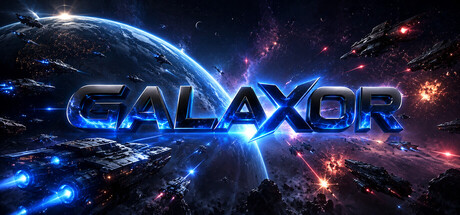
Galaxor uses generative AI tools to support the creation and revision of selected visual content, including icons, artwork, banners, store graphics and marketing materials. Generated content is reviewed, selected and, where necessary, manually adjusted before being used in the game or on the store page. No live-generated AI content is created during gameplay.
This game includes some pre-generated visual assets and music created with the help of AI tools during development. No AI content is generated live during gameplay.
This game uses AI-assisted tools during development to help create and iterate on some visual assets, such as concept art, UI background images, icons, effects references, and promotional artwork. The generated material is reviewed and edited by the developer before it is included in the game or store page. AI is not used during gameplay to generate player-facing text, images, audio, music, voice, 3D models, code, story choices, or gameplay decisions.
During development, we used generative AI image tools to produce base images for some of our 2D art assets. Our artist then worked on them to create the final assets in the game and on the store page.
Generative AI tools were used to assist in the creation of certain visual assets during development. All final in-game content was created and reviewed by professional artists.
In this work, much of the text is interactively generated by a language generation AI. In addition, language generation AI is used for various judgments on the text entered by players. Furthermore, all the illustrations in this work are created using image generation AI.
This game uses AI assistance as a support tool for efficient development.
Scope of AI Use
- Assistance with programming and code implementation
- Drafting and style adjustment for English localization
- Drafting and editing of some in-game text, including Observation Records in the Anomaly Codex, command reaction text, countermeasure procedures, and other text related to gameplay explanations and strategy
- Drafting, editing, and proofreading of general text such as social media announcements, descriptions, and notices
Scope Where AI Is Not Used
Character images, Anomaly images, background images, Steam capsule images, audio, and BGM are created by the developer or use licensed distributed assets.
No AI-generated assets are used for these materials.
Content Created and Managed by the Developer
The story, worldbuilding, characters, basic Anomaly concepts, and the folklore and supplementary materials related to the Anomalies are independently created by the developer.
Game design and various specifications are also determined by the developer.
For any content created with AI assistance, the final decision on whether to use the text, as well as quality control, is handled by the developer.
Generative AI tools were used during development for photos and videos of characters, as well as for development support such as code suggestions and iteration.
All AI-assisted assets and code are fixed, reviewed, and integrated by the developer prior to release. The game does not use generative AI to produce live or dynamic content, text, images, audio, or code during gameplay.
Generative AI was used in the creation of reaction sound effects (burning, explosions, electricity etc.) only.
All music and imagery is human-made and attributed.
Some store page text, marketing copy, and promotional planning materials for Black File were created with assistance from generative AI tools and reviewed, edited, and approved by the development team before publication. The game does not use generative AI to create content during gameplay.
The art, music, and writing in this game were created with AI tools during development, directed by the developer through written prompts. The development process is documented publicly, prompt by prompt. The shipped game contains no live or runtime AI generation — the in-game assistant “Aya” is a hand-authored, deterministic simulation, and the game makes no network or model calls during play.
Generative AI was used during the development of this game to speed up the coding process and to create some 2D visual designs. No other AI tools were used in the creation of the game.
Some of this game's assets were produced with the help of generative AI during development: 2D art and illustrations, background music and sound effects, and machine-assisted translation of the in-game text into additional languages. All such assets were reviewed by the developer and are included as fixed content. No content is generated at runtime.
AI writing tools were used to assist in drafting store page descriptions and marketing copy. All game content, code, artwork, and audio were created without generative AI.
Some graffiti textures were created using AI, entirely based on our own original game/licensed assets. No copyrighted or third-party materials were used in the process. All AI-generated textures have been manually reviewed, repainted, and edited.
Space Planet Explorer uses generative AI to create assets that ship with the game, including planet surface textures, cinematic sequences, voice narration, and music. All of this content was generated during development — no AI content is generated live during gameplay. Planet visuals are AI-generated interpretations based on real scientific data, not actual NASA photography.
Generative AI was used in creating the fictional high schools, nicknames, and logos. I encourage all users to utilize the editing abilities in this game to create your very own universe. Generative AI is a great way to do this, so pick your favorite AI and build away!
Generative AI tools were used in the development of Lexip to create initial drafts and source material for parts of the project, including code, visual assets, sounds, writing, and marketing materials. These outputs were not used unchanged; they were reviewed, selected, adapted, edited, and integrated by the developer. The final implementation, design decisions, and overall tuning were done manually. The game does not generate new AI content during gameplay.
Salt and Soil uses generative AI during gameplay to create some Annual Family Council narrative text and structured choice outcomes based on the current campaign state. Generated council content is constrained by the game’s historical setting, family data, localization rules, and gameplay schema, then validated before it is shown to the player.
AI has been used in some store materials, such as audio content. However, the majority of the game’s content is not AI-generated, particularly the main characters, maps, and weapons.
Ice Cream Express uses generative AI-assisted artwork in some packaging visuals for in-game products/items. Generative AI is not used in any other part of the game, and we are working to remove these AI-assisted visuals before the full release.
Some in-game art assets were created or assisted using generative AI tools, then reviewed, edited, and integrated by the developer. AI tools were also used as development assistance for parts of the code. The game does not generate AI content during gameplay.
Pre-rendered AI-assisted promotional artwork and marketing assets may be used for the store page and promotional materials. No generative AI content is created live during gameplay.
ElevenLabs was used to create pre-recorded voice-over/narration audio, including some trailer narration.
Some existing promotional/store page images were edited with AI-assisted tools for cleanup, enhancement, and visual polishing. These images were not generated from scratch by AI.
No AI-generated content is generated live during gameplay, and the game does not use live AI systems during play.
Pueblo Duerme uses generative AI during gameplay to create short in-game text chat messages for bot players in social deduction matches. The game includes local Qwen3 GGUF models that run on the player's PC through a local llama-server process, with Quality and Performance modes available in the settings menu. Player messages are not sent to an external AI service. The system is limited to gameplay dialogue and uses validation and fallback responses to keep messages within the game's rules.
Some 2D images and promotional artwork used in the game and on the Steam store page were created or assisted using generative AI tools and then reviewed, modified, and integrated by the developer. No real-time AI-generated content is created during gameplay.
I don't know how to code, and I only speak two languages (both badly, if I'm being honest). To actually get this game running properly and make it playable, I had to use AI as a technical assistant.
I wrestled with the ethics of this because I care deeply about the line between tools and art. If this game makes any money, it will go straight into hiring professional programmers, artists, and translators.
Thank you.
We used generative AI tools during development to create game icons. All assets were reviewed and integrated manually. The game does not generate content in real-time.
Some store page artwork, promotional artwork, and marketing assets for False Normality were created or assisted using generative AI tools. The game's design, writing direction, rule system, gameplay logic, editing, and final asset selection were created and curated by the developer. False Normality does not use live-generated AI during gameplay.
Lane Wars uses generative AI only for some pre-made 2D artwork: the game's icon, main-menu key art, and the Steam store capsule/promotional images were created with AI image-generation tools and then edited by the developer. Some trailer and marketing music was made with an AI music tool. Everything you interact with in-game — the 3D characters, environments, HUD, visual and sound effects, and all gameplay systems — is hand-built and procedurally generated in code, not AI-generated. The game does not use any generative AI at runtime.
The game does not use live AI-generated content. All gameplay assets were created by an artist. Some promotional images and UI artwork were initially generated with AI and then manually edited and refined.
This project includes limited use of AI generated content. AI tools were used to create certain background imagery and placeholder visual assets during development.
Additionally, AI-assisted tools were utilized in a supplementary capacity during parts of the coding process to support development efficiency.
All AI-generated content has been reviewed, modified, and integrated by the developer to ensure it aligns with the project’s overall quality and artistic direction.
AI was used for to help write and come up with description text edited by a person to fit the game better, tags, and some other minor items on the steam page. AI was not used in the development of the game there are no AI generated assets in this game at all.
This game uses generative AI during development in the following areas:
* Localization: AI tools were used to assist with translating some in-game text. All translations are reviewed and edited by the developer before being included in the game.
* Art Assets: AI tools were used to assist in creating some visual assets. All generated materials are selected, edited, and finalized by the developer.
* Programming: AI tools were used to assist with parts of the game's code development.
* Store Page: AI tools were used to assist in creating certain store page materials.
The game does not include any live-generated AI content. All AI-assisted content is generated during development, reviewed by a human, and finalized before being included in the shipped build.
The game does not use AI to generate content for the game. Some of the game content was developed using AI, but the game itself does not use AI to generate any content.
The developer used generative AI tools to assist in creating certain 2D environmental textures and concept artwork used during development. Additionally, AI voice generation software was used to synthesize specific voice lines for characters within the game. AI coding assistants were also utilized to aid in writing and optimizing standard gameplay scripts
Generative AI tools were used as an aid in creating this store page description and its translations into each language (all reviewed and edited by the developer).
quietd does not generate any content using AI during gameplay, and it does not connect to any external AI services.
AI is used during our early Alpha development phase to create temporary placeholder art. The intent is to replace once the core game loop as been satisfied.
Galaxor uses generative AI tools to support the creation and revision of selected visual content, including icons, artwork, banners, store graphics and marketing materials. Generated content is reviewed, selected and, where necessary, manually adjusted before being used in the game or on the store page. No live-generated AI content is created during gameplay.
This game includes some pre-generated visual assets and music created with the help of AI tools during development. No AI content is generated live during gameplay.
This game uses AI-assisted tools during development to help create and iterate on some visual assets, such as concept art, UI background images, icons, effects references, and promotional artwork. The generated material is reviewed and edited by the developer before it is included in the game or store page. AI is not used during gameplay to generate player-facing text, images, audio, music, voice, 3D models, code, story choices, or gameplay decisions.
During development, we used generative AI image tools to produce base images for some of our 2D art assets. Our artist then worked on them to create the final assets in the game and on the store page.
Generative AI tools were used to assist in the creation of certain visual assets during development. All final in-game content was created and reviewed by professional artists.
In this work, much of the text is interactively generated by a language generation AI. In addition, language generation AI is used for various judgments on the text entered by players. Furthermore, all the illustrations in this work are created using image generation AI.
This game uses AI assistance as a support tool for efficient development.
Scope of AI Use
- Assistance with programming and code implementation
- Drafting and style adjustment for English localization
- Drafting and editing of some in-game text, including Observation Records in the Anomaly Codex, command reaction text, countermeasure procedures, and other text related to gameplay explanations and strategy
- Drafting, editing, and proofreading of general text such as social media announcements, descriptions, and notices
Scope Where AI Is Not Used
Character images, Anomaly images, background images, Steam capsule images, audio, and BGM are created by the developer or use licensed distributed assets.
No AI-generated assets are used for these materials.
Content Created and Managed by the Developer
The story, worldbuilding, characters, basic Anomaly concepts, and the folklore and supplementary materials related to the Anomalies are independently created by the developer.
Game design and various specifications are also determined by the developer.
For any content created with AI assistance, the final decision on whether to use the text, as well as quality control, is handled by the developer.
Generative AI tools were used during development for photos and videos of characters, as well as for development support such as code suggestions and iteration.
All AI-assisted assets and code are fixed, reviewed, and integrated by the developer prior to release. The game does not use generative AI to produce live or dynamic content, text, images, audio, or code during gameplay.
Generative AI was used in the creation of reaction sound effects (burning, explosions, electricity etc.) only.
All music and imagery is human-made and attributed.
Some store page text, marketing copy, and promotional planning materials for Black File were created with assistance from generative AI tools and reviewed, edited, and approved by the development team before publication. The game does not use generative AI to create content during gameplay.
The art, music, and writing in this game were created with AI tools during development, directed by the developer through written prompts. The development process is documented publicly, prompt by prompt. The shipped game contains no live or runtime AI generation — the in-game assistant “Aya” is a hand-authored, deterministic simulation, and the game makes no network or model calls during play.
Generative AI was used during the development of this game to speed up the coding process and to create some 2D visual designs. No other AI tools were used in the creation of the game.